
Square and Rectangular Steel Tube: Which Sizes and Uses Fit Your Project?
Order the wrong square steel tube and the whole frame is re-cut, re-drilled and re-galvanized. The cost lands on site, not on the mill certificate.
Square and rectangular steel tube are hollow structural sections dimensioned by outer size and wall thickness, commonly supplied from 20×20 mm up to 200×200 mm with walls from 1.0 mm to 12 mm and lengths of 3–12 m, in plain, hot-dip galvanized or pre-galvanized condition.
This guide works through the questions buyers actually ask — what the product is, which sizes exist, how to calculate weight, where each profile is used, which standards govern it, and how to write an enquiry that suppliers can quote against without guessing.
What Are Square and Rectangular Steel Tube, and How Are They Made?
Square tube and rectangular tube are structural hollow sections, not pressure pipe. Confusing the two families is the first specification mistake buyers make.
Square and rectangular steel tube are hollow structural sections with a square or rectangular outer profile and rounded corners, formed from steel strip, welded along the seam and dimensioned by outer width, outer height and wall thickness rather than by nominal pipe size.
How hollow sections are actually formed
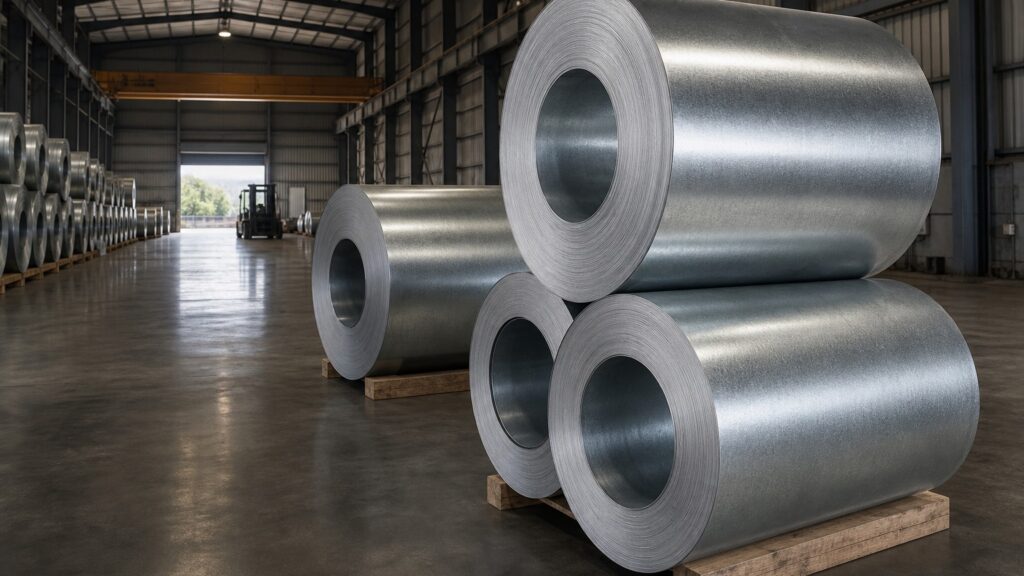
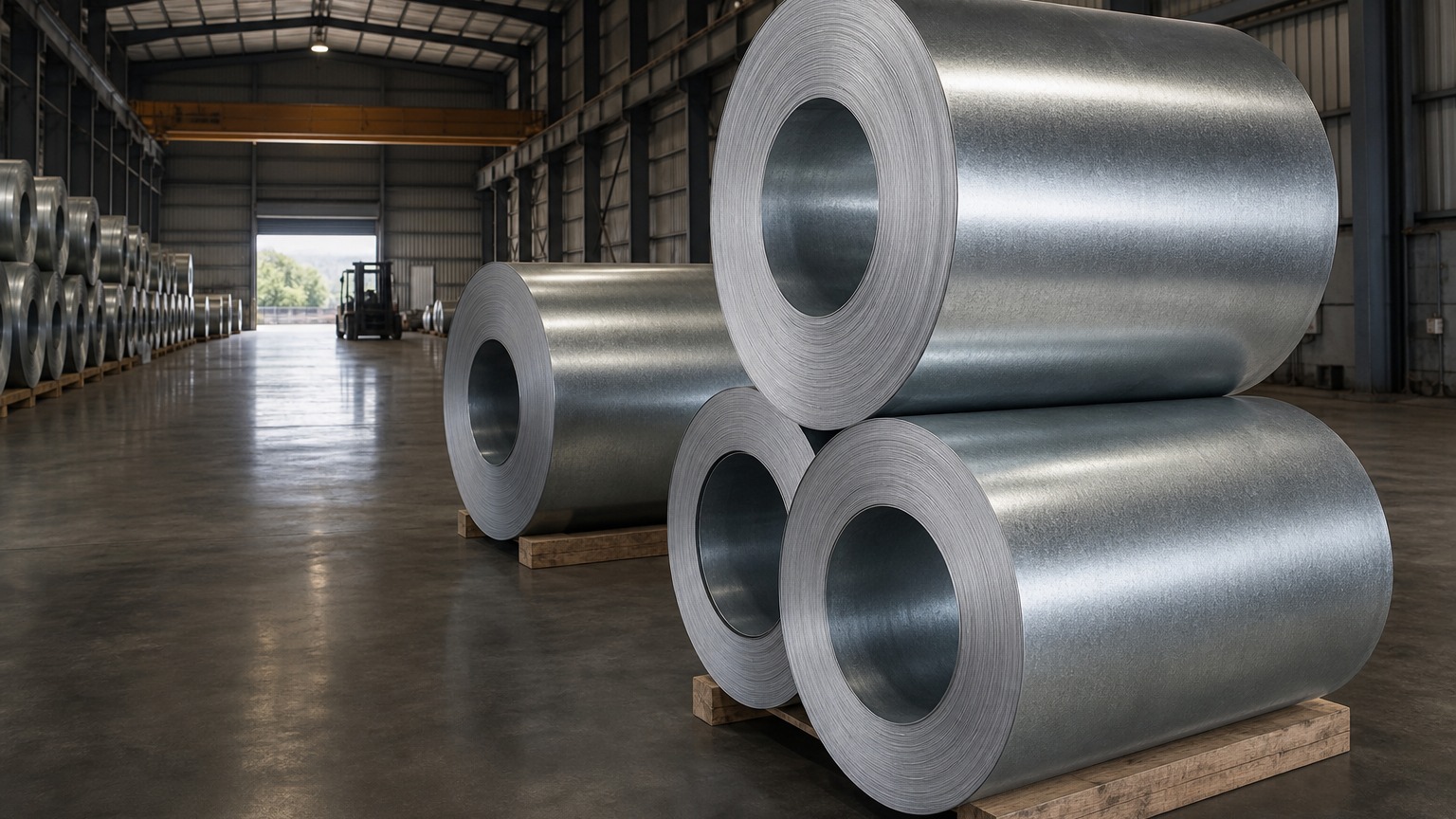
Cold-formed tube begins as flat steel strip. The strip is uncoiled, slit to the developed width that corresponds to the finished perimeter, and fed through a series of forming rolls that gradually bend it into a round or near-round shape. The two edges meet and are welded — most commonly by high-frequency induction or resistance welding — to create what the mill calls the mother tube. From there, a set of shaping stands squeezes the round section into a square or rectangular profile, and the corners are formed to a radius of roughly twice the wall thickness. The tube is then sized, straightened, cut to length and, where required, hot-dip galvanized.
That sequence explains several things buyers notice on delivery. First, the corner radius is not a defect; it is part of the product definition, and it matters because fixings and brackets sit on the flat faces, not in the corners. Second, the welded seam runs along one face of the tube, and on a galvanized product the seam is usually visible as a faint line beneath the zinc. Third, because the profile is formed from strip, wall thickness is highly uniform around the perimeter — unlike a seamless product, where eccentricity can vary wall thickness from one side to the other.
Hot-finished hollow sections follow a different route: they are formed at temperature and normalized, which produces a more uniform microstructure and is often preferred where the section will be heavily welded or used in a dynamically loaded structure. Cold-formed sections, by contrast, are the standard choice for general structural and mechanical work and represent the bulk of what is traded internationally.
Structural tube and steel pipe are different product families, and the difference matters at the enquiry stage. Our range of square and rectangular steel tube is dimensioned by outer size and wall thickness because it is designed to carry load; pipe is dimensioned by nominal size and schedule because it is designed to carry pressure. The reference article on hollow structural sections sets out how the international naming works — HSS in North America, and CHS, SHS and RHS in markets that follow the EN 10210 and EN 10219 families.
What Sizes and Wall Thicknesses Are Standard for Square Steel Tube?
Size availability drives both design and freight. Knowing the standard range before you design saves weeks of re-specification later.
Standard square steel tube sizes run from 20×20 mm to 200×200 mm in outer dimensions, with rectangular profiles covering similar widths and heights, wall thicknesses from 1.0 mm to 12 mm, and standard mill lengths of 3 m to 12 m.
The dimensional logic behind a square tube size
Unlike pipe, hollow sections are ordered by their outside dimensions. A “60×60×2.5” square tube is 60 mm wide, 60 mm high and has a 2.5 mm nominal wall — three numbers, no ambiguity. Rectangular tube is written the same way but with two different sides, so “100×50×2.0” means 100 mm by 50 mm with a 2.0 mm wall. This is the format to use in an enquiry, and it is also the format that appears on the mill certificate.
The size ranges that dominate international trade are driven by the forming equipment and by the applications that consume the volume. Small sections from 20×20 mm to 40×40 mm are produced on lighter mills and are used for furniture, racking and light fabrication. Sizes from 40×40 mm to 100×100 mm — and their rectangular equivalents such as 80×40 mm and 120×60 mm — make up the bulk of the structural market: frames, gates, supports and machine bases. Above 100×100 mm the sections become heavier, wall thicknesses generally rise, and the product starts to compete directly with hot-finished structural sections.
Wall thickness deserves more attention than it usually gets. For a given outer size, the wall thickness controls nearly everything: load capacity, mass per metre, weldability and price. Two buyers ordering the same 60×60 mm profile can end up with sections whose weights differ by more than 50% depending on whether they specified a 2.0 mm or a 3.0 mm wall. Over-specifying the wall is one of the most common and most expensive habits in steel purchasing, because the load capacity the project does not need is paid for on every metre, in every container, on every shipment.
The table below shows how the common metric profiles compare for the square and rectangular sections most often traded. All values are nominal and assume a steel density of 7.85 g/cm³.
| Profile | Wall thickness | Mass per metre | Typical use |
|---|---|---|---|
| 40×40 mm square | 2.0 mm | 2.39 kg/m | Furniture frames, light racking, guards |
| 50×50 mm square | 2.5 mm | 3.73 kg/m | Gates, fencing frames, small supports |
| 60×60 mm square | 2.5 mm | 4.51 kg/m | Structural frames, mezzanine posts, equipment stands |
| 80×80 mm square | 3.0 mm | 7.25 kg/m | Columns, heavy frames, solar mounting |
| 100×100 mm square | 4.0 mm | 12.06 kg/m | Primary structural members, machine bases |
| 100×50 mm rectangular | 2.0 mm | 4.58 kg/m | Beams, purlins, trailer frames |
| 120×60 mm rectangular | 3.0 mm | 8.20 kg/m | Structural beams, platforms, support frames |
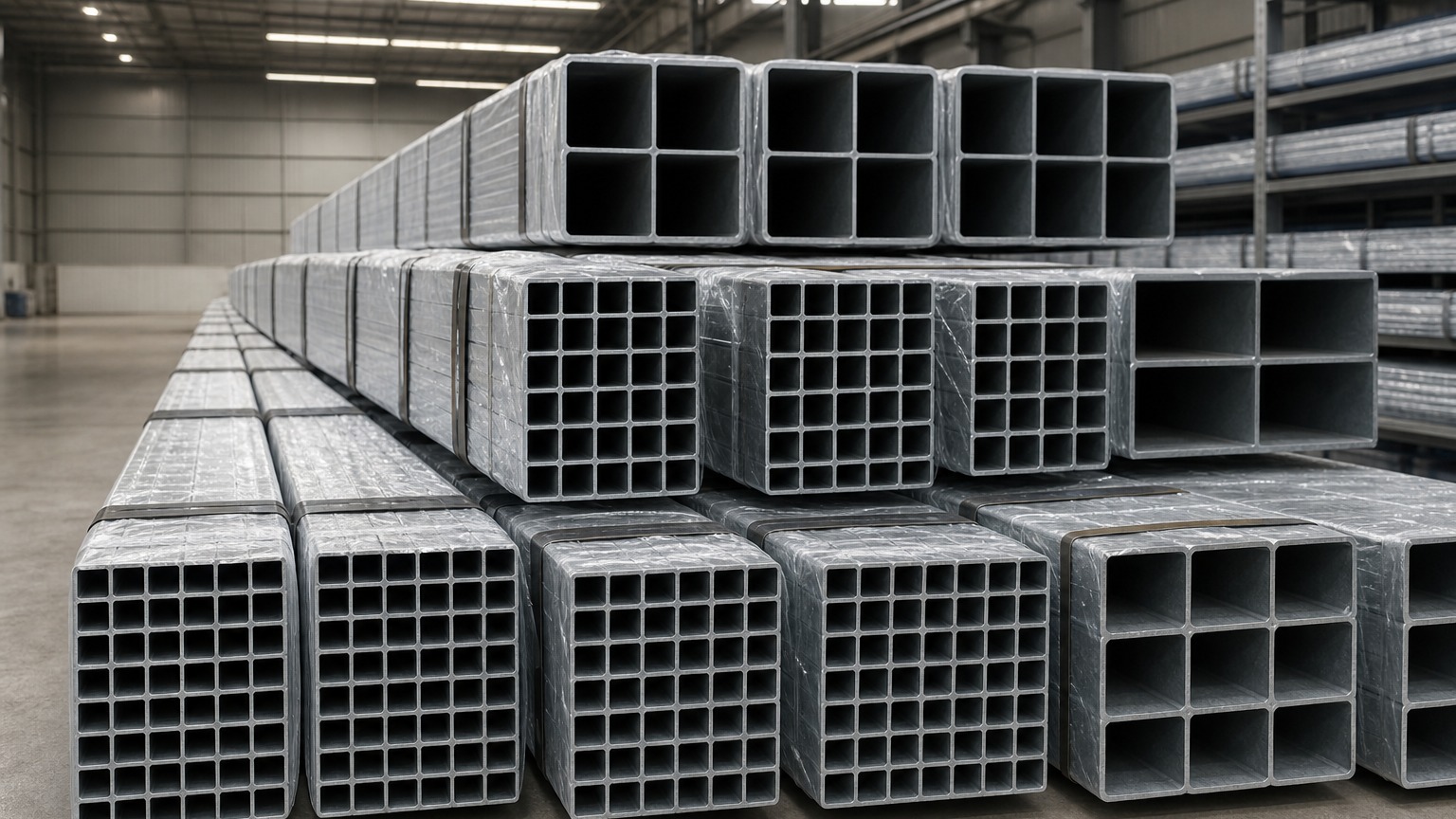
Where a project needs non-standard lengths or tighter tolerances, those are normally achievable as a mill order rather than a stock purchase, but the lead time changes with them. Before committing to a size, it is worth checking the standard galvanized steel tube sizes available ex-stock, because a section that exists in a stock list will almost always beat a special mill run on both price and delivery.
How Do You Calculate the Weight of Square and Rectangular Tube?
Weight per metre decides both the load on your structure and the freight on your invoice. The calculation takes thirty seconds and prevents costly over-ordering.
For a square tube, mass per metre equals 4 × (outer side − wall) × wall × 0.00785. For a rectangular tube, it equals 2 × (width + height − 2 × wall) × wall × 0.00785. The constant 0.00785 converts the cross-sectional area in mm² into kilograms per metre.
Where the formula comes from
The formula is not a trade convention — it is simple geometry. The cross-sectional area of a square hollow section is the outer square minus the inner void: side² − (side − 2 × wall)², which simplifies to 4 × wall × (side − wall). For a rectangular section the same subtraction gives width × height − (width − 2 × wall) × (height − 2 × wall), which simplifies to 2 × wall × (width + height − 2 × wall).
Multiply that area in square millimetres by the density of steel, 7.85 grams per cubic centimetre, and by one metre of length, and the result is kilograms per metre. That is where the 0.00785 constant comes from, and it holds for any carbon or galvanized steel section because the zinc coating on a galvanized tube is thin enough — typically tens of grams per square metre — that it does not change the mass by a meaningful amount at the level of a quotation.
Working an example makes the arithmetic concrete. Take a 60×60 mm square tube with a 2.5 mm wall, the profile we supply as our galvanized square steel tube in 60×60 mm with a 2.5 mm wall. The area is 4 × 2.5 × (60 − 2.5) = 575 mm². Mass per metre is 575 × 7.85 ÷ 1000 = 4.51 kg/m. A 6 m length therefore weighs about 27.1 kg, and a bundle of 100 lengths about 2.71 tonnes — a number you need before you can choose a container or a lifting plan.
Three practical cautions apply. First, the mass you calculate is nominal; mill tolerances on wall thickness mean the delivered weight can differ by a few per cent, and weight-based purchase orders should state whether the tolerance is on theoretical or actual weight. Second, the same profile in a different material carries a different density — stainless steel is around 7.9 to 8.0 g/cm³ depending on grade — so do not carry a carbon steel figure across to a stainless enquiry. Third, when you compare quotations, compare the mass per metre of the exact profile rather than the price per ton alone: a lighter wall always looks cheaper per ton, and that is precisely how a cheaper-looking offer ends up delivering a weaker section.
For projects where the load case is already fixed by an engineer, the fastest path is to send the required section properties — mass per metre, moment of inertia and section modulus — and let the supplier confirm which wall thickness meets them. That converts a price conversation into a specification conversation, and it is where most of the value in a mill-direct relationship actually sits.
What Are the Main Uses of Square and Rectangular Steel Tube?
Most square tube is bought for one of five duties: framing, support, guarding, mechanical work or exposed architectural steel.
Square and rectangular steel tube is used mainly for structural frames, gates and fencing, mezzanine and racking supports, machine and equipment frames, solar mounting structures, handrails and architectural exposed steel, where flat faces make bolting, welding and fixing straightforward.
Why the flat face decides so many applications
Applications follow geometry. A square or rectangular section presents four flat faces along its length, which means almost any attachment — a bracket, a hinge, a clamp, a bolted plate, a solar rail — can be mounted directly onto the tube without an adapter or a specially shaped saddle. On a round section the fabricator has to cope or notch the mating part to sit against a curve. Over a large frame with dozens of connections, that difference in fabrication time is usually bigger than the difference in material price.
The main application families break down along those lines:
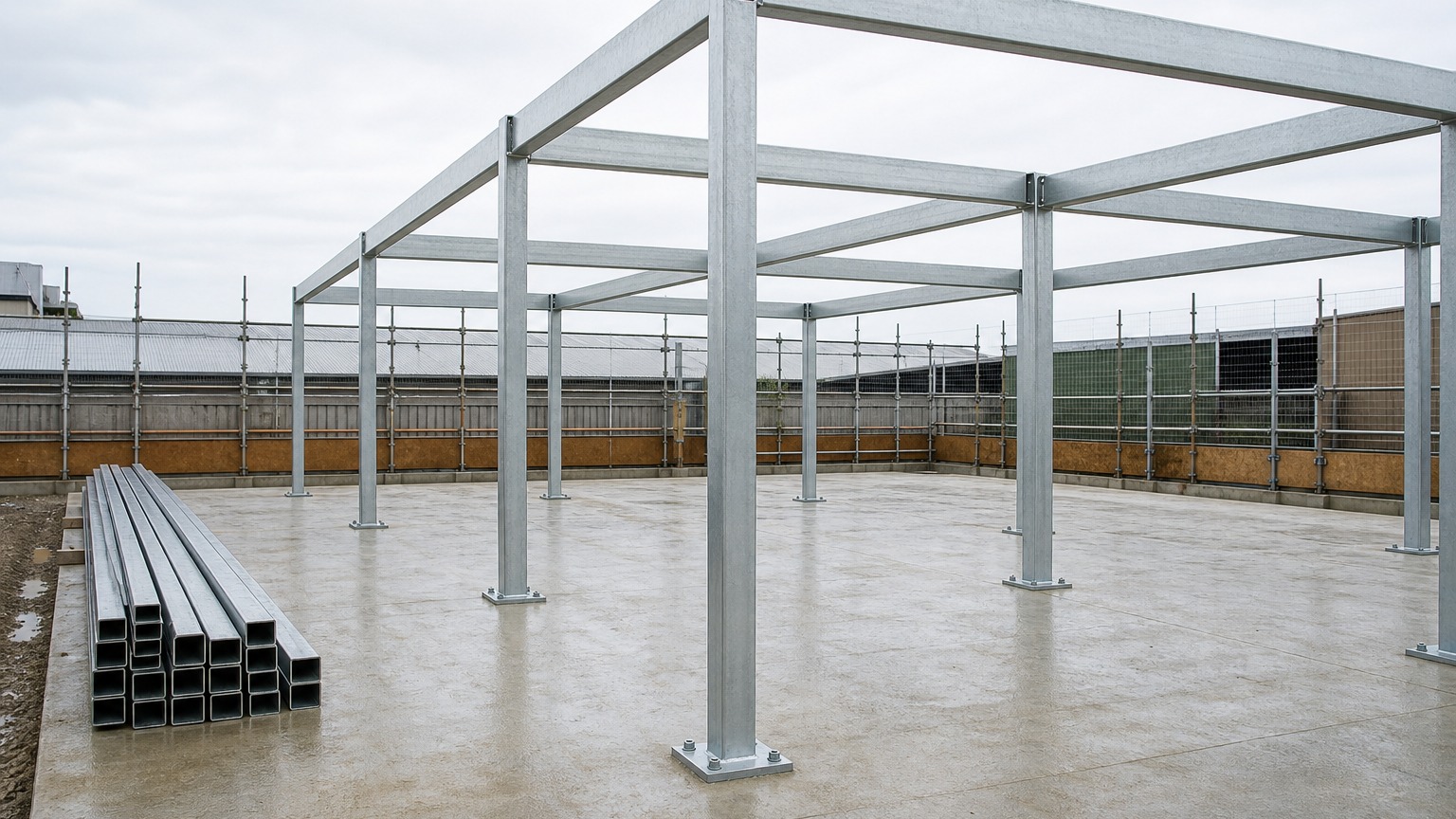
- Structural frames and supports. Mezzanine structures, platform frames, machine bases and equipment stands are built almost entirely from square and rectangular sections because the frame is a lattice of straight members meeting at right angles, and the flat faces make clean welded and bolted joints.
- Fencing, gates and guarding. Square tube gives a clean, modern line, and mesh panels or infill bars fix easily to a flat face. Guard rails around machinery and safety barriers are usually square or rectangular for the same reason.
- Racking and storage systems. Uprights and beams in industrial shelving and pallet racking are made from square and rectangular hollow sections selected for bending stiffness and for the ease of attaching shelf brackets at regular intervals.
- Solar and outdoor mounting. Photovoltaic mounting rails and ground-mount frames favour rectangular tube for its stiffness and for the way it accepts clamps and bolts in any position along its length.
- Architectural and exposed steel. Canopies, pergolas, balustrade frames and shopfront structures increasingly use exposed square section precisely because the flat faces read as clean lines and can be powder coated or left galvanized with a consistent appearance.
- Mechanical and transport equipment. Trailer frames, machine guards, conveyor supports and handrails inside vehicles combine square tube for frames with round tube where the member is loaded in torsion.
Where the member moves from a known two-direction frame to something that twists or takes load from any direction, the profile conversation changes. Broadly, rectangular and square profiles win where connections and known load directions dominate, while circular hollow sections win where torsion or omni-directional compression dominates — the reasoning is set out in detail in our comparison of how square profiles compare with round tube, including the section-property table that usually settles the argument.
Almost every outdoor application in that list is supplied galvanized, and the reason is electrochemical. The zinc coating on a galvanized tube corrodes preferentially to the steel beneath it, so a scratch that exposes bare metal does not immediately become a rust pocket — the surrounding zinc continues to protect it. As the reference entry on galvanization explains, this sacrificial behaviour is why galvanized steel is chosen wherever corrosion resistance is needed without the cost of stainless steel.
Which Standards and Grades Apply to Square Structural Tube?
Standards decide whether a tube can legally be used in your structure. Getting the designation wrong can invalidate an engineer’s design.
The main standards for square and rectangular steel tube are ASTM A500/A500M for cold-formed welded and seamless carbon steel structural tubing, the EN 10210 and EN 10219 families for hot-finished and cold-formed hollow sections in Europe, and GB/T 6728 in China.
What each standard actually covers
ASTM A500/A500M is the specification most often named on North American and export enquiries. As the ASTM A500/A500M standard states in its scope, it covers cold-formed welded and seamless carbon steel round, square, rectangular or special shape structural tubing for welded, riveted or bolted construction of bridges and buildings and for general structural purposes, produced with a periphery of up to 2235 mm and a specified wall thickness of up to 25.4 mm. The specification fixes the chemical requirements, requires the tubing to be made either seamless or by welding, calls for tension and flattening tests, and requires inspection at the place of manufacture. Grades A, B and C differ mainly in minimum yield strength, which is why the grade letter matters as much as the dimensional call-out.
European practice splits the same product family by forming temperature. EN 10219 covers cold-formed welded structural steel hollow sections in both fine-grain and non-alloy steels, while EN 10210 covers the hot-finished equivalent. In these markets the products are named by shape rather than by the collective HSS term — SHS for square hollow section, RHS for rectangular, CHS for circular — followed by the outer dimensions and wall thickness. A call-out of “RHS 120×60×3” therefore reads exactly like the metric format used elsewhere, with a European surname attached. Chinese production commonly references GB/T 6728 for cold-formed hollow sections for general structures, and because so much of the export market is supplied from Chinese mills, buyers in Europe and North America frequently see GB/T 6728 sections offered against an ASTM A500 or EN 10219 requirement. That is workable, but the equivalence must be confirmed in writing, grade by grade and thickness by thickness, rather than assumed from the shape.
Coating is governed separately from the section standard, and this is where two products that look identical can diverge sharply in service life. Continuously galvanized strip is specified by coating weight in grams of zinc per square metre — designations such as Z180 or Z275 — while batch hot-dip galvanizing of a finished fabricated tube is specified by coating thickness in micrometres, with ISO 1461 being the reference standard in most export markets. The difference in mechanism matters: a pre-galvanized tube has its coating applied to the strip before forming, so cut ends and weld seams expose steel, whereas a hot-dipped finished tube has zinc on the inside and outside surfaces including over the seam. The hot-dip galvanization process — immersion in molten zinc at around 450 °C, which forms a metallurgically bonded zinc-iron alloy layer rather than a simple deposit — is what produces that durability, and it is the reason heavy outdoor structures are usually specified as hot-dipped rather than merely pre-coated.
How Do You Specify and Order Square Steel Tube Without Costly Mistakes?
Most disputes start at the enquiry, not at the mill. An incomplete specification produces offers that cannot be compared honestly.
Specify five things before requesting quotes: profile dimensions and wall thickness, steel grade and standard, coating requirement, length and end finish, and quantity with packing. Only then are quotations technically comparable.
Three specification traps that cost real money
The first trap is mixing dimensional systems. A buyer who writes “2 inch square tube” is describing a profile that could be sold as 50×50 mm or as a genuinely inch-dimensioned section, and the two are not interchangeable. Always state outer dimensions in millimetres together with the wall thickness, and state whether the tolerance applies to the outside dimension or the wall, because an inspector checking against the wrong table will reject a conforming bundle.
The second trap is leaving the coating requirement vague. “Galvanized” alone can mean anything from a 40 g/m² electroplated layer to a 275 g/m² hot-dip coating to a batch-galvanized finished part. Service life scales with coating weight and with the aggressiveness of the environment, so a coastal installation and an inland warehouse should not receive the same answer. Naming the coating weight or the coating thickness, and requiring it on the inspection certificate, costs nothing at the enquiry stage and prevents a very expensive conversation at handover.
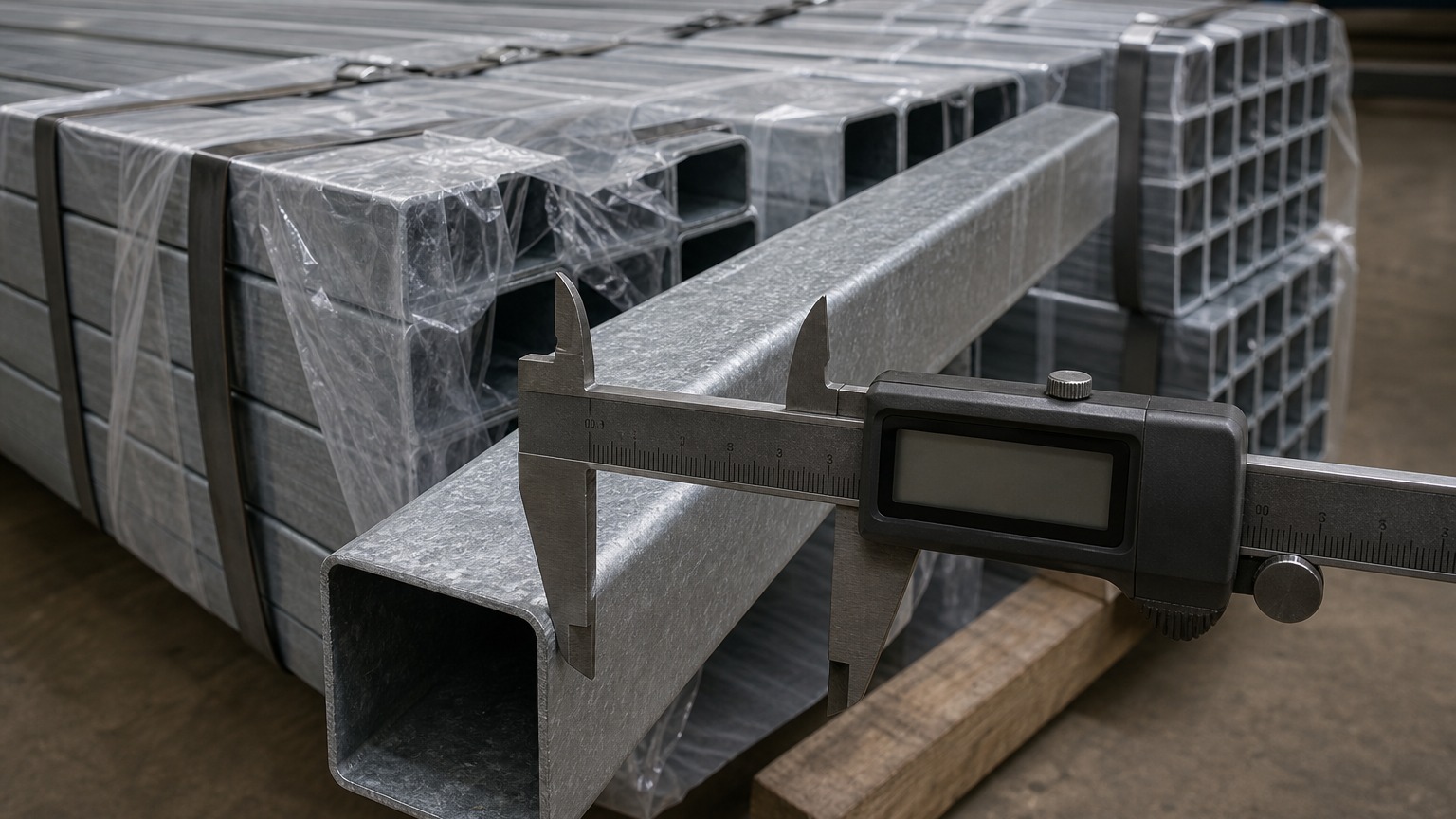
The third trap is describing the application instead of the product. A specification that says “tube for a mezzanine” leaves the supplier guessing about load, whereas one that says “60×60×2.5 mm square tube, ASTM A500 Grade B, hot-dip galvanized to 60 µm minimum, 6 m lengths, 12 tonnes, plastic film and steel band bundles” can be quoted, produced and inspected without a single clarification email. Length and end finish belong in the same sentence as the size, because cutting to a non-standard length adds processing time that must be priced into the delivery date from the start.
What to send with your enquiry
Send the drawing or the frame layout if you have one, the exact profile call-out, the standard and grade, the coating requirement, the quantity in metres, pieces or tonnes, the delivery port and the required date. If the load case is already fixed, include the required section properties so the wall thickness can be confirmed rather than assumed. That is the difference between receiving a catalogue price and receiving a quotation your engineer can sign off.
If any of those five items is still open for your project, send your sizes and quantities for a quotation and let our team review the specification before you commit. A short technical check at the enquiry stage is far cheaper than re-cutting a frame, re-galvanizing a batch, or rejecting a container of tube that met the price but not the requirement.
Conclusion: Which Square Tube Should You Specify?
Fix profile, wall, grade, standard and coating before comparing prices, then confirm them on the mill certificate. Square tube is specified by geometry and duty, never by price alone.