
Steel Import Process: How Do You Handle Documentation, Inspection and Shipping?
One missing certificate can hold a steel shipment at the port for weeks. The steel import process is a sequence you control, not a gamble you take.
Documentation, inspection, then shipping — in that order. Fix the HS code, the mill certificates, the inspection scope and the Incoterms before the goods leave the mill, and clearance becomes a routine administrative step instead of a commercial risk.
Transition: a steel import is not a single transaction but three projects running in parallel — a paperwork project, a verification project and a logistics project — and each one can stop the other two. The six sections below follow the order in which the decisions have to be taken: what the import process actually covers, which documents must exist before loading, how inspection is scoped and performed, how shipping terms and stowage are chosen, how HS classification converts into duty, and what a complete import checklist should contain before a purchase order is signed.
What Does the Steel Import Process Actually Cover?
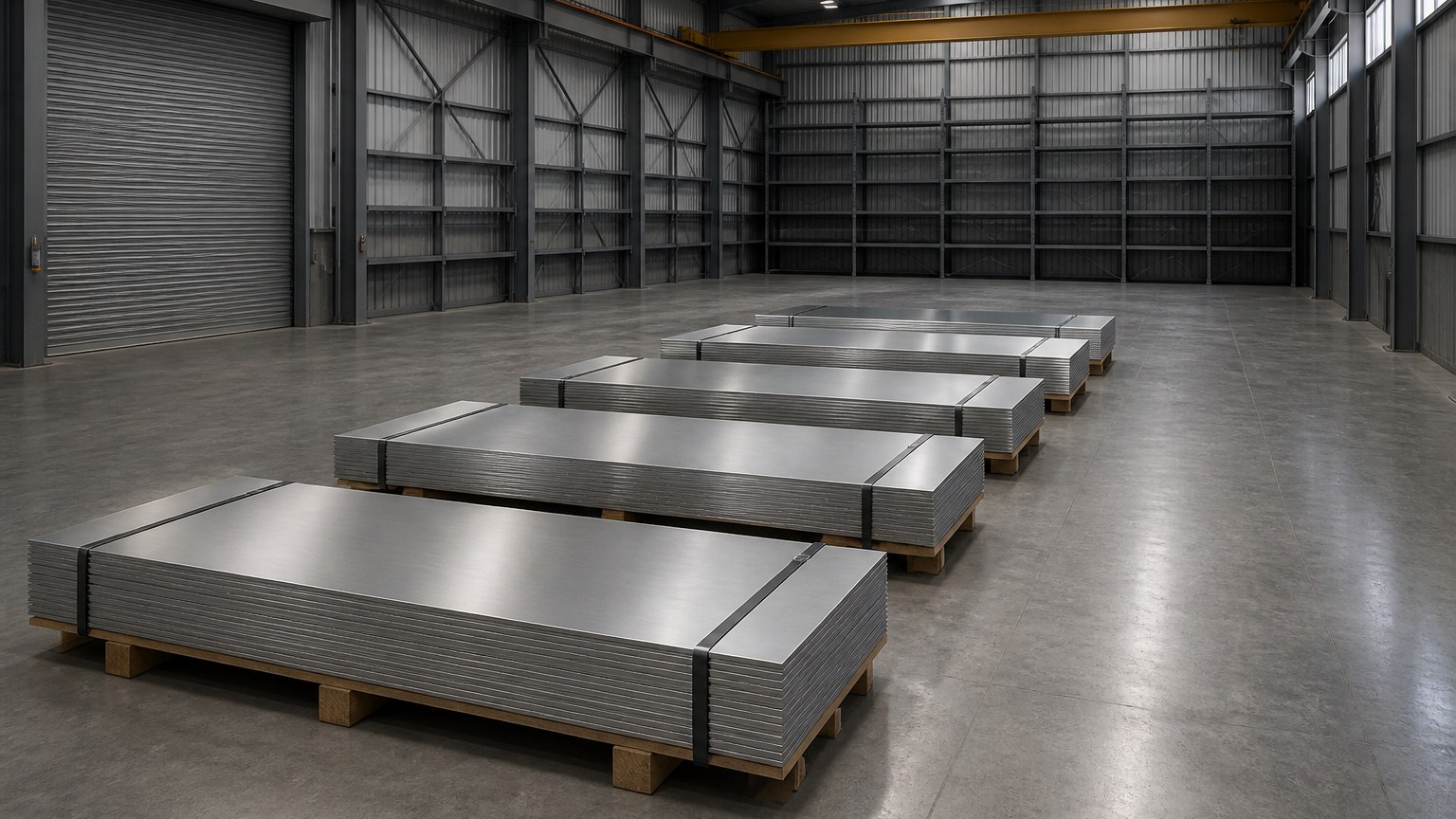
Importing steel is three projects at once: paperwork, physical verification and logistics. Most delays come from treating them as one.
It covers four phases: preparing compliant documents, verifying the material against the order, booking and loading the cargo, and clearing it at destination. Each phase carries its own deadlines, and one decision taken late resets the others.
Four phases, four deadlines
Document preparation comes first because it constrains everything downstream. The commercial invoice has to describe the goods in the terms the customs authority expects, the certificate of origin must match the invoice, and the packing list must agree with both. Verification comes second, because inspection results belong in the shipping documents rather than in a separate e-mail thread that nobody can find three months later. Booking comes third, once the cargo is described, quantified and confirmed as loadable. Clearance comes last, and it should require no new information at all — if the customs broker is asking the buyer for a document that did not exist at the mill, the sequence was broken somewhere earlier. Treating these as four dates in a project plan, rather than one open-ended task, is what separates an importer who clears in three days from one who clears in three weeks.
Why sequence matters more than paperwork volume
Importers often assume the difficulty scales with the thickness of the document file. It does not. A ten-line invoice for a single heat of material can clear faster than a thick file for a mixed consignment, because the variable that customs and the forwarder actually react to is internal consistency. Every document that contradicts another — a weight that differs between the packing list and the bill of lading, a grade designation written two different ways, a quantity stated in pieces in one place and tonnes in another — creates a query, and a query creates a dwell day. Standardising the description of the goods once, and reusing that exact wording in the invoice, packing list, certificate and booking, removes the largest class of delay at zero cost. The commercial terms that govern who is responsible at each stage, the Incoterms rules published by the International Chamber of Commerce, then determine which party has to act first.
Where the process usually breaks
The break point is almost never the customs declaration. It is usually the handover between the mill, the trading company and the forwarder: the specification that was agreed verbally and never written into the order confirmation, the inspection that was assumed to be included and was not, or the loading that was booked on a weight estimate that the final bundle count proved wrong. The whole sequence is cheaper to control than to repair, which is why the steel import process works best when one party owns the description of the goods from the enquiry to the bill of lading.
Which Documents Must Be in Place Before a Steel Cargo Ships?
A steel shipment carries two document sets: commercial papers that describe the transaction, and technical papers that describe the material. Both must agree.
The core set is a commercial invoice, packing list, bill of lading, certificate of origin, mill test certificates documenting the steel, and an insurance certificate where the term of sale requires one. The technical documents are what make steel different from general cargo.
The core document set
The commercial invoice states seller, buyer, description, quantity, unit price, total value, currency and delivery term, and it is the document customs reads first. The packing list breaks the shipment into bundles, coils or lifts with their weights and dimensions, so that the cargo can be checked in and unloaded without opening every package. The bill of lading is the carrier’s receipt and, in negotiable form, a document of title. The certificate of origin establishes where the goods were produced, which decides whether a preferential duty rate is available. If the sale is on terms that place insurance obligations on the seller, the insurance certificate belongs in the same file, and the coverage level should be stated rather than assumed. Each of these documents is ordinary, and each becomes a problem only when it contradicts another one.
Certificates: what the buyer is entitled to expect
For steel, the mill test certificate is the document that ties the physical material to the order. It reports heat number, chemical composition and mechanical properties, and it is the only way a buyer can verify after arrival that the plates received are the plates that were ordered. A certificate issued by the manufacturer for its own product is one level of assurance; a certificate countersigned by an independent inspection representative is a higher level, which is why purchase orders frequently specify the certificate type as well as the material grade. This is not a formality: the certificate is what a fabricator, a notifying body or a project engineer will read when the material is used in a structure or a pressure application, and a missing heat number on a certificate can make otherwise acceptable material unusable for its intended purpose.
Consistency is the requirement, not volume
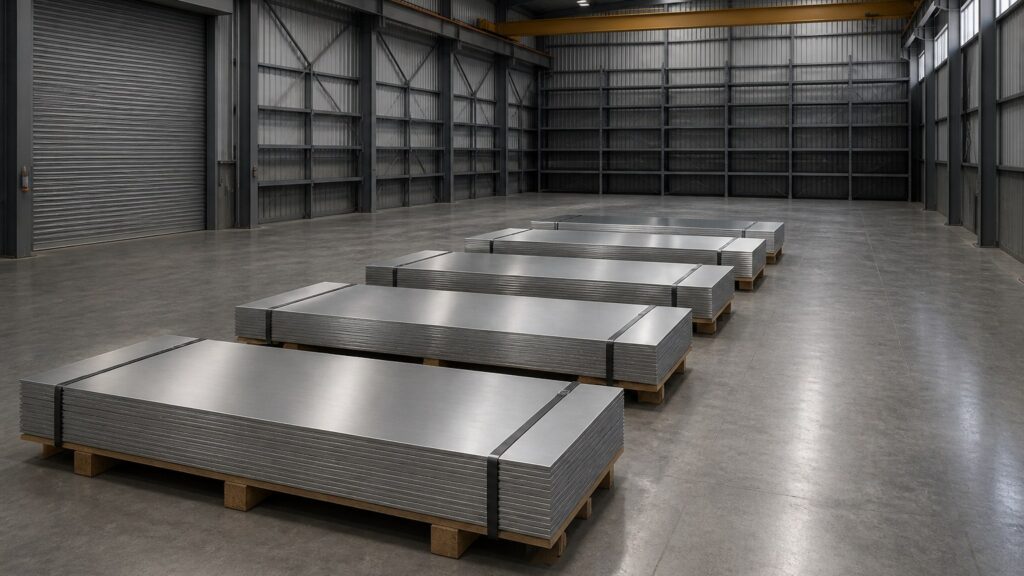
The most useful habit in document preparation is to write the goods description once, in the form that the customs authority will read, and then copy it without alteration into every downstream document. “Cold rolled stainless steel plate, grade 304, 8 mm, 2B finish, 1500 × 3000 mm” is a description that survives translation into an invoice line, a packing list entry, a certificate reference and a booking note. The corresponding product, a 304 stainless steel plate 8 mm 2B finish, illustrates why the dimensions belong in the description: at a density of 7.93 g/cm³, one 1500 × 3000 mm plate of 8 mm thickness weighs about 285 kg, and the plate count and the tonnage in the file have to reconcile to the same figure. When they do, no query is raised.
How Is Steel Inspected Before Loading and at Destination?
Inspection is cheapest at the mill and most expensive at the destination port. Specify it before the material is packed, not after it arrives.
Inspection covers three things: identity (is this the grade ordered?), dimensions (do thickness, width and length sit within tolerance?) and condition (are there defects, rust, edge damage or handling marks?). Mill certificates document the first; physical checks confirm the others.
Inspection before loading
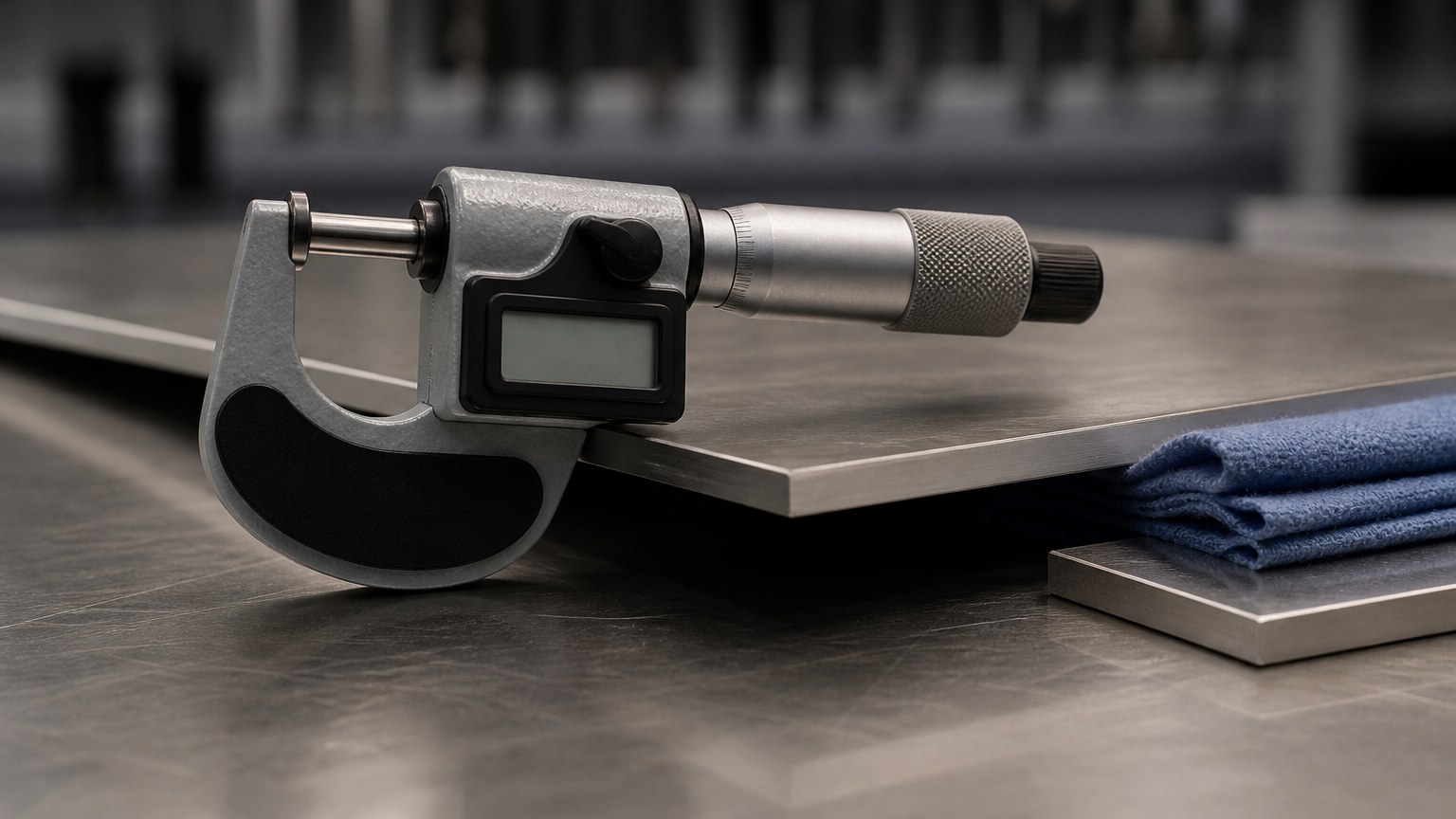
Pre-shipment inspection at the mill is where the leverage is. Positive material identification confirms that the grade delivered is the grade ordered, and it is the check that catches the most expensive class of error, because a substituted grade may look identical and fail only in service. Dimensional verification — thickness at several points across a plate, width and length against the ordered figures — is what a buyer can verify independently once the material is in hand. Visual inspection for edge condition, roll marks, scratches and surface finish follows next, with the acceptance level agreed in advance rather than negotiated after the fact. Where the material is flat-rolled stainless, the governing general requirements for dimensions, tolerances, finish and packaging are set out in the ASTM A480/A480M specification for flat-rolled stainless steel plate, sheet and strip, which is why a purchase order usually references both a material specification and a general requirements specification.
What a buyer should specify
An inspection clause is only useful if it names three things: scope, standard and remedy. Scope defines which properties are tested, on what sample size and at what frequency. Standard defines the acceptance criteria — the tolerances on dimensions, the permitted surface condition, the test methods used, and whether the check is a mill internal inspection or an inspection witnessed by a third party. Remedy defines what happens when a result fails: re-test, re-selection, replacement or credit. A buyer who writes those three elements into the order confines later arguments to genuine disputes instead of matters of interpretation, and can compare offers from two suppliers on the same basis, because both are pricing the same inspection burden. This also disciplines price comparison: an offer that excludes third-party witnessing is not cheaper, it simply moves the inspection cost to the destination port where the material is already difficult to send back.
Inspection at destination
A destination inspection is a confirmation, not a discovery exercise, and it should be designed to be quick. Count bundles against the packing list, check that the declared weight is plausible, look for transit damage and water ingress, and verify heat numbers on the material against the certificates. Then take documentary custody: photograph the bundles as received, keep the bill of lading and the certificates together, and record any claim in writing within the period allowed by the sale terms and the insurance policy. Where the order contained several heats of one grade, the reconciliation is heat by heat rather than by total tonnage, which is faster to do from the certificate set than from the material itself. Dimensional background for plate products — the standard range of thicknesses, sizes and tolerances that inspection will be measured against — is summarised on our stainless steel plate pages, which states each product’s dimensions and finish together, as an order would.
How Do Shipping Terms and Stowage Affect a Steel Import?
Steel is heavy, so it reaches a payload ceiling before it fills a space. The shipping decision is therefore about weight, handling and risk rather than about volume.
Choose the Incoterm first, because it decides who books the freight, who insures the cargo and where risk transfers. Then design the stowage for lifting, lashing and moisture, and confirm the declared weights before booking.
Choosing an Incoterm for steel
Incoterms define the point at which risk and cost pass from seller to buyer, and the choice changes the importer’s exposure well beyond the freight invoice. On sea terms such as FOB, the buyer controls the carrier and the freight rate but also owns the risk from the moment the cargo is on board, which means port handling and stowage quality become the buyer’s commercial problem. On CIF or CFR, the seller arranges carriage and the price includes it, so the buyer trades rate control for simplicity; where insurance is required under the term, the default cover level is defined by the rule and can be raised by agreement. The structure of these rules — eleven terms in the 2020 edition, with some usable for any mode of transport and others reserved for sea freight — is summarised in the reference material on Incoterms and international commercial terms. For a first shipment with a new supplier, a buyer who wants control of the stowage should book the freight; a buyer who wants a single landed figure should take a delivered or CIF basis and verify the stowage standard in the contract.
Stowage, lashing and weight
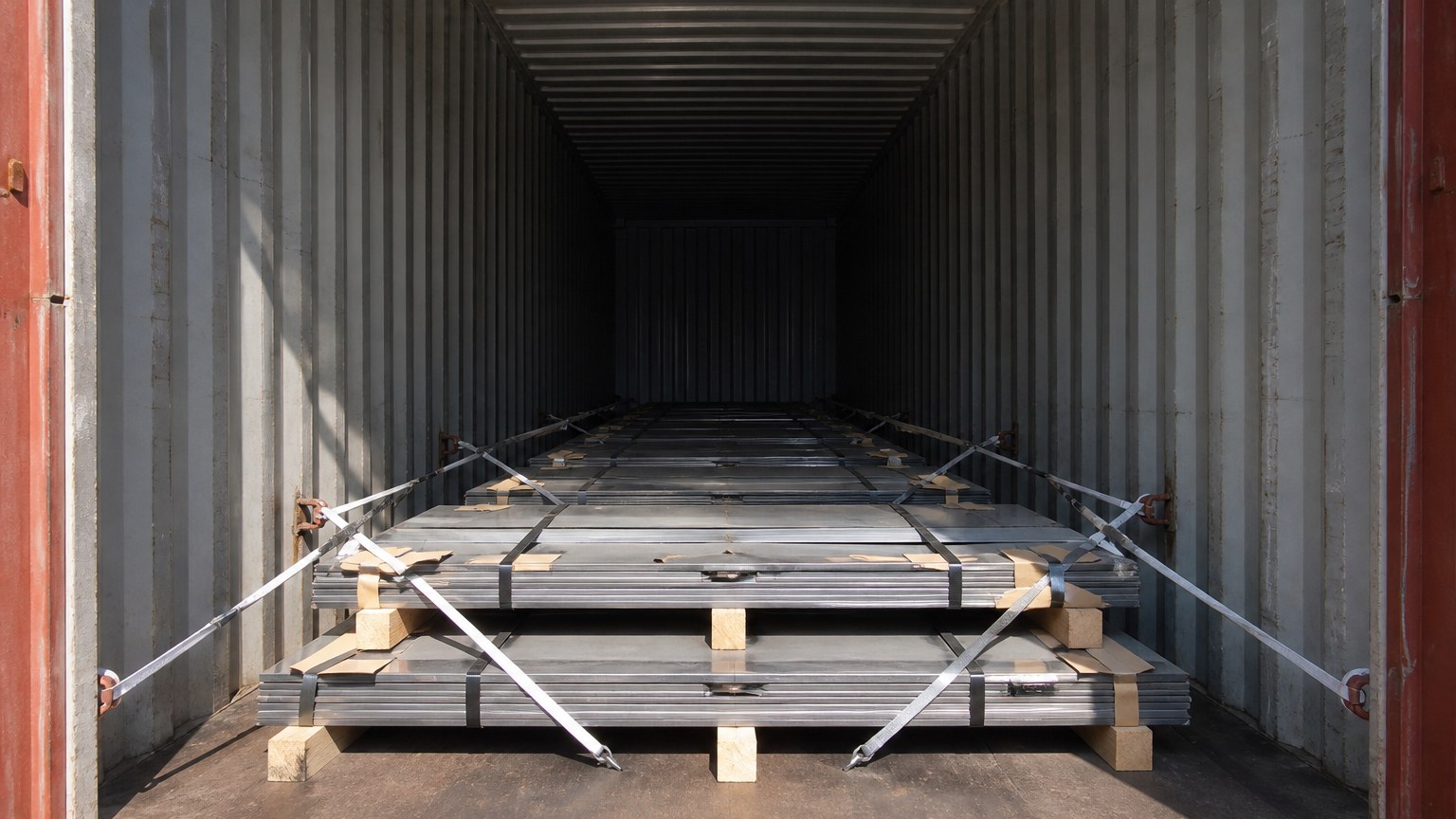
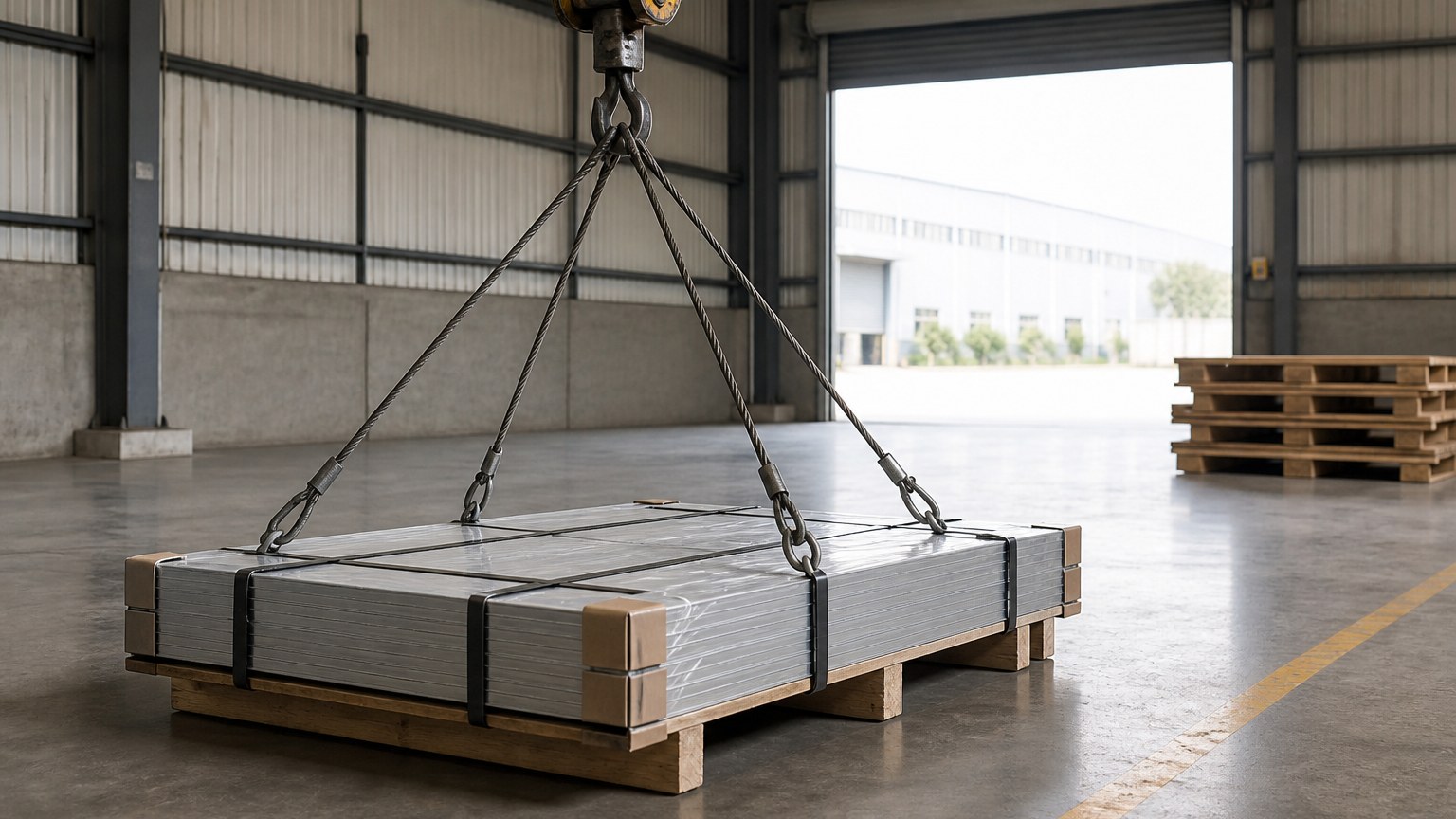
Flat product is stowed flat, on dunnage, with the bundle edges protected and the mass distributed over the container floor rather than concentrated on one end. Bundles are secured so that they cannot shift in a seaway, and the lifting points are agreed in advance, because a bundle that has to be lifted by its banding can be damaged before it ever leaves the yard. The weight calculation is the constraint that decides how many plates travel together. Taking the example above, a plate weighing about 285 kg means a shipment of 25 tonnes corresponds to roughly 87 plates — a number the packing list, the booking and the internal transport plan all have to agree on. Where the total exceeds the payload the route allows, the practical choices are to split the release into two shipments, to move to breakbulk for heavier flat product, or to adjust the plate mix, and the decision is cheaper before production than after.
Packing, and why it belongs in the contract
Packing is a specification, not a default. Steel banding, edge protection, wooden cradles, moisture control and end protection all change the declared gross weight, and therefore the freight calculation, as well as the condition of the goods on arrival. Two suppliers offering the same net tonnage can invoice different gross weights for the same material, so the packing method belongs in the order, in the booking and in the shipping documents. Where the cargo will be stored outdoors at destination, the packing and coating decisions interact with corrosion risk, and specifying them at the enquiry stage is far cheaper than reclaiming a rusted consignment afterwards.
How Do HS Codes and Customs Clearance Change the Landed Cost?
Duty is calculated on the value of the goods as classified. Get the classification wrong and the error surfaces as a cost, not as a question.
Classification is the first decision: fix the six-digit HS subheading before the price is agreed. Duty, value-added tax, inspection fees and any anti-dumping measure then follow from that subheading and from the origin declared.
Classification is the first decision
Steel products sit in different chapters and subheadings depending on what the product actually is, and a description written for commercial convenience rather than for tariff purposes invites disagreement at the border. Flat-rolled stainless plate, welded tube and seamless pipe are classified differently, and within a family the subheading can turn on dimensions, alloy content, finish or intended use. The classification system itself is administered by the World Customs Organization and revised every five years, with a six-digit subheading that is common across participating countries and further national digits added on top; the structure and the five-year revision cycle are described in the WCO nomenclature overview. Because the first six digits are internationally shared, a classification agreed once with a supplier is a reusable asset — provided the product description genuinely supports it, which is why the wording used in the invoice and the certificate of origin should be the wording the classification was based on.
Clearing at destination
Clearance is an information handover rather than a negotiation. The broker needs the invoice, packing list, bill of lading, certificate of origin and classification, and needs them consistent; where the value declared is compared against a reference value for the same product, a low invoice without supporting documents is the fastest way to a valuation query. Importers importing into markets with additional national digit requirements should confirm the format before shipment: the United States, for example, expands the six-digit subheading to a ten-digit number, a structure set out by the International Trade Administration’s guidance on HS codes, while other markets use their own national extension. Agreeing the code with the forwarder or broker before the goods are loaded costs an afternoon and removes the largest single source of unexpected cost in an import programme.
Where landed cost leaks
Landed cost is decided long before the goods arrive, and the leaks are predictable. Classification errors produce duty adjustments, storage and penalties. Weight discrepancies between the packing list and the arrival weight produce demurrage while the file is corrected. Quantity assumptions drive freight: a weight-dense cargo that outgrows its booked equipment needs a second shipment at full cost, which is why quantity planning for heavy product follows the same discipline as the quantity estimation used for steel pipe procurement — convert the requirement to weight, compare it with payload, and only then release. Finally, insurance chosen by default rather than by decision shows up as a claim shortfall, not as a premium saving.
What Belongs on a Steel Import Checklist?
A checklist is not bureaucracy; it is the shortest route to a clean clearance. Write it once and reuse it on every shipment.
Six items: product description and HS code, quantity and weight basis, certificate requirements, inspection scope and standard, Incoterms and insurance, packing and stowage. Confirm all six in writing before the purchase order is released.
A working checklist
Before the order: fix the exact product description with grade, dimensions and finish; agree the six-digit classification; state the quantity in both pieces and tonnes and record which one governs; name the material standard and the general requirements standard; specify the certificate type and whether third-party witness is required; agree the Incoterm and the insurance cover level; and record the packing method and declared gross weight. Before loading: confirm the inspection results and attach them to the file; reconcile bundle count, plate count and weight against the packing list; photograph the cargo as loaded; and check that the goods description on the bill of lading matches the invoice exactly. Before arrival: send the document set to the broker, pre-pay duty where the scheme allows, and book internal transport on the actual weight rather than the estimated one.
What to send a supplier
The enquiry that produces the fewest problems in return is the one that states the description, the quantity basis, the standard, the certificate requirement, the inspection scope and the destination port, in that order, and says which of them are already fixed. A supplier who receives that enquiry can price the inspection burden, the packing and the documents as line items rather than as assumptions, and the resulting offer can be compared against a second offer without rebuilding the requirement from scratch. This is the point at which an import programme stops being a series of surprises. If you want the document set, the classification wording, the inspection scope and the packing method confirmed against a specific order — including a 304 stainless steel plate programme of the type described above — send your specification and destination port to our export team and we will return the figure with the assumptions shown.
Conclusion: How Do You Run a Steel Import Process Without Delays?
Describe the goods once, classify them early, inspect them at the mill, book on actual weight, and keep every document consistent with the next. The rest is routine.