
Plasma vs Laser vs Waterjet Cutting Stainless Steel: Which Process Should You Choose?
Cut stainless plate the wrong way and it warps, discolours and comes back for rework. Three processes dominate the shop floor, and choosing badly is an expensive habit.
Plasma cuts stainless steel fastest and handles the thickest plate; laser gives the tightest tolerances and cleanest edges on thin sheet; waterjet cuts any thickness with no heat at all. For most 304 or 316 work, thickness, edge finish and heat tolerance decide.
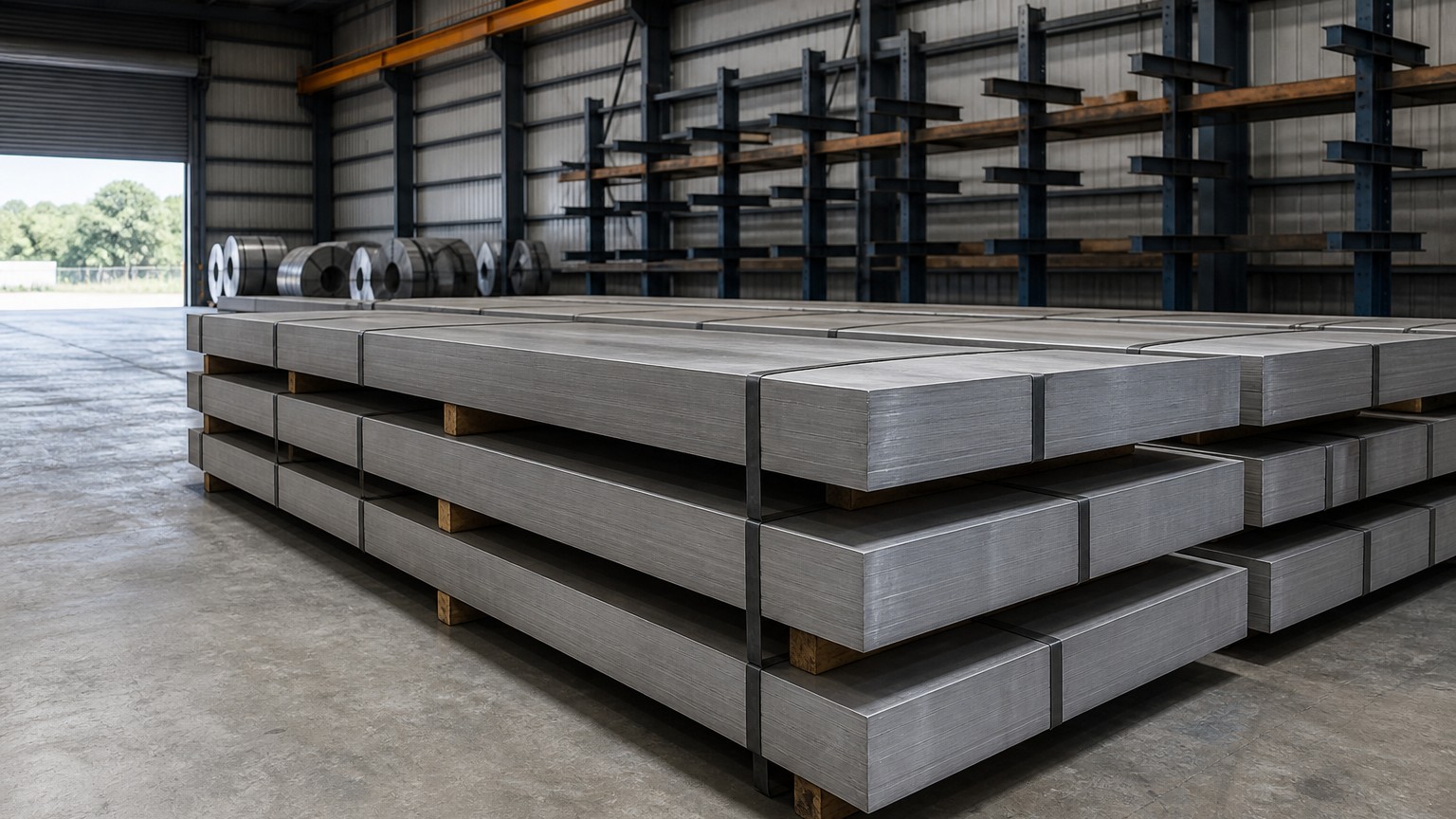
Stainless steel punishes careless cutting harder than mild steel does, because the same alloy that resists corrosion also holds heat, work-hardens under pressure and discolours when it overheats. Instead of arguing for one method, the sections below compare how each process removes metal, what it leaves behind on the cut face, which thickness range it suits, what it costs to run, how heat changes the material, and how to prepare plate so that the first cut is the one you keep.
How Do Plasma, Laser and Waterjet Cutting Actually Remove Metal?
Every method removes metal by a different mechanism, and that mechanism explains almost everything that happens afterwards.
Plasma melts the steel with an electric arc and blows the molten metal out of the kerf with high-velocity gas. Laser melts and vaporises it with a focused beam. Waterjet erodes it with abrasive particles suspended in a very fine, extremely high-pressure water stream.
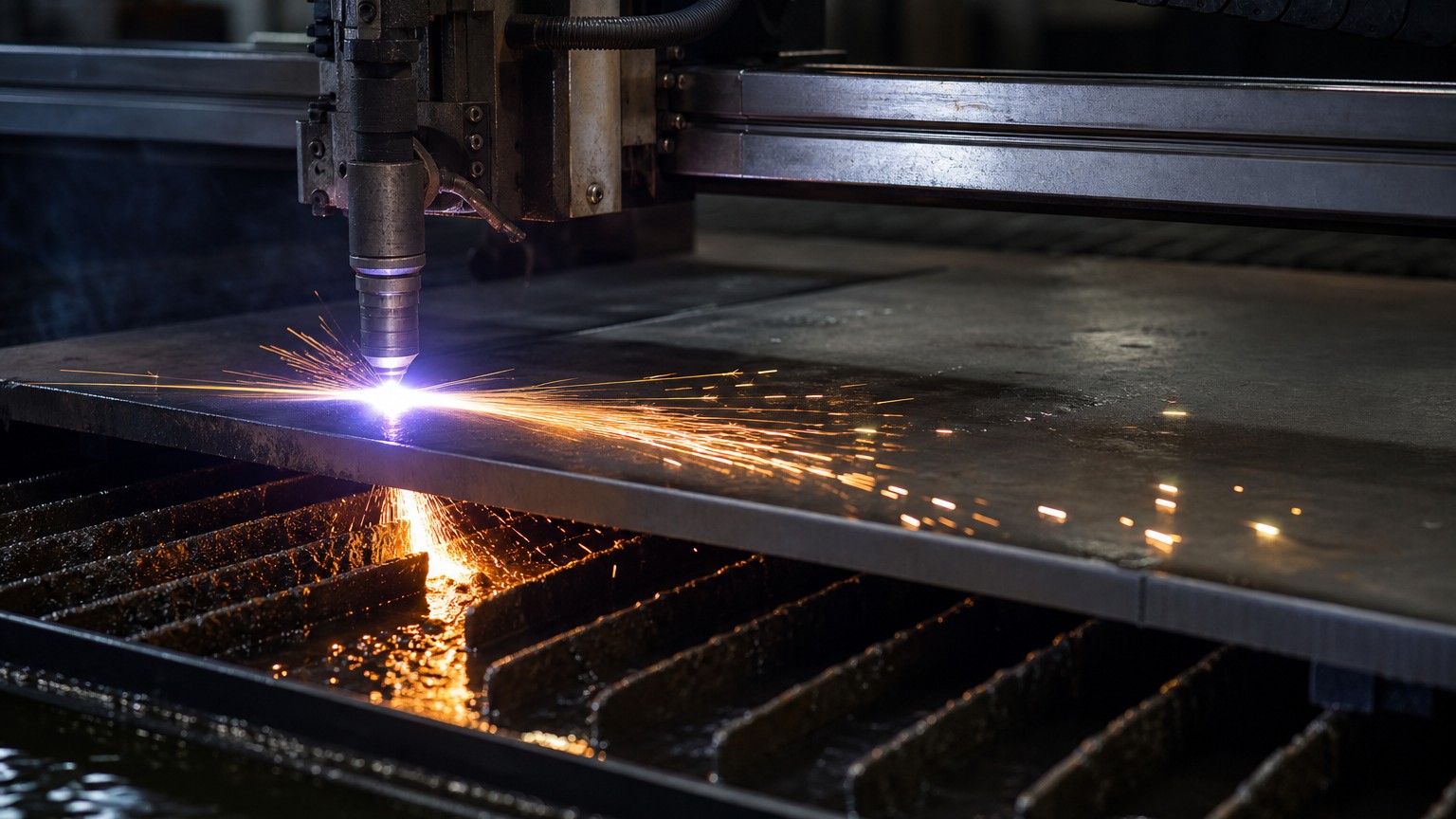
Dive deeper: three mechanisms, three sets of consequences. In plasma cutting, compressed gas is forced through a narrow nozzle and an electrical arc inside the torch ionises that gas into plasma, a conductive channel hot enough to melt steel. The arc runs from the electrode to the workpiece, and the gas stream does the rest by pushing molten metal clear of the cut. Because the process depends on a completed electrical circuit, it works only on conductive metals – which is why plasma cutting handles steel, stainless steel, aluminium, copper and brass but not ceramics or plastics. The parts that wear are the electrode, usually a copper body with a hafnium insert, and the nozzle; both are consumables whose life is measured in arc starts rather than in metres cut, so every pierce carries a small cost. Modern CNC tables hold a tilting head and cut weld preparations directly into the edge, which removes a secondary grinding operation on heavy sections. Laser cutting takes the opposite approach. A focused beam concentrates energy into a spot small enough to melt or vaporise the metal locally, and an assist gas blows the molten material out of a kerf only a fraction of a millimetre wide. The mechanism is recorded plainly in the general description of laser cutting: a narrow, low-distortion cut with a very small heat-affected zone, achieved because the energy density is high and the interaction time is short. Fibre sources have made that capability routine on stainless sheet, using nitrogen as the assist gas so the cut edge stays bright instead of oxidised. Waterjet cutting shares nothing with either. An ultra-high-pressure pump drives water through a tiny orifice, and abrasive particles – normally garnet – are drawn into the stream to do the cutting by erosion rather than by heat, as the overview of the water jet cutter sets out. There is no arc, no beam and no molten pool, so the material is never heated above ambient; the trade-off is speed, abrasive consumption and a cutting bed that is permanently wet. The practical consequence for buyers is simple: whatever a supplier promises about edge finish, thickness capability or distortion begins with which of these three mechanisms the shop actually owns. A workshop with a fibre laser and a waterjet will quote your heavy plate differently from one with plasma only, and the difference is capability, not negotiation.
Which Process Gives the Best Cut Quality on Stainless Steel Plate?
Cut quality is not one number; it is a set of measurable deviations, and a published standard already classifies them.
Laser produces the narrowest kerf and the best edge finish on thin plate. Waterjet leaves a matte, oxide-free edge with a slight taper. Plasma cuts fastest but leaves a rougher, darker edge and a heat-affected zone unless nitrogen and fresh consumables are used.
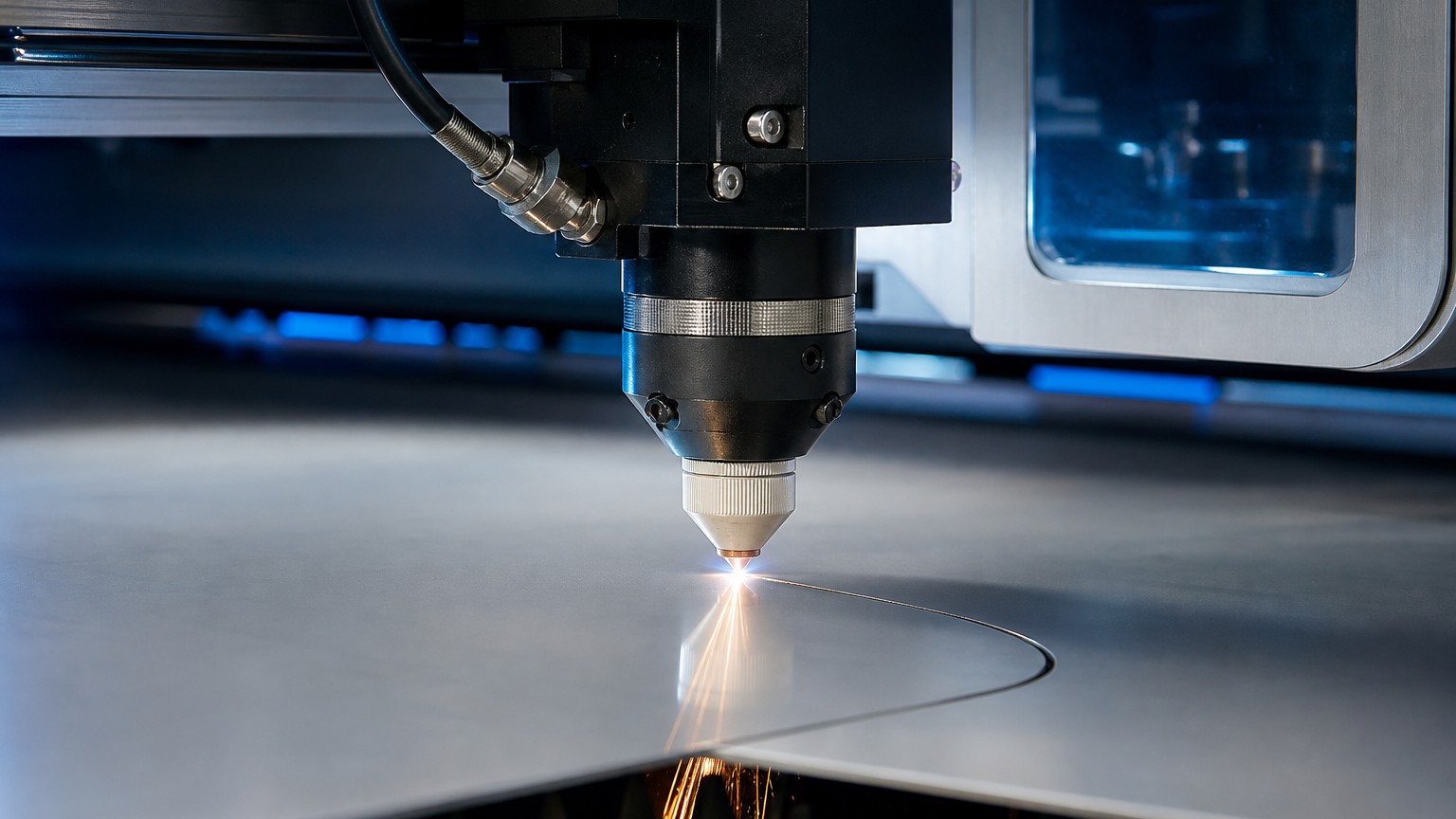
Dive deeper: reading a cut edge the way an inspector does. The reference document here is ISO 9013:2017, which sets out geometrical product specifications and quality tolerances for classifying thermal cuts. It applies to flame, plasma and laser cuts, and its scope is worth noting for two reasons. First, it gives thickness limits per process: plasma cuts from 0.5 mm to 150 mm, laser cuts from 0.5 mm to 32 mm, and flame cuts from 3 mm to 300 mm. Second, it states that applying the same classification to parts produced by other cutting processes would have to be agreed separately, which is the standards world acknowledging that waterjet quality is measured on its own terms. Within the thermal processes, an inspector looks at four things. Perpendicularity describes how far the cut face leans away from a true right angle; it worsens as the kerf widens through the plate, so thick plasma cuts taper more than thin laser cuts. Kerf width tolerance covers how consistently the cut tracks its programmed path. Surface roughness is judged on the cut face itself, and it is where laser and waterjet both outperform plasma on stainless. Dross – re-solidified metal clinging to the bottom edge – is the defect that decides whether a part needs a second operation before welding or painting, and on stainless it appears quickly when cutting parameters or gas purity drift. Alongside those measurable items sit two visible ones. Heat tint is the straw, blue or grey oxide film left by thermal cutting; it is a cosmetic defect on architectural work and a corrosion concern where it is not removed, because the altered surface layer has lost the passive film that protects the parent metal. Heat-affected zone is the underlying metallurgical change discussed in its own section below. Finish also has to be matched to the surroundings, because a rough plasma edge next to a polished face reads as a defect even when the dimension is right – which is why it pays to understand how 2B and No.4 finishes differ before you specify cut edges and sheet finish together rather than in isolation. The honest summary is that laser and waterjet produce a better cut face on stainless, plasma produces a faster one, and the cost of closing the gap on plasma is consumables, gas purity and operator attention.
How Does Plate Thickness Decide Which Cutting Process You Use?
Thickness narrows the field faster than any other single factor, and it does so in predictable bands.
From roughly 0.5 mm to about 6 mm, laser wins on speed, kerf and finish. From 6 mm to around 50 mm, plasma is usually the economical choice, with waterjet used where the edge must stay cold. Beyond that, plasma and waterjet dominate and laser options run out.
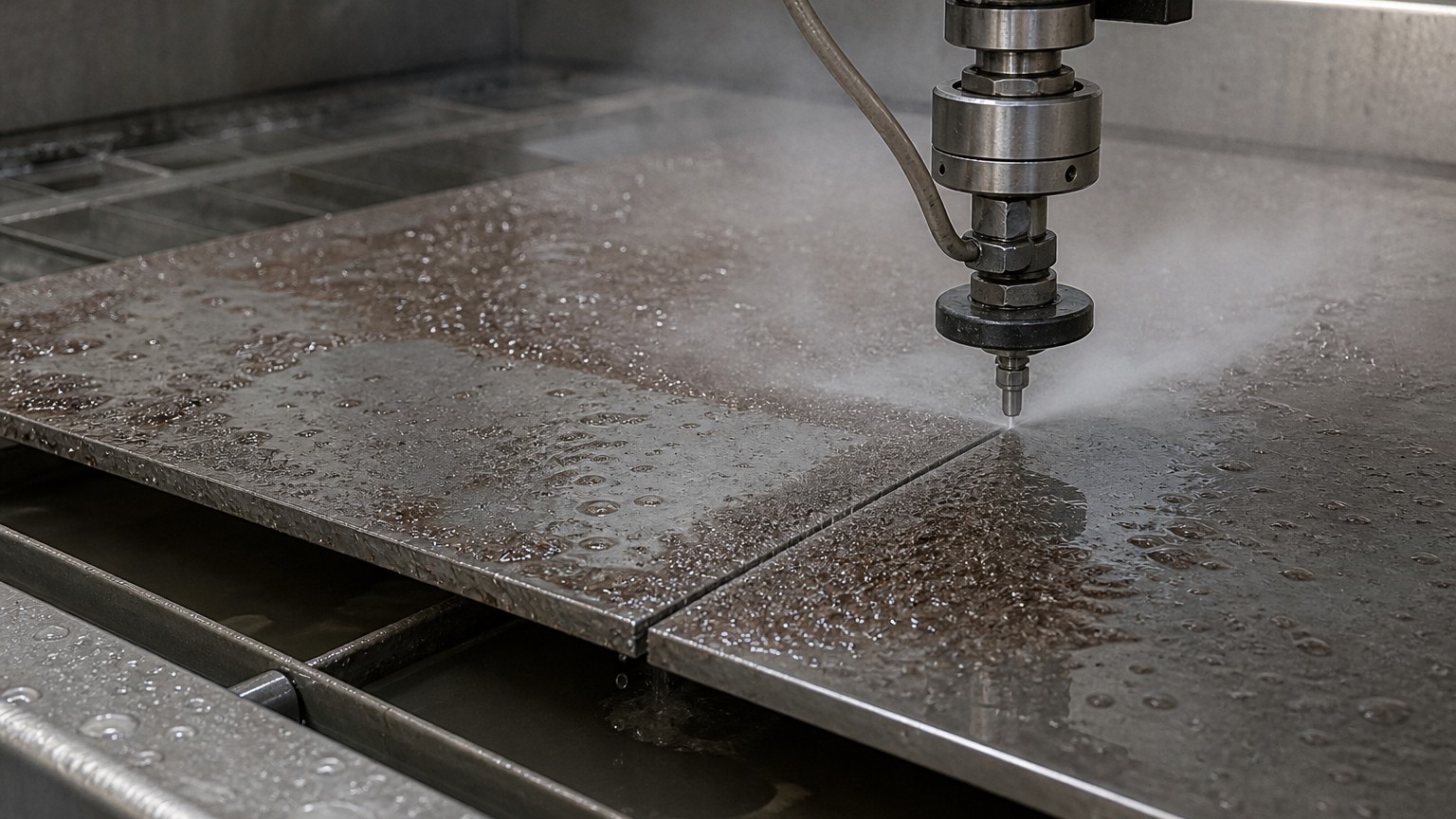
Dive deeper: process windows and how to read them. The bands are not arbitrary; they follow the physics of each mechanism. A laser beam loses focus and energy density as it travels deeper into a kerf, so the practical ceiling on stainless sits in the 20–32 mm region, which is also where the ISO 9013 scope for laser cuts ends. Sheet work therefore belongs to laser almost by default: a 1 to 3 mm panel can be nested densely, cut at high speed with a kerf well under a millimetre, and stacked straight into a bending cell with no secondary edge dressing. Plasma has the opposite profile. It cuts thick plate well because the arc and gas stream are not degraded by depth in the same way, and machine torches reach roughly 150 mm on steel, so a 10 mm or 20 mm plate is comfortable territory. That thickness range is exactly where most structural and process work sits, which is why heavy stainless steel plate delivered as 1500 × 3000 mm or 1500 × 6000 mm sheets is so often plasma cut, and why No.1 hot-rolled finish with its dull, mill-scale-free surface is the normal pairing for that class of material. Where the plate must be thick and the edge must stay cold, waterjet takes over, with the practical ceiling set by pump pressure and cutting time rather than by the material: the same machine that cuts 3 mm sheet will cut 100 mm plate, just slowly, and the abrasive bill rises in step with the cut length. Two planning questions settle most cases. The first is what the part needs that the plate cannot give back: if a hole must be within a few hundredths of a millimetre, or if a 0.3 mm kerf is what keeps the nesting economical, laser is the only answer. The second is what the plate can tolerate: if the finished part will be a pressure boundary, a machined mating face or a welded assembly that must pass corrosion testing, the heat question in the next sections decides more than the price per metre. Before committing a large order, compare a thickness chart against your own drawings, because a process chosen for a 3 mm prototype can be the wrong one for the 12 mm production batch – and a defect discovered on a prototype sheet is cheap next to one discovered on a delivered plate. A quick look at the stainless steel sheet thickness chart confirms where sheet gives way to plate and therefore where the process assumption should change with it. Where the project is dominated by heavy 10 mm material rather than thin sheet, a 304 stainless steel plate in 10 mm No.1 finish is the practical starting point, and it is also the thickness at which the choice between plasma, laser and waterjet stops being academic.
What Do Plasma, Laser and Waterjet Cutting Cost to Run?
Comparisons usually start with the hourly machine rate, which is the least informative number in the file.
Quoted per metre of cut, the ranking is unstable: laser is cheapest on thin sheet, plasma on mid-thickness plate, waterjet on thick or heat-sensitive material. The honest comparison is cost per finished part, including consumables, gas or abrasive, loading, and any edge dressing.
Dive deeper: where the money actually goes. Every thermal and abrasive process has the same five cost buckets, and they behave differently. Capital and floor space come first: a fibre laser table and an abrasive waterjet cell are both significant investments, which is why most fabricators own one or two processes and subcontract the third rather than buying a machine that idles. Consumables come second. Plasma burns electrodes and nozzles, and its cost scales with the number of pierces, so a programme full of small holes is far more expensive than the same cut length in one long profile. Laser consumes protective lenses, nozzles and assist gas; nitrogen for stainless is the dominant variable, and purity affects both edge quality and consumption. Waterjet consumes abrasive by the kilogram, and because the abrasive is entrained continuously while the pump runs, a slow thick-plate cut carries a very different abrasive cost from a fast thin-sheet cut. Utilities come third. A waterjet cell spends its money on pump maintenance and electricity; a plasma table on compressed air, gas and fume extraction; a laser on power and chiller load. Labour is the fourth bucket and the one most often underestimated. Laser and waterjet cut cells run largely unattended once the programme is proven, so one operator can supervise several machines; plasma is faster per metre but usually needs more attention to consumable condition around stainless work. The fifth bucket is post-processing, and on stainless it is frequently the largest. Dross removal, heat tint pickling or grinding, edge deburring and any straightening after distortion all consume time at a rate that a quote per cut metre never shows. That is why two quotations for the same part can differ by a third without either being dishonest. The practical way to compare is to cost the finished part at your own rates: add cut time, setup and programming, consumables and gas, dressing, and the scrap risk attached to a process that might introduce distortion. Where a buyer controls none of the cutting, the useful question for a supplier is not the machine rate but which process they intend to run and what the delivered part will need afterwards, because that answer carries every one of the five buckets.
How Does the Heat from Cutting Change Stainless Steel?
Heat is the hidden specification, because it leaves no dimension behind that a tape measure can catch.
Laser introduces a narrow heat-affected zone, plasma a wider one, and waterjet none at all. On stabilised or low-carbon grades that is tolerable; on standard 304 in corrosive service it becomes the reason a part fails inspection later.
Dive deeper: what the heat-affected zone really is. Stainless steel resists corrosion because chromium in the alloy forms a thin, self-repairing passive film in the presence of oxygen. Around a thermal cut, three things disturb that balance at once. The cut face is melted and re-solidified, so its structure is not the wrought structure the mill rolled. Immediately behind it sits a heat-affected zone where the metal never melted but reached temperatures high enough to change its microstructure. On top of both sits an oxide film that is visually obvious as heat tint and functionally significant, because the surface under that film has been depleted of chromium. The mechanism that makes this matter is sensitisation. In standard grades such as 304 or 316, carbon in the alloy can combine with chromium at elevated temperature and precipitate as chromium carbides at the grain boundaries, pulling chromium out of the surrounding metal; the boundaries then corrode preferentially, which is how intergranular attack begins long before any visible loss of section. The low-carbon grades exist precisely to remove that risk. This is the reason ASTM A240/A240M, which covers chromium and chromium-nickel stainless steel plate, sheet and strip for pressure vessels and general applications, specifies carbon limits as a primary requirement, and why 304L and 316L are the default specification where a cut or weld edge will sit in a chemical, marine or hygienic service. Waterjet sidesteps the whole question, because abrasive erosion never raises the material above ambient temperature; there is no melted layer, no sensitised band and no tint to remove. That single property is why waterjet is chosen for thick stainless that will be welded into vessels, for parts that cannot be straightened after distortion, and for any job where pickling or grinding a cut edge is more expensive than cutting it slowly in the first place. Between laser and plasma the difference is one of scale rather than kind: both heat the edge, and both leave a zone whose width grows with thickness, cut speed and gas choice. The response is the same either way – use clean, dry assist gas, keep parameters inside the supplier’s window, remove heat tint mechanically or chemically before service, and specify low-carbon grades where the consequence of an altered boundary layer is a failure rather than a cosmetic complaint. In corrosive duty, the cheapest cut is never the one that leaves oxide on the edge.
How Should You Prepare Stainless Steel Plate Before Cutting and Verify the Result?
Most cutting complaints trace back to preparation, not to the machine, and the rest to a verification step that never happened.
Support the plate so it cannot shift, keep carbon steel tools away from the surface, prove the parameters on a scrap coupon, then check the first part before running the batch. Measure kerf, dross, squareness and dimension and keep the records.
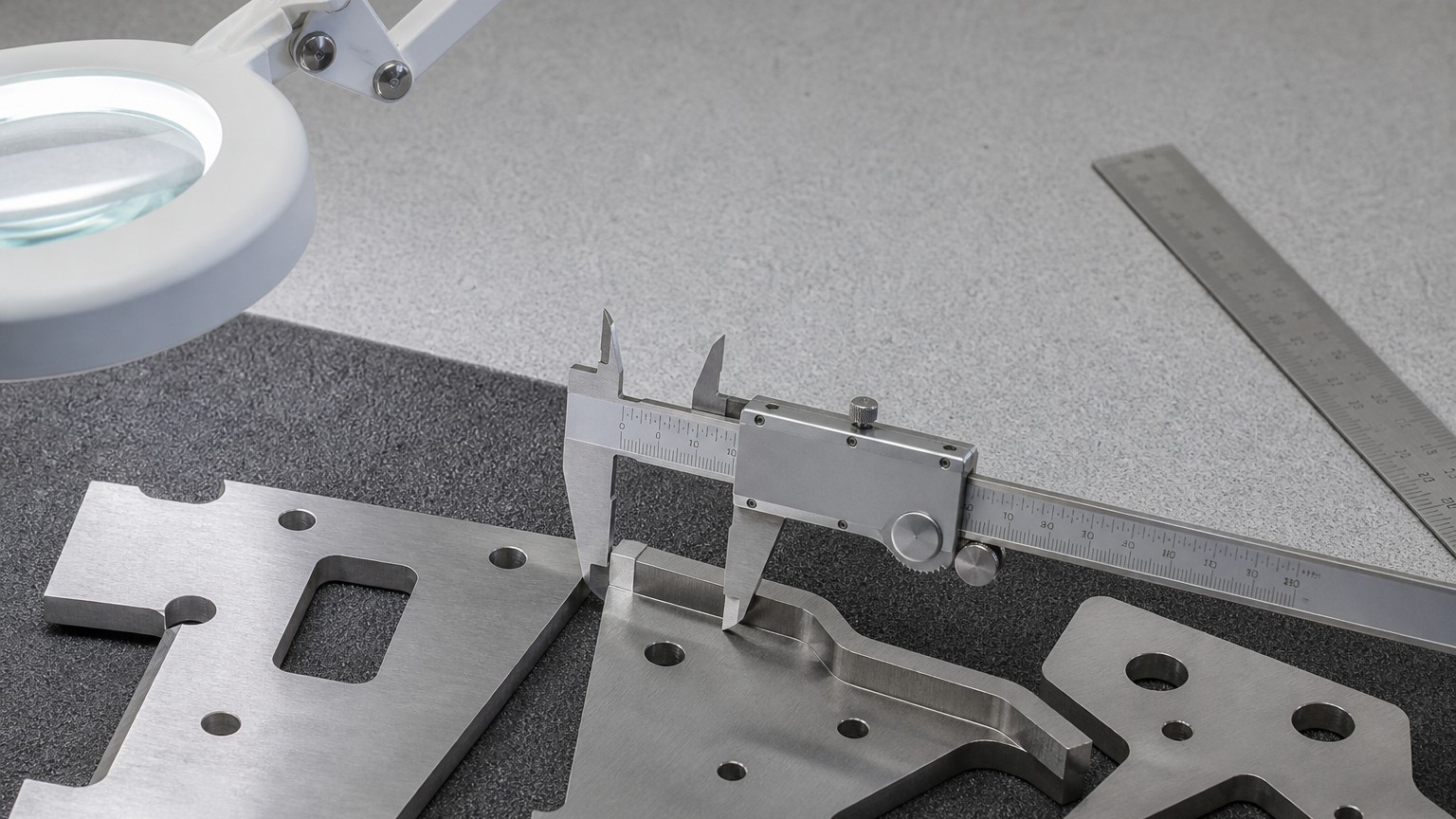
Dive deeper: a preparation and verification routine that prevents rework. Preparation begins with contamination control, because stainless steel is unforgiving about it. Grinding sparks, steel shot, iron particles from a wire brush or swarf from a carbon steel bench will embed in the surface and later appear as rust spots blamed on the material; the fix is dedicated stainless tools, clean slings and a separate handling area. The protective plastic film that protects the surface during transport must be removed far enough back from the cut line that it cannot melt into the kerf, but not so far that the rest of the sheet is exposed during handling. Marking should use paints or pens specified for stainless rather than a general-purpose marker that leaves residues, and any adhesive-backed template should be taken off before cutting rather than after. Support matters most on thick plate. The sheet must sit flat on the cutting bed without rocking, because movement mid-cut shows up as an out-of-square corner or a broken consumable; on long parts, allow for the weight of the offcut hanging over the slats so the kerf does not close behind the torch. For thermal processes, parameter choice should be proved on an offcut of the same grade and thickness rather than assumed from a table – assist gas, gas purity, cutting speed and standoff between them decide whether the edge comes out bright or covered in dross. Once the first part is cut, verification is a short sequence that produces evidence rather than impressions. Check the kerf width against the value the nesting assumed, because a kerf that has drifted by a tenth of a millimetre quietly changes every mating dimension on the sheet. Inspect the bottom edge for dross and the top edge for rounding, since both indicate that speed or gas is outside the window. Confirm squareness by comparing the two diagonals of a rectangular part rather than trusting one edge, and measure thickness and overall size with instruments that are calibrated. Where heat tint is present, record it and remove it before the parts go into service, and where the material will be welded, keep it graded rather than mixed on the bench. Finally, tie the parts back to their paperwork: the mill certificate that accompanied the plate, the grade and finish actually cut, and the process used. That record is what turns a query about corrosion or fit-up into a two-minute answer instead of a re-inspection of the whole batch. Most of all, verify early. A defect found on the first part costs a parameter change; the same defect found after the batch is cut costs the plate.
Planning a cutting programme on 304 or 316 stainless plate and unsure which process your parts need? Send your cutting drawings to our export team and we will confirm the grade, finish and thickness available, and the process each of your parts is best suited to.
Conclusion: Plasma wins on speed and thickness, laser on precision, waterjet where heat must be avoided. Match the process to the plate, then verify the first cut.