
How to Choose a Steel Supplier: Which 10 Factors Matter for Importers?
A weak steel supplier turns a routine import into claims, delays and stranded containers. Most importers discover this only after the deposit has left their account.
Choose a steel supplier by checking ten things: product and grade range, mill traceability, mill test certificates, third-party inspection, management-system certification, export documentation, transparent pricing, lead time and capacity, technical communication, and claim handling. Rank those ten against project risk instead of picking on price alone.
The ten factors below follow the order in which a purchase actually fails. Range and traceability decide whether the material exists at all; certificates and inspection decide whether it is what the paperwork says; documentation and pricing decide whether the shipment clears; communication and claim handling decide whether you place a second order. Read them as one sequence, because a supplier who passes the first six and fails the last four is still a supplier you will be replacing within a year.
What Should You Check in a Steel Supplier’s Product Range?
Range is the first filter. A supplier that stocks one product line subcontracts everything else, and subcontracted quality is quality you cannot see.
Check that the range covers your grade, thickness, standard and delivery form, and ask which items are made in-house rather than traded. A narrow range with genuine mill access usually beats a broad catalogue with no mill relationship.
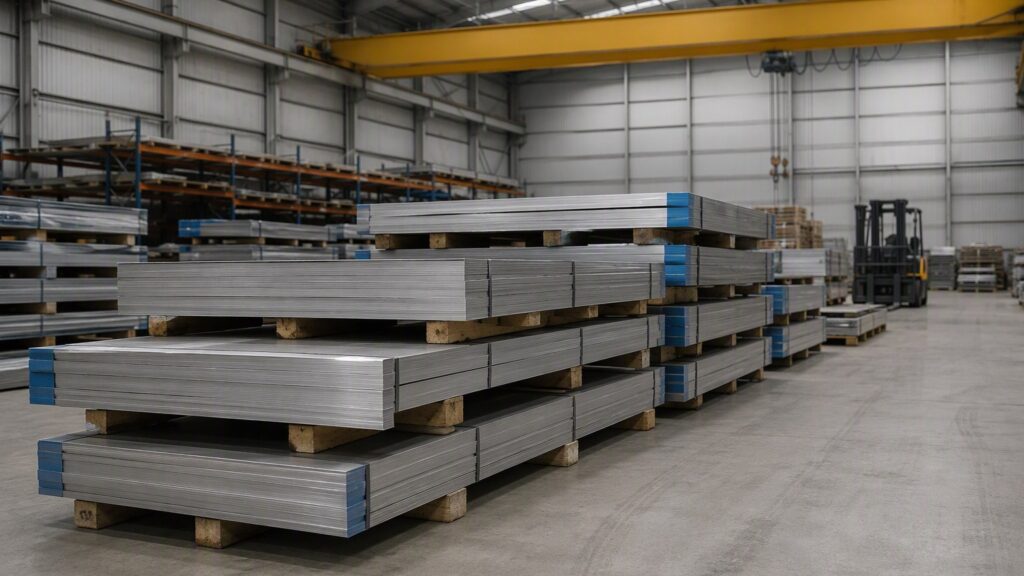
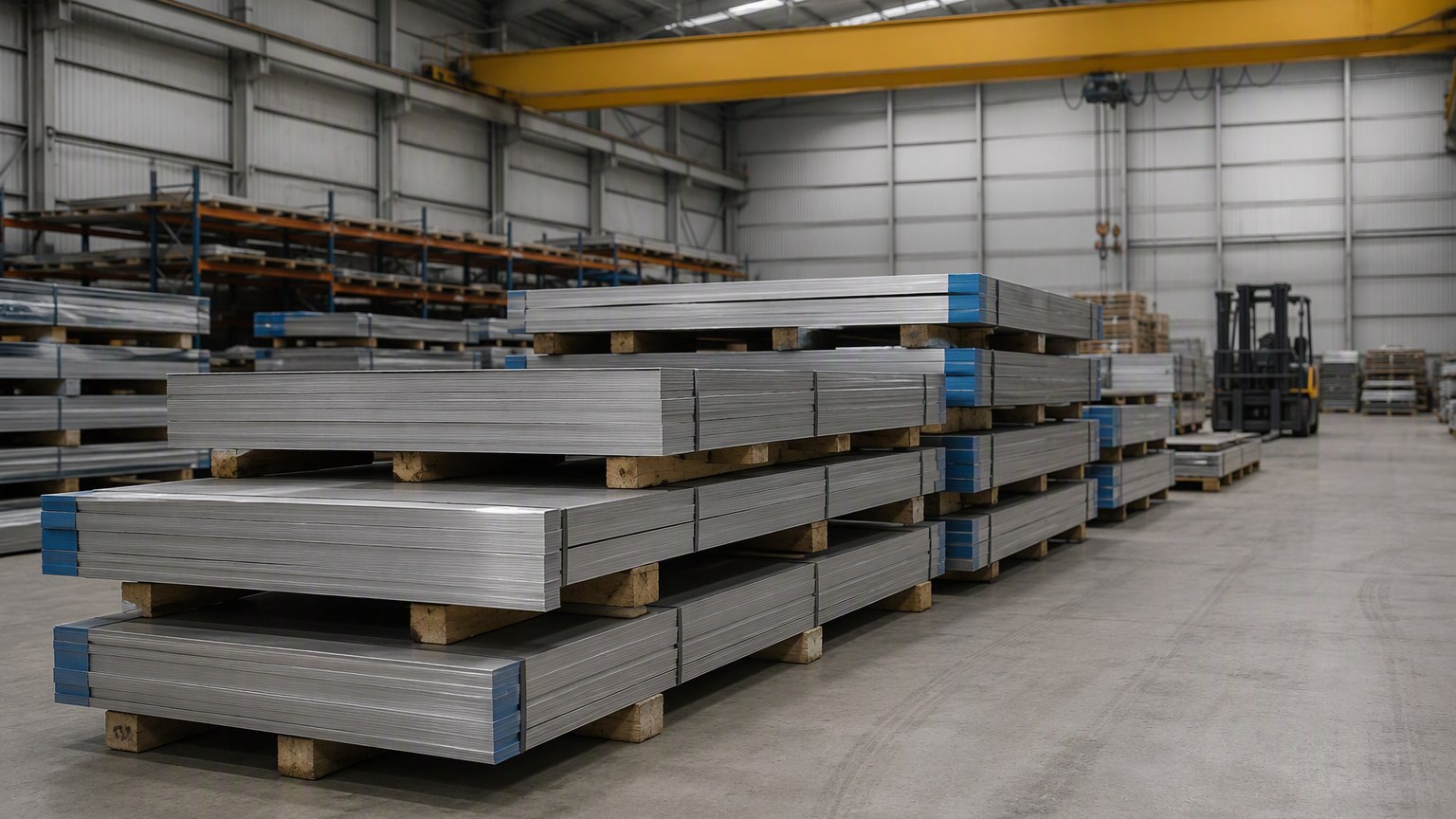
A supplier’s catalogue is a claim; production depth is the evidence behind it. Four dimensions decide whether your order is routine or a project risk: the grades held in the standard range, the thickness span, the product forms supplied, and the standards the material is normally certified against. A service centre that routinely handles 304 and 316L plate from 3 mm to 30 mm, and also supplies pipe, tube, coil and square hollow section, absorbs a specification change without re-quoting the entire order. One that buys finished material on the spot market cannot, because every change forces a fresh search for availability. The second test is the difference between made and traded. Ask which items the supplier produces or holds under its own quality system and which are purchased from third parties, then ask which steelworks supplies the traded items. A credible answer names a specific mill and its location; a vague answer names a country. The third test is inventory depth against your delivery schedule, because a supplier with no stock either waits for the next mill rolling campaign or quietly misses your vessel booking, and both outcomes cost more than the price difference you were negotiating. Depth carries a commercial consequence as well: a supplier holding a narrow range in quantity can commit to a fixed tonnage on a fixed date, while a broad trader prices each line separately and passes mill lead time straight through to the buyer. Finally, match the range to your own downstream process. A fabricator cutting 304L stainless steel plate in 10 mm 2B finish for tank shells has different requirements from a galvanizer feeding tube mills, and a good supplier’s range already reflects the industries it serves. Where grades are defined across plate, sheet and strip, the ASTM A240/A240M specification and the technical library of the British Stainless Steel Association are both reliable baselines for comparing what a supplier claims to stock.
Why a wide catalogue is not the same as a deep one
Two suppliers can list identical product families and still be very different businesses. A deep catalogue means the supplier can hold a grade, commit tonnage, quote a realistic date and answer a tolerance question without leaving the building. A wide catalogue often means a trading desk forwarding your enquiry to a mill it has never visited. The practical test is a single question: what happens to my order if the mill changes its rolling schedule next week? A stocked supplier answers with a defined alternative size or a specific delay. A pure trader answers with a revised lead time and an apology. Neither answer is automatically wrong, but the risk sits in a different place, and the price you agreed should reflect that difference rather than the length of the catalogue.
How Do You Verify Steel Quality and Traceability Before Ordering?
Certificates are easy to send and hard to fake convincingly. Traceability is the part that proves the plate in your container came from the heat the certificate names.
Ask for a mill test certificate showing heat numbers, confirm the same heat number is stamped or tagged on the material, and book third-party inspection before shipment. Without that link, the certificate describes steel that may not be yours.
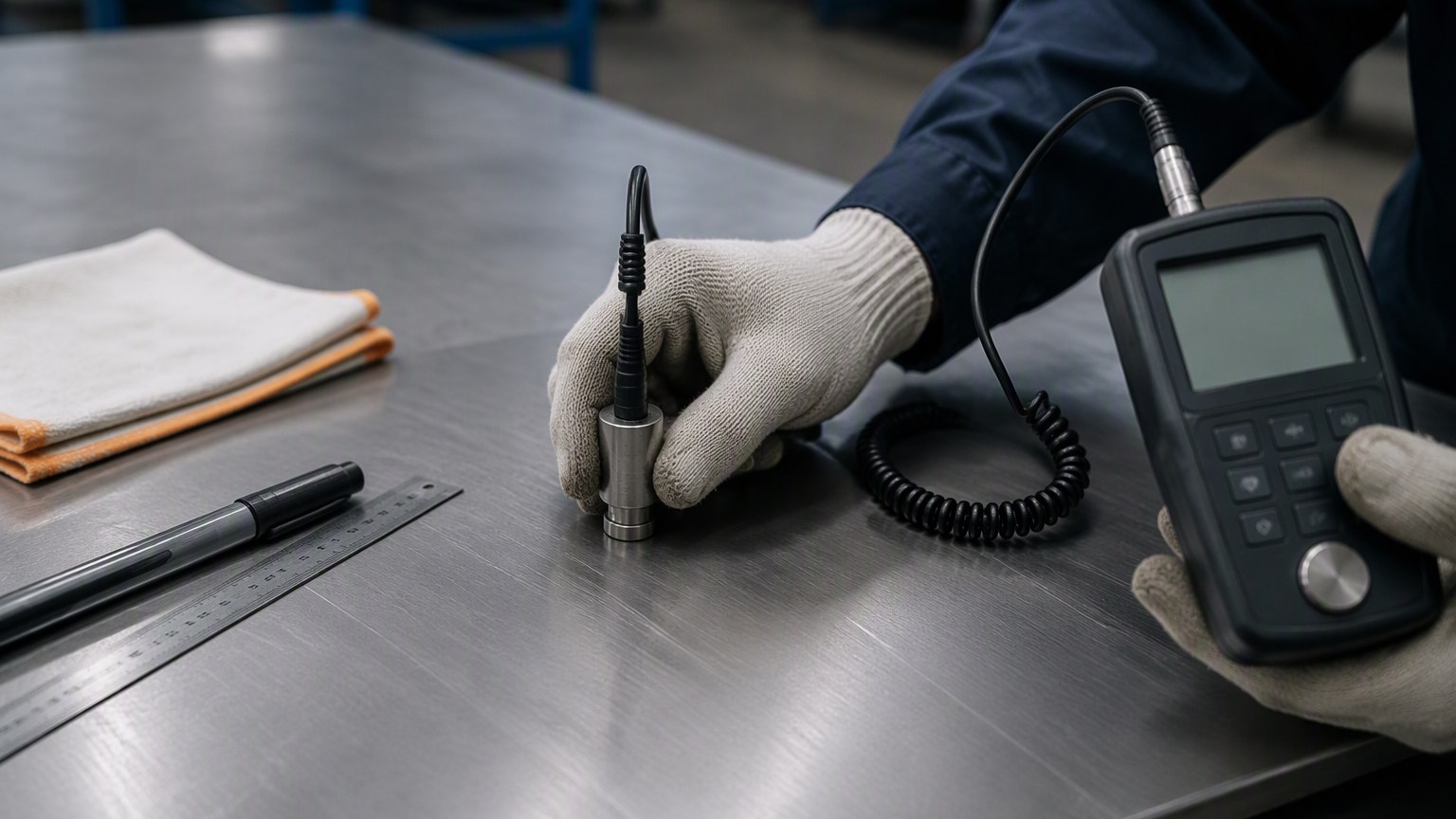
A mill test certificate is only useful when it is tied to the physical material, and the tie is the heat number. The document type matters as well, and buyers should be specific: under the EN 10204 scheme, a type 3.1 certificate is issued by the manufacturer’s own inspection department on the basis of actual test results from the delivered heat, while a type 2.2 document is non-specific and carries far less evidential weight. Ask which type is being offered, then ask how the heat number travels with the steel: stamped on the plate end, stencilled on the bundle tag, or printed on a label that can be swapped. Only the first two survive handling. Inspection is the second layer. Third-party agencies such as SGS, Bureau Veritas or TUV are routinely appointed to witness dimensional checks, verify chemistry with portable analysers and confirm bundle counts before a container is sealed, and the cost of that visit is usually a fraction of the cost of a rejected shipment. Ask specifically what the inspector will test: thickness at defined points, length and width against the order, surface condition after the protective film is removed, and marking conformance with the purchase order. A certificate pack that reaches you before the vessel sails gives you time to react; the same pack arriving at destination gives you a claim instead of a remedy. For background on how alloying elements drive corrosion behaviour, and why chemistry verification sits at the centre of any quality argument, the reference material published by the world stainless association is a sound starting point. The way the certificate itself is structured, and the fields a buyer should check first, is unpacked in our guide to reading a mill test certificate.
The heat number habit that prevents most claims
Importers who never receive a claim share one habit: they record the heat number before shipment and check it again on arrival. That number connects the purchase order, the certificate, the packing list and the plate itself, and photographing a bundle tag at the loading port takes less than a minute. When a dispute does arise, whether it is a thickness shortfall, a surface defect hidden under the film or a substituted grade, the number decides whether the conversation is short and factual or long and expensive. Request it on the pre-shipment documents, keep the photograph in the order file, and compare it against the certificate before the container is released. Buyers who do this stop arguing about opinions and start arguing about evidence, which is a much shorter argument.
Which Certifications Actually Matter for a Steel Supplier?
Certificates on a website prove nothing. What matters is who issued them, what scope they cover, and whether they are still valid when your order ships.
Ask for ISO 9001 certification of the supplier’s own quality system, the specific product certification your material must carry, and the inspection document type you require. Check each certificate against the issuing body, its stated scope and its expiry date instead of accepting a scanned copy at face value.
Certification falls into three layers, and confusing them is expensive. The first layer is a management-system certificate: ISO 9001 for quality, with ISO 14001 and ISO 45001 for environment and occupational health where your own procurement policy requires them. These describe how the supplier’s processes are controlled; they do not certify a product. The second layer is product certification tied to a standard, which is where most project requirements actually live. Pressure equipment in the European Union falls under the Pressure Equipment Directive, structural steelwork under EN 1090 requires a separately assessed factory production control, and line pipe and oil country tubular goods are often specified with an API licence. Buyers should confirm that a licence or approval covers the exact product specification and size range on the order, because a licence held for one specification does not extend to another. The third layer is inspection documentation, the EN 10204 types discussed above, which travels with the goods rather than with the company. Verification completes the picture, and it is the step most importers skip. A certificate should be checked against the issuing body’s register, the scope statement should be read for the precise product and manufacturing site, and the expiry date should cover the production window rather than only the day the order was placed. ISO publishes the principles behind quality management systems, including what a certification body audits and how the standard family is structured, at ISO 9001 quality management.
Certificates you should never pay a premium for
Not every document adds value, and some are actively misleading. A certificate that names a group holding company rather than the plant that made the steel tells you little about the material. A quality certificate for a different product family, offered as reassurance because the same company also makes your item, proves nothing about your order. A scanned certificate without a number that can be looked up in the issuer’s register is decoration. What is worth paying for is narrow and specific: a certificate covering the exact grade, the exact specification and the site that produced the heat, an inspection document type matched to the risk of the application, and a supplier willing to name the issuing body so you can verify it independently. Everything beyond that is brochure material.
Why Does Export Documentation Decide Whether Your Steel Order Ships on Time?
Steel is rarely delayed at the mill. It is delayed at the port, waiting for a corrected document that nobody checked before the container was sealed.
Steel ships on the strength of four documents: the commercial invoice, the packing list, the bill of lading and the certificate of origin, supported by the mill test certificate and a compliant packing declaration. A single inconsistency between them stops the container.
Documentation fails for boring reasons: a weight that disagrees with the packing list, a description that does not match the HS code, a certificate of origin carrying an outdated exporter address, or timber packing without the heat-treatment marking that many importing countries require under the ISPM 15 plant-health standard. Each of those is a five-minute fix before shipment and a two-week delay afterwards, because a vessel will not wait. The sequence to enforce is straightforward. Confirm that the commercial invoice description matches the purchase order grade and standard exactly, including the edition year where a standard is quoted, since a generic product description invites both customs questions and classification risk. Confirm that the packing list matches the physical bundle count and the declared gross and net weights, because customs authorities and the carrier both compare them. Confirm that the bill of lading shows the consignee and notify party exactly as named in the letter of credit, since banks reject mismatched names even when the goods are correct. Confirm that the origin document carries the current exporter name and legal address. Then check the packing itself: ISPM 15 requires wood packaging material to be heat-treated or fumigated and marked accordingly, and unmarked timber pallets are a routine cause of held shipments. The HS code is worth settling with your customs broker before the order is placed rather than after the invoice is issued, particularly for alloy steel where classification depends on composition. Finally, agree the Incoterms rule in writing, because the partition of risk, freight and terminal cost differs sharply between FOB, CIF and CFR, and a quote written on one rule while the contract names another is a dispute waiting to happen.
Build the document pack backwards from the vessel
The reliable way to avoid port delays is to work backwards from the sailing date. Start with the vessel booking, then set the internal deadlines that produce the bill of lading, the origin certificate and the inspection reports, then work back to the date the goods must leave the factory. Document drafting should begin while production is still running, not after it finishes, because drafts are what customs, banks and inspection agencies actually review. A supplier that can send drafts of all four documents before packing starts has done this before. One that sends everything at the last minute is relying on the vessel being delayed, which is not a plan.
How Should You Compare Steel Prices and Payment Terms?
Two suppliers can quote the same tonnage and mean two different prices. The difference sits outside the base rate, in the extras and conditions.
Compare delivered cost rather than the rate per tonne: tolerance extras, edge and surface treatment, packing specification, quantity breaks, freight terms and payment conditions. Convert every offer to the same Incoterm, unit and payment basis before you compare anything.
Metal prices move with raw material, energy and freight costs, and the World Steel Association publishes production statistics and short-range outlooks that explain why a quotation is only meaningful for a limited window, so treat an unusually long validity period as a question rather than a favour. Once price is on the table, the comparison has to be like for like. The base rate is normally quoted per tonne for flat and long products, but extras accumulate quickly: a thickness outside the standard rolling range, a specified edge condition, peeling or coating, bevelling and custom cut lengths, and packing specification all add cost, and packing is the line buyers most often forget until the container is being loaded. Quantity breaks matter as much as the headline rate, because a supplier holding stock can frequently hold a price across a larger tonnage while a trader cannot. Payment terms then determine the real exposure. A documentary credit at sight protects the buyer at the document stage, a deposit with the balance against copy documents is a common middle ground for repeat business, and open account terms are normally reserved for established relationships with a track record. Currency belongs in the contract alongside the price, because a quotation denominated in one currency against revenue in another carries a risk that has nothing to do with steel. Finally, ask what the rate excludes: terminal charges, inspection fees, marking, certification copies and any inland movement.
| Quotation line | What to confirm before you compare |
|---|---|
| Base rate | Unit (per tonne or per piece), grade, standard edition and nominal thickness |
| Extras | Tolerance premium, edge and surface treatment, cutting, bevelling, coating |
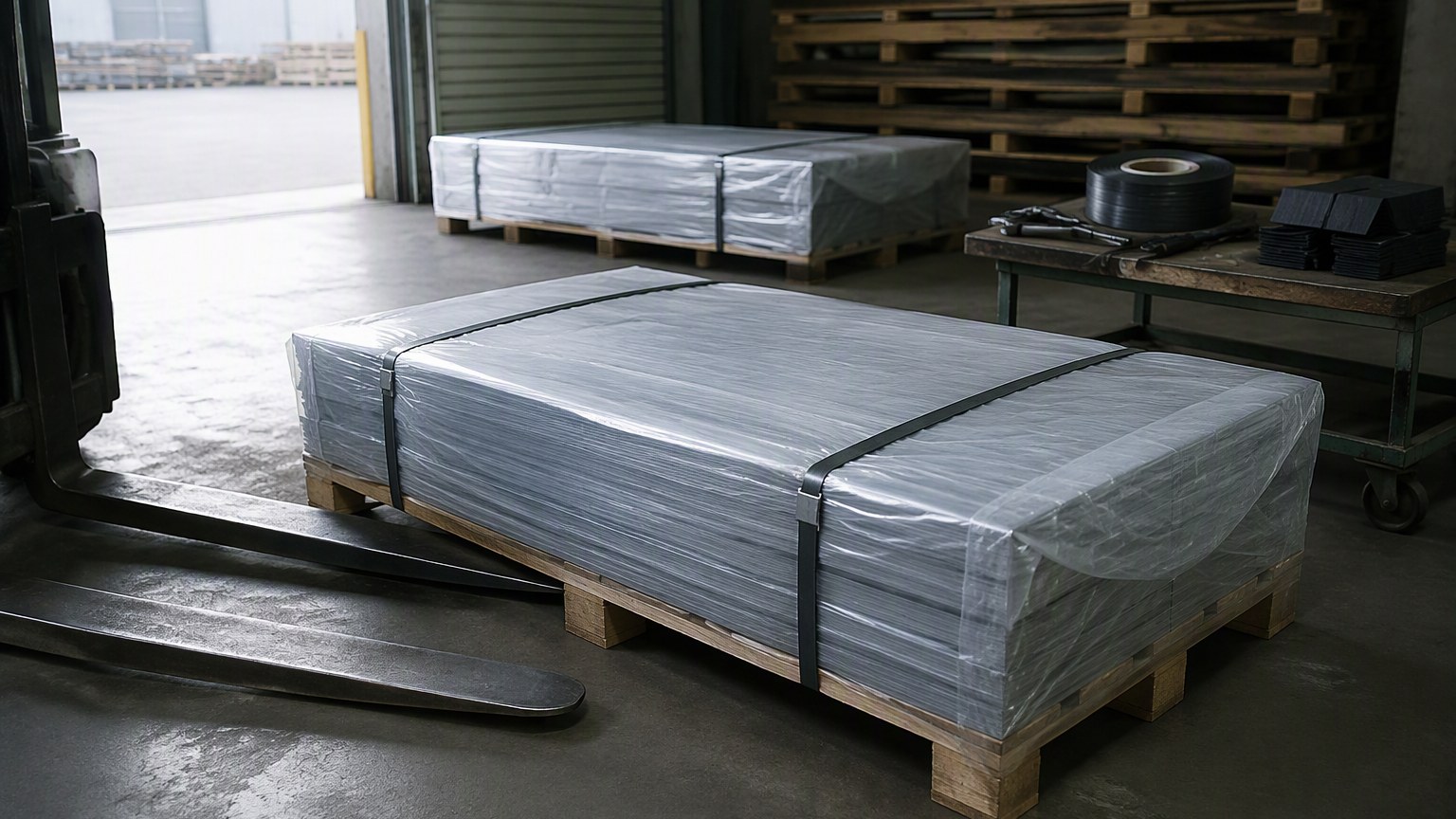
| Packing | Bundle size, strapping, interleaving, protective film, ISPM 15 marking on timber |
| Quantity break | Tonnage at which the rate steps down, and whether it applies to mixed sizes |
| Freight and rule | Incoterms rule, port of loading, terminal handling and who bears the risk |
| Payment | Credit at sight, deposit plus balance against copy documents, or open account |
| Validity | How long the rate holds and what triggers a re-quote |
Where a cheap quote quietly becomes expensive
Price gaps between suppliers are usually smaller than they look once the extras are aligned, and the remaining gap is nearly always explained by four things: grade substitution, thickness tolerance, packing quality and inspection scope. A quote that sits several percent below the market usually differs on one of them, and the difference surfaces later as a claim, a rejection at destination or an inspection cost that was never quoted. The efficient response is not to reject the cheap offer but to interrogate it line by line using the comparison above, then ask the supplier to confirm in writing which lines are included. A supplier that answers precisely is competitive in a way you can verify; a supplier that answers vaguely is quoting a product you have not yet seen.
What Keeps a Steel Supplier Reliable After the First Order?
The first order is a test both sides can pass. The second order is where a supplier’s real behaviour appears.
Repeat reliability comes from four habits: answering technical questions with data, committing to dates rather than ranges, handling claims without renegotiating the contract, and keeping quality consistent between heats. Test them on a small follow-up order before scaling volume.
Most supplier relationships degrade slowly rather than failing suddenly, and the signals are consistent. Replies slow from hours to days, technical questions are answered with marketing copy instead of a standard reference, a committed date becomes a range, and the packing on the second container looks different from the first. Because the risk accumulates quietly, the cheapest way to test a supplier is a second order at modest volume before tonnage is increased. Judge the response in three ways. First, technical quality: a supplier able to explain a tolerance, a substitution or a welding consideration with a clause reference is managing the material rather than merely trading it. Second, schedule honesty: a production date commitment and a vessel booking that is confirmed rather than estimated, with early warning when a mill schedule slips. Third, claim behaviour: what happens when a bundle arrives with a damaged edge or a thickness outside tolerance. A supplier who resolves a small claim quickly and documents the corrective action is worth a longer contract, while one who begins by questioning your inspection method is telling you how the next claim will proceed. Documentation consistency is the fourth signal, because a supplier able to reproduce the same certificate pack, packing specification and marking standard on the second and third shipment is running an actual process rather than handling exceptions. Put together, these four behaviours are what most importers mean when they describe a supplier as easy to work with, and they are observable within one shipment if you look for them deliberately. The next time you choose a steel supplier, test the behaviours on a trial order of a few tonnes rather than an annual contract; it is the cheapest due diligence available, and it produces evidence that no reference list can substitute for.
A ten-minute review before every repeat order
Before releasing a repeat order, run the same short review that caught the problems last time. Compare the current certificate against the previous heat and confirm the chemistry sits where you expect. Check the packing specification against the photographs from the previous shipment. Confirm the delivery date against your own production schedule rather than against the supplier’s calendar. Ask whether any standard or specification on the order has been revised since the last purchase. Then confirm the commercial terms, since freight rates and raw material indices move independently of the mill. The review takes ten minutes, and it converts a supplier relationship from something you hope will hold into something you can actually measure shipment by shipment.
Before the next enquiry leaves your desk, put the checklist to work. Send your specification — grade, standard, thickness, quantity and destination port — to our export team for a line-by-line quotation, and ask for the mill name, the inspection document type and the packing specification in the same message. The answers to those three questions separate a supplier from a broker faster than any price list.
Conclusion: Choosing a steel supplier is a ten-point check, not a price comparison. Verify range, traceability, documents and claims before payment — the cheapest quote rarely survives the first container.