
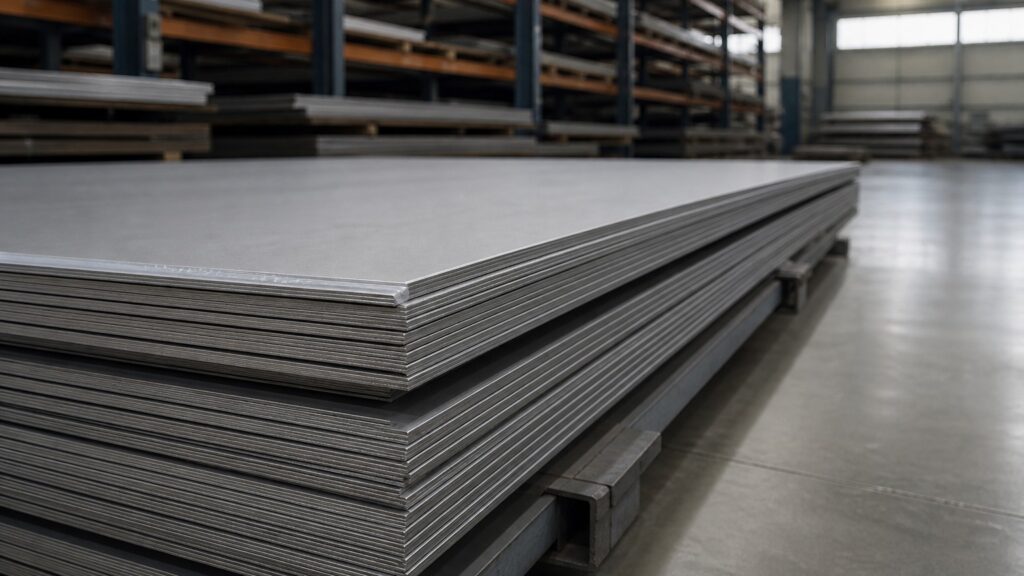
Pickling and Passivation: Why Does Stainless Steel Plate Need It?
Your stainless steel plate arrived with weld discolouration or embedded iron, and rust spots are already appearing. Ignoring surface contamination is costly — here is why pickling and passivation matter.
Pickling removes the chromium-depleted, contaminated layer left by hot rolling, welding and fabrication, while passivation rebuilds the natural chromium oxide film. Stainless steel plate needs both because a clean, oxide-rich surface is what actually delivers corrosion resistance — the alloy alone cannot do it.
Understanding the chemistry is one thing; specifying the right treatment for a plate supplied in a given grade and thickness is another. The sections below walk through what each process actually does, how the two differ, which standards govern them, how contamination gets there in the first place, and the practical checks that prove a plate is genuinely passive before it leaves the works. If you buy pickling and passivation stainless steel and need to know what to ask for, this is the sequence to follow.
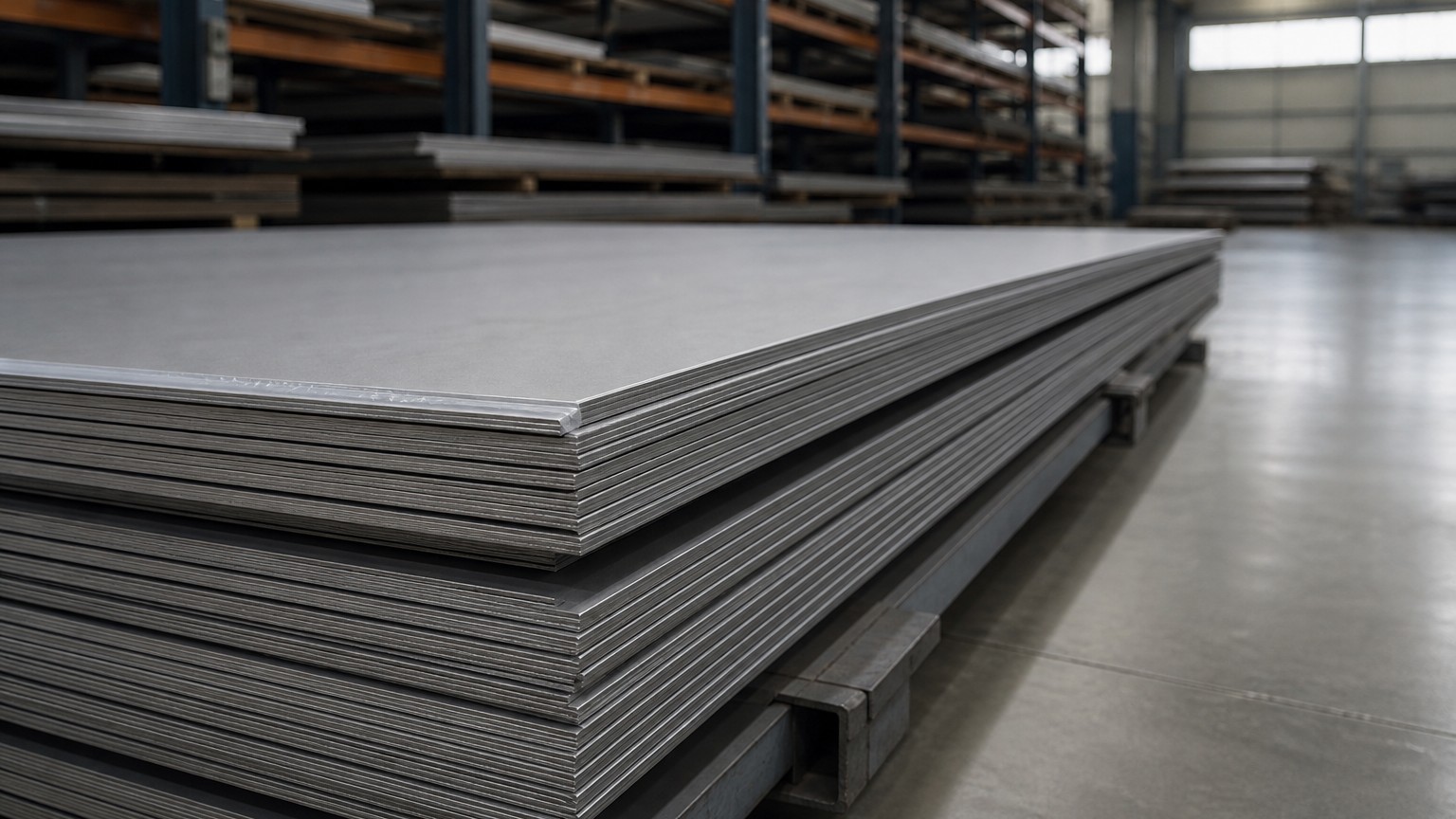
What Actually Happens to Stainless Steel Plate During Pickling?
Pickling is an acid descaling step, not a cosmetic clean: it strips mill scale and the chromium-depleted surface layer.
Short answer: Pickling dissolves mill scale, heat tint and the chromium-depleted layer from a stainless steel plate using an acid bath, usually a nitric and hydrofluoric acid mixture, exposing clean metal so the passive film can re-form.
Dive deeper: Every stainless steel plate leaves the mill with a surface that is not yet in its best corrosion-resistant state. During hot rolling the steel oxidises, producing a mill scale that sits on top of a thin zone where chromium has migrated to form that scale and left the metal immediately underneath slightly poorer in chromium than the bulk of the plate. The alloy as a whole might be a correctly specified 304 with roughly 18% chromium and 8% nickel, but the top few micrometres are not the alloy the buyer thinks they bought. Pickling removes that compromised zone and the scale above it.
For stainless steel the pickle liquor is normally a mixture of nitric acid and hydrofluoric acid. The nitric acid provides the oxidising conditions that keep the surface passive, while the hydrofluoric acid attacks and dissolves the oxide scale and any chromium-depleted metal beneath it. This is the key practical difference from carbon steel pickling, which is typically carried out in hydrochloric or sulphuric acid. Carbon steel pickling removes rust and scale; stainless pickling has to remove scale and a metallurgically altered layer, without leaving the surface in a state where a fresh oxide cannot form.
Why the acid cocktail matters
Concentration, temperature and immersion time are set together, because a faster pickle is not automatically a better one. Undertreat and residual scale or heat tint survives; overtreat and the acid roughens the surface, attacks grain boundaries and increases metal loss, which changes the finish the customer ordered. Suppliers generally classify treatments by the steel family and surface condition rather than offering a single universal recipe — austenitic grades such as 304 and 316 behave differently from ferritic or martensitic grades, and high-carbon martensitic grades can be attacked outright.
Because the plate has to be supplied against a specification, the chemical composition it is tested against is not negotiable. ASTM A240/A240M, the standard specification for chromium and chromium-nickel stainless steel plate, sheet and strip, sets the composition and mechanical property requirements that a 304 or 316 plate is verified against in the mill test certificate; pickling and passivation are the surface operations that stop the delivered plate from corroding before those properties can ever be used.
How Is Passivation Different from Pickling?
Passivation is a chemical clean-up, not a coating — nothing is added to the plate.
Short answer: Passivation removes free iron and other surface contamination with a milder acid and lets the natural chromium oxide film rebuild, whereas pickling aggressively removes scale and the metal beneath it.
Dive deeper: The most common misreading of passivation is that it puts a protective layer onto the steel. It does not. Stainless steel is corrosion resistant because chromium in the alloy reacts with oxygen to form a very thin, tightly adherent chromium-rich oxide film, often only nanometres thick, that is self-healing when the surface is clean. Passivation does not create that film from scratch; it removes the things that prevent it from forming properly — free iron, iron oxide, shop dirt, machining debris and residual contamination picked up during handling.
That distinction explains why the two treatments are complementary but not interchangeable. Pickling is a descaling operation with real metal removal. Passivation is a cleaning operation that chemically dissolves free iron from the surface and encourages the oxide to reform. A plate that has been pickled is normally already passive once the acid is rinsed away, because clean stainless steel in contact with air or aerated water self-passivates. Passivation as a separate step is therefore specified where fabrication, machining, handling or transport has reintroduced iron contamination after the pickling step.
The chemistry is well described in the open literature. Passivation in physical chemistry is the formation of a shield layer that renders a surface less readily corroded, which for stainless steel means the chromium oxide rather than an applied coating. Traditional passivation used nitric acid alone; citric acid formulations are now widely used because they provide the same oxidising conditions with less hazardous handling, lower fume emission and simpler waste treatment. Citric acid will not, however, remove heavy welding scale — that still requires pickling or mechanical descaling first.
Practically, this is why the order of operations cannot be reversed. Descaling and cleaning come first; passivation follows. A passivation treatment applied over intact heat tint simply seals in the contamination it was meant to remove.
Which Standards Govern Pickling and Passivation of Stainless Steel?
Three standards do most of the work in international stainless steel supply chains.
Short answer: ASTM A380 covers cleaning, descaling and passivating practice, ASTM A967 covers chemical passivation treatments and their acceptance tests, and ISO 16048 covers passivation of stainless steel fasteners.
Dive deeper: Buyers rarely specify pickling and passivation in their own words. They reference a standard, and the standard determines what the supplier must do and what evidence comes back with the plate. Knowing which one applies avoids a very common specification mismatch.
ASTM A380 — cleaning, descaling and passivating practice
A380 is the practice document: it covers recommendations and precautions for cleaning, descaling and passivating new stainless steel parts, assemblies, equipment and installed systems, and it classifies nitric acid treatments by code according to steel family, surface condition, temperature and time. It is the document to cite when the requirement is a process practice rather than a product test.
ASTM A967 — chemical passivation treatments and acceptance tests
ASTM A967/A967M, the standard specification for chemical passivation treatments for stainless steel parts, defines immersion treatments in nitric acid solutions, immersion treatments in citric acid solutions and electrochemical treatment, together with the rinsing and neutralisation steps that follow. Its most useful feature for a buyer is the test menu: water immersion, high humidity, salt spray, copper sulphate, potassium ferricyanide-nitric acid, damp cloth and boiling water practices, plus a free iron test. These are qualitative tests aimed squarely at detecting residual free iron and other exogenous contamination.
ISO 16048 — passivation of stainless steel fasteners
ISO 16048:2003, passivation of corrosion-resistant stainless-steel fasteners, specifies the methods most often used to passivate stainless fasteners. It is a fastener standard rather than a plate standard, but it matters in practice because fasteners, fixings and small components brought to site alongside the plate carry their own surface contamination and are frequently specified to a different clause in the same project.
| Document | Scope | What it gives the buyer |
|---|---|---|
| ASTM A380/A380M | Practice for cleaning, descaling and passivating stainless steel parts and systems | Process codes, temperature and time ranges by steel family and surface condition |
| ASTM A967/A967M | Specification for chemical passivation treatments | Nitric, citric and electrochemical treatments plus acceptance tests for free iron |
| ISO 16048:2003 | Passivation of corrosion-resistant stainless-steel fasteners | Method selection for fasteners and small components in the same assembly |
| ASTM A240/A240M | Plate, sheet and strip for pressure vessels and general applications | Composition and mechanical property basis reported on the mill test certificate |
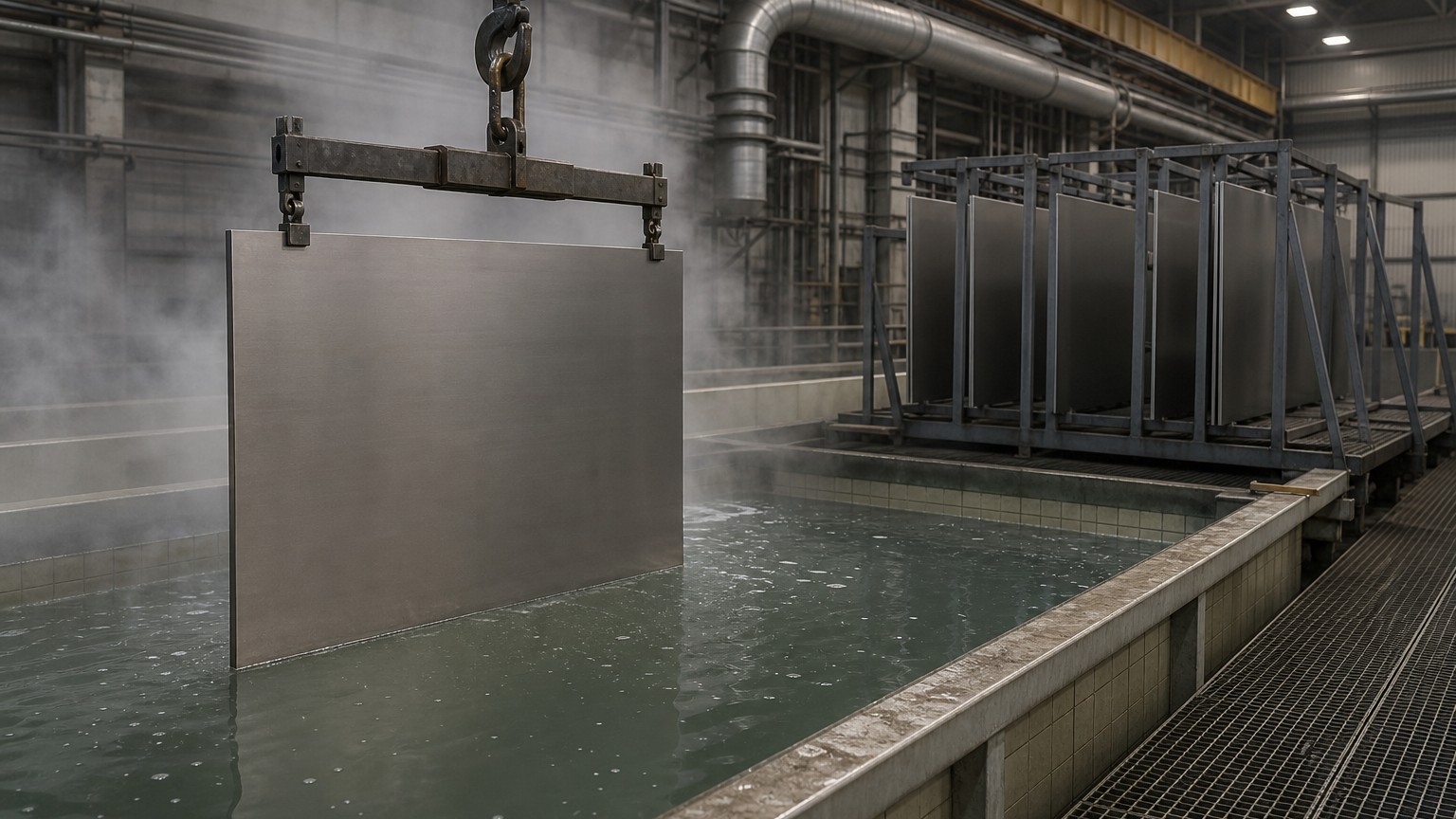
Why Does Fabrication Create the Contamination in the First Place?
Every cutting, grinding and welding operation can deposit foreign iron on stainless steel.
Short answer: Fabrication contaminates stainless steel because grinding sparks, carbon steel brushes, steel rolls and welding heat all deposit free iron or strip chromium from the plate surface, leaving a site for pitting to start.
Dive deeper: A plate can be perfectly pickled and passivated at the mill and still arrive at site in a condition that will rust. The contaminants almost never come from the alloy itself; they come from the tools and processes used around it.
The usual sources of free iron
- Grinding and cutting sparks — particles of carbon steel thrown off a grinding disc or a saw blade embed in the stainless surface and oxidise as rust blooms.
- Carbon steel tooling and brushes — wire brushes, chipping hammers and slings previously used on carbon steel transfer iron by contact.
- Shared handling equipment — bending rolls, shear beds and lifting gear used for both carbon and stainless steel deposit iron on the softer stainless surface.
- Welding heat tint — the coloured oxide left around a weld is chromium-depleted, so it is chemically weaker than the parent plate and holds contamination at the joint.
- Blast media — steel shot or grit used to clean a mixed workshop contaminates any stainless steel it touches.
This is why pickling and passivation is specified on fabricated components rather than only on flat plate, and it is also why the sequence of how plate fabrication introduces iron contamination matters: cutting and forming should be done with dedicated stainless tooling where possible, and any heat tint or embedded iron removed before the finished item is handed over.
Why the risk is worse in service than in the yard
Rust spots from embedded iron often appear weeks after installation, when moisture and chlorides have had time to work on the contaminated site. In a chloride-bearing environment the local breakdown can escalate from a cosmetic stain into real pitting, because the free iron particle shields a small area from oxygen and creates the chemistry that pits propagate in. By the time it is visible, the fix is no longer a rinse.
For a plate supplied to a defined finish, this is also where finish and contamination interact. A smooth, clean passivated stainless steel surface that drains freely is far less likely to hold deposits than a rough, contaminated one, which is why finish specification and surface treatment are normally decided together rather than separately.
How Do You Verify That a Stainless Steel Plate Is Properly Passivated?
Verification is a test, not an opinion about how the plate looks.
Short answer: Properly passivated plate is verified by a free iron test plus one or more of the ASTM A967 practices, such as copper sulphate, water immersion, high humidity or salt spray, supported by a mill test certificate and a treatment record.
Dive deeper: Visual inspection is the weakest form of verification and the easiest to argue about. A plate can look uniformly bright and still carry free iron that will bloom within weeks, and a plate can show a light variation in finish with no measurable contamination at all. What actually settles the question is a defined test with an acceptance criterion agreed before the work starts.
The tests worth specifying
The copper sulphate test is the fastest wet check: applied to a clean surface, a copper sulphate solution deposits metallic copper where free iron is present, giving a visible indication in minutes. The water immersion, high humidity and salt spray practices are slower but better suited to confirming a whole batch or a finished assembly, and the potassium ferricyanide-nitric acid practice gives a further check for free iron. A dedicated free iron test is used to detect iron on the surface directly. Independent technical guidance from the British Stainless Steel Association on passivation of stainless steels makes the same point that the standards do: passivation cannot work unless the surface is already clean and free from scale and welding contamination, and the acceptance tests exist because a treatment that was carried out is not the same as a treatment that worked.
What the documentation should contain
- The grade and finish of the plate, matched to the mill test certificate.
- The standard referenced for the treatment, with the specific practice or code used.
- Bath concentration, temperature and immersion time for the run.
- The test performed, the acceptance criterion and the result.
- Rinsing and drying method, since residual acid or contaminated rinse water defeats the treatment.
A plate supplied as a specific product item — for example 304 stainless steel plate 4mm 2B finish — should come with surface documentation that matches what was ordered, because the finish was chosen for the environment and the treatment is what preserves it.
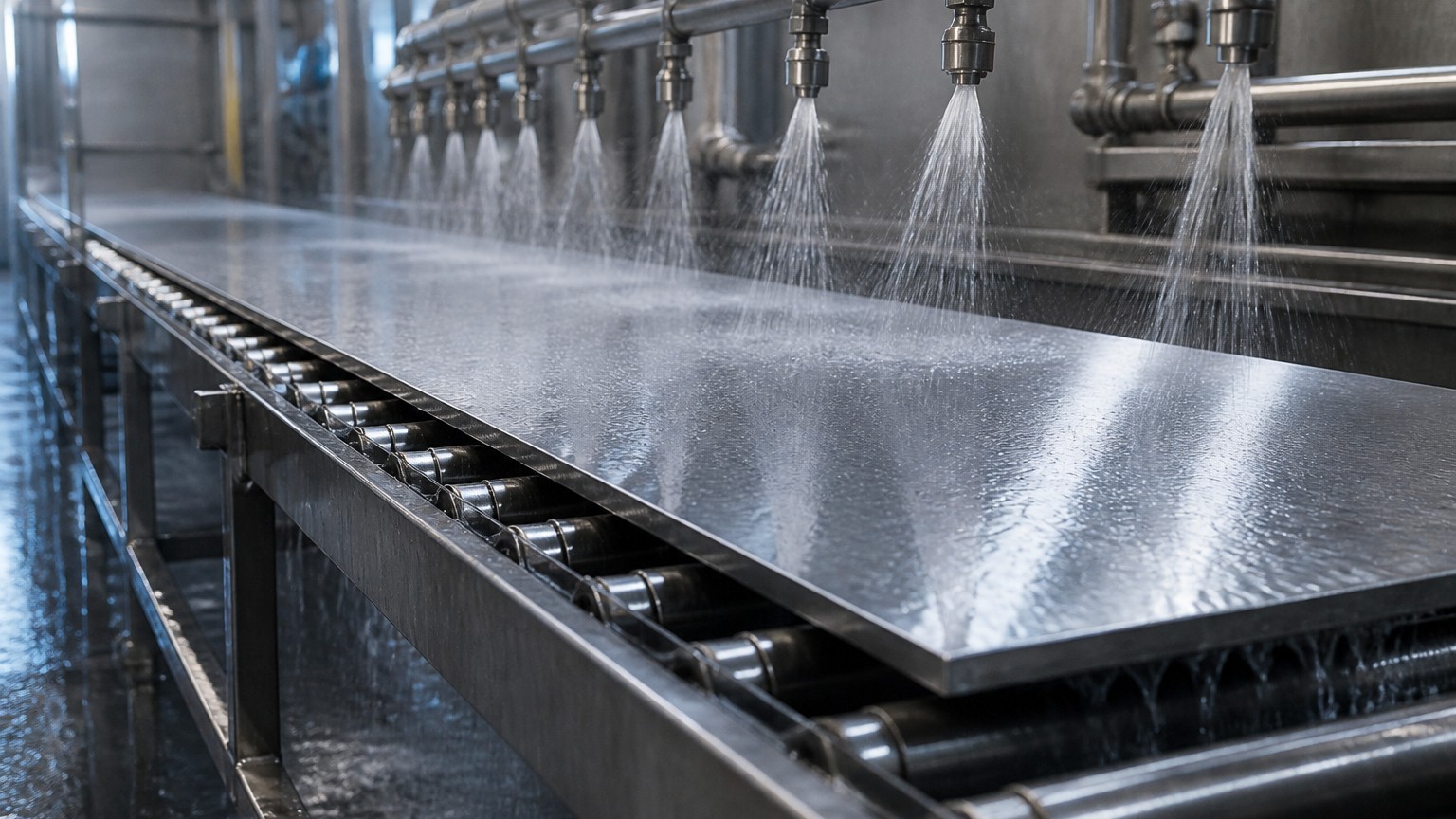
What Are the Common Mistakes and Cost Traps?
Most failures come from sequence errors, not from bad chemistry.
Short answer: The common mistakes are passivating before descaling, skipping the rinse, recontaminating treated plate with carbon steel tooling, and specifying a treatment without agreeing a test and acceptance criterion up front.
Dive deeper: Because pickling and passivation are usually the last operations before packing, an error here is expensive: the plate is already cut, formed and possibly welded, so a failed surface treatment cannot be swapped out like a raw sheet. That is why the sequence controls the outcome.
The sequence errors that cost the most
Passivating over heat tint or mill scale is the most frequent failure. The acid removes the loose contamination on top, the visual result looks acceptable, and the chromium-depleted layer under the scale remains in place as a pitting site. The second is incomplete rinsing. Trapped acid and contaminated rinse water keep the surface chemically active and can leave staining that later reads as a quality defect. The third is recontamination after treatment, which happens whenever treated plate is handled with the same slings, forks or benches used for carbon steel. Good practice isolates the stainless route from the carbon steel route, from the shear through to the packing line.
How to build the cost in without over-specifying
Pickling and passivation should be specified where the surface condition actually demands it, not as a blanket line item. Flat plate supplied clean and handled on a dedicated route may need nothing beyond protection for transport. Fabricated items with visible welds almost always need descaling, and anything going into a chloride-bearing, humid or coastal environment justifies both the treatment and a documented test. Asking for full pickling where only a weld zone needs it adds processing, metal loss and lead time for no corrosion benefit; asking for passivation only where the heat tint has already been ground back is equally wasteful.
The workable approach is to define the required surface at handover, name the standard, agree the test, and let the supplier choose the treatment that gets there. That keeps the specification defensible without prescribing a process the supplier may have to work around.
Conclusion: Pickling removes scale and the chromium-depleted layer; passivation removes free iron and lets the oxide film rebuild. Sequence, rinse and testing decide whether the plate actually resists corrosion.
If you are specifying stainless steel plate for a project where surface condition matters, contact our technical team with the grade, thickness, finish and service environment, and we will confirm what the supply should include.