
Hot-Dipped vs Electro-Galvanized Steel Tube: What’s the Difference?
Your first galvanized tube rusted within two seasons; a neighbor’s identical fence still looks new. The difference is rarely the steel: it is how the zinc coating was applied.
A hot dipped galvanized tube is immersed in molten zinc at about 450°C, forming a thick, tough zinc-iron coating. An electro-galvanized tube receives a thinner, smoother zinc layer from an electric plating bath. Choose hot-dip for outdoor durability, electro for finish and cost.
The word galvanizing actually covers two very different industrial routes, and choosing the wrong one means either paying for decades of protection you do not need, or watching an indoor-grade tube fail its first winter outside. This guide walks through how each coating is produced, how the tubes differ in thickness, appearance and corrosion life, which applications each suits, and the standards that govern them, so you can specify the right product the first time. It starts with the family of processes that put zinc on steel, known collectively as galvanization, then narrows the comparison to the two routes that dominate the tube market.
What Is a Hot Dipped Galvanized Tube and How Is It Made?
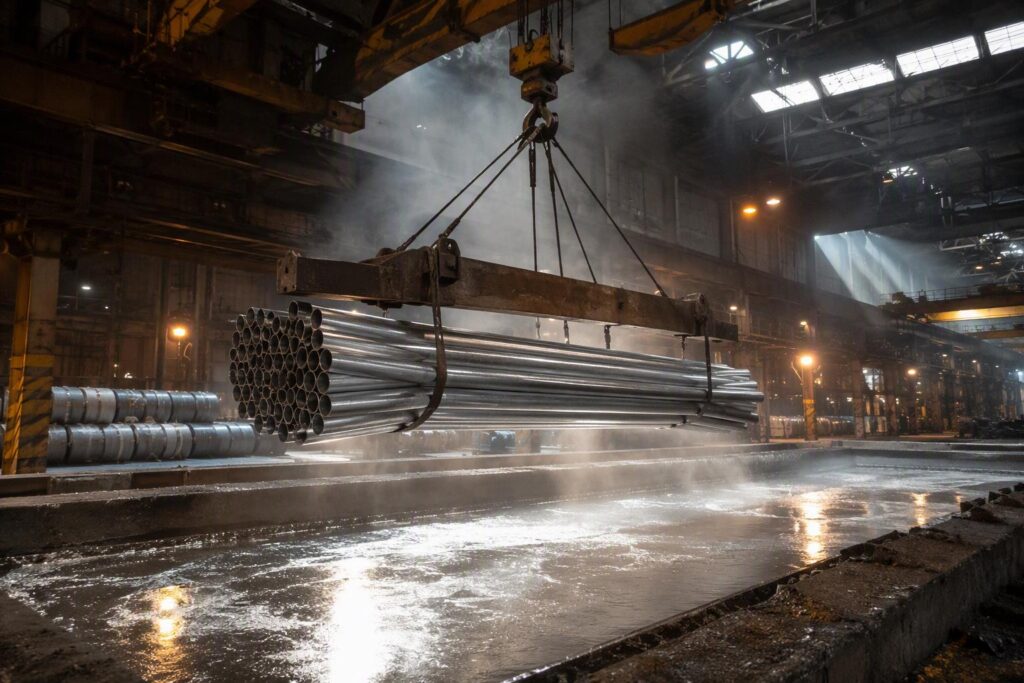
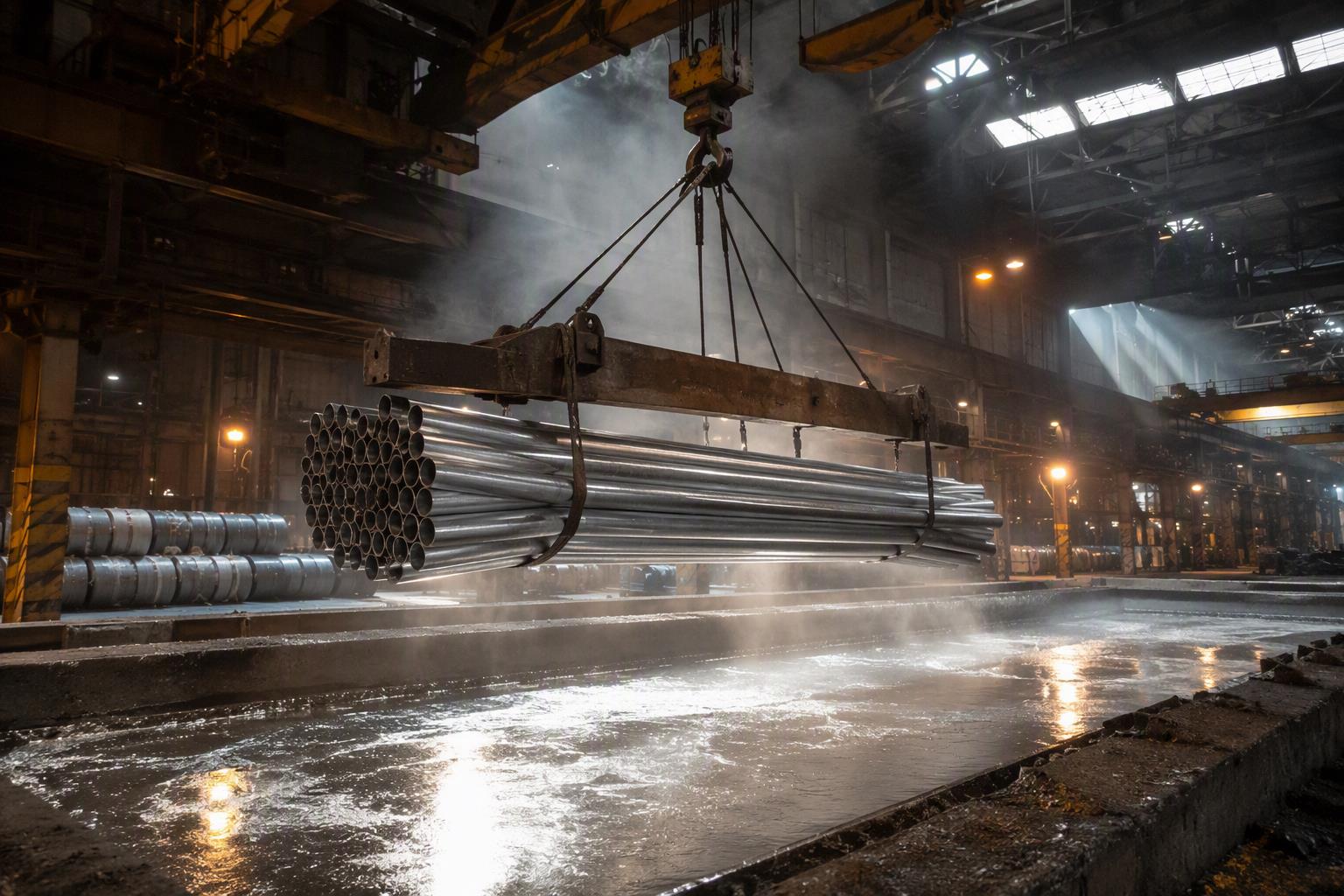
A hot dipped galvanized tube is a welded or seamless steel tube immersed in molten zinc at about 450°C, producing a metallurgically bonded protective coating.
The molten zinc alloys with the steel surface to form layered iron-zinc compounds topped by pure zinc, the grey, crystalline coating known as spangle that gives hot-dip tube its signature look.
Before a single tube enters the zinc bath it must pass through a strict preparation sequence, because molten zinc will not wet an oily or scaled surface. The tube is degreased in a hot caustic solution to strip rolling oils and drawing lubricants, pickled in acid to remove mill scale, rinsed to wash away residual chemicals, then dipped in a flux solution that keeps the freshly cleaned surface active until it meets the molten metal. Inside the bath, held near 450°C, zinc diffuses into the steel and forms a series of iron-zinc intermetallic layers, the gamma, delta and zeta phases, capped by a layer of nearly pure zinc. That metallurgical bond is the defining quality of a hot dipped galvanized tube: the coating is not painted onto the steel but grown from it, which is why the finish shrugs off the impact and abrasion that would chip a thinner plated layer. On ordinary structural sections the coating commonly falls in the 45 to 85 micron range, several times thicker than most electro-deposited zinc, and because the whole tube is immersed, zinc also covers the internal bore, the weld seam and the cut ends, the exact places where brushed or sprayed protection always fails. Two cautions are worth noting: the finish is not perfectly smooth, carrying the crystalline spangle and occasional drips or runs that specifiers of decorative work sometimes dislike, and the process normally happens after welding and forming, so the tube should be cut to final length before it is galvanized. The physics of the bath and the alloy layers it produces are described in detail in the Wikipedia article on hot-dip galvanization, and if you are comparing stock programs, our hot dipped galvanized tube range lists the sizes, wall thicknesses and standards we keep in regular supply.
What Is an Electro-Galvanized Steel Tube and How Is It Made?
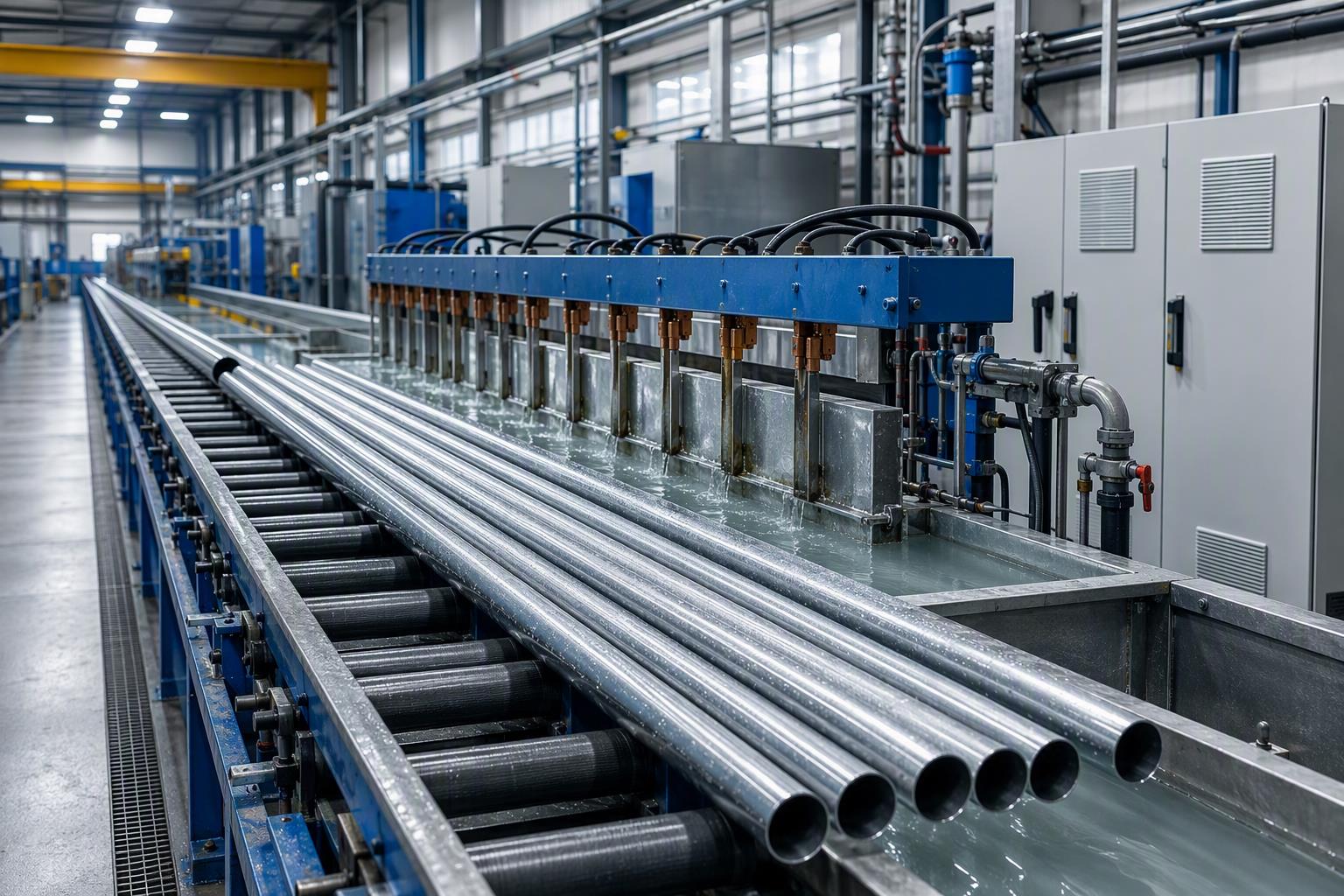
An electro-galvanized steel tube is coated by electrodeposition: zinc ions in an electrolytic bath are plated onto the steel surface by an electric current.
The result is a thin, exceptionally uniform, bright silver zinc layer, usually only a fraction of a hot-dip coating’s thickness, with no alloy interlayers and a smoother surface.
Electro-galvanizing follows a completely different physics. Instead of a molten bath, the steel passes through an electrolyte, normally an aqueous zinc salt solution, where an applied electric current drives zinc ions onto the steel surface as a dense, fine-grained deposit. In tube production the plating is usually applied to the steel strip on a continuous line before the strip is roll-formed and welded into tube, although finished tube can also be plated in an inline process. Because the layer builds up atom by atom, it is exceptionally uniform in thickness, even around corners and along the length, and it faithfully follows the surface finish of the underlying steel, giving a bright, smooth, almost mirror-like appearance that is prized where the tube will be seen indoors. Coating thickness is controlled by current density and line speed and is normally a fraction of a hot-dip layer, commonly in the range of roughly 5 to 20 microns for tube and strip applications. The zinc is deposited rather than alloyed, so there is no brittle intermetallic zone; the coating stays ductile and survives the bending, flanging and swaging operations used to turn tube into finished parts without cracking or flaking. That ductility, combined with the smooth surface, makes electro-galvanized tube an excellent substrate for painting and powder coating, because the zinc layer also protects any scratch or chip in the topcoat. The trade-off appears at the cut ends and the weld line: when pre-plated strip is formed and welded afterwards, the weld zone and any cut edges carry no zinc at all unless a secondary treatment is applied, and the internal bore of a pre-plated tube usually has no protection either. Electro-galvanized steel tube is therefore best understood as a product for controlled, mostly indoor environments where finish, tolerance and cost per metre matter more than decades of weather exposure.
How Do Hot-Dipped and Electro-Galvanized Steel Tube Differ in Structure and Appearance?
Different plating physics produce different engineering trade-offs: thickness, toughness, appearance and cost all move together.
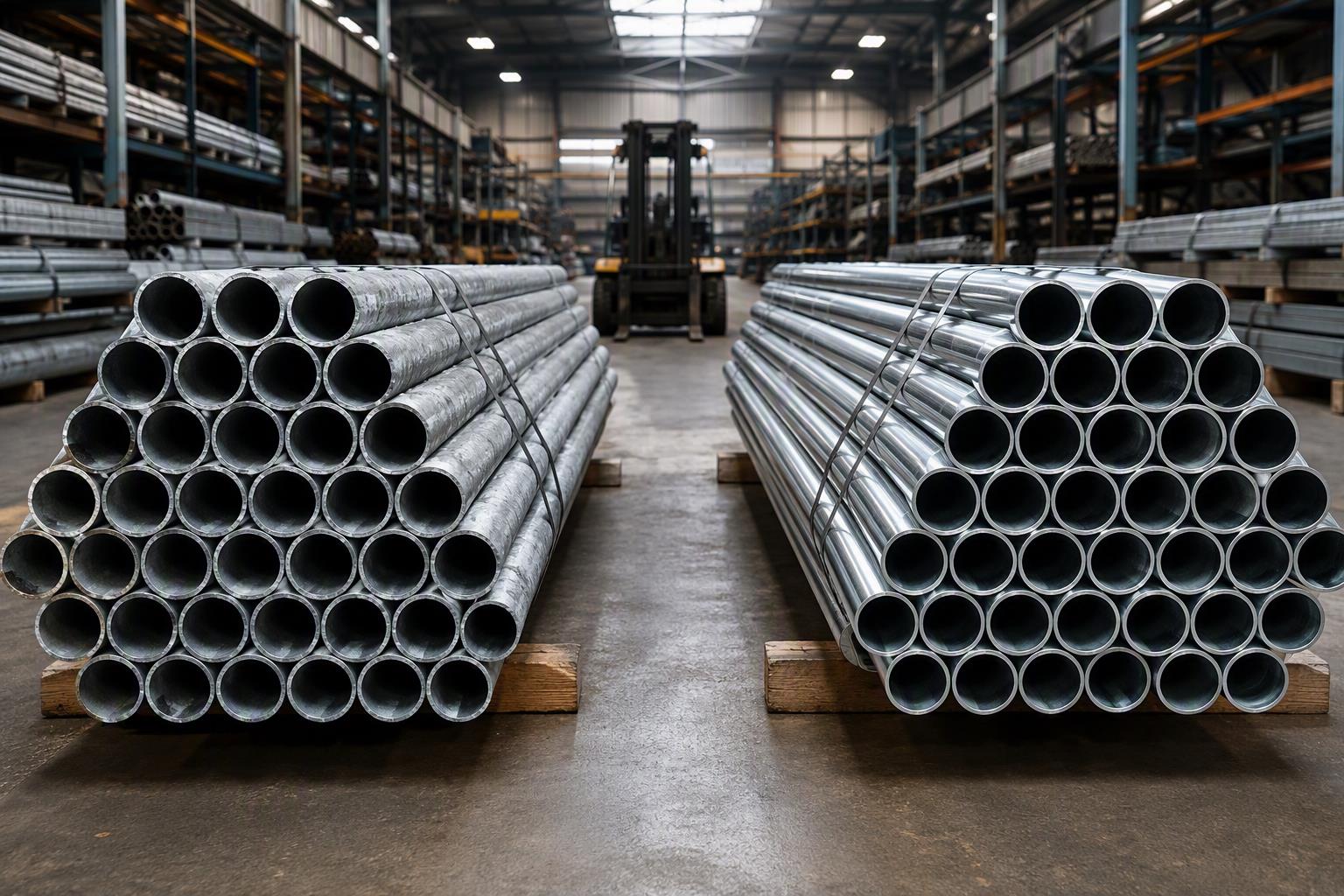
Hot-dip coatings are thick, matte and metallurgically bonded; electro-galvanized coatings are thin, bright and ductile. Expect hot-dip tube to cost more per metre while lasting far longer outdoors.
The most visible difference is the surface. A freshly hot-dipped tube cools to a bright silver-grey with a patchwork crystalline pattern, the spangle, and a slightly textured feel; an electro-galvanized tube is smoother, shinier and more mirror-like, closer in look to polished chrome than to traditional galvanizing. Under the surface the difference is even larger. The hot-dip coating is a composite of iron-zinc alloy layers and pure zinc, bonded to the steel through diffusion, which makes it hard, abrasion-resistant and difficult to remove without destroying the tube itself. The electro-deposited layer is essentially pure zinc sitting on the steel, softer and more ductile, and thin enough that a file or a heavy scratch can reach the base metal. These structural differences drive the practical ones that buyers notice first. Thickness: a hot-dip coating on tube is commonly several times heavier than an electro-galvanized layer, which is the single biggest factor in outdoor service life. Coverage: immersion coats the outside, the inside bore, the weld line and the cut ends of a hot-dipped tube, while pre-plated electro-galvanized tube loses protection exactly where it is cut, drilled or welded. Formability: the thin ductile zinc layer of electro-galvanized tube bends and flanges without cracking, whereas thick hot-dip coatings can craze on very tight bends and are best formed before galvanizing. Price: hot-dip tube carries more zinc and an extra process step, so it costs more per metre, while electro-galvanized tube is cheaper to produce in high volume. If you are still comparing zinc routes, our earlier guide to galvanized steel tube types and benefits explains how after-fabrication hot-dip galvanizing relates to pre-galvanized strip, which is the same family of trade-off you see between these two coatings.
Which Coating Offers Better Corrosion Protection: Hot-Dip or Electro-Galvanized?
Both coatings protect by sacrificing zinc before steel, but protection depth is a function of zinc thickness and the environment.
Hot-dip wins outdoors: its thicker zinc delivers decades of service in normal atmospheres, while thin electro-galvanized zinc is consumed quickly by rain, chlorides and industrial pollution.
Corrosion protection works the same way in both products, which confuses many buyers. Zinc is electrochemically more active than steel, so wherever the coating is scratched, cut or worn through, the surrounding zinc corrodes preferentially and defends the exposed steel until the zinc itself is consumed. That sacrificial mechanism is identical in a hot-dipped tube and an electro-galvanized tube; what differs is the quantity of zinc available to sacrifice and therefore how many years of protection the tube carries. A hot-dip coating of 45 to 85 microns in a typical rural or urban atmosphere commonly protects for decades, and the American Galvanizers Association, whose corrosion data we reference via its website galvanizeit.org, publishes service-life tables showing hot-dip zinc outlasting paint systems by a wide margin in the same exposure. An electro-galvanized layer of 5 to 20 microns, by contrast, is measured in years rather than decades even in mild outdoor service, because each winter of wetting consumes a meaningful share of the thin zinc reserve. The gap widens in aggressive environments: coastal salt, de-icing chemicals, industrial fallout and high humidity all accelerate zinc consumption, and a thin coating disappears first. Edge behavior matters just as much as thickness. A hot-dipped tube is protected on its cut ends and internal surfaces, so a saw cut or a drilled hole exposes only a narrow ring of steel that neighbouring zinc can still defend. An electro-galvanized tube made from pre-plated strip has bare steel at every cut end and along the welded seam, and those uncoated zones rust first, with corrosion creeping under the coating from the edge. There is also a practical temperature limit on the hot-dip product: continuous service above roughly 200°C can cause the zinc layer to peel from the intermetallic bond, so genuinely hot process duty belongs to other materials. For any buyer whose tube will face weather, moisture or chemicals, the corrosion answer is clear, and it is the thickness difference that decides it.
Which Galvanized Tube Should You Choose for Your Application?
The right answer depends on where the tube lives, how it is made into a product, and the budget envelope of the project.
Specify hot dipped galvanized tube for outdoor structures, fencing and frames; choose electro-galvanized steel tube for indoor, decorative or pre-painted parts with tight tolerances.
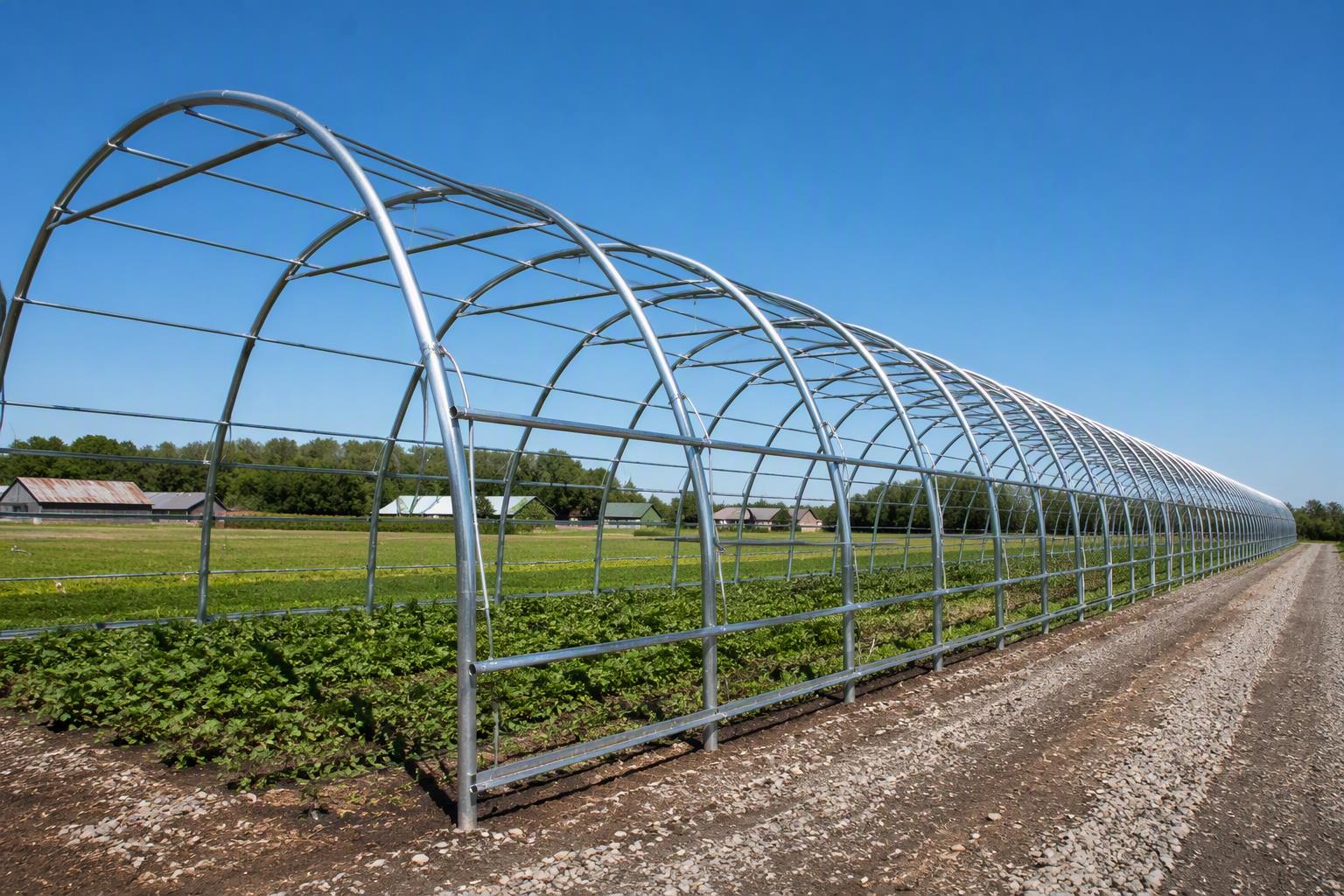
Start with the environment, because it eliminates most options by itself. If the finished product will stand outside, get wet, sit in the sun or face road salt, specify a hot dipped galvanized tube: fencing and gate frames, handrails and balustrades, greenhouse and polytunnel arches, solar mounting structures, crash barriers, sign gantries and agricultural equipment all live on the thick zinc reserve and the full edge coverage that only immersion provides. The greenhouse example is instructive: a frame built from electro-galvanized tube under plastic sheeting will see condensation every night and fertilizer dust all season, and the thin coating plus bare cut ends will begin to bloom white rust within a year or two, while the same structure in hot-dip tube is still sound after a decade. If the part lives indoors or in a dry, sheltered space, electro-galvanized steel tube is frequently the smarter buy: furniture frames, display stands, shelving and racking components, appliance frames, cable trays, trolleys and light automotive parts need a smooth, uniform, paint-friendly surface at a low cost per metre, and they rarely see enough moisture to exhaust even a thin zinc layer. Next, consider how the tube will be fabricated. If the design calls for heavy bending, flanging or close-tolerance assembly, the ductile thin coating of electro-galvanized tube survives forming without cracking, whereas a thick hot-dip coating should generally be formed first and galvanized afterwards. If the part is welded, remember that welding destroys the zinc locally in either product and the joint needs a zinc-rich repair coating, but a pre-plated tube also leaves its weld seam unprotected from day one. Finally, look at the whole order rather than a single line item: many projects mix tube with sheet and coil, and buyers consolidating a galvanized fence or racking program often pair tube with galvanized steel sheet with a Z275 coating from the same mill so that finish, coating chemistry and documentation are consistent across the shipment. When in doubt, the specification should name the environment, the coating route and the governing standard, and let the supplier quote against that description rather than against a bare product name.
What Standards Apply to Hot-Dipped and Electro-Galvanized Steel Tube?
Standards turn a marketing description into a measurable coating thickness, so naming the right specification prevents most supply disputes.
ISO 1461 and ASTM A123/A123M govern hot-dip coatings on fabricated articles, while electro-deposited zinc on steel falls under ASTM B633.
Standards are where the two products stop sounding similar and become legally different goods, so they belong in every inquiry. For hot-dip coatings applied to fabricated iron and steel articles, the international reference is ISO 1461, formally titled Hot dip galvanized coatings on fabricated iron and steel articles: specifications and test methods, and the current edition, published in 2022, sets minimum local and average coating thicknesses that rise with the thickness of the steel section, together with sampling and test methods for verifying them. The ISO 1461 scope is worth reading carefully because it excludes sheet, wire, and tube hot-dip galvanized in automatic plants, so a tube galvanized on a continuous mill line may fall outside it even though it is genuinely hot-dipped. In North America the equivalent reference is ASTM A123/A123M, which covers zinc (hot-dip galvanized) coatings on iron and steel products and likewise grades the required coating weight by material category and thickness; small parts such as fasteners are more often quoted to ASTM A153, and galvanized pipe ordered to pipe standards is governed by ASTM A53, which includes hot-dipped welded and seamless pipe. The international specification buyers most often cite is ISO 1461:2022, while North American projects will reference ASTM A123/A123M; both documents are written in measurable terms, average and minimum thickness, adhesion behavior, and appearance criteria, which is exactly what a receiving inspection can check. Electro-galvanized tube and parts, by contrast, are specified to electroplating standards, most commonly ASTM B633 for electrodeposited coatings of zinc on iron and steel, which classifies coatings by service condition and thickness, and buyers of plated strip should also confirm whether the standard applies to the finished part or to the strip before forming. Whatever standard governs the order, ask the supplier three questions in writing: which coating route was used, what average and minimum coating thickness was measured, and which test method produced the certificate. A supplier who answers all three with documents is describing a real product; a supplier who answers with adjectives is describing hope. Putting the standard name into the inquiry costs nothing and removes almost all of the ambiguity this article has walked through.
Ready to compare specifications for your next order? Send your profile, dimensions, wall thickness, coating requirement and destination port, and our team will confirm the governing standard and reply with a quotation and lead time. Start the conversation on our contact page.
Conclusion: Hot-dipped galvanized tube wins outdoors on coating thickness and life; electro-galvanized steel tube wins indoors on finish and cost. Match the coating to exposure, not price.