
Galvanized Steel vs Galvalume: Which Offers Better Corrosion Protection?
Rust never sleeps, and a coating chosen on price alone can fail years before you expect it to.
Galvalume generally outlasts galvanized steel in most outdoor exposures thanks to its 55% aluminium–zinc coating, while hot-dip galvanized steel remains the tougher, lower-cost choice where abrasion, cut edges and forming damage dominate.
If you are specifying coated steel for roofing, structural sections, ductwork or tube, the decision between these two metallurgically different products decides how many years the steel stays rust-free — and how much your client spends on maintenance. This guide compares galvanized vs galvalume honestly: how each coating is made, how each resists corrosion, what happens at cut edges, how service life changes across environments, and which material makes sense for your budget and fabrication process. No marketing gloss, just the engineering trade-offs you need before placing an order.
What Is the Difference Between Galvanized Steel and Galvalume?
Both products start as steel sheet or strip, but the protective metal applied to the surface is completely different.
Galvanized steel carries a coating of nearly pure zinc, while galvalume carries an alloy of roughly 55% aluminium, 43% zinc and a small silicon addition, applied by the same continuous hot-dip principle.
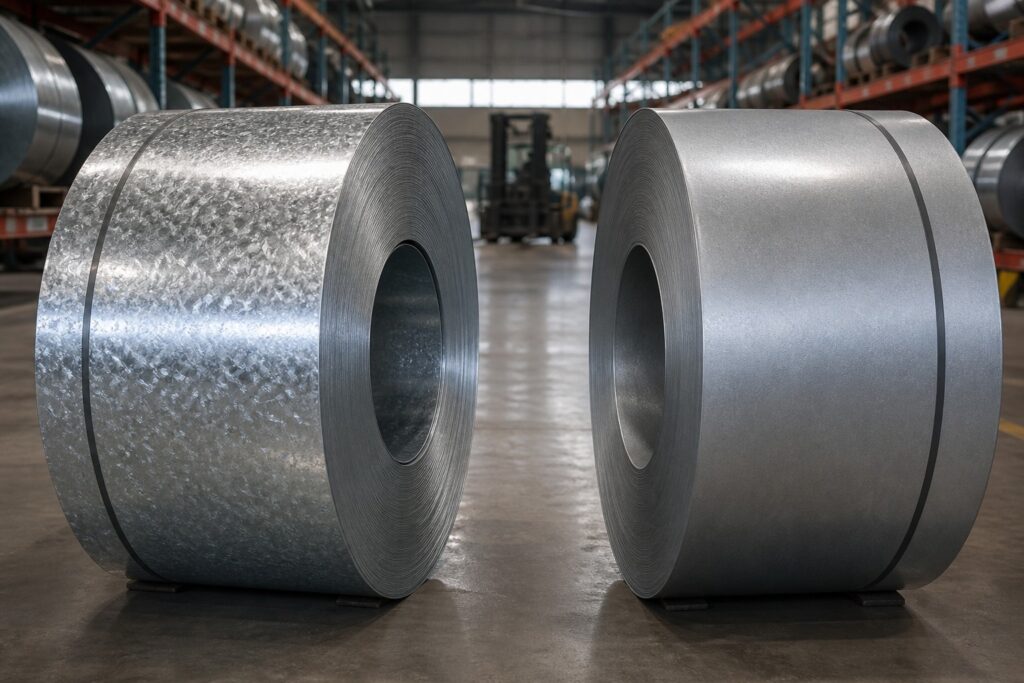
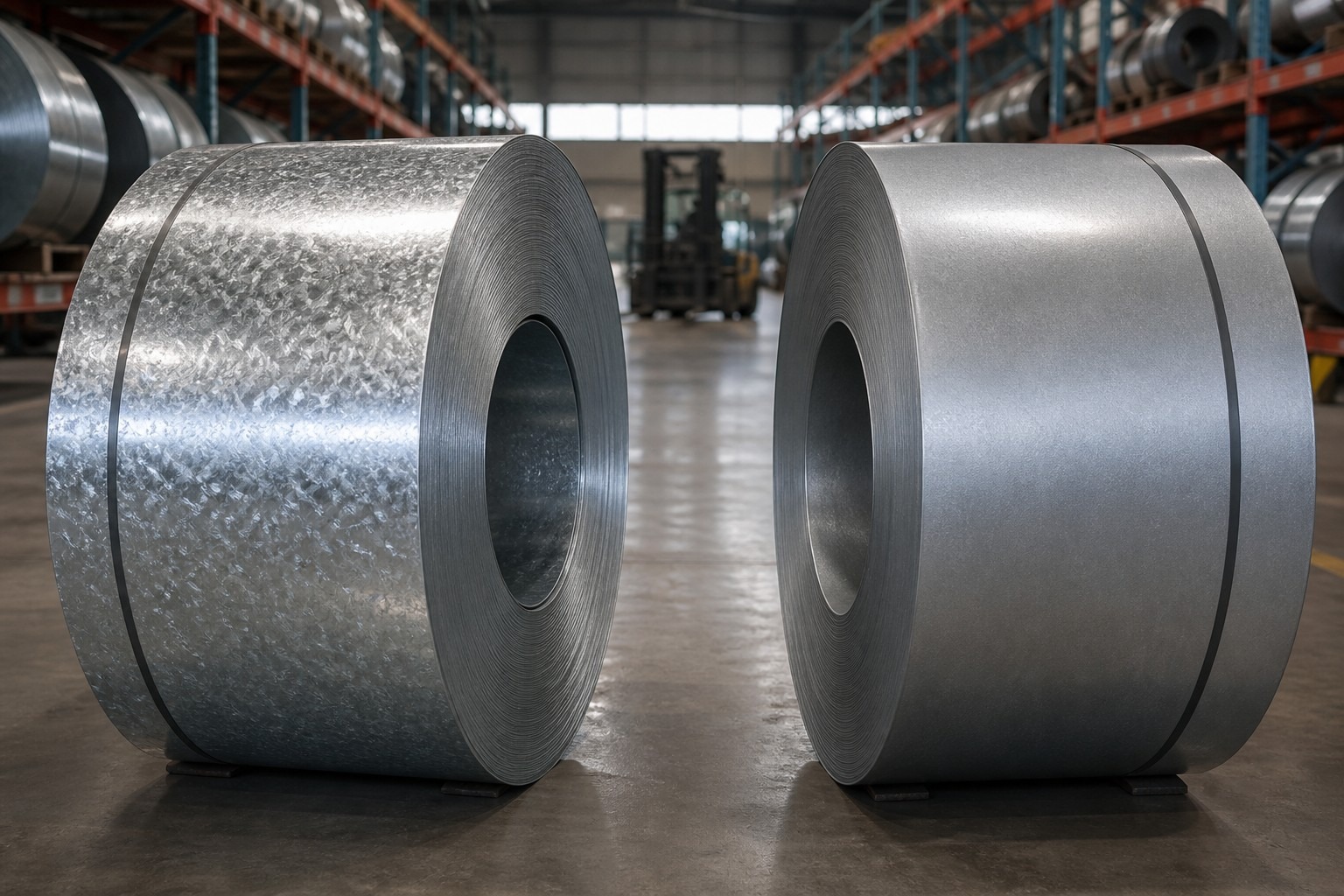
Dive deeper: the metallurgy behind the two names. When people say galvanized steel, they almost always mean hot-dip galvanized (GI) material produced on a continuous galvanizing line, where cold-rolled or hot-rolled strip passes through a bath of molten zinc at around 450°C. The result is a coating that is essentially zinc with a thin intermetallic layer at the steel interface, and it is defined by the mass of zinc per square metre — commonly expressed as a coating weight such as Z180 or Z275 on sheet, or by average thickness on tube and structural sections. The classic bright, crystallised “spangle” pattern on the surface is the visual signature of pure zinc solidification.
Galvalume, often abbreviated GL, is a separate family of products that belongs to the aluminium–zinc alloy class. The bath is roughly 55% aluminium by weight, which changes the solidification behaviour completely: instead of a pure zinc spangle, the surface develops a characteristic grey, more uniform finish. The aluminium fraction forms a dense, stable aluminium-oxide layer that acts as a long-lasting barrier, while the zinc fraction remains dispersed in the microstructure and still provides sacrificial protection at small scratches and at freshly cut edges. ASTM specifications for this coating family are designated under the A792 series, whereas traditional zinc-coated sheet is covered by ASTM A653, and the two standards must never be treated as interchangeable on a drawing or purchase order.
Because the two coatings behave differently under the same weather, buyers frequently ask which one they should put on their galvanized steel tube, purlin, roofing sheet or silo wall. The short answer is that neither is universally superior — the winner depends on the environment, the amount of cutting and drilling the component will receive, and the service life you are willing to pay for. The sections below break that decision down into measurable factors so you can compare galvanized vs galvalume against your own project conditions rather than against marketing claims.
| Property | Galvanized steel (GI) | Galvalume (GL) |
| Coating composition | Pure zinc (typical) | 55% aluminium, 43% zinc, silicon |
| Coating family standard | ASTM A653 zinc-coated | ASTM A792 aluminium–zinc alloy |
| Surface appearance | Bright spangled finish | Uniform grey, matte tone |
| Primary protection mode | Sacrificial (cathodic) | Barrier, with limited sacrificial action |
| Cut-edge behaviour | Fast, wide sacrificial protection | Slower creep of zinc-rich phases |
| Typical best-fit use | Tubes, structural steel, immersion-prone parts | Roofing, wall cladding, long-life exterior sheet |
How Does Each Coating Stop Corrosion from Starting?
Corrosion starts where moisture and oxygen reach the steel surface — unless the coating can block that contact or sacrifice itself first.
Galvanized steel protects by sacrificial action: zinc corrodes preferentially and keeps protecting bare steel even where the coating is scratched, while galvalume mostly protects by forming an inert aluminium-oxide barrier that physically seals the surface.
Dive deeper: two different defence strategies. Zinc is electrochemically more active than iron, so in the galvanic series it acts as a sacrificial anode. When a galvanized component is scratched down to the steel, the surrounding zinc corrodes instead of the exposed steel, and the corrosion products redeposit over the damaged area. This cathodic protection is the reason galvanized steel can survive decades of service despite inevitable handling damage — the coating effectively heals small defects by sacrificing itself. The broader technical background on this mechanism, including the role of zinc carbonate patina formation, is well summarised in the Wikipedia overview of galvanization, which explains why zinc continues to protect steel even where gaps exist in the coating.
Galvalume works differently. Its high aluminium content produces a very stable, tightly adherent oxide film that cuts corrosion current at the surface — this is a barrier defence, not a sacrificial one. The practical consequence is excellent resistance to general atmospheric corrosion, especially in the sheet form used for roofing and cladding, because the aluminium oxide does not wash away or dissolve as quickly as zinc corrosion products. The trade-off appears at damaged areas: the aluminium-rich matrix is less electrochemically active, so galvalume does not throw protective current across large bare areas the way a pure zinc coating does. At small scratches the zinc phase in the alloy still provides limited sacrificial protection, but at large cut edges the protection depends on a slow “creep” mechanism in which zinc-rich corrosion products migrate laterally across the exposed steel over many months.
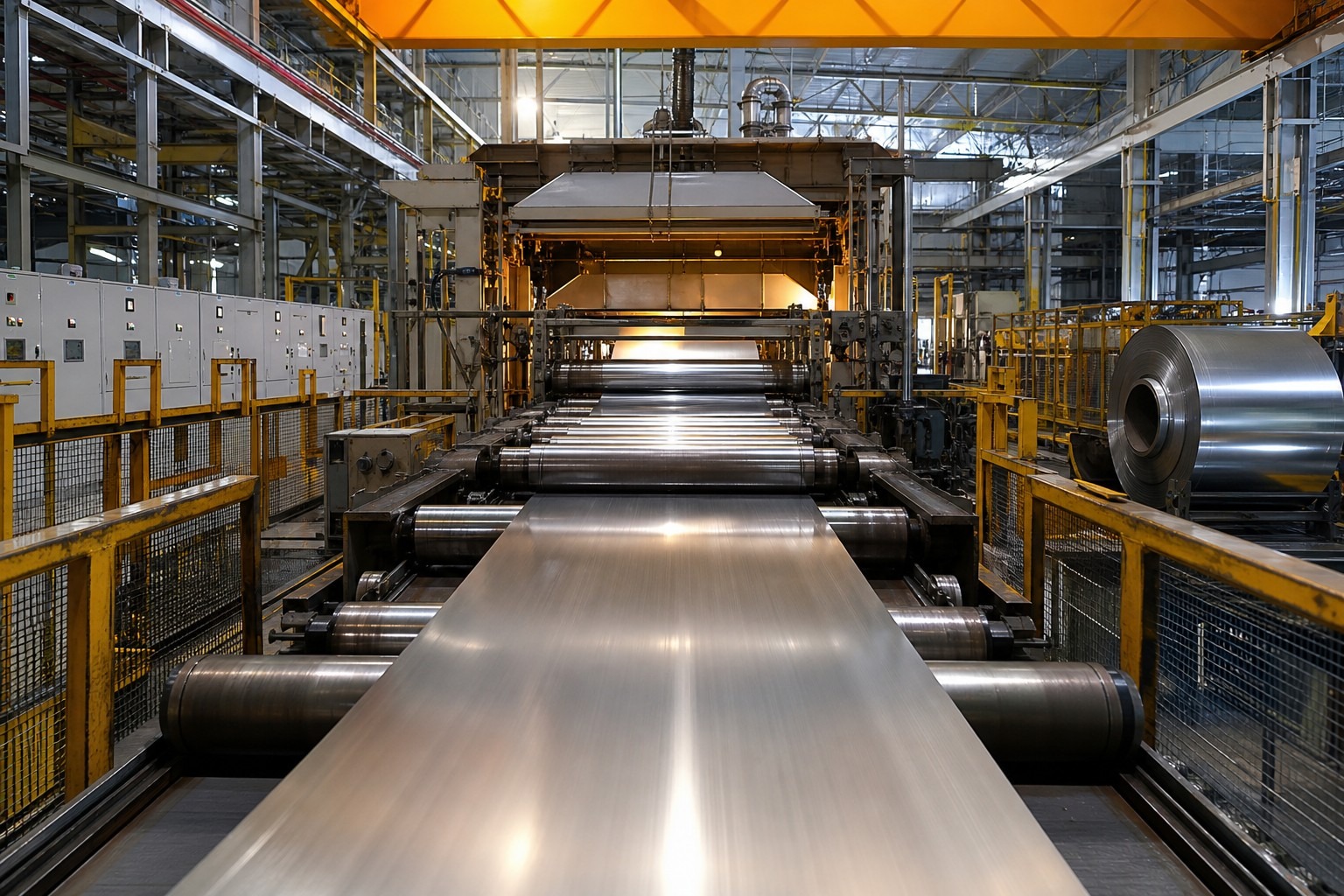
How the coating is applied matters too. Both products are made on continuous hot-dip lines where strip is cleaned, annealed, passed through the molten bath, and then cooled under controlled conditions that set the coating microstructure. A modern coil coating line runs at high speed with accurate bath chemistry and coating-weight control, because small variations in bath composition change the corrosion performance of the finished sheet far more than most buyers realise. Specifying the correct coating weight, the correct steel grade and the correct coating family on the same purchase order is the single most reliable way to get the performance you actually pay for.
Galvanized vs Galvalume: Which Lasts Longer in Coastal or Industrial Air?
Environment is the dominant factor in coating life, and the ranking of the two materials reverses in some exposures.
In clean rural air both coatings last a very long time; in marine and industrial atmospheres galvalume typically shows slower general corrosion, but galvanized steel often behaves better where the coating is repeatedly damaged or where components stay wet for long periods.
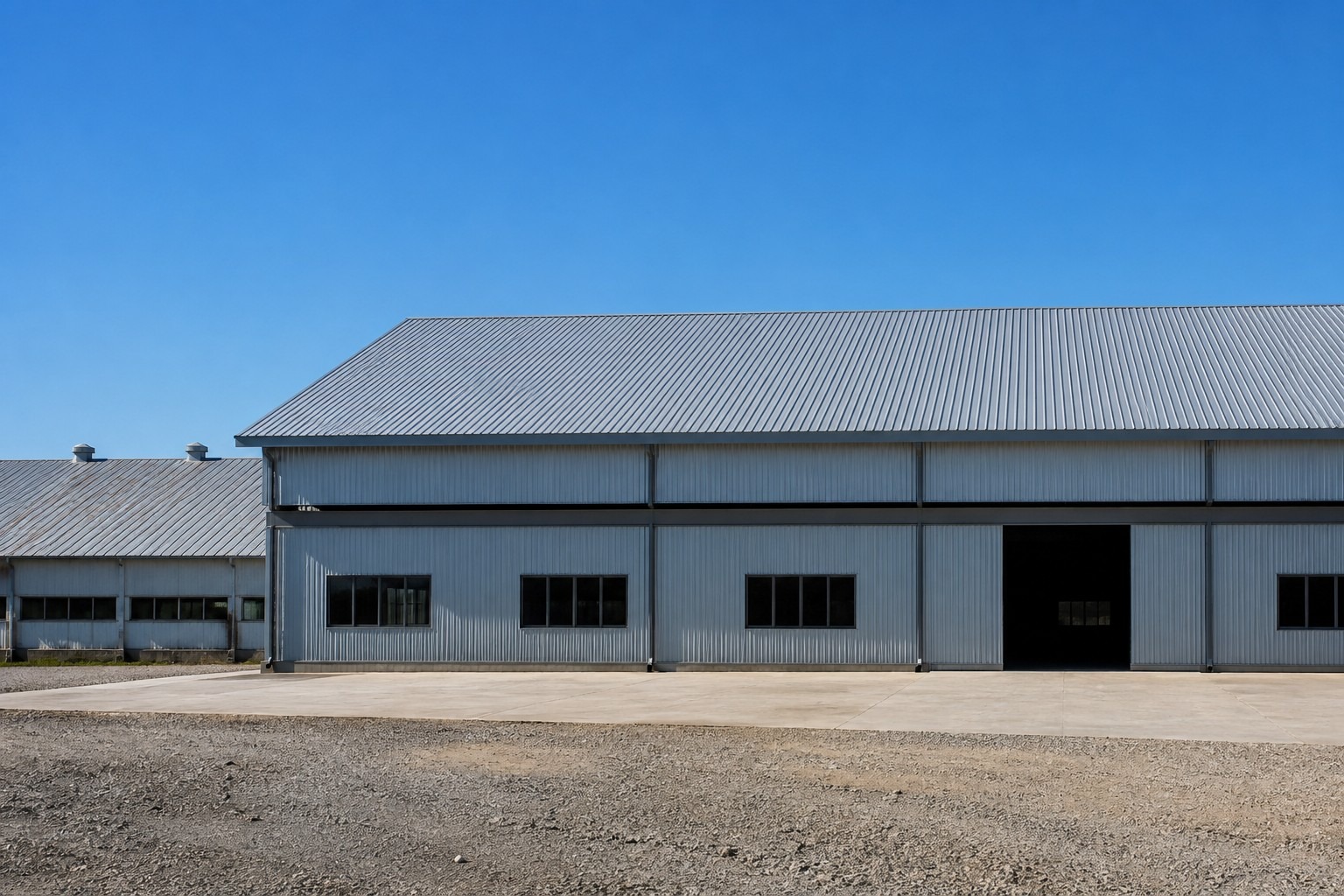
Dive deeper: reading the environment correctly. Atmospheric corrosion of coated steel is driven by time-of-wetness, chlorides from sea spray and sulphur dioxide from industry. Galvalume’s aluminium-oxide barrier is remarkably resistant to chloride-driven attack, which is why galvalume roofing and wall cladding have a strong track record in coastal buildings, agricultural sheds and industrial facilities. Industry field data compiled by organisations such as the American Galvanizers Association and the Galvanizers Association (UK) consistently shows that the atmospheric life of a coating is roughly proportional to its thickness, but the corrosion rate of the 55% aluminium–zinc alloy in most outdoor environments is substantially lower than that of pure zinc of the same coating mass — commonly reported at a fraction of the zinc corrosion rate in the same atmosphere.
There are, however, exposures where galvanized steel wins. Zinc’s sacrificial behaviour is an advantage in situations where the coating will be mechanically damaged in service, and in certain constantly wet or buried conditions a well-chosen zinc coating continues to protect the steel cathodically, whereas a barrier coating relies entirely on staying intact. If your project involves structural tube, fence posts, handrails, cable trays or any component that is cut, drilled, scratched, bolted and knocked around during installation, the self-healing character of galvanized steel is worth more than a marginally lower corrosion rate on an untouched panel. If the project is a roof or wall skin that is installed once and then left alone for thirty years, galvalume’s slow general corrosion rate is usually the better bet. For anyone comparing material options for coated tube in particular, read our earlier guide on tube types and benefits, which walks through the common applications and typical service expectations for galvanized tube products in more detail.
What Happens at Cut Edges, Scratches and Welds?
Every fabrication shop cuts, punches or welds coated steel — and the uncoated edge is where rust always starts.
At a fresh cut edge, galvanized steel protects the exposed steel over a wider band and more quickly than galvalume, whose protection relies on the slower creep of zinc-rich phases from the adjacent coating.
Dive deeper: why edge protection decides real-world performance. When you cut a galvanized sheet, the zinc coating adjacent to the cut becomes the anode and protects the bare edge — the classic “edge protection” effect. Because zinc corrodes preferentially over a reasonably wide band, galvanized edges stay clean for a long time, which is why galvanized products tolerate site cutting and drilling so well. Galvalume also protects cut edges, but through a different and slower mechanism: the zinc phase in the alloy corrodes preferentially and its corrosion products creep laterally over the exposed steel. This works, and for many atmospheres it is sufficient, but the protection band is narrower and develops over a longer period, so a galvalume panel with a raw edge exposed to aggressive chloride-laden rain can show edge rust sooner than an equivalent galvanized panel would. This is a well-understood phenomenon in the coated-steel industry and is one reason fabricators are advised to apply a zinc-rich edge primer on galvalume components that will be heavily cut in the field.
Scratches behave similarly. A light scratch through the galvalume surface that exposes only the alloy layer is generally harmless because of the stable oxide film; a deep scratch down to the steel is better tolerated by galvanized steel, which sacrifices zinc across the whole damaged zone. Welding is the third weak point: any welding on either product destroys the coating around the weld, and the weld area must be cleaned and repaired with a zinc-rich paint or by metal spraying, regardless of whether the base sheet is GI or GL. Dissimilar-metal contact is another trap documented in engineering references such as AZoM’s technical note on galvanic corrosion of galvanized steel: placing coated steel in contact with copper, brass or stainless steel fasteners can accelerate local corrosion of the coating, so fastener selection should match the corrosivity of the environment. For tube and structural sections that will be drilled on site, this edge and scratch behaviour is precisely why many engineers still default to hot-dip galvanized material even in projects where galvalume sheet would otherwise be specified.
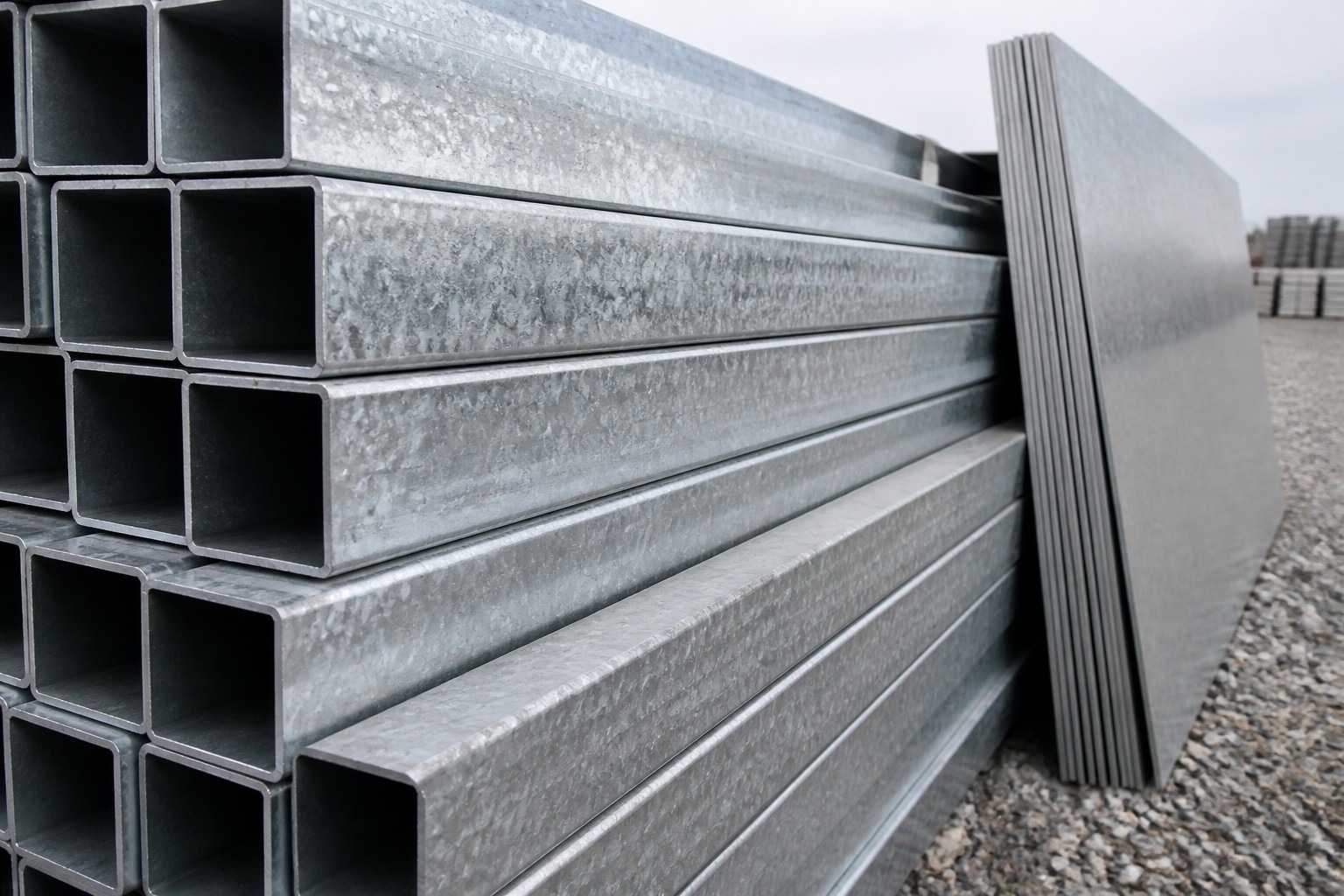
The dense spangle texture on a galvanized tube is not just cosmetic; it is evidence of a thick, sacrificially active zinc layer that keeps protecting the steel long after the fabricator’s saw has exposed fresh metal.
Galvanized vs Galvalume: How Should Cost Influence Your Choice?
Initial price per tonne is only half the calculation; cost per year of protected service is the number that matters.
Galvanized steel is generally the lower-cost coating to purchase, while galvalume frequently delivers a longer service interval in outdoor sheet applications, which can make it the cheaper material over a full life cycle.
Dive deeper: comparing value without being fooled by sticker price. Coated steel is sold by coating mass, base steel grade and dimensional tolerance, and the mill price of the two coating families differs because of bath chemistry, alloy costs and line configuration. As a general engineering rule, for the same steel thickness and coating mass, hot-dip galvanized product tends to carry a lower purchase price than galvalume, and galvanized tube is among the most economical corrosion-protected products available in structural sizes. However, the relevant comparison for a building owner is not the invoice from the steel merchant but the annualised cost of the installed component: if a galvalume roof system delivers a materially longer interval before first maintenance in a coastal environment, paying more per sheet can still be the economically rational decision. Conversely, if the component is inside a dry building or is expected to be replaced during a renovation anyway, paying a premium for a longer-life coating is wasted capital.
Three cost traps to avoid. First, comparing coatings by thickness alone is misleading because a micron of the aluminium–zinc alloy and a micron of zinc are not equivalent in corrosion rate — always compare by expected life in your specific environment. Second, do not assume that all galvanized or all galvalume products are equal: coating weight, steel grade and edge quality vary between mills, and a cheap coil with a marginal coating weight can underperform an expensive one in the same exposure. Third, remember that fabrication cost is often larger than the material premium: if your design forces extensive cutting and drilling of galvalume sheet, the cost of edge treatment may erase the coating’s life advantage. For most buyers the sensible process is to fix the service-life requirement first, estimate the coating mass needed in the actual environment, and only then compare prices between equivalent specifications.
How Do You Choose Between Galvanized Steel and Galvalume for Your Project?
You now have the full trade-off; the final step is matching it to your application and site conditions.
Choose galvalume for long-life roofing, cladding and exterior sheet in clean or mildly corrosive atmospheres, and choose galvanized steel for tube, structural sections and components that will be cut, drilled, handled hard or kept wet.
Dive deeper: a practical selection checklist. Start with the environment: coastal chloride exposure and industrial sulphur pollution favour galvalume’s barrier film on sheet products, while rural and indoor service is forgiving enough that galvanized steel is usually the value choice. Second, examine the fabrication route. Components that are roll-formed from coil, where the coating is bent but not removed, suit either material, but anything saw-cut, punched or drilled on site moves the balance toward galvanized steel and its wider edge-protection band. Third, think about mechanical abuse in service: pallet racking, fence posts, handrails and tube supports take knocks that scratch through any coating, and zinc’s sacrificial behaviour is the most forgiving response available at a reasonable price. Fourth, consider appearance: galvalume weathers to a uniform grey that many architects prefer, while galvanized spangle is brighter initially and dulls to a patchy grey as the zinc patina develops.
Finally, verify the specification, not just the trade name. “Galvanized” and “galvalume” are sometimes used loosely by traders, so confirm the coating family, the coating weight, the base steel grade and the applicable standard on the mill certificate, and ask your supplier to state the coating mass explicitly for the exact profile you are buying. If you are comparing a 30×30×1.5 mm galvanized steel tube against an alternative profile for a structural frame, the same logic applies at component level: weigh the environment, the amount of site cutting, the required service life and the total installed cost. When the answer still feels uncertain, ask our engineers for coating guidance with your drawings and site location, and we will help you compare galvanized vs galvalume options against real atmospheric data for your region before you commit to a purchase.
Conclusion: Galvalume wins on long-term atmospheric sheet life; galvanized steel wins on edge toughness, economy and versatility — so choose by environment, fabrication and service life.