
Oil Country Tubular Goods Explained: What Are OCTG Casing and Tubing?
One casing failure can end a well programme and cost millions. Most OCTG specifications are still inherited rather than engineered — signed before anyone asks what the string must withstand.
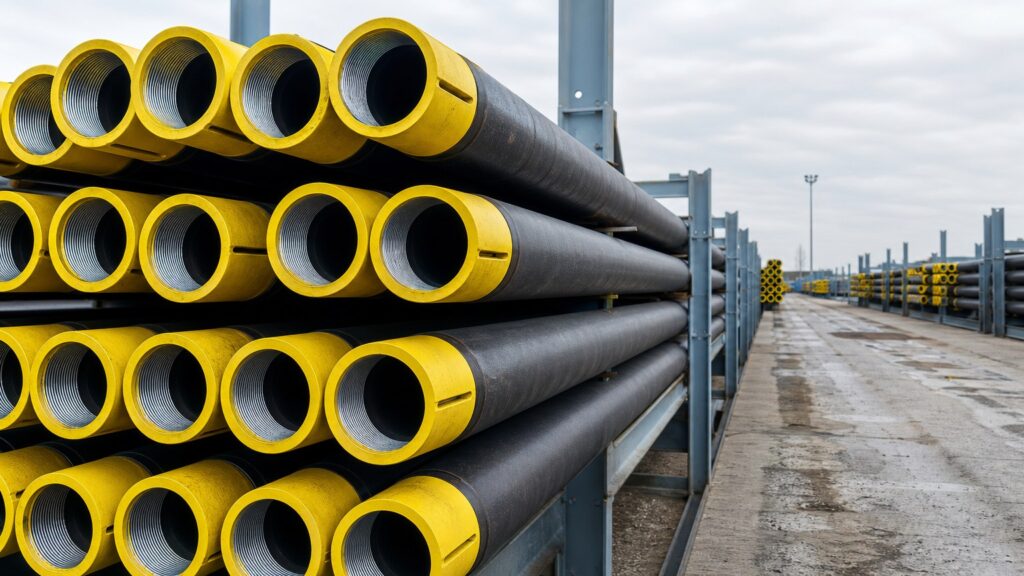
OCTG — oil country tubular goods — are the seamless steel pipes used to line and complete an oil or gas well. Casing is the larger pipe cemented in the borehole to seal formations; tubing is the smaller pipe run inside it to carry production to surface.
Transition: the two products look alike on a pipe rack and behave very differently in service, and the specification that decides which one you need is written long before the first joint is run. The sections below follow that sequence — what the product family contains, how casing and tubing divide the work, which standards and grades govern them, how connections are chosen, and what inspection has to prove before a string leaves the mill. By the end you should be able to read an OCTG enquiry and know exactly which questions are still unanswered.
What Are Oil Country Tubular Goods and Where Do They Fit in a Well?
OCTG is a product family, not a single item: every pipe the well needs below the wellhead, from conductor to production liner.
Oil country tubular goods are seamless or welded steel pipes made to API 5CT and ISO 11960 and used downhole. The group covers casing, tubing and pup joints, with couplings, coupling stock and accessory material.
Why the tubular string is the well’s structure
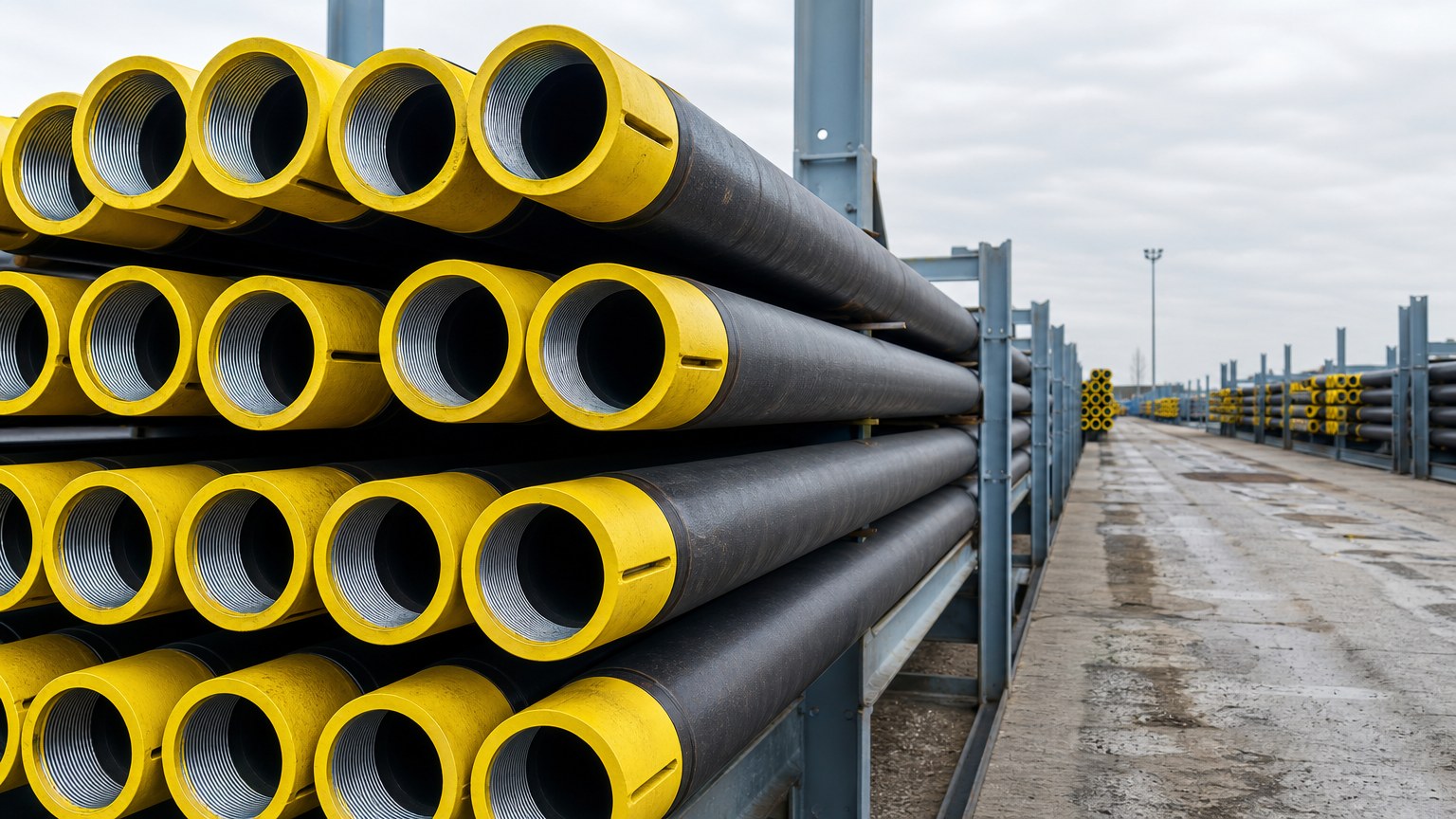
A well is never drilled and left open. Each interval is cased before drilling continues, and the casing is cemented so that pipe and cement sheath together hold back formation pressure, isolate zones from one another and protect shallow fresh-water aquifers. That is why the string is designed as a pressure vessel rather than a pipe: burst, collapse and tensile ratings are calculated for the worst combination of conditions the tubulars will meet while drilling and throughout the producing life of the well, and every subsequent string must pass inside the one above it. As described for well casing, hole sizes and casing sizes cascade downwards, and the inside diameter of the final string has to accommodate the tubing and the hardware that hangs with it — packers, gas-lift mandrels and subsurface safety valves.
What the family contains beyond the pipe body
Casing and tubing are the visible half of the product group; the couplings and accessory material are where a surprising share of field failures originate. A coupling is the threaded sleeve that joins two joints, and it is machined to match the connection type, the grade and the wall thickness of the pipe it serves. Coupling stock and coupling material are therefore ordered and certified as separate items, and the thread compound, thread protectors and pup joints (short lengths used to make up exact string lengths at surface) travel with them. Buyers who purchase pipes and couplings from separate sources take on an interface risk that mills and accredited threaders spend considerable effort removing, which is why a complete order is normally specified as pipe, coupling and thread protection from one qualified route.
The commercial consequence is that an OCTG enquiry is never a single line item. Wall thickness, grade, connection, coupling, thread form, length range and coating each carry their own requirement, and each one can move the price independently. That structure is also why this product family rewards being specified as a system rather than assembled from the cheapest available parts.
What Is the Difference Between Casing and Tubing?
Casing is the well’s permanent lining; tubing is the removable conduit that produces the well.
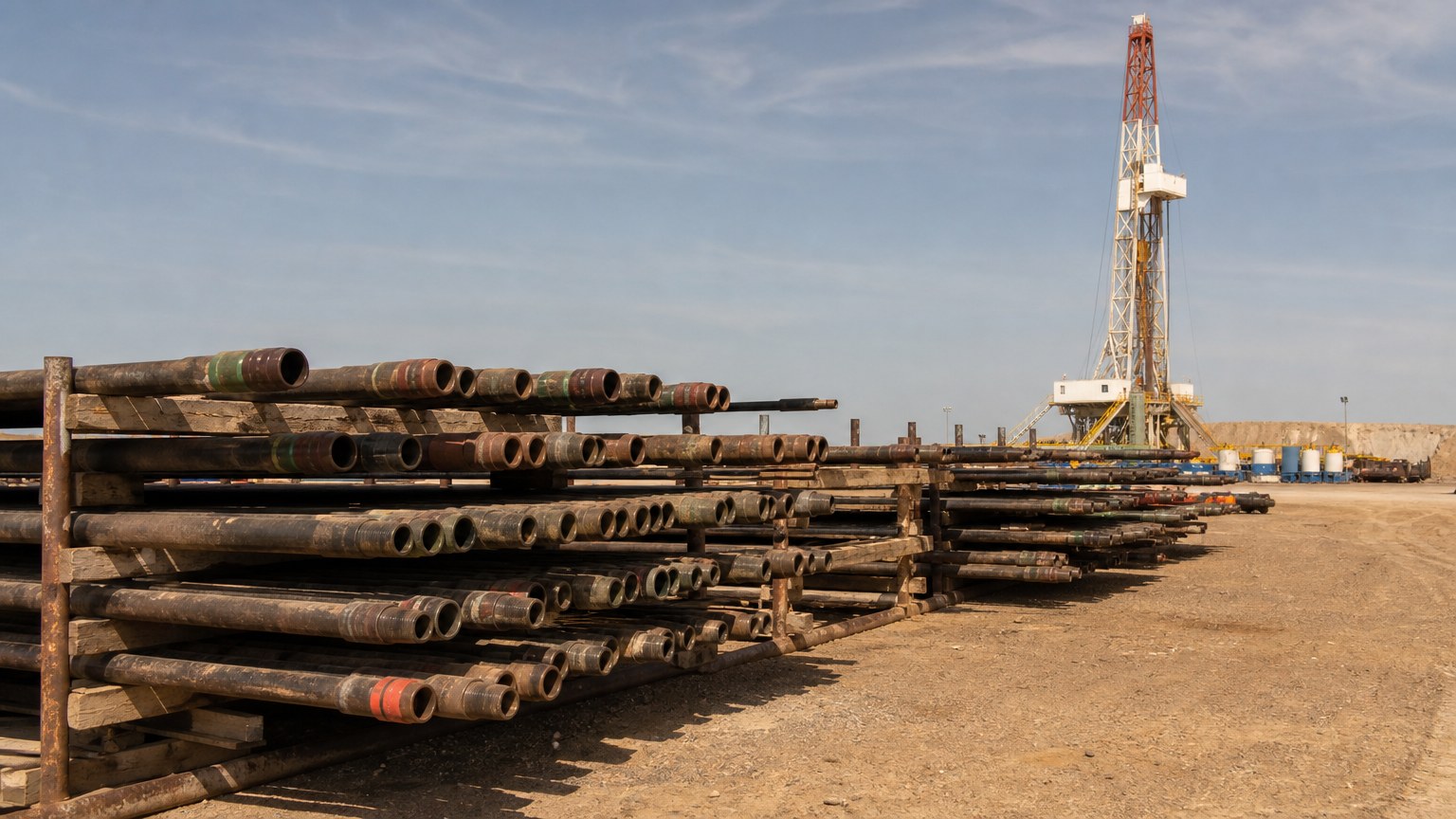
Casing is larger, cemented in place and stays for the life of the well. Tubing is smaller, run inside the production casing, sealed at the bottom by a packer and retrievable for workovers. Several casing strings are typical; one production tubing string is normal.
The two roles, and why the difference matters commercially
The functional split is simple, but it drives every purchasing decision that follows. Because casing is cemented and never recovered, it is specified for structural integrity: collapse resistance against external pressure deeper in the hole, burst resistance against internal pressure near surface, and tensile capacity to carry its own weight when the string hangs in the wellhead. Because tubing is designed to be pulled, it is specified for flow and for repeatability: a smooth bore, a pressure-tight connection that can be made up and broken out many times, and resistance to the produced fluid. The related notion of production tubing puts this plainly — tubing is run after the casing has been cemented, and it exists to protect the casing from wear, corrosion and deposits while conveying fluid to surface. Most OCTG casing and tubing is therefore produced as seamless product rather than welded, because a pierced wall has no seam to interrogate in a service where the consequence of a seam defect is a well-control event rather than a leak. Our overview of OCTG casing and tubing supplied in seamless form sets out the size and wall range available for that route.
How the two strings work together downhole
The strings form a nested system with a defined hierarchy. A conductor string is set shallow to support loose surface formations and to return drilling fluid; surface casing isolates freshwater zones and is the most strictly regulated string on the well; intermediate casing is run where pore pressure and fracture pressure diverge far enough to require it; production casing is the final full string and the one that isolates the producing interval, which is then perforated selectively. Where a full string is uneconomic, a liner is hung off inside the previous casing instead, overlapping it by a short distance — a common arrangement in the 7 inch range for deeper sections. Tubing is then run inside the production casing and sealed by a packer that prevents formation fluid entering the annulus, so that produced gas or oil travels up a controlled bore rather than up an open hole. Every one of those decisions consumes wall thickness, grade or connection capability, which is why the casing design is one of the first engineering documents a well programme produces and one of the last anyone wants to re-open.
Which Standards and Grades Govern OCTG Casing and Tubing?
Two documents do most of the governing: API Specification 5CT and its ISO counterpart.
API Spec 5CT, matched internationally by ISO 11960, sets the technical delivery conditions for casing, tubing and pup joints, including grades, product specification levels and testing. Connections and thread gauging are covered separately by API Spec 5B.
Grades, product specification levels and what they change
Grades group pipes by minimum yield strength and by the service they tolerate, and the grouping is not cosmetic. The current edition of the ISO standard lists the applicable grades as H40, J55, K55, N80, L80, C90, R95, T95, P110, C110 and Q125, and it also specifies three product specification levels. The arrangements are set out on the ISO 11960:2020 standard page, while the API edition of the same specification is announced on the API Specification 5CT page. PSL-1 is the baseline and is what a straightforward water-disposal or shallow service string usually needs. PSL-2 adds mandatory non-destructive examination, tighter chemistry and impact-testing requirements, and it is the usual basis for anything in a pressure-critical or low-temperature service. PSL-3 goes further for the most demanding sour and high-pressure applications. The practical point for a buyer is that two quotations for the same size, wall and grade can differ substantially without either being dishonest, because they may not describe the same PSL.
How to read an OCTG grade designation
A designation such as N80 Type 1 or L80 13Cr looks cryptic and is not. The letters indicate the strength or service group — for example J and K grades for the lower-strength casing and tubing range, N for a widely used medium-strength grade, L and C for restricted-yield grades with controlled hardness for sour service, and P and Q for high-strength, high-pressure service. The number in most cases is the specified minimum yield strength in ksi: J55, K55, N80 and P110 sit at roughly 55, 55, 80 and 110 ksi minimum yield. Beyond strength, grades carry heat-treatment conditions and, in the sour-service families, hardness ceilings that exist because sulphide stress cracking is a hardness-driven failure mode rather than a strength-driven one. A grade suffix such as 13Cr indicates a modified chemistry with 13 percent chromium for resistance to carbon dioxide, which is a materials decision rather than a strength one. The most frequent specification mistake in this family is choosing a grade by strength alone and then discovering that the connection, the toughness requirement or the hardness limit has pushed the selection somewhere else entirely. As a rule, resistance to a specific well condition at a comparable strength level is the right way to compare seamless pipe available from an experienced supplier before a grade is fixed for the well programme.
How Are OCTG Connections and Threads Selected?
Strength stops the pipe failing; the connection decides whether the string holds pressure.
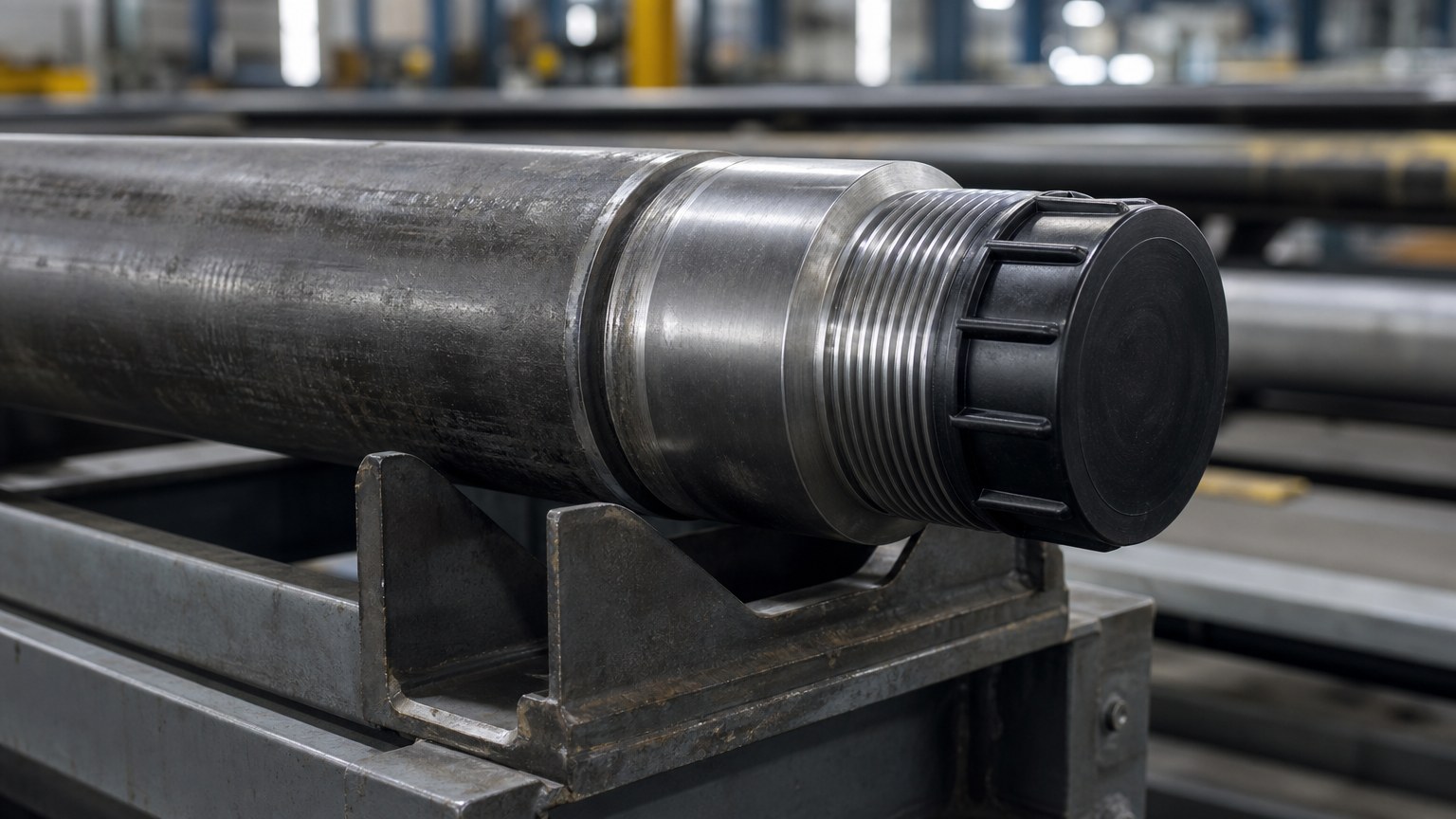
Connections are chosen from the API threaded types — short and long round thread casing, buttress casing, non-upset and external-upset tubing, and integral-joint tubing — or from proprietary premium connections for gas-tight service. Thread dimensions and gauging are governed by API Spec 5B.
Standard threads and the limits of round thread
Round thread casing is the oldest and most widely available connection family, and its constraint is geometric. The thread form depends on interference and on a thread compound to seal, so its pressure integrity is limited and it is normally specified for lower-pressure service and for applications where a small leak path along the thread is tolerable. Long round thread spreads the load over more engaged turns and is preferred where the joint is expected to carry higher tensile load. Buttress thread casing changes the thread profile to a near-vertical load-bearing flank, which raises joint strength and is the conventional choice for heavier intermediate and production strings where the connection, not the pipe body, would otherwise be the weak point. Tubing follows the same logic in a smaller envelope: non-upset tubing leaves the tube plain and needs couplings, external upset tubing thickens the tube ends to recover the strength lost to threading, and integral-joint tubing machines the connection into a thickened wall so the outside diameter stays as small as possible — useful where clearance inside the completion is tight.
When a premium connection is genuinely required
Premium connections exist because gas-tightness under combined load is a different requirement from tensile strength, and they are usually specified where three conditions meet: high pressure, the presence of gas rather than liquid only, and load cycles that include bending from directional drilling. The design features that answer those conditions are a metal-to-metal seal rather than a thread-compound seal, a torque shoulder that controls make-up precisely, and often a tapered or wedge thread for faster running and improved resistance to over-torque. For a specification engineer, the selection sequence is therefore not cosmetic: define pressure and temperature, decide whether gas-tightness is mandatory, estimate the bending and cyclical loads the string will see during installation, then compare the resulting connection requirements against what the standard threaded families can prove. Where the API families cannot demonstrate the required performance, a premium connection is the honest answer rather than a heavier wall. For a casing string in the 7 inch range, for example, 7 inch J55 OCTG casing is a common starting point for shallower surface and intermediate service, and the connection family specified with it is what decides whether the string qualifies for the load case in front of you.
How Should You Inspect and Verify OCTG Before Shipment?
Every dispute in this product group is settled by documents and measurements, never by argument.
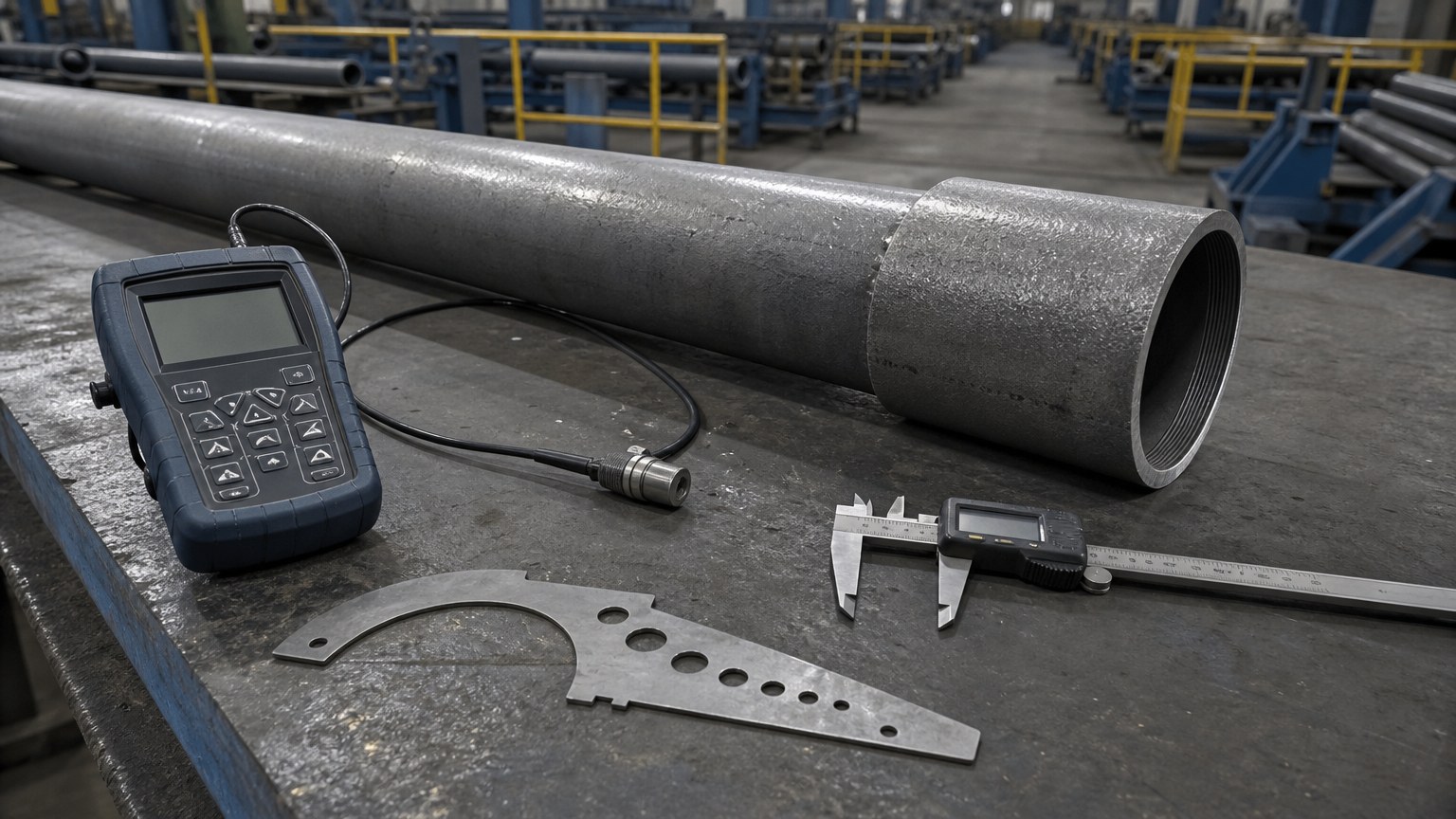
Verify dimensionally, verify metallurgically and verify the connection, then match all three to the certification. Wall thickness, drift, straightness, grade chemistry, hardness, impact properties and thread gauging should be evidenced by inspection reports and traceable mill test certificates.
The inspection regime that actually protects the buyer
Inspection is accumulated evidence, and it should be built in the mill’s own sequence rather than invented at the load port. Start with the pipe body: a wall thickness survey around the circumference and along each sampled length quantifies the eccentricity that the piercing route inherently produces, and it protects the burst and collapse calculations directly because those equations use minimum wall rather than average wall. Drift testing confirms that the bore will pass the tool the completion requires. Then metallurgy: chemistry and tensile tests, hardness surveys and, where the grade or the service calls for it, impact tests at a specified temperature. The seam comparison discussion in how ERW and seamless pipe are made is useful context here, because it explains why a seamless wall places the entire inspection burden on the body of the pipe. Finally the connection, which is where OCTG differs most sharply from general pipe: thread form, taper, pitch diameter and standoff must be gauged with the API gauges, thread protectors must be fitted, and coupling make-up torque must be controlled. A pipe that passes every body test and fails gauging is still an unusable joint.
Documentation, marking and loading checkpoints
Three habits prevent most claims. First, require the heat number to be transferred to each length or bundle so that certificates can be matched to material rather than to a delivery note; a certificate that cannot be traced to a joint is decoration. Second, require the certificate to state the standard and edition, the grade and product specification level, the wall thickness basis, the heat treatment condition and the connection type — and treat anything shorter than that as an incomplete document set. Third, where the order value justifies the cost, appoint a third-party inspector and witness the gauging, the wall thickness survey and the hydrostatic test at the works, because that is the moment when a re-test is still cheap. Before loading, confirm piece count and length against the packing list, photograph the thread protectors and coupling condition, record the wall thickness readings taken, and check that marking is legible on the material rather than only on the paperwork. If you want the grade, PSL, connection, wall basis and certificate set agreed before production starts, send your well programme to our export team and we will confirm what is available against the service conditions you describe.
Conclusion: How Do You Specify OCTG Casing and Tubing?
Specify the well before the product: define pressure, depth, fluid and load case, then choose grade, PSL, wall and connection as one system, and prove it with traceable inspection.