
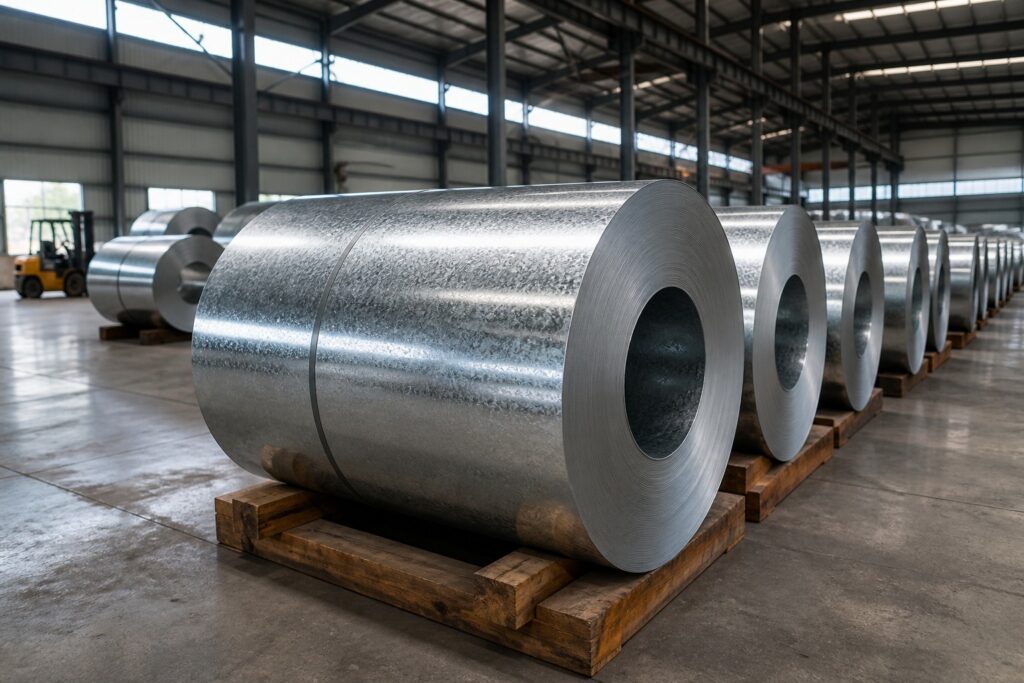
Prepainted Steel Coil: What Must You Check Before Buying Color Coated Sheet?
One fading, peeling roof panel can erase a whole project’s savings. Most color coated sheet failures trace back to decisions made at ordering time, before the coil ever ships.
A prepainted steel coil is zinc-coated steel strip finished with factory-cured paint; to buy color coated sheet safely you specify substrate, coating weight, paint type, film thickness and color, then verify each number on the mill certificate.
Choosing between suppliers then becomes a technical conversation, not a price contest. In this guide we explain the five numbers every quotation should carry, how paint systems and substrates change service life, which color and finish options are worth paying for, and the receiving checks that catch a downgraded coil before it reaches your roof or your production line.
What Is a Prepainted Steel Coil and How Is Color Coated Sheet Made?
Prepainted material is everywhere: roofs, wall panels, warehouses, even refrigerator doors. Few buyers, though, can explain what sits between the paint and the steel.
A prepainted steel coil is cold-rolled or zinc-coated strip that passes through a continuous coil coating line, where it is cleaned, pretreated, primed, topcoated and cured before being rewound into a ready-to-form coil.
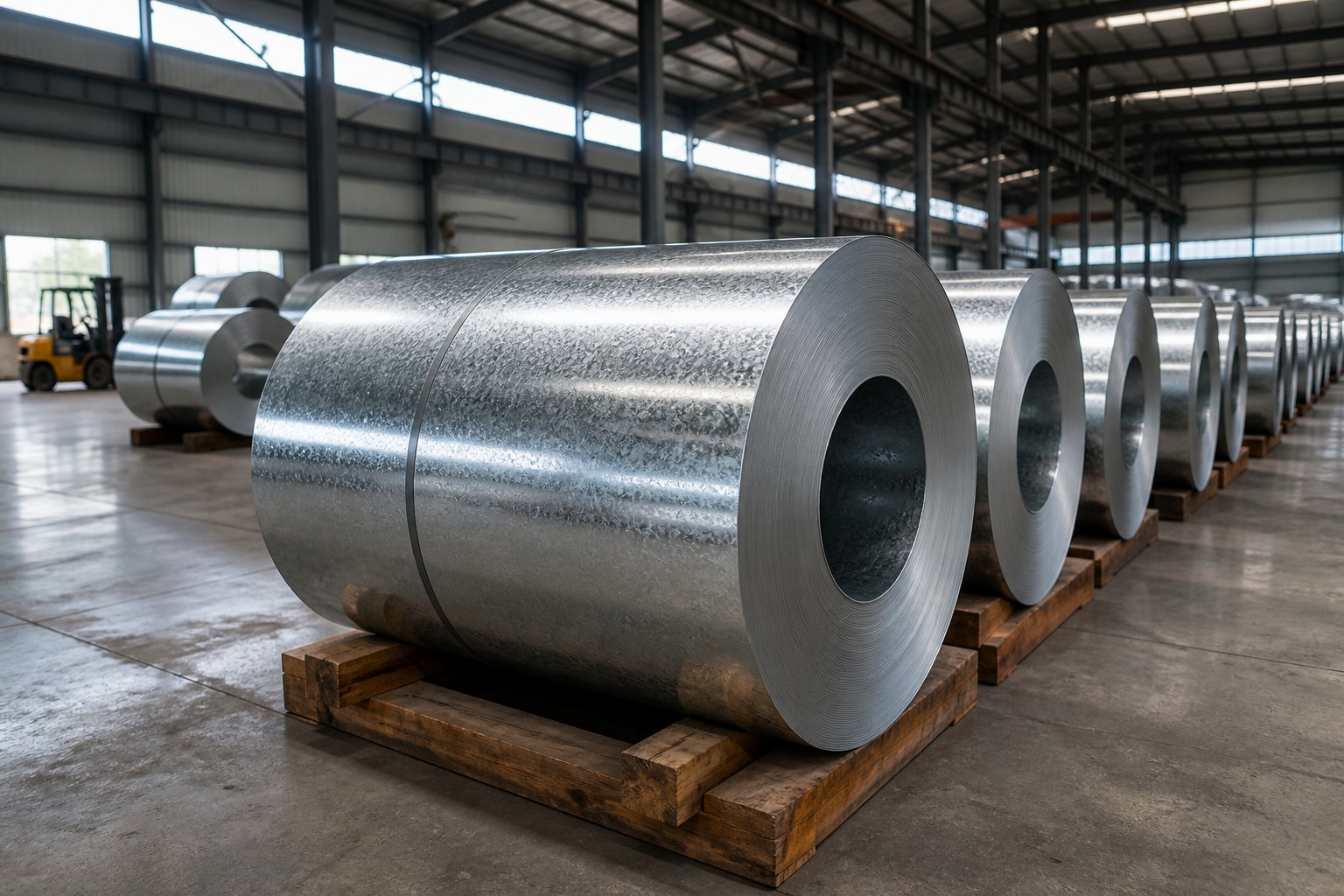
Dive deeper: what the name actually means. Color coated sheet is not painted steel in the workshop sense — no spray gun, no drying rack, no second coat applied on site. The paint is applied in a factory on a coil coating line while the strip is still flat, moving at constant speed, before the metal is cut or formed. That sequence matters more than it sounds: because every square metre of strip passes through the same rollers, ovens and cure temperatures, the coating thickness is uniform across the whole coil, which is almost impossible to achieve with post-fabrication painting on profiles with ribs, corners and concealed surfaces. The product family is often described in the industry as prepainted metal, and the encyclopedic description of the coil coating process, the line steps and the substrate families is available in the Wikipedia overview of prepainted metal, which also notes the European standard EN 10169 that governs this product group.
The structure of a coil, layer by layer. Reading a cross-section of a coil from the inside out explains nearly every quality argument you will have with a supplier. At the core is the steel substrate, usually cold-rolled or hot-dip galvanized strip in thicknesses from roughly 0.2 mm to 1.5 mm. On top of that sits the metallic protective layer, typically a zinc or aluminium-zinc coating applied by hot dipping, which defends the steel against corrosion where the organic paint is scratched or cut. Above the zinc sits a chemical pretreatment layer, a thin conversion coating that makes the paint stick to the metal instead of delaminating after a few seasons of thermal cycling. The primer is the next layer: a thin corrosion-inhibiting coat that bonds the pretreatment to the finish and carries a large share of the system’s resistance to under-film corrosion at cut edges. Finally comes the finish coat — the colour you see — which may be polyester, SMP, HDP or PVDF depending on the service life you need, followed by a protective strippable film when the coil is destined for deep drawing or handling-sensitive applications.
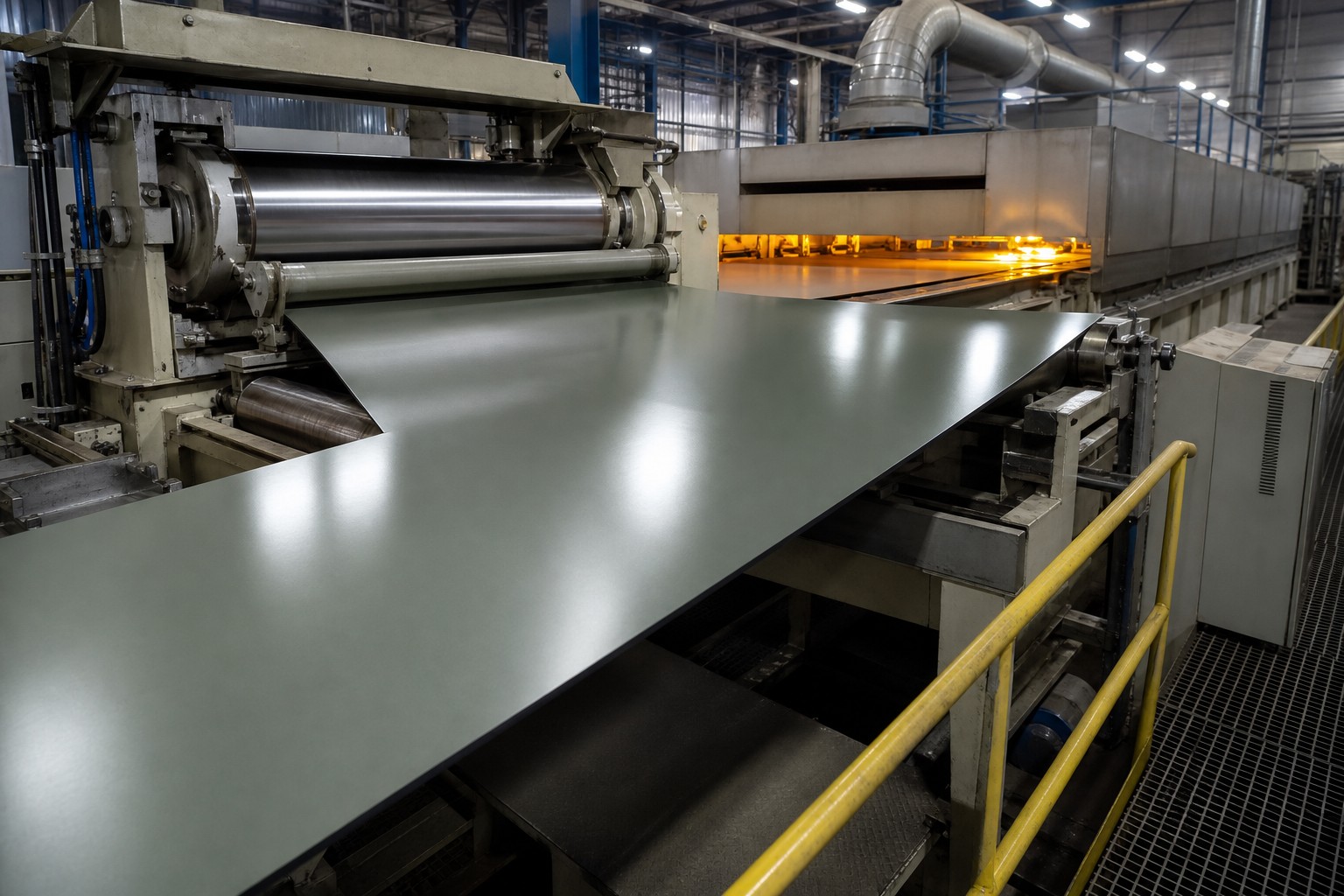
Each of those layers is a line item in the cost of the coil, which is why cheaper quotations almost always save money in a layer you cannot see with the naked eye: a thinner zinc coating, a skipped pretreatment, a lower-cost paint resin or a reduced film build. The practical rule for a buyer is simple: never buy color coated sheet by colour alone. The specification that protects you is written in the substrate grade, the coating weight, the paint system and the film thickness — the four numbers this guide walks through next.
What Is the Right Substrate for a Color Coated Steel Coil: Galvanized, Galvalume or Cold Rolled?
Choose the wrong base metal and no paint system in the world will save the coil. The substrate decides what happens at the first scratch.
Hot-dip galvanized (GI) substrate carries a sacrificial zinc layer that protects cut edges and scratches; galvalume (GL) carries an aluminium-zinc alloy that resists corrosion better in open atmospheres; cold rolled base has no metallic protection and is used mainly indoors.
Dive deeper: why the base metal matters more than the topcoat. A color coated coil is only as corrosion-resistant as its weakest layer, and in service the weakest point is almost always the metal exposed at cut edges, punched holes and scratches, where the organic paint no longer covers the steel. At those points the metallic coating under the paint takes over, and the two dominant metallic systems behave quite differently. Hot-dip galvanized substrate protects by sacrificial action: zinc is electrochemically more active than iron, so when the edge is exposed, the surrounding zinc corrodes preferentially and keeps the steel intact; the mechanism is described in detail on the Wikipedia page on hot-dip galvanization, including the roughly 450 °C zinc bath temperature at which the metallurgical bond forms. Galvalume substrate, by contrast, protects mainly through the barrier formed by its aluminium-rich phases, which is why it tends to outperform GI in open, unsheltered atmospheres such as roofing and wall cladding, where there is little handling damage but years of rain and UV. Cold rolled substrate carries no metallic protection at all: it is painted on both sides, but once a scratch reaches the steel in a humid environment, rust starts under the film and lifts the paint — which is why CR-based color coated sheet is normally specified only for interior applications such as ceiling tiles, partitions and light appliance housings.
Matching substrate to environment is where most importers can save or lose the most money. For an industrial or agricultural building in a dry climate, a galvanized substrate with a sensible zinc coating weight is often the most economical choice, because the environment never really tests the coating. For a coastal warehouse, a chemical plant or any location with salt or industrial fumes, the extra cost of galvalume substrate is usually repaid many times over in years of service. Within the GI family you also choose between bright spangle and minimised spangle finishes, and between regular and zero-spangle products for smooth paint appearance. The relationship between the two metallic systems is examined in our earlier comparison of galvanized steel vs galvalume, where the corrosion mechanisms, edge behaviour and cost trade-offs are set out side by side. Before you compare paint systems or colours, fix the substrate decision first, because every later specification — and every price difference between suppliers — hangs off it.
How Do Polyester, SMP, HDP and PVDF Paint Systems Differ?
Paint is not paint. The resin family in the topcoat decides how quickly the coil chalking, how long the gloss holds and whether the colour survives a decade of sun.
Standard polyester is the economical workhorse for roofs and cladding; SMP adds silicone for better weather resistance; HDP is a high-durability polyester with stronger UV resistance; PVDF is the premium fluoropolymer system for coastal and monumental buildings.
Dive deeper: the resin chemistry behind the four letters. When a supplier names a paint system, they are really naming the resin that binds the pigments, and that resin determines how the film degrades under ultraviolet light and moisture. Polyester (PE) is the default choice for a reason: it is flexible enough to survive roll-forming and profiling, colour-fast enough for typical building service of five to eight years in moderate climates, and inexpensive enough to keep roofs affordable. Its weakness appears in intense sun and polluted air, where it chalking — the surface slowly eroding into a white powder — and the gloss drops noticeably within a few years. Silicon-modified polyester (SMP) adds a silicone component that hardens the surface and improves gloss and colour retention, which is why SMP is a common specification for roofing in tropical and high-UV markets; the trade-off is reduced formability, because the harder film is more brittle in tight bends. High-durability polyester (HDP) was developed to close the gap between SMP and fluoropolymers: it keeps the formability of a polyester but uses more UV-stable chemistry, and in practice it delivers gloss and colour retention close to premium systems at a lower price, which has made it the fastest-growing specification for industrial roofing. Polyvinylidene fluoride (PVDF) systems, at the top of the range, use a fluoropolymer resin that is exceptionally resistant to UV degradation, chemical attack and chalking; PVDF is the standard specification for coastal high-rise cladding, airports and monumental buildings where a 20-year-plus colour warranty is expected, and its premium price reflects both the resin cost and the tighter application control it demands. The table below summarises the practical choice.
| Paint system | Resin family | Typical exterior life (temperate) | Formability | Typical use |
|---|---|---|---|---|
| Polyester (PE) | Alkyd-free polyester | 5–8 years | Excellent | Roofing, wall sheet, general buildings |
| SMP | Silicone-modified polyester | 8–12 years | Good | Tropical roofing, high-UV regions |
| HDP | High-durability polyester | 10–15 years | Good | Industrial roofs, commercial cladding |
| PVDF | Fluoropolymer (70% PVDF resin) | 20+ years | Fair | Coastal cladding, landmark buildings |
Three practical warnings follow from the resin chemistry. First, never accept a quotation that says only “polyester” without naming the supplier of the paint; reputable coil coaters name the paint brand and grade, and the difference between a cheap import paint and a branded system is often larger than the difference between two coil suppliers. Second, check that the paint system suits the forming process: a coil destined for deep profiles and tight bends needs a flexible film, and an SMP or PVDF system with poor formability can micro-crack at the bends even though it looks perfect on the flat sheet. Third, remember that paint is specified by system and total film thickness together; a premium PVDF applied too thinly protects no better than a correctly built polyester system, which is exactly the point of the next section.
How Do Zinc Coating Weight and Paint Thickness Determine How Long the Coil Lasts?
A beautiful colour hides a silent budget: the zinc under the paint and the microns on top of it. Both are invisible to the eye and decisive in service.
Zinc coating weight, expressed as grams per square metre such as Z180 or Z275, measures the metallic protection on the substrate; total paint film thickness, typically 20–25 microns for exterior sheet, measures the organic protection — and both must be written on your order.
Dive deeper: reading the two numbers that control coil life. The first number is the zinc coating weight, and it is a mass, not a thickness: Z180 means roughly 180 grams of zinc per square metre measured on both sides of the strip together, Z275 means about 275 g/m². Because the zinc layer is what protects cut edges, scratches and the reverse side of the sheet — where no paint is applied — its weight sets how many years the coil resists red rust once the film is damaged. In a coastal or industrial environment, a Z180 coil and a Z275 coil can differ by several years of edge protection on exactly the same paint system, which is why zinc coating weight is one of the most common places where a “cheaper” coil is silently downgraded. The mechanism that makes zinc effective — it corrodes in preference to the steel beneath it and keeps protecting exposed areas even where the coating is broken — is explained in the Wikipedia article on galvanization, along with the difference between hot-dip and electro-galvanized layers.
The second number is the paint film thickness, usually quoted as total dry film thickness (TDFT) or as the thickness of the topcoat alone. For exterior building sheet, a typical total film build is in the region of 20–25 microns — commonly a thin primer plus 15–20 microns of finish — while interior products may run thinner. Film thickness matters because the paint film is what blocks UV, water and oxygen from reaching the substrate in the first place: too thin a film ages quickly, chalking and fading within a couple of years, and it also offers less protection where the profile is formed, because the film is stretched thinner at bends and corners. When you compare offers for the same paint system and the same substrate, ask each supplier for the zinc coating weight and the total dry film thickness in writing; a 5-micron difference in topcoat, repeated over thousands of square metres, is exactly where a low price is recovered at your expense. The two numbers should appear on the mill test certificate for every coil you receive, and our color coated steel coil specification page lists the coating weights, film builds and paint systems we supply so you can compare an offer against a written baseline. For buyers who want to understand how coating weight choices such as Z180 and Z275 behave in real exposure before committing, the material selection guide for color coated rolls on our blog walks through the trade-offs in more detail.
Which Color, Finish and Profile Should You Choose for Your Building or Product?
Colour decides how the building looks for the next decade — and how much you pay for the privilege. The choice is technical, not just aesthetic.
Specify colours by an international reference such as the RAL system rather than by name or photo, choose gloss level and texture for the application, and confirm that the profile you plan to form is compatible with the paint system you selected.
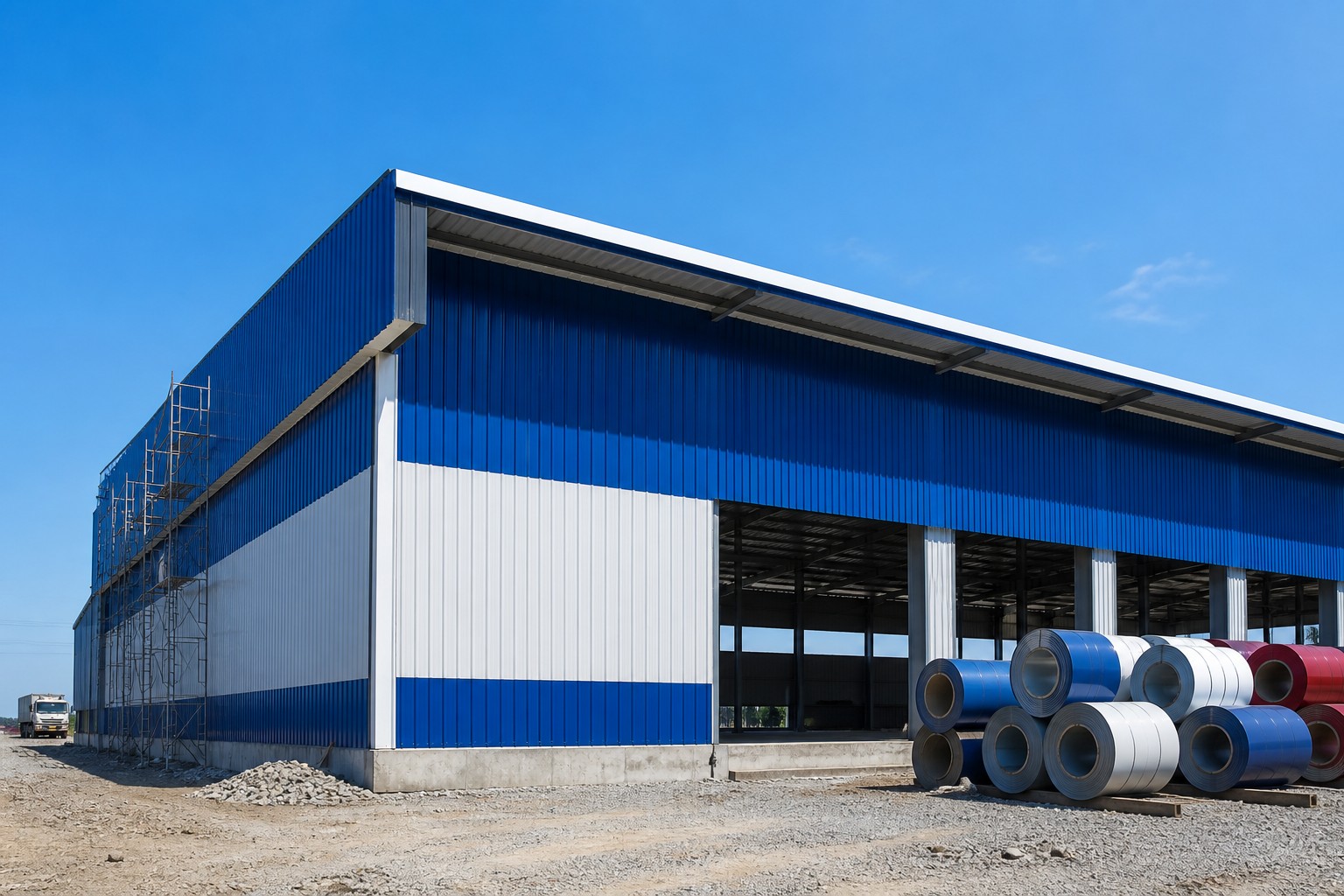
Dive deeper: colour codes, gloss and the finishes that sell. The single most common specification error in colour coated sheet purchasing is describing a colour in words — “light grey”, “sea blue”, “like the sample you sent last year”. Colour memory is unreliable across batches, suppliers and seasons, and a verbal description gives you no legal or technical basis to reject a coil that is visibly different from the previous delivery. The professional method is to name the colour by its reference number in an international colour system; in Europe, the Middle East, Africa and much of Asia, the reference system is RAL, a four-digit scheme administered in Germany that has been used since 1927 to define standard colours for paint, powder coating and now coil coatings, with the full history and structure of the system described on the Wikipedia page for the RAL colour standard. When your order states, for example, RAL 9002 (grey-white) or RAL 3005 (wine red), the mill and the end user are both bound to the same physical standard, and any colour check on delivery is a comparison of numbers, not opinions. RAL 9002 and RAL 3005 happen to be the two shades that many buyers request for industrial roofing and facades, and a common stocked specification is a prepainted steel coil in 0.5 mm RAL 9002, which we supply with a polyester finish for standard building use.
Beyond the colour number, three further decisions shape both appearance and cost. Gloss level is the first: standard polyester roofing sheet is usually supplied in 30–70% gloss, with higher gloss looking richer when new but showing chalking and dirt sooner, and lower gloss hiding surface defects better — a consideration on large unbroken roof planes where even slight shading is visible. Texture is the second: embossed finishes, which print a leather, wood grain or stone pattern onto the film, are popular for wall cladding and architectural panels because they give a premium look at a modest premium over plain colours, and they mask minor surface variations during installation. The profile is the third: trapezoidal and corrugated profiles dominate roofing, while concealed-fix standing seam systems, sandwich panel faces and flat wall panels each impose their own formability demands, so the paint system and the profile must be specified together rather than independently. Finally, ask about colour retention testing: a serious supplier can show fade and chalk ratings for the specific colour you are ordering, because dark colours and certain pigments degrade faster than light colours under the same UV load, and a specification written only as “RAL 3005, polyester” is incomplete until the film build and the colour fastness class are added.
How Do You Verify a Prepainted Steel Coil Before You Pay?
The mill certificate is the coil’s passport — but a passport only proves what it states. Verification means checking the coil against the document, not reading the document.
Verify five things on arrival: the coil number and markings, the substrate and zinc coating weight, the paint system and film thickness, the colour against the RAL reference, and the physical condition of the coil and its edges.
Dive deeper: a receiving checklist that catches downgraded coils. Importers who have been burned once learn that the cheapest coil in a quotation can arrive with a thinner zinc layer, a thinner paint film or a different paint resin than the sample, and none of these downgrades is visible from the end of a coil. The receiving check therefore starts with documents: the mill test certificate should state the substrate grade, the zinc coating weight (for example Z180 or Z275), the paint system and its brand, the total dry film thickness, the colour reference and the coil number, and every one of those items should match your purchase order before you release payment. Then verify the physical coil against the document. Check the coil number and the markings printed on the outer wrap and the inner paper, because coils are swapped in handling more often than suppliers admit. Measure film thickness with a coating thickness gauge on both the visible top side and the reverse side at several points along the coil width; the numbers should sit inside the tolerance of the stated specification, and a consistent shortfall of several microns is grounds to reject the delivery rather than to negotiate a discount. Check the colour against the agreed RAL reference with a colour difference meter or, at minimum, a freshly calibrated RAL fan, under standard lighting; the human eye overestimates colour differences between adjacent panels and underestimates them between a coil and a faded sample. Inspect the cut edge and the inner laps for rust staining, which indicates that the edge protection failed during storage or transit, and check the outer wraps for water staining or crushed edges that could make the first metres unusable. Finally, perform a simple formability sanity check by bending a sample over a mandrel in the T-bend test and rubbing the painted surface with a solvent-soaked cloth (the MEK rub test) to confirm the film is properly cured; a soft, easily wiped film signals under-curing and will fail in the field within a season.
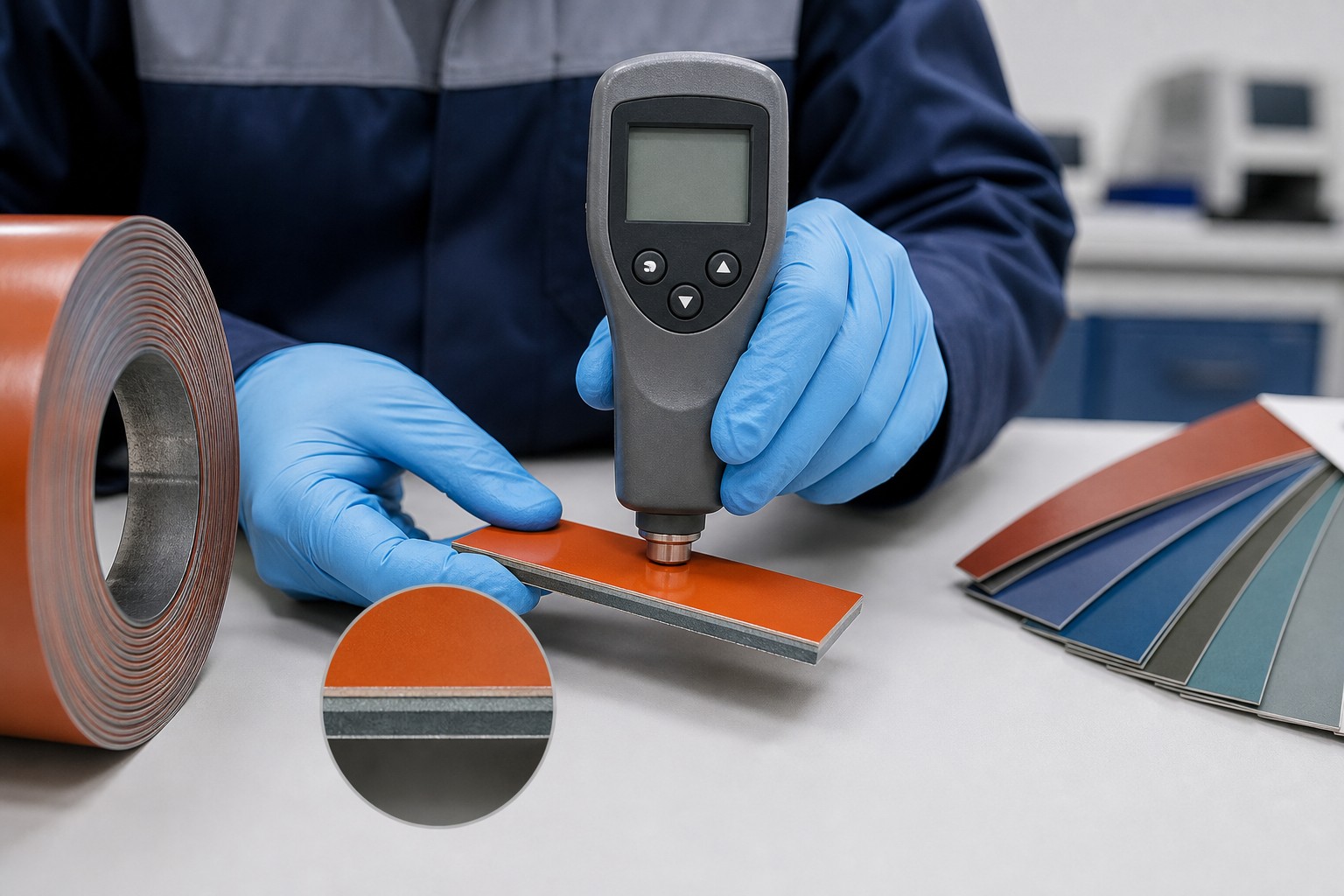
These checks take less than an hour with a coating thickness gauge and a colour fan, and they turn a coil purchase from an act of faith into an audited transaction. When the delivery matches the certificate, the coil can be profiled and installed with confidence; if you would like a quotation with the full specification written out — substrate, zinc coating weight, paint system, film thickness and RAL colour — request a quotation from our export team, and we will send the technical details and test documents together with the price.
Conclusion: Substrate, zinc, paint, film and colour are one specification, not five options. Write them down, verify them on arrival, and your roof keeps its promise.