
Sanitary Stainless Steel Pipe: What Do ASTM A270 and Hygienic Standards Require?
One rough weld bead inside a dairy line and the whole production batch is condemned — not by the customer, but by the auditor.
Short answer: Sanitary stainless steel pipe is seamless or welded austenitic tubing ordered to ASTM A270/A270M in grades such as TP304 and TP316L, with a controlled surface finish, full drainage geometry and documented cleanliness so product-contact lines can be cleaned in place.
That answer is only the beginning, because a hygienic line is bought on evidence rather than on appearance. The tube that arrives at a plant gate looks like any other polished stainless pipe; what separates it from general-service pipe is a chain of requirements running from the steel heat, through the weld, to the surface finish and the paperwork that travels with it. This guide follows that chain in the order a buyer and an engineer actually meet it: what makes the product different, what ASTM A270 requires, which grade to select, how 3-A and EHEDG hygienic design rules extend the pipe specification, how the tube is welded and inspected, and how to write an order a mill can answer without guessing.
What Makes Sanitary Stainless Steel Pipe Different From Ordinary Stainless Steel Pipe?
A sanitary line is judged on what it leaves behind, not on what it carries. Residue, not pressure, decides the design.
Sanitary stainless steel pipe differs from ordinary stainless pipe by surface condition, drainage geometry and documentation: the bore must be smooth and crevice-free, every leg must drain, and the tube must be traceable to a tested heat rather than merely meeting a pressure rating.
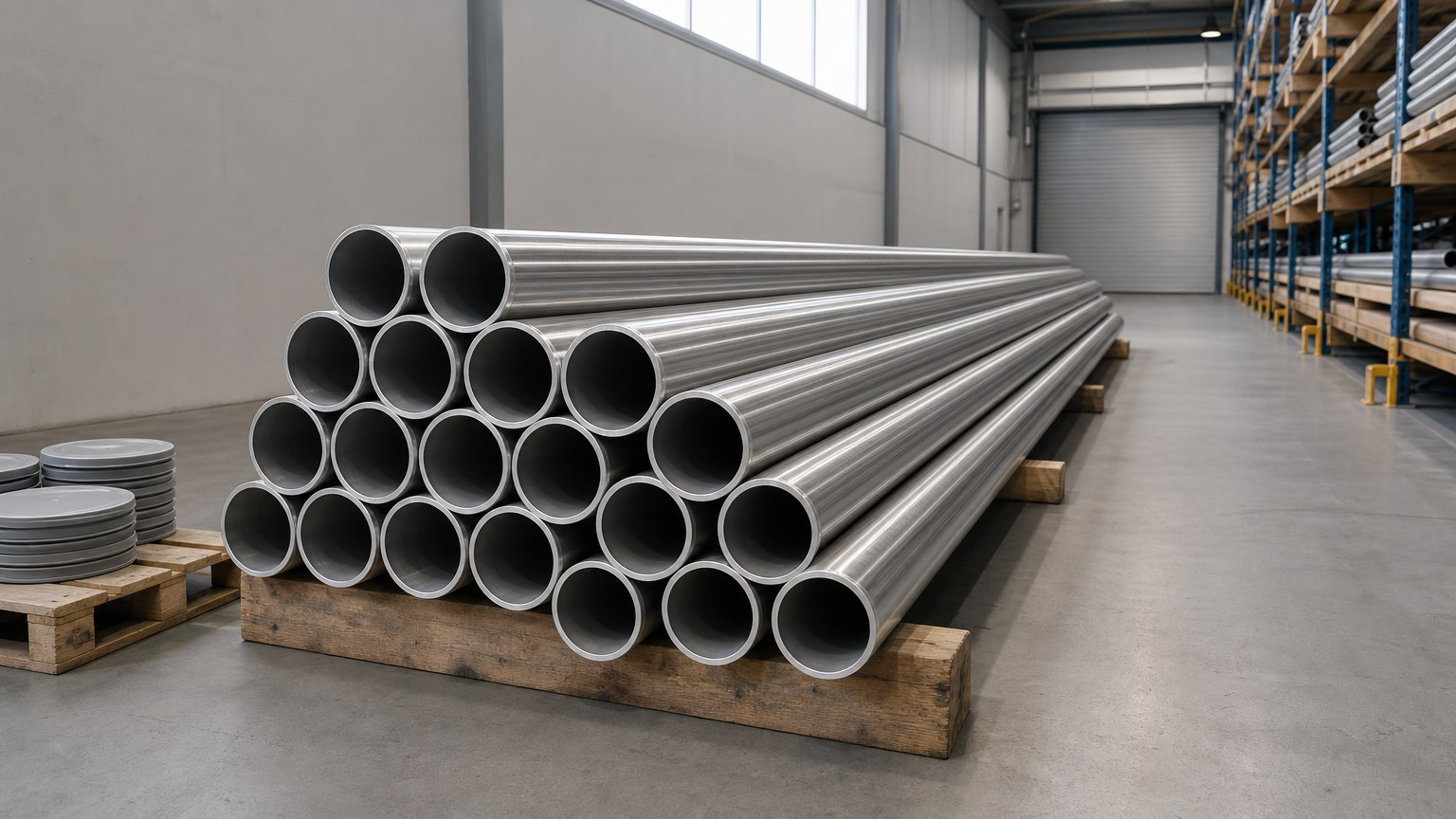
Start with the surface, because that is where the difference becomes visible. A general-service stainless pipe is purchased on dimensions and pressure integrity; its internal surface may carry an as-welded bead, mill scale or a pickled finish, and nobody measures it unless the process demands it. Sanitary tubing is bought on roughness and cleanability, and its internal surface is a specified characteristic rather than a by-product of manufacture. The reason is that soil does not sit on metal so much as it sits in the geometry above the metal — a scratch, a weld bead, a crevice at a fitting joint, or a low point that holds a few millilitres of product all create a zone that cleaning solution reaches late and leaves early. A film of soil that survives one cleaning cycle becomes the seed for the next one, and the failure is not visible until a microbiological result arrives days later. The second difference is geometry. A hygienic circuit must be self-draining, with no horizontal run that can hold liquid and no branch that cannot be flushed at full velocity, which is why sanitary fittings are designed with radiused internal transitions and without shoulders that trap product. Product standards for pipe cannot enforce that on their own, because drainage is a property of the assembled system, not of a single tube length. The third difference is verification. A pressure line is closed out with a hydrostatic test and a dimensional check, while a hygienic line is closed out with roughness measurement, weld documentation, a certificate traceable to each heat, and often a cleaning validation report that the processor must be able to show an inspector. Those three differences explain why the same nominal size and the same steel grade can cost materially different amounts in two enquiries, and why comparing a sanitary quotation against a general-service quotation on price per tonne alone is not a comparison at all. Buyers who treat the hygienic requirement as a finishing option rather than as the specification tend to discover the gap only when the first audit arrives.
Why cleanability is a surface property, not a cleaning-chemical property
A stronger caustic does not compensate for a rougher surface. Turbulent flow removes soil from a smooth bore readily, but the same flow leaves a stagnant boundary layer in pits, scratches and crevices where shear stress never reaches the design value. That is why surface roughness is specified in the purchase order and measured on delivery rather than assumed from a polish description, and why the tube is only one of the surfaces that must meet the requirement — fittings, valve bodies, gaskets and tank internals are all exposed to the same cleaning cycle.
What the difference means commercially
Three costs follow from buying on hygiene rather than on pressure. The first is finishing cost, because mechanical polishing and electropolishing consume mill time that ordinary pipe never requires. The second is test cost, because sanitary tubing is commonly inspected end to end by eddy current or hydrostatic test rather than sampled. The third is handling cost, because a hygienic tube must be protected from contact with carbon steel, from grit and from chloride contamination between the mill and the installation. The sanitary stainless steel pipe range for hygienic service is therefore quoted with standard, grade, finish and test package stated together, and any quotation that omits one of those four items should be treated as incomplete.
| Requirement | General-service stainless pipe | Sanitary stainless tubing |
|---|---|---|
| Governing standard | ASTM A312 or A269, general service | ASTM A270/A270M, special finishes |
| Internal surface | As-welded, pickled or mill finish | Specified polish or maximum roughness average |
| Weld | Filler metal permitted, bead often left in place | Automated weld without filler, or heavily cold worked |
| Drainage | Not a pipe property | System must drain and flush completely |
| Documentation | Mill certificate and dimensional record | Heat traceability, finish records, weld and cleaning validation |
| Typical duty | Pressure and corrosion service | Product-contact food, dairy and pharmaceutical lines |
What Does ASTM A270 Require on Surface Finish and Roughness?
A270 is not a pressure standard with a finish clause attached. It is a finish standard carrying a pressure obligation.
ASTM A270/A270M covers seamless, welded and heavily cold worked austenitic sanitary tubing for dairy and food service up to 12 inches outside diameter; finishes range from mill finish through mechanically polished No. 80, 120, 180 and 240 to electropolished or a specified maximum roughness average.
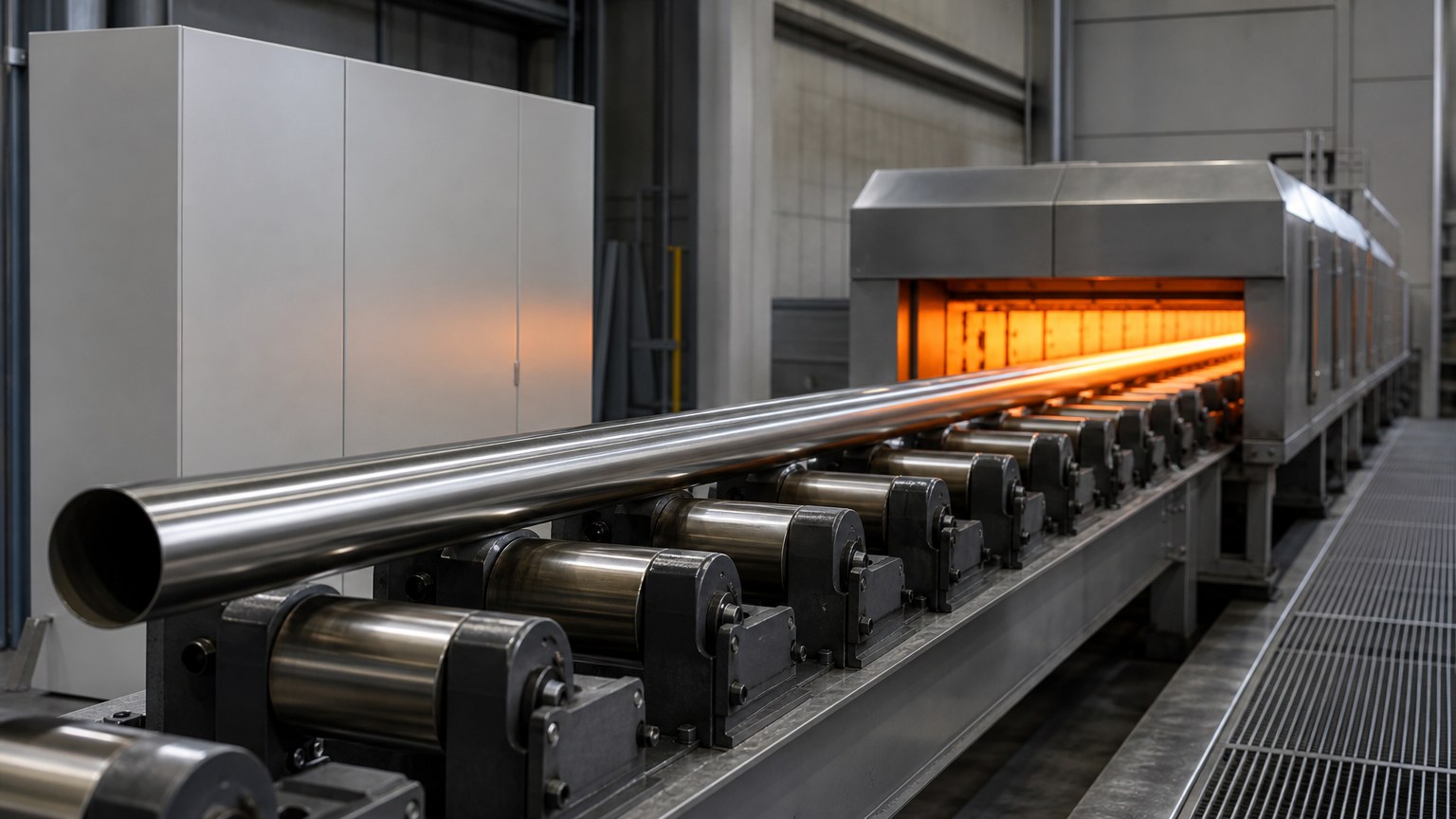
The first thing the standard does is close the gap between the words seamless and welded. Under A270, a seamless tube must be made by a process that involves no welding at any stage. A welded tube must be produced by an automated welding process with no filler metal added, so the weld is an autogenous fusion joint rather than a filled joint. A heavily cold worked tube starts life as a welded tube and is then cold worked by not less than thirty-five percent reduction of thickness across both wall and weld before the final anneal, which breaks up the cast weld structure and produces a metallurgically homogeneous wall with no continuous weld line left at the surface. All material is supplied in the heat-treated condition, which matters because a sanitary line is expected to be corrosion resistant as delivered and not only after the fabricator has re-annealed it. The second thing the standard does is make the surface a matter of the order. Finishes available under A270 include mill finish, mechanically polished finishes, finish No. 80, No. 120, No. 180 and No. 240, an electropolished finish, and a maximum roughness average value — and the direction of polishing is itself specified, with a longitudinal polished finish applying to the inside surface only, while a circumferential polished finish can be applied to the inside, the outside, or both. That distinction is not cosmetic. A longitudinally polished bore is the usual requirement for product-contact tubing because the residual scratch pattern runs parallel to the flow, which is far easier to clean than a circumferential pattern that runs across the direction of flow and across every weld. The third requirement, and the one most often left implicit, is the test schedule. A chemical analysis is made for each heat from either one length of flat-rolled stock or one tube. Every tube is then subjected to mechanical testing that includes a reverse flattening test, and to either a hydrostatic test or a non-destructive electric test. Pharmaceutical quality can be requested as a supplementary requirement, which changes both the surface requirements and the documentation. A buyer who writes “polished stainless tube, food grade” on an enquiry has specified none of this, and the answer will be whatever the mill does by habit.
Why a roughness average number is not sufficient on its own
A maximum roughness average is only meaningful with three companions: the measurement method, the cut-off length used, and the location where the reading is taken. The same bore can report different numbers on the same instrument settings applied at different positions along the tube, and the reading taken across a weld is not comparable with the reading taken on parent metal. This is why a serious specification names the method and the acceptance criteria, and why a roughness reading on delivery should be treated as a quality record rather than as a marketing figure.
Reading the finish callout correctly
The finish callout should be read as three separate facts: which surface (inside, outside or both), which treatment (mechanical polish grade or electropolished), and which measurement limit. Electropolishing is not simply a finer mechanical polish — it removes a thin layer of metal from the surface, which can improve both roughness and the passive film. Where a project requires it, the requirement belongs in the order as its own line item, because a mill that has already polished to No. 240 will not automatically proceed to an electropolished finish. The full scope, including the size limit, the finish options and the supplementary pharmaceutical requirement, is published on the ASTM A270/A270M specification page, and the edition cited on the order is the edition the certificate must be issued against.
Which Stainless Grade Should You Choose for a Hygienic Line?
A hygienic line fails in the corrosion cell, not in the pressure wall. Grade selection is a cleaning-chemical decision.
Grade selection for sanitary stainless steel pipe usually settles on 316L, because its molybdenum content resists the chloride and acidic cleaning chemicals used in place; 304L is adequate for milder dairy and food duties, and duplex grades are used where higher chloride exposure demands more.
The starting point is that the two grades usually on the table differ in one alloying element that matters enormously in a hygienic plant. Type 304L carries roughly 18 to 20 percent chromium and 8 to 12 percent nickel, while Type 316L carries the same chromium range with 10 to 14 percent nickel and an addition of 2 to 3 percent molybdenum. Chromium is what forms the passive oxide film that makes stainless steel stainless at all, and nickel stabilises the austenitic structure that keeps the material tough and formable. Molybdenum raises resistance to pitting and crevice corrosion, which is the failure mode that ends the service life of process lines. The reason that single element decides so many hygienic applications is that cleaning is chemically aggressive by design. A clean-in-place cycle typically alternates caustic and nitric or phosphoric acid washes, often with chlorinated or peroxide-based sanitisers, at elevated temperature. Where the washing water is chlorinated, or where the process fluid itself carries chlorides — brine, whey, sauces, fermentation broths — Type 304L will pit in a crevice that Type 316L survives, and the crevice usually appears exactly where it is hardest to find: under a gasket, at a poorly fused weld or in a threaded connection. The second reason is the low-carbon suffix. The L grades limit carbon to 0.030 percent or below, which reduces the precipitation of chromium carbides along grain boundaries in the heat-affected zone of a weld. When carbides form, they strip chromium from the adjacent metal, and that narrow band becomes the least corrosion-resistant part of the tube — a problem that only appears after the weld has been in service, which is why the L grade is the default for welded hygienic systems rather than a premium option. Grade selection does not stop at 304L and 316L. The standard also covers ferritic/austenitic grades, which combine high strength with better chloride resistance and are used for aggressive duties, and higher-molybdenum austenitic grades where chloride levels are high and temperatures are elevated. What a buyer should avoid is not a specific marketing grade but a specification that names a grade with no passivating chromium-molybdenum combination appropriate to the cleaning regime actually used in the plant.
Why the cleaning regime, not the product, sets the grade
A line that carries a mild product and is cleaned with chlorinated alkaline foam can corrode faster than a line carrying an aggressive product that is cleaned with hot water and a neutral detergent. The practical rule is to collect the cleaning chemicals, their concentrations, temperatures and contact times, plus the chloride content of the process water, before choosing a grade. That information belongs in the enquiry alongside the flow rate.
The grades that appear on cheap quotations
Lower-cost austenitic grades and straight ferritic grades such as Type 201 and Type 430 appear in sanitary service quotations because they look bright and pass a magnet test convincingly. Neither contains molybdenum, and neither is intended for repeated exposure to aggressive cleaning chemicals. A passive film forms on both, but it is less able to repair itself in a chloride environment, and the saving at the mill gate is small compared with the cost of replacing a line inside a process area. The general corrosion mechanism that governs this choice is described in the reference material on stainless steel and is worth a moment with an engineer before the grade is fixed.
How Do 3-A and EHEDG Hygienic Design Rules Extend the Pipe Specification?
A tube standard ends at the tube. Hygiene is decided by what the tube is joined to.
3-A Sanitary Standards publishes hygienic standards for equipment used in dairy and food processing, and EHEDG issues hygienic design guidance and operates a certification scheme for equipment; both regulate joints, drainage and cleanability of the assembled system rather than the tube alone.
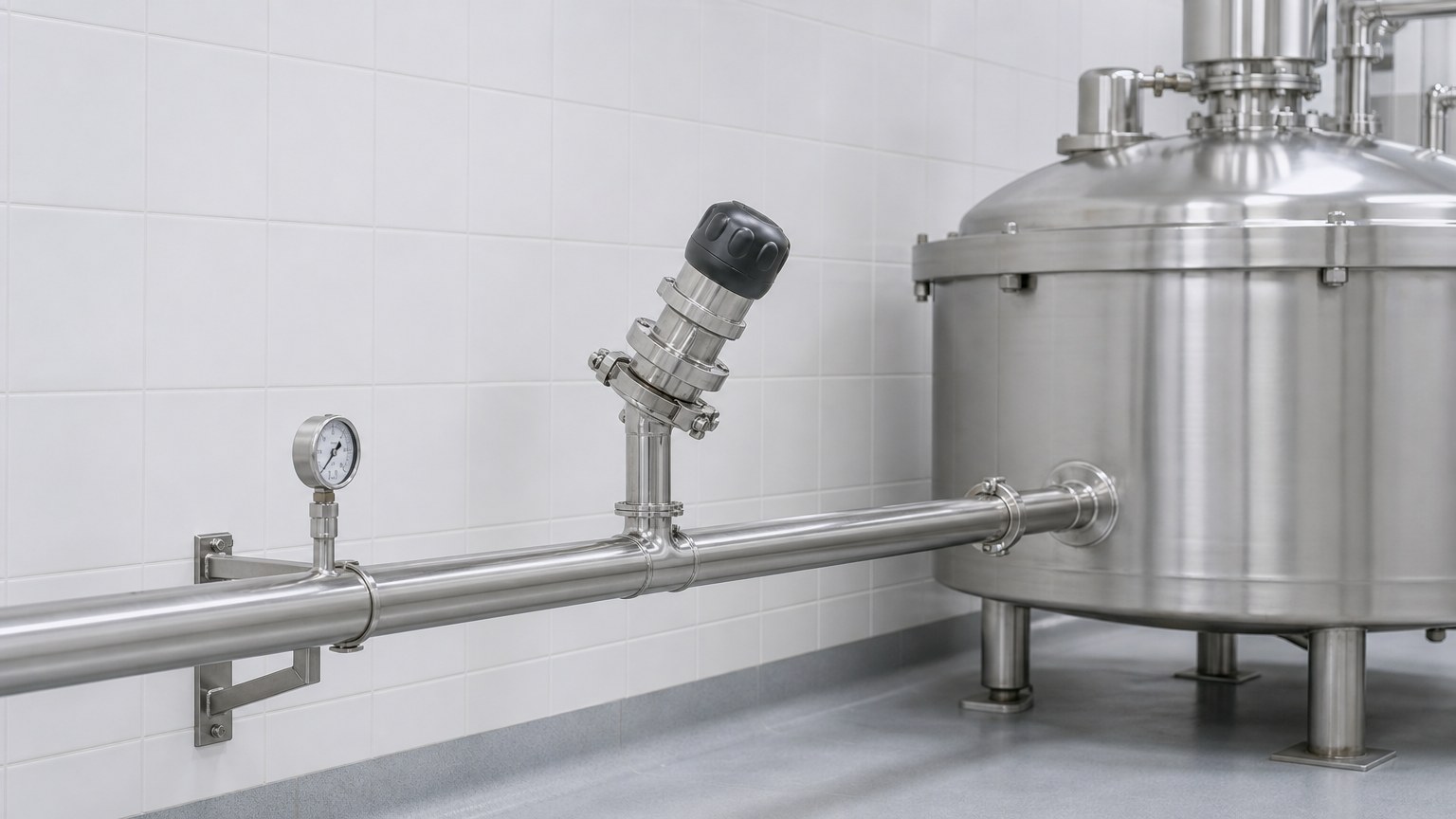
The gap these organisations fill is easy to describe once the boundary of a pipe standard is understood. ASTM A270 tells a mill what to deliver: a tube of a stated grade, size and surface condition, tested in a stated way. It says nothing about how that tube is cut, how it is joined to a valve, whether the branch drains, or whether the gasket sits in a crevice. Yet those are the details that decide whether a line can be cleaned. This is why hygienic design bodies exist. 3-A Sanitary Standards, Inc. maintains the standards used for equipment in dairy and food processing and organises the working groups that revise them, so a processor can point to a published standard rather than to a supplier’s own opinion. EHEDG, the European Hygienic Engineering and Design Group, has worked on hygienic design since 1989 and has grown to more than seven hundred and fifty members across the world; its first guidance addressed pipe couplings and valves, and it now maintains a body of over fifty documents across ten focus areas, supported by a certification scheme with authorised evaluation officers and testing laboratories. The practical effect on a pipe specification is that the tube requirements are supplemented rather than replaced. A hygienic joint is expected to present no internal step where product can lodge, to compress a gasket in a defined seat rather than squeezing it into the flow, and to be verifiable — a joint that must be inspected must also be accessible and inspectable. Pipe runs are expected to slope continuously to a drain point with no horizontal pocket, and dead legs are either eliminated or kept so short that they can be flushed at design velocity. Surfaces in the product zone are specified not only by roughness but by the absence of defects that can hold soil, because a scratch through a polished surface is a crevice by another name. Finally, materials in contact with product must be cleanable and non-absorbent, which is why elastomers, seals and even the tracer or insulation arrangement become part of the hygiene file. Two documents therefore sit behind a well-run installation: the mill documentation that proves what the tube is, and the design and validation record that proves how the system was built. A buyer who asks for both at the enquiry stage is asking the supplier to be explicit about scope.
Where the standards overlap and where they do not
Pipe standards and hygienic design standards answer different questions, and confusing them is expensive. The pipe standard certifies the material and its finish; the design standard addresses the geometry of the assembled plant. A perfectly compliant tube welded with a proud internal bead and fitted with a mismatched gasket satisfies the first and fails the second, and no mill certificate will reveal that.
What to ask a supplier about hygienic compliance
Ask which edition of the tube standard the material is certified against, which finish was applied and how roughness was measured, whether the weld is autogenous and how it was inspected, and which hygienic design guidance the fittings and seals follow. Answers that name document numbers are traceable; answers that name adjectives are not.
How Is Sanitary Tubing Welded, Inspected and Documented?
The weld is where a hygienic line is either finished or ruined, and it is invisible from the outside.
Sanitary tubing is welded autogenously with an inert gas purge and no filler metal where possible, inspected by endoscope or boroscope together with a pressure or eddy current test, and documented through a weld map, finish records and a mill certificate traceable to each heat.
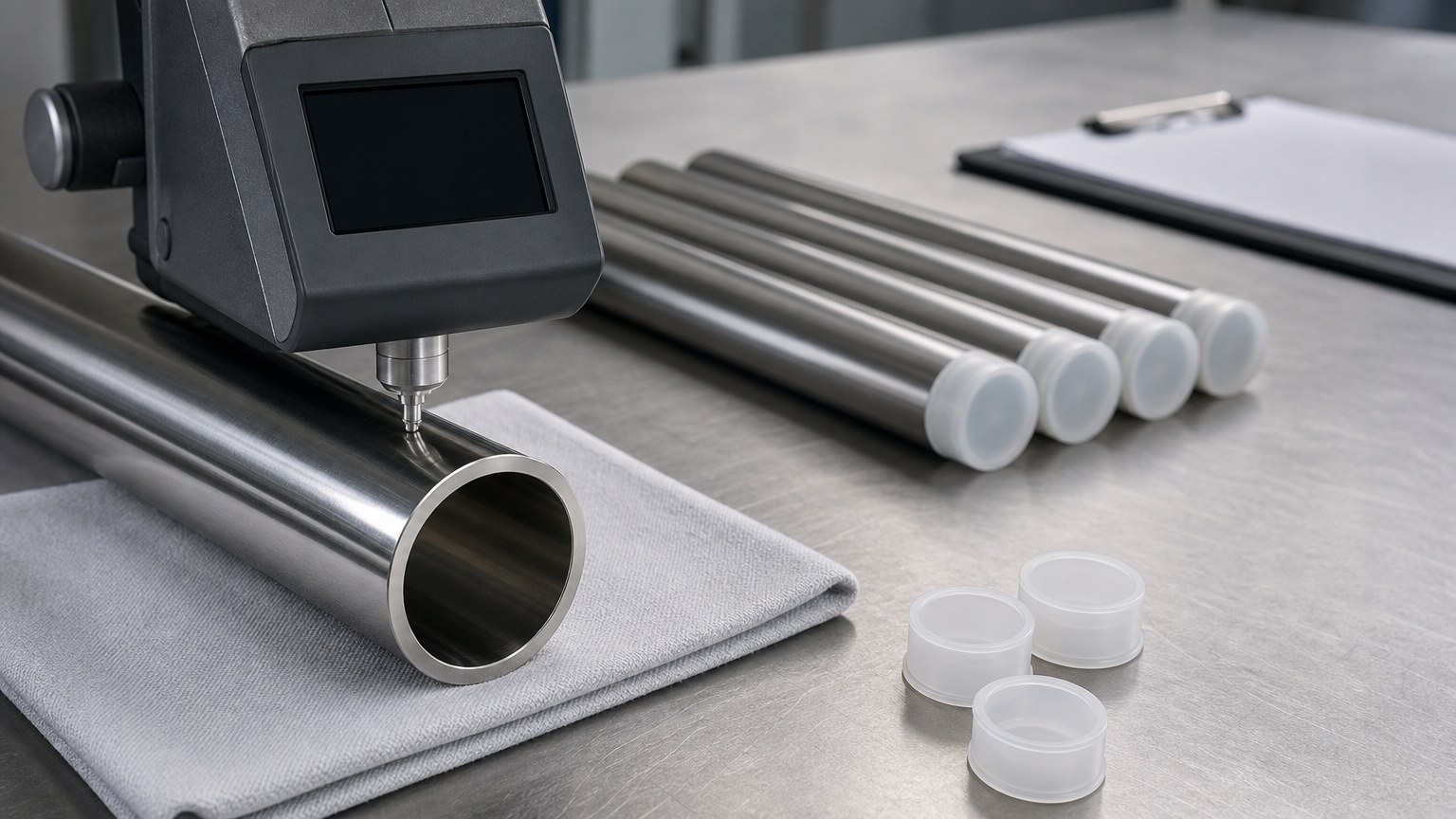
Welding begins before the arc strikes, with the specification. The tube supplied under A270 may itself have been welded by an automated process without filler metal, and a heavily cold worked tube has had that weld worked and annealed out of the structure. The closure welds made later, during fabrication or on site, are the ones that introduce risk, because they are made in a workshop or a plant rather than in a mill. The established practice is orbital tungsten inert gas welding with a controlled procedure and a qualified welder or machine, autogenous where the wall permits, with an internal purge of argon or forming gas so that the inside of the weld is protected from oxidation. An oxidised, discoloured internal weld is not a cosmetic defect: it is a chemically altered surface that will resist cleaning and corrode preferentially. For that reason the purge condition is part of the procedure that must be qualified, not a matter of operator judgement on the day. Inspection follows the same logic. A weld in a hygienic line is normally verified in three ways: visually and by endoscope from the inside, where the inspector looks for a full penetration profile without undercut, suck-back or a bead protruding into the flow; by a test of pressure integrity, through a hydrostatic test of the fabricated section or an eddy current or dye penetrant examination of the joint; and by a re-check of surface condition, because the weld and its heat-affected zone are polished or treated after welding so that roughness in the joint matches the parent tube. Where duplex or other ferritic/austenitic material is welded, the balance between the two phases in the weld is checked, since an incorrect balance affects both corrosion resistance and toughness. Documentation then binds the work together. The material must be traceable to a heat number and a mill certificate issued to the standard edition on the order; welded joints are recorded on a weld map that identifies each joint, the procedure used and the result of its inspection; finish readings for the polished areas are recorded; and any post-weld treatment such as pickling or passivation is recorded with the area treated. Buyers who also purchase general stainless tubing for utility duties will recognise the certificate requirements from the general-service ASTM A269/A269M specification, and the useful discipline is to keep the two documentation sets separate so that a hygienic record is never diluted by a utility one. A documentary pack assembled this way converts a claim about hygiene into something an auditor can check line by line, and it is far cheaper to build during fabrication than to reconstruct afterwards.
Three weld defects that survive a visual check
An incomplete penetration that leaves a hairline crevice on the inside surface, a weld whose heat-affected zone was not restored to the parent roughness, and a weld whose internal surface was oxidised by an inadequate purge all look acceptable from outside and all create a cleaning shadow. Each is detected by looking at the inside of the joint, which is why bore inspection is a requirement rather than a courtesy.
How the documentation pack is assembled
- Mill certificate issued to the standard and edition named on the order, with heat number, chemical analysis and mechanical results.
- Hydrostatic or non-destructive electric test report identifying the method applied and the tubes covered.
- Surface finish record showing the finish applied and the roughness measurement taken, with the method and location stated.
- Weld map identifying each fabrication joint, the qualified procedure used and the inspection result.
- Post-weld treatment record for pickled or passivated areas.
- Packing list and marking schedule that matches the tube markings to the certificate.
How Do You Specify and Order Sanitary Stainless Steel Pipe?
An enquiry that says “food-grade polished pipe” will be answered with a guess. Name the standard and the finish.
Order sanitary stainless steel pipe by stating the standard and edition, the product form, the grade, the outside diameter and wall, the internal and external finish with a roughness limit, the length and end finish, the test package and the documentation, then require every item to appear on the certificate.
The specification section of an enquiry can be short and still complete, provided it leaves nothing for the supplier to fill in by habit. Put the standard and edition first, because the certificate must be issued against that edition. Name the product form explicitly — seamless, welded, or heavily cold worked — since the three are different products under the same standard and the choice affects both cleanability and cost. State the grade as it will appear on the certificate. Give the size in the form the drawing uses, together with the tolerance basis, and if the line is dimensioned in inches, say so rather than leaving the mill to convert. Specify the finish in its three parts: which surface, which treatment, and which roughness limit with the measurement method, then state separately whether electropolishing is required, because that is a distinct operation rather than a finer polish. Add the length and end finish, the straightness and squareness requirements, and the marking and packing instructions that protect a hygienic surface in transit — end caps on every tube, no contact with carbon steel, and protection against grit and chloride contamination in a sea shipment. Then close with the test package and the documents required. Two habits prevent most of the arguments that follow. The first is to price the alternatives rather than asking for a single figure: a quotation for the same size and grade in welded and in heavily cold worked form, with and without electropolishing, tells a buyer where the cost actually sits and which requirement is worth defending. The second is to inspect against the order rather than against the sample, because a sample polished by hand in a sales office is not evidence about a production lot. For a worked example of how a hygienic item is stated with its size, schedule and grade together, the 316L stainless steel pipe in 8 inch Sch 40 listing shows the format a quotation should follow, and the sanitary stainless steel tube and pipe range covers the sizes, finishes and test packages available for hygienic duties. Where the dimensional conventions on the drawing need checking before the enquiry goes out, the reference notes on how outside diameter and wall thickness are read will settle the question in minutes rather than in a round of emails. When the requirement is clear, send us your specification and quantity for a quotation with the cleaning regime the line will see, and the grade and finish can be confirmed against the standard rather than assumed.
The five questions a mill will ask back
Which product form is acceptable, which finish is required on the inside and the outside, which roughness limit applies and how it will be measured, whether electropolishing is needed, and which documents must accompany the shipment. Answering them in the enquiry removes the return round trip and puts the commercial comparison on a like-for-like basis.
Where cost actually sits in a hygienic order
Cost rises with grade, with the amount of finishing, with the strictness of the test package and with the smallness of the quantity. A thin-wall tube polished on both surfaces and electropolished inside costs more than a thick-wall tube in the same grade left at mill finish, even though the lighter tube contains less metal, because the finishing hours dominate. Pricing the options separately is therefore the fastest way to find the requirement that is genuinely necessary for the process and the one that was copied from an old specification.
Conclusion: Sanitary stainless steel pipe is specified, not selected: name the standard, the grade, the finish and the documentation, and verify all four on delivery.