
Stainless Steel vs Galvanized Steel: Which Is Better for Your Project?
Two steels, one budget, and a decision that outlives the invoice. Choose wrong and a structure rusts in year eight, or you overpay for protection the environment never demanded.
Neither material is universally better. Stainless steel resists corrosion through an inherent chromium-oxide passive film, so it survives chlorides, chemicals and high temperature without any coating. Galvanized steel protects ordinary carbon steel with a zinc layer that corrodes sacrificially, and it costs far less per square metre.
Transition: the real question is not which metal is superior, but which one your environment, service life and maintenance budget can actually justify. A coastal canning plant, a highway guardrail and a food conveyor are three different answers to the same question, and each can be defended with the same logic. The sections below separate the two protection mechanisms, compare them on corrosion resistance, price structure, service limits and fabrication, and finish with a short decision routine you can apply to any drawing or bill of materials.
What Is the Difference Between Stainless Steel and Galvanized Steel?
Both are steel, and both resist rust. Where the protection comes from is the whole story.
Stainless steel is an alloy: chromium, at least about 10.5 percent, forms a passive oxide film across the whole body of the metal. Galvanized steel is carbon steel with a zinc coating applied to the surface, so its protection sits on top of the steel rather than inside it.
Where each material’s protection actually comes from
Stainless steel is not coated. Chromium in the alloy reacts with oxygen to build a chromium-rich oxide film a few atoms thick on every exposed surface, and that film reforms within seconds when it is scratched or cut, as long as oxygen is available. This is why stainless steel can be sheared, drilled, brushed and welded without losing corrosion protection at the cut edge or the weld: the passive layer is a property of the metal itself, not an applied layer that has to be repaired. The chemistry also explains the grades. Type 304 carries roughly 18 percent chromium and 8 percent nickel and handles rural, urban and most indoor industrial atmospheres. Type 316 adds molybdenum, which stabilises the passive film against chlorides, and it is the grade specified near salt water, in chemical service and in many food plants.
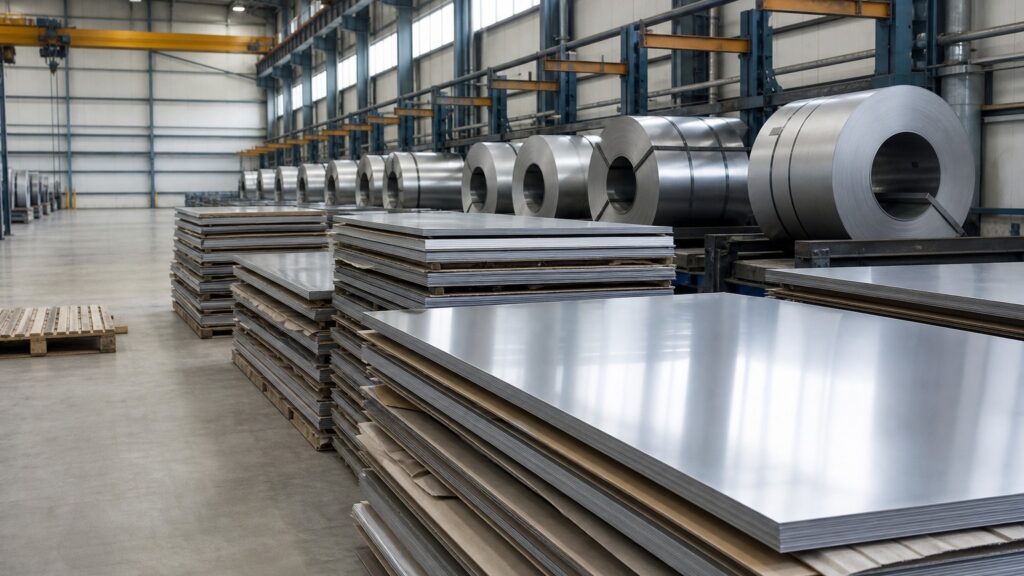
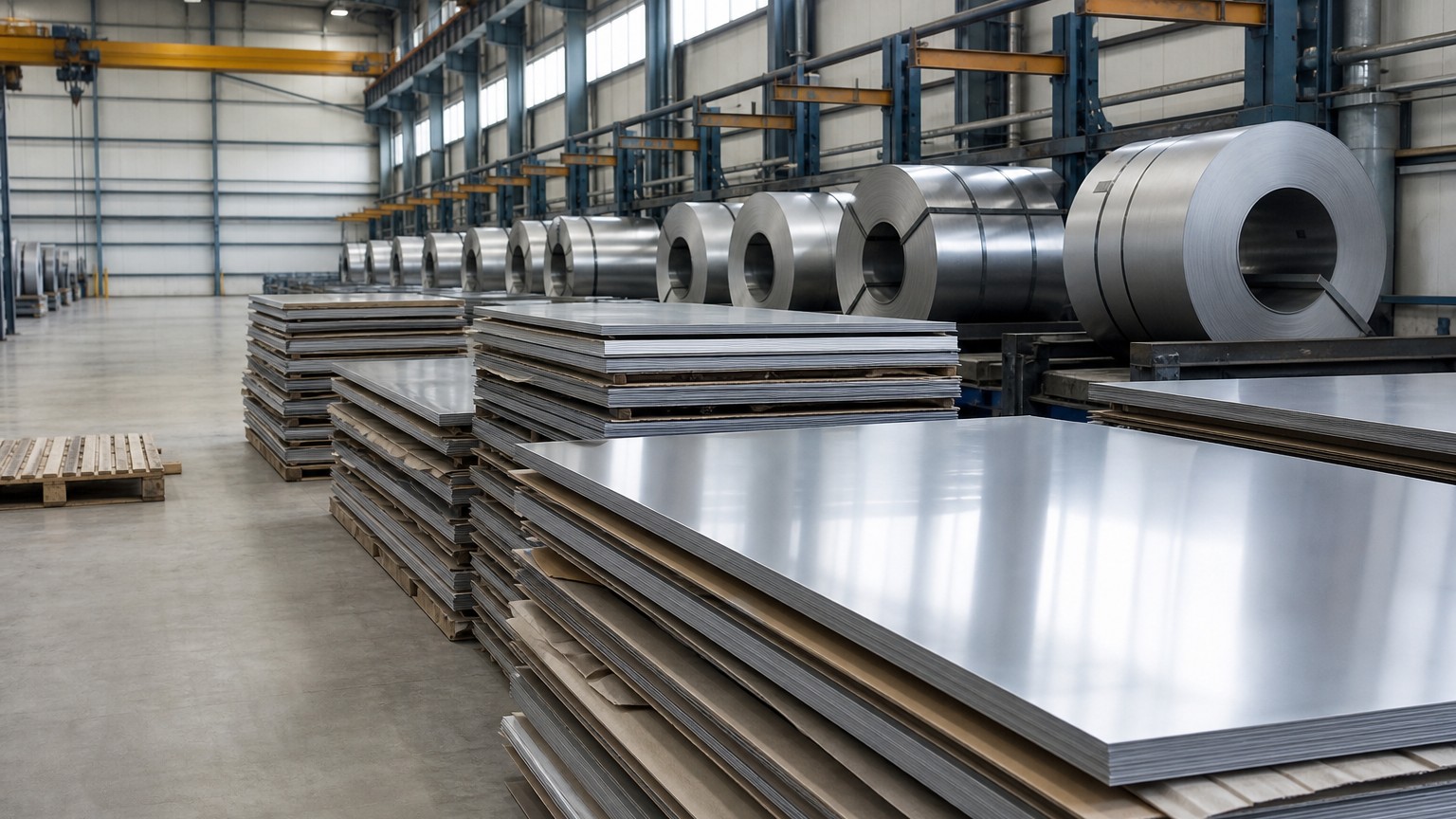
Galvanized steel works on the opposite principle. As described under galvanization, zinc is applied to the surface of carbon steel to prevent rusting, most commonly by hot-dip galvanizing, in which the fabricated item is submerged in molten zinc, or by continuous galvanizing, in which steel strip is passed through a molten zinc bath and then cut or rolled into sheet and coil. The coating is pure protection: it is not part of the parent metal, and once it is consumed the underlying steel begins to rust.
Why the zinc layer behaves better than paint
The zinc coating protects in two ways at once, and the second way is the one buyers rarely price. As a barrier it simply keeps water and oxygen away from the steel. As a galvanic anode it does something paint cannot: zinc is electrochemically more active than steel, so at a scratch or a cut edge the zinc corrodes preferentially and continues to protect the exposed steel nearby. This sacrificial action is local — published references describe protection extending only a short distance, on the order of a few millimetres, from the zinc — which is why cut edges and small coating damage in galvanized work do not normally become rust initiation points, while the same damage in a painted carbon steel structure does.
That distinction sets the tone for the rest of this comparison. Stainless steel is a change of material; galvanizing is a change of surface. One is paid for in the alloy, the other in the coating line, and the two costs behave very differently as the environment gets harsher.
How Do Stainless Steel and Galvanized Steel Compare on Corrosion Resistance?
Corrosion is where the price difference either pays for itself or wastes money.
Stainless steel wins in aggressive environments: chlorides, acids, high humidity and high temperature. Galvanized steel performs well in ordinary atmospheric exposure for decades, but its protection is consumed over time and fails faster in salt, acid or continuously wet service.
How long a zinc coating actually lasts
A galvanized coating has a measurable life, and that is an advantage as well as a limit. The coating mass applied to the steel determines how long it lasts in a given atmosphere, which is why continuous galvanized sheet and coil are ordered by coating designation such as Z180 or Z275 — nominally 180 and 275 grams of zinc per square metre of sheet, counting both faces. A heavier coating buys more years, and the relationship is broadly proportional, so the first question on a galvanized specification is never “is it galvanized” but “at what coating weight, and in which corrosivity category”.
Atmospheric corrosivity is classified in ISO 9223, which sorts environments from very low to very high aggressiveness; a zinc coating that offers decades on an inland, rural structure may be spent in a small fraction of that time on a marine or heavily polluted industrial site. The technical guidance published by the American Galvanizers Association is a practical reference for converting coating thickness into expected service life in each category, and it is the source most specifiers use when they justify a coating weight to a client rather than simply accepting the mill standard.
What stainless steel is vulnerable to
Stainless steel is not immune, and pretending otherwise is how stainless projects fail. Because protection depends on the passive film, anything that locally destroys or starves that film creates a corrosion site. Chlorides are the classic offender: in warm chloride-bearing service, type 304 can suffer pitting and crevice corrosion, which is why type 316 with molybdenum is specified for coastal and chemical exposure, and why duplex grades are used where chloride stress corrosion cracking is the governing risk. Crevice corrosion is the second vulnerability. Gaps under washers, thread roots, weld undercuts and unwelded faying surfaces trap stagnant liquid where oxygen cannot reach the metal, and the passive film cannot rebuild there; good detailing, sealed joints and full-penetration welds matter more in stainless work than most designers expect. The third is what happens to the alloy near a weld if heat input and cooling are not controlled, because chromium can be tied up as carbides in the heat-affected zone and the local corrosion resistance drops. Low-carbon variants such as 316L exist precisely to keep that effect manageable on welded fabrication.
The practical ranking follows from those mechanisms. In a dry, rural or ordinary urban atmosphere, galvanized carbon steel delivers a long, low-cost service life and stainless steel is largely unnecessary. In a wet, salty, acidic or hot environment, zinc is consumed quickly and the stainless premium buys a protection mechanism that does not deplete. Between those extremes sit most real projects, and there the deciding variables are the chloride level, whether the surface stays wet, and whether the asset can be re-coated later.
Which Material Costs Less Over the Life of the Project?
Stainless steel costs more on the purchase order. The invoice is not the life-cycle cost.
Galvanized steel is the cheaper material by a wide margin on a per-tonne and per-square-metre basis. Stainless steel carries a higher first cost because of nickel, chromium and molybdenum, but it needs no re-coating and no replacement where the environment defeats zinc.
Why the purchase price differs so much
The material cost of galvanized steel is dominated by ordinary carbon steel plus a zinc coating that represents a small fraction of the finished weight. The material cost of stainless steel is dominated by alloying: nickel, chromium and, in molybdenum-bearing grades, an element whose price is both higher and more volatile than the steel around it. That is the entire story behind the first-cost gap, and it also explains why the gap is not stable. Alloy surcharges move with the nickel and molybdenum markets, so a stainless quotation can be materially different two months later, while the galvanized price moves with the much calmer carbon steel and zinc markets. Buyers who treat the stainless premium as a fixed percentage are usually the ones surprised at the contract stage.
Processing adds a second layer. Hot-dip galvanizing is a batch operation with its own handling, pickling, fluxing, dipping and inspection steps, and fabricated items have to be designed for it — with venting and drainage holes, and with the understanding that long, slender or heavy assemblies may not fit a bath. Stainless steel is supplied in sheet, plate, coil, bar and tube and is fabricated much like carbon steel, but it work-hardens, it needs dedicated tooling and cutting consumables, and it demands cleaner welding practice. Neither is free to process; the cost simply lands in different places.
The maintenance side of the ledger
This is where the comparison usually flips. A zinc coating is a consumable: it protects until it is spent, and then the asset either rusts or is re-protected. Re-protection of an installed structure is expensive out of all proportion to the paint or metal involved, because the cost is dominated by access, surface preparation, containment and downtime rather than by material. A bridge, a tower, a rooftop duct run or a jetty cannot be repainted for the price of a workshop job. Stainless steel, by contrast, has no coating to renew, and grades such as 304 and 316 are commonly left unpainted for the life of the asset in atmospheres where they remain passive.
The industry association literature is blunt about the trade: the British Stainless Steel Association publishes guidance on selecting stainless steel on the basis of total life cost rather than first cost, and the same argument appears in coating literature from the other side. If you are weighing a coated carbon steel against a zinc–aluminium alternative for roofing or cladding, our comparison of how zinc–aluminium coatings compare covers the intermediate option that often wins on sheet and coil work.
Where the cheap choice becomes the expensive one
There are five situations in which the galvanized option loses on money even though it wins on price. The first is any asset that cannot be accessed economically for maintenance. The second is chloride exposure with a wet surface, where coating consumption accelerates. The third is chemical or acid service, which attacks zinc quickly. The fourth is continuous service above the temperature at which zinc coating integrity degrades — the American Galvanizers Association recommends a maximum continuous service temperature of about 200 degrees Celsius for hot-dip galvanized steel, above which the coating can peel at the intermetallic layer. The fifth is hygiene, where a flaking coating is a contamination risk rather than a maintenance item. In those five cases the stainless premium is not a luxury; it is the cheaper route once the asset is in service.
Where Does Galvanized Steel Beat Stainless Steel?
Most of the steel in the world is not stainless, and most of it does not need to be.
Galvanized steel suits structural, outdoor and high-volume work in moderate atmospheres: frames, guardrails, towers, roofing and cladding, ducting, agricultural equipment and general fabrication, where carbon steel’s strength and weldability are wanted at a fraction of the alloy cost.
Scale, tonnage and structural work
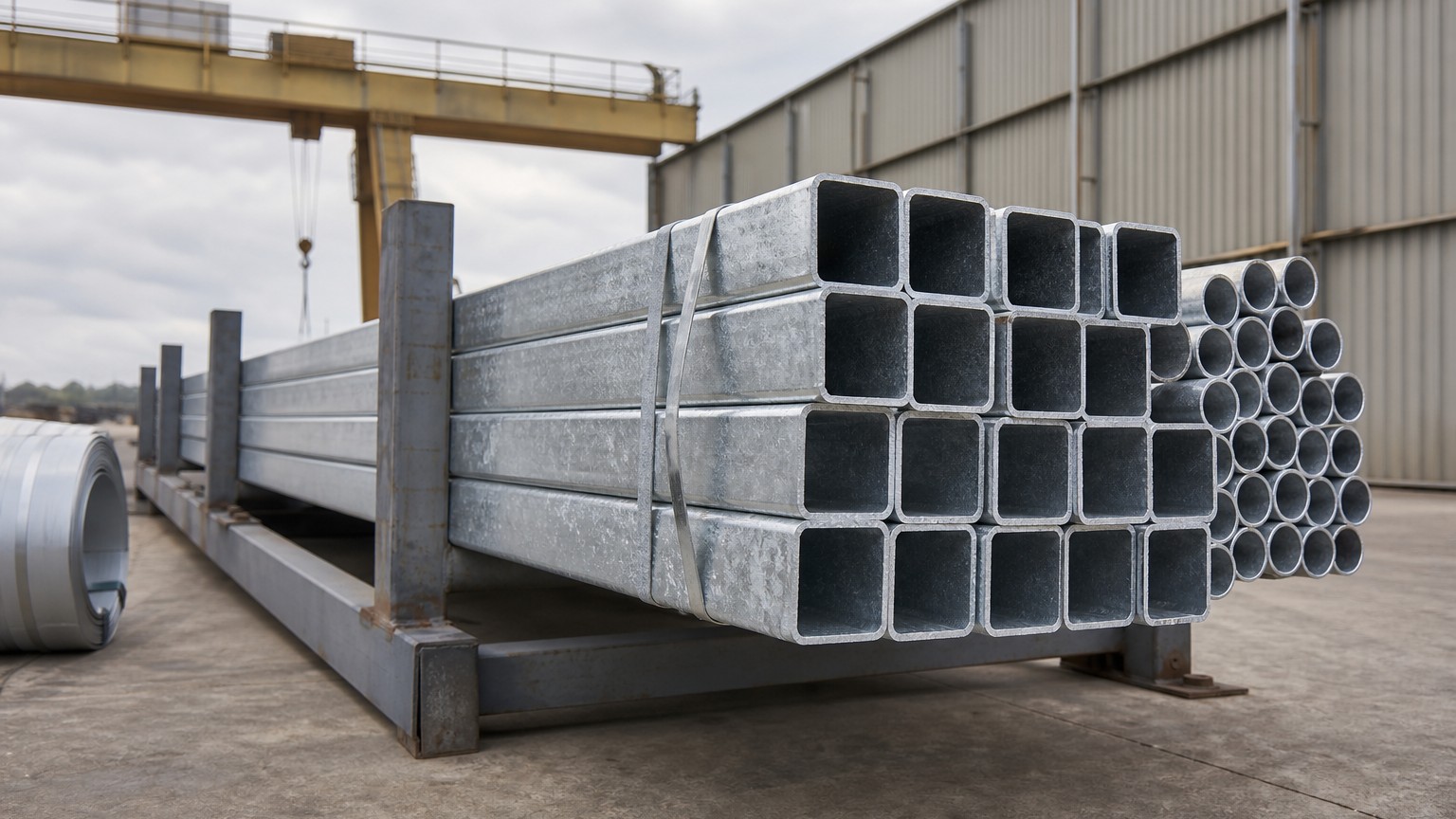
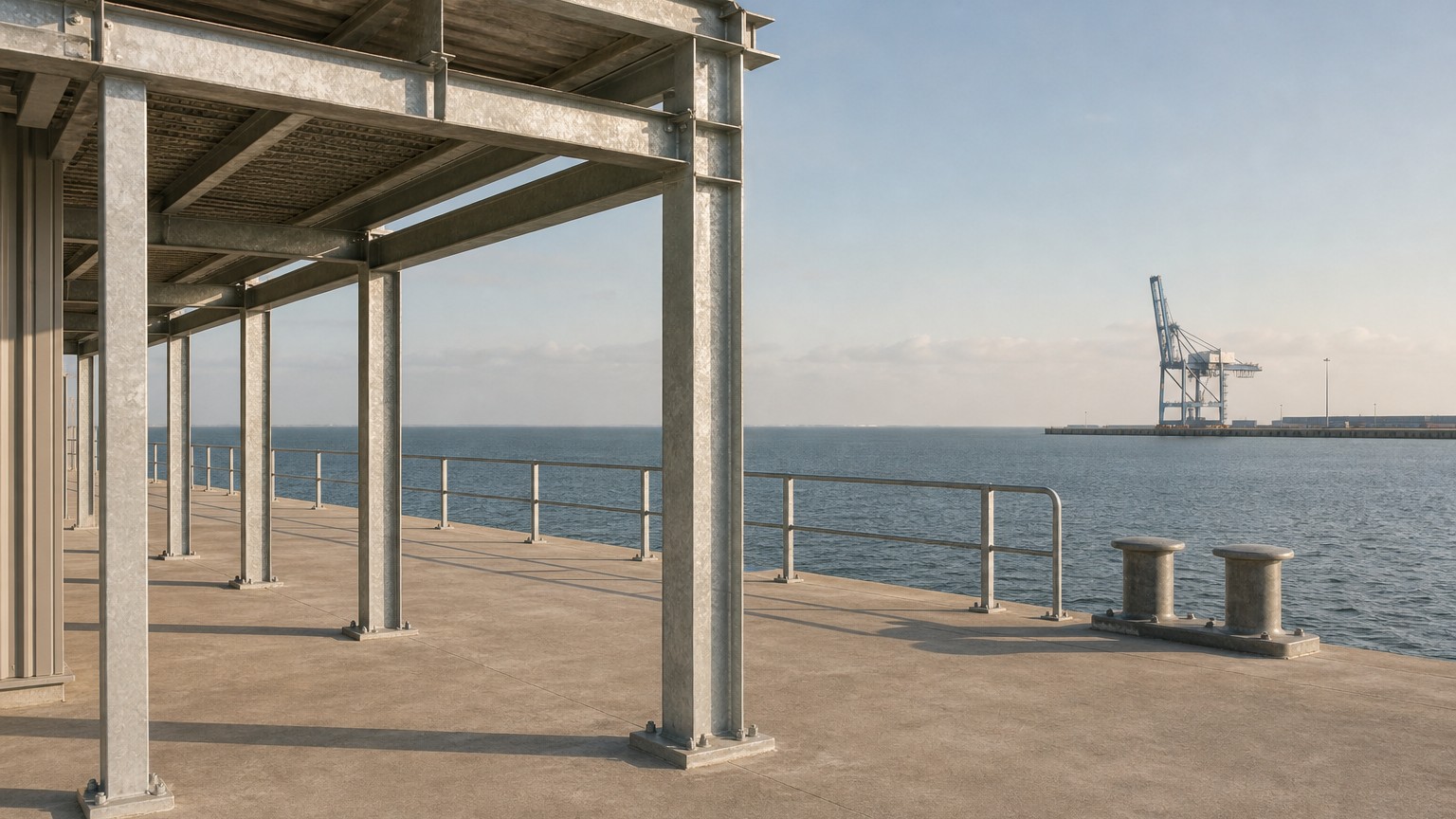
The first reason galvanized steel dominates is scale. Structural steelwork is bought by the tonne, and a material whose cost is largely alloying cannot compete in a market where a single project may consume hundreds or thousands of tonnes. A galvanized coating applied to carbon steel adds a modest amount of zinc and one process pass to a product that is already priced competitively, so the finished cost stays close to the structural steel price while delivering decades of protection in a normal inland atmosphere. Guardrails, transmission and telecommunication towers, walkway and platform structures, ladders, gratings, pallets, cable trays and hollow sections supplied as galvanized steel tube are all standard galvanized products for exactly this reason.
The second reason is that fabricated items can be galvanized after manufacture. Hot-dip galvanizing after fabrication — the process covered by standards such as ASTM A123 and ISO 1461 — coats the finished assembly inside and out, including edges, holes and internal voids, in a single operation, so the protection is applied to the item rather than assembled with it. Continuous galvanized sheet and coil, produced under standards such as ASTM A653, serve the other half of the market: roofing, cladding, ducting, appliances and light-gauge formed parts, where the coating is applied before the steel is shaped.
Fabrication and weldability
Galvanized carbon steel behaves predictably in the workshop. It can be cut, drilled, bent, punched, rolled and welded with conventional equipment and consumables, and repaired with zinc-rich paint where a weld or a heavy scratch has removed the coating. Stainless steel demands more discipline: it work-hardens quickly, it needs sharp and dedicated tooling, and its thermal expansion and low thermal conductivity make it distort more readily under welding heat.
There is one important safety point on the galvanized side. Welding galvanized steel produces zinc oxide fume, which is a known cause of metal fume fever in poorly ventilated spaces. The practical answer is standard practice rather than avoidance: remove the coating from the weld zone before welding, use appropriate respiratory protection and fume extraction, and restore the coating afterwards with a suitable zinc-rich repair product. That is a process lesson, not a reason to reject the material.
The service envelope is the other factor. Galvanized steel performs best in moderate atmospheres and at ordinary ambient temperatures, and its coating is consumed faster where the surface stays wet, where chloride deposits accumulate, or where acids are present. Inside that envelope it is difficult to beat on cost. Outside it, no amount of coating weight compensates for the environment, and that is where the stainless case begins.
When Is Stainless Steel Worth the Extra Spend?
Five service conditions make stainless steel the cheaper decision, however the quotation reads.
Choose stainless where chlorides, acids, food-contact hygiene, high temperature or a very long maintenance-free life are involved: chemical and petrochemical plants, coastal and offshore structures, food and pharmaceutical equipment, and components that cannot economically be repainted.
Assets that cannot be maintained
The strongest financial case for stainless steel is not corrosion science, it is access. Wherever the cost of reaching a surface exceeds the cost of the material on it, a coating that must be renewed becomes the expensive option. Roof-mounted ductwork, marine hardware, tunnel and station fittings, buried or embedded components, and equipment inside operating plants all fit this description. In those locations the comparison is not stainless against galvanized, it is stainless against a recurring inspection and re-coating programme whose price is set by scaffolding, permits, shutdown windows and labour. A single expensive access campaign can exceed the entire alloy premium on the same component.
Hygiene, appearance and cleanability
Food, beverage, dairy and pharmaceutical service imposes requirements that a coating cannot satisfy, no matter how heavy. The surface must be cleanable, it must not shed particles into the product, and it must survive the cleaning chemicals used in place — which are frequently caustic or acidic, and in many plants chlorine-based. A zinc coating fails on all three counts: it is consumed by the cleaning regime, it can flake, and it introduces a foreign element into a hygienic process. Stainless steel answers the same requirements structurally, because the corrosion resistance is in the metal and the surface can be mechanically or chemically restored rather than renewed. This is why process equipment, tanks, conveyors, mixers and fittings in these industries are fabricated from stainless material rather than from coated carbon steel — plate, sheet and coil made to standards such as ASTM A240 are supplied with documented chemistry, which is what a food-safety or pharmaceutical audit will ask for.
Chloride, acid and high-temperature service
The third, fourth and fifth conditions are all environments in which zinc simply does not last. Chloride exposure with intermittent wetting — coastal sites, de-icing salt, marine atmospheres, swimming pool halls — accelerates coating consumption sharply and pushes the specification toward molybdenum-bearing stainless grades. Acid and chemical service attacks the zinc coating directly. Continuous high temperature pushes past the point at which the coating’s intermetallic layer becomes unstable, which is why boiler, furnace and exhaust applications go to stainless or to an alloy steel rather than to galvanized material.
Stainless steel is also chosen where a long inspection interval is itself the requirement, since a passive film does not need monitoring the way a depleting coating does. The World Steel Association publishes industry-level data on how steel is used and recycled, and durability over long service lives is one of the arguments the material chain makes for itself. For a specific case: where a project needs thin, corrosion-resistant sheet for forming into ducting, panels or tank shells, 316L stainless steel coil in 0.8 mm is supplied in 1250 mm width with 2B finish, which is the usual starting point for that kind of fabrication. The same reasoning applied at heavier gauges leads to stainless steel plate for structural and pressure components where 316L is specified for the process fluid rather than for appearance.
How Do You Choose Between Stainless Steel and Galvanized Steel?
Answer four questions in order and the material usually chooses itself.
Start with the environment — chloride, acid, humidity, temperature — then the required service life and whether the asset can be maintained, then hygiene or appearance requirements, then fabrication. If zinc survives the first three, galvanized steel is the economical answer; if any of them defeats zinc, specify stainless.
A side-by-side comparison
| Factor | Galvanized steel | Stainless steel |
|---|---|---|
| Protection mechanism | Zinc coating: barrier plus sacrificial action at damage | Chromium-oxide passive film inherent to the alloy |
| Cut edges and drilled holes | Protected nearby by sacrificial zinc, then consumed | Self-passivating; no coating to repair |
| Typical coatings / grades | Z180, Z275 and heavier coatings; ASTM A653, ASTM A123, ISO 1461 | Type 304, 316, 316L and duplex; ASTM A240 for plate, sheet and coil |
| Best atmosphere | Rural, urban and ordinary inland industrial | Marine, chemical, hygienic and high-temperature service |
| Weak points | Coating is consumed; acid, chloride, permanent wetting, high temperature | Chloride pitting, crevice corrosion, weld heat-affected zone |
| First cost | Low | High, and sensitive to alloy surcharges |
| Maintenance | Inspection and eventual re-coating | Cleaning and passivation, no re-coating |
| Fabrication before coating | Hot-dip galvanizing is applied after fabrication | Fabricated as supplied; needs dedicated tooling and clean welding |
Verify what you receive, whichever you choose
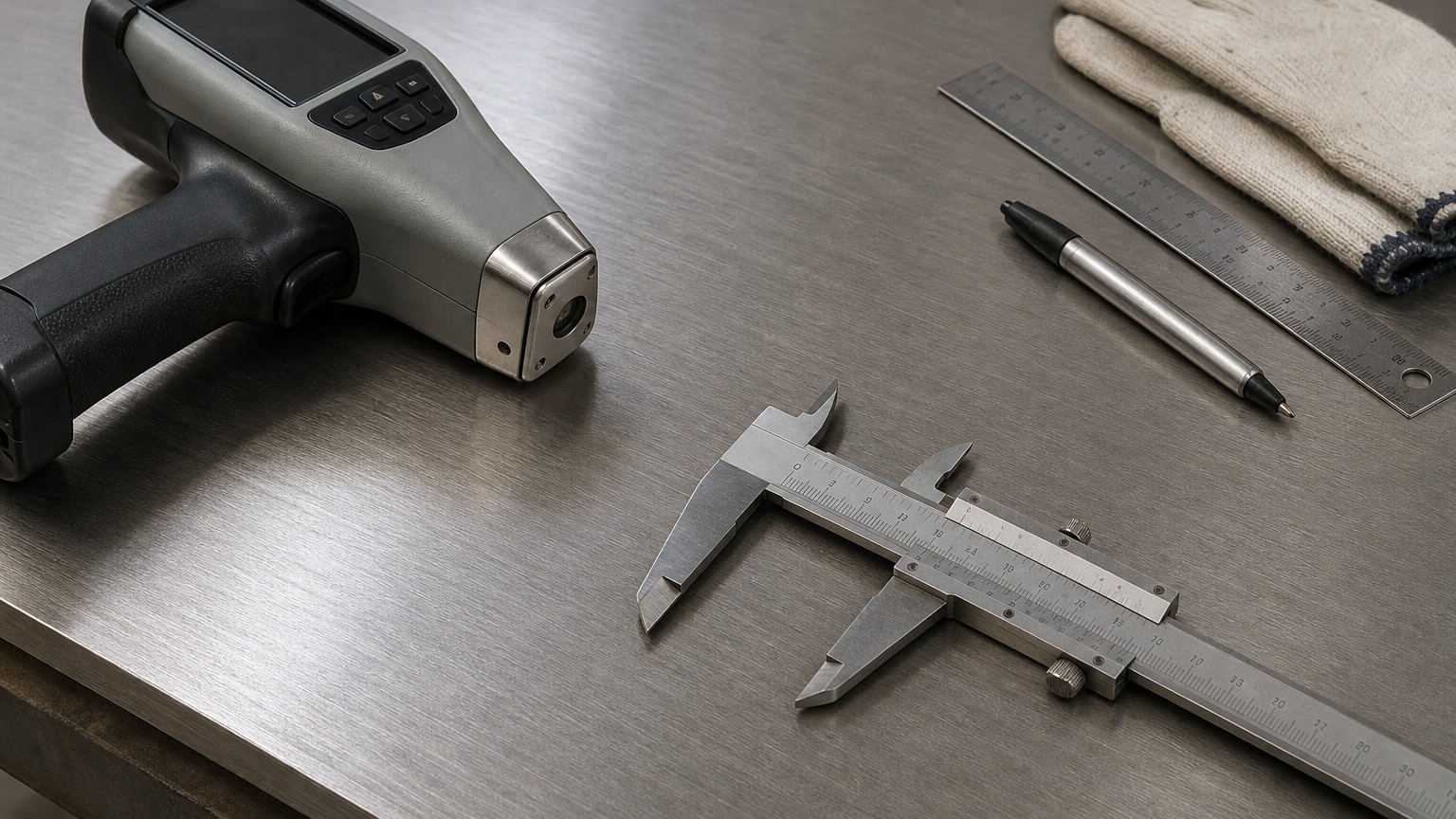
The decision only holds if the material delivered matches the material ordered, and both product families have specific failure modes at the point of receipt. For galvanized steel, the coating is the product, so ask for coating mass or coating thickness and check it: the standard acceptance basis for hot-dip galvanized fabricated items is defined in ASTM A123 and ISO 1461, and for continuously galvanized sheet and coil in ASTM A653, where the coating designation is part of the order description. A magnetic coating thickness gauge in the receiving area settles most disputes in minutes, and it catches the common commercial substitution of a lighter coating than the one quoted. Coating appearance — the crystalline spangle, uniformity, absence of bare patches and dross inclusions — is a visual check that requires no equipment.
For stainless steel, the risk is grade substitution rather than coating weight, because a lower-alloy material looks identical in the rack. The answer is documentation plus positive identification: a mill test certificate stating the standard, grade and heat number, cross-checked against marking on the material, and a portable alloy analyser or PMI check on a sample of heats for anything going into a corrosive or safety-relevant service. Dimensional checks matter too, since thickness tolerance directly affects the weight of a fabricated assembly, and surface finish should be compared against the sample approved at order stage. These are the same checks a third-party inspector would run, and they are cheap to do at goods-in.
If you want the material choice, the coating basis, the grade and the certificate set agreed before production starts, send your project details to our export team and we will confirm what is available against your service conditions. Most projects do not need the most corrosion-resistant material on the market; they need the material whose protection mechanism matches the environment it will live in.
Conclusion: Which Material Fits Your Project?
Match the material to the environment, not to the quotation. Galvanized steel wins on cost in moderate conditions; stainless steel wins wherever chlorides, chemicals, heat or maintenance-free decades decide.