
LSAW vs SSAW Pipe: Which Large Diameter Option Suits Your Pipeline?
Choosing between LSAW and SSAW pipe is easy to get wrong, and the error survives hydrostatic testing to surface years later as a seam defect. This comparison fixes that.
LSAW pipe is formed from discrete plate and welded along one straight seam; SSAW pipe is formed from coiled strip and welded along a continuous helical seam. LSAW gives tighter diameter and wall control for high-pressure lines; SSAW gives larger diameters and lower cost for lower-pressure transmission.
Transition: the two products share a specification family but almost nothing else about how they are made, and that difference reaches into tolerances, testing scope, freight and price. This guide works through the forming routes, compares weld volume and dimensional accuracy, sets the two against cost and diameter range, and closes with a selection rule you can apply to a live enquiry.
What Is the Real Difference Between LSAW and SSAW Pipe?
Both are welded steel pipe, yet plate feeds one route and coil feeds the other — and that single fact shapes everything downstream.
LSAW welds a flat plate along one longitudinal seam; SSAW welds coiled strip along a spiral seam that wraps the pipe. The seam length, forming method and resulting tolerance differ, which changes pressure capability, diameter range and cost.
A single straight seam against a seam that keeps going
LSAW stands for longitudinal submerged arc welded pipe. A plate is cut to length, its edges are prepared, and the plate is progressively formed into a cylinder whose two long edges meet along one straight line. That line is welded from the inside and from the outside by submerged arc welding, producing a single longitudinal seam running the full length of every joint. The architecture is simple to inspect, simple to radiograph on a straight line, and simple to reason about in a pressure calculation, because there is exactly one weld to qualify per length.
SSAW stands for spiral submerged arc welded pipe, and it is also described as spiral welded or helical seam pipe. Here a coil is uncoiled, the strip is fed into the forming mill at a set angle to the pipe axis, and the strip edge advances along a helix as the shell is continuously formed. The weld therefore follows the spiral, not the axis. The practical consequence is weld volume: on a joint of a given length the spiral mill lays down a multiple of the weld metal that the longitudinal mill uses, because the seam travels around and along the pipe simultaneously. Spiral welded pipe is not a compromise product — it is a different answer to the same question, and one that dominates very large diameter supply lines worldwide.
The standards treat both as legitimate welded pipe. ISO 3183, published by the International Organization for Standardization, specifies requirements for two product specification levels of both seamless and welded steel pipe for pipeline transportation systems, and it is written to cover the weld configurations in commercial use rather than to favour one of them. The same logic applies in the wider pipe market: where a project needs an unbroken wall, the answer is a pierced shell rather than a welded one, and we cover those grades, dimensions and services in our overview of seamless steel pipe. The choice between LSAW and SSAW is a choice inside the welded family, and it is decided by the six points in the table below.
| Selection point | LSAW pipe | SSAW pipe |
|---|---|---|
| Forming input | Steel plate, cut to length | Steel coil, continuous strip |
| Weld path | One straight longitudinal seam | Continuous helical seam |
| Weld volume per joint | Approximately one joint length | Several times the joint length |
| Dimensional control | Very good, especially after expansion | Good, set by strip width and forming stability |
| Typical duty | High-pressure transmission and critical lines | Large diameter, medium and lower pressure mains |
| Cost position | Higher per tonne | Lower per tonne at large diameters |
| Diameter reach | Moderate to large | Large to very large |
How Is LSAW Pipe Manufactured From Steel Plate?
LSAW quality is decided before the arc strikes, because plate quality and edge preparation limit everything the press can achieve afterwards.
A cut-to-length plate is edge-milled, crimped, progressively formed into a cylinder in a JCO or UOE press, welded inside and outside by submerged arc welding, then mechanically expanded and tested to bring diameter and roundness within tolerance.
Plate, edge preparation and crimping
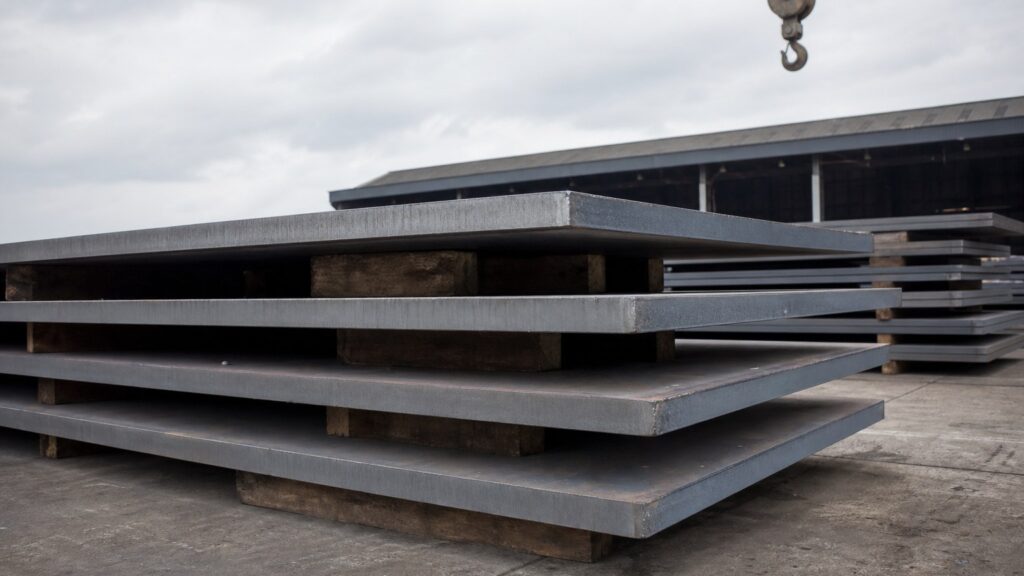
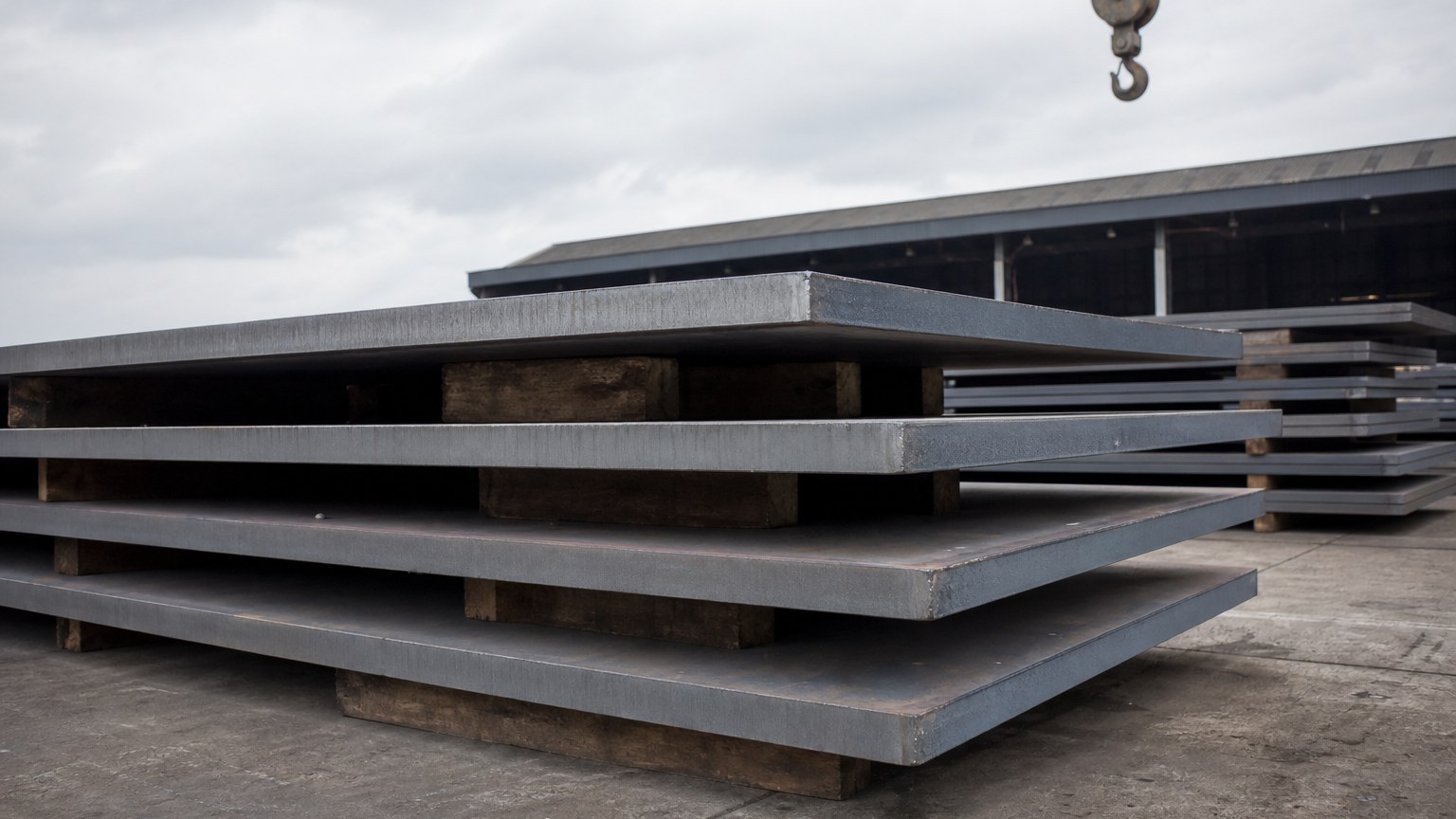
The line begins with plate rather than coil, and that choice is the source of both the strength and the cost of the product. Plate can be supplied to tighter thickness tolerance and in heavier sections than strip, so an LSAW mill can build a shell whose wall is thicker than a coil-fed spiral mill would comfortably run. Thickness uniformity matters more than buyers usually assume: wall variation translates directly into variation in burst capacity, and it disturbs the gap control that the weld needs. Plate is inspected and cut to the developed length required for the ordered diameter, which means the mill must complete its dimensional calculation before the first cut rather than simply uncoiling and forming.
Edge preparation is the second controlling step. The two long plate edges are milled to a square or bevelled profile so that they present clean, straight faces to each other, free of rust, scale and cut defects. Before forming, the plate is crimped — the edges are pre-bent through a small radius — so that when the shell closes, the edges meet as a straight line rather than as a distorted lip. A crimping operation that is skipped or poorly set leaves an edge mismatch that no amount of downstream inspection will repair, because the weld is made at that interface and not somewhere else.
JCO forming, welding and mechanical expansion
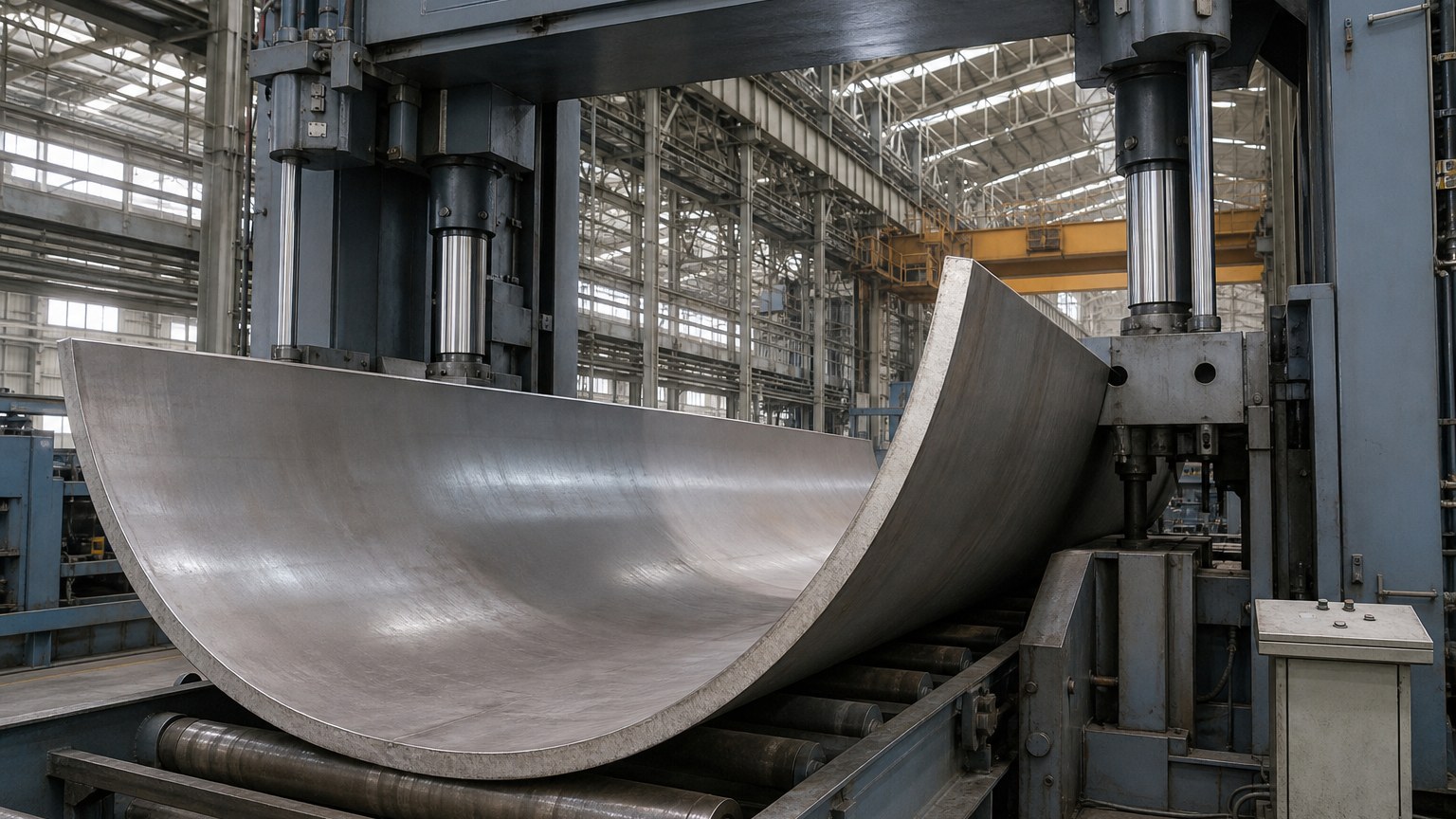
Forming in a JCO press runs in three strokes that give the process its name. The first stroke presses the plate into a J shape, the second closes it into a C, and the third presses it into an O with the two edges brought together at the top of the shell. The UOE variant reaches the same geometry by pressing into a U, closing to an O and then welding and expanding, which is why the two are often written together as JCO/UOE. The assembled shell is then welded: tac welds hold the geometry, and submerged arc welding completes the seam from the inside and the outside, with the process described in general engineering references on submerged arc welding, where the arc runs beneath a blanket of granular flux and deposition rates far above manual processes are achievable.
Mechanical expansion is what separates a good LSAW pipe from an acceptable one. After welding, a mandrel is drawn through the shell to expand it and simultaneously cold-work the seam, which removes the forming bow, improves roundness and outside diameter consistency, and reduces the residual stresses left by welding. The direct benefit to the buyer is a pipe whose ends are concentric and circular when it arrives at a field site, which is what automatic girth welding and automatic ultrasonic inspection of those girth welds both require. Expansion does not fix a bad weld, but it makes a good weld usable at line speed.
How Does the SSAW Spiral Welding Process Work?
The spiral route swaps a formed plate for a continuous coil, and that changes how the weld is made, how it is examined and how much of it there is.
SSAW pipe is produced by feeding coiled strip at a set angle into a spiral forming mill, so the strip edge advances helically while submerged arc welds run along the inside and outside of the seam, after which the pipe is cut, end-faced and tested.
Coil feeding, forming angle and continuous welding
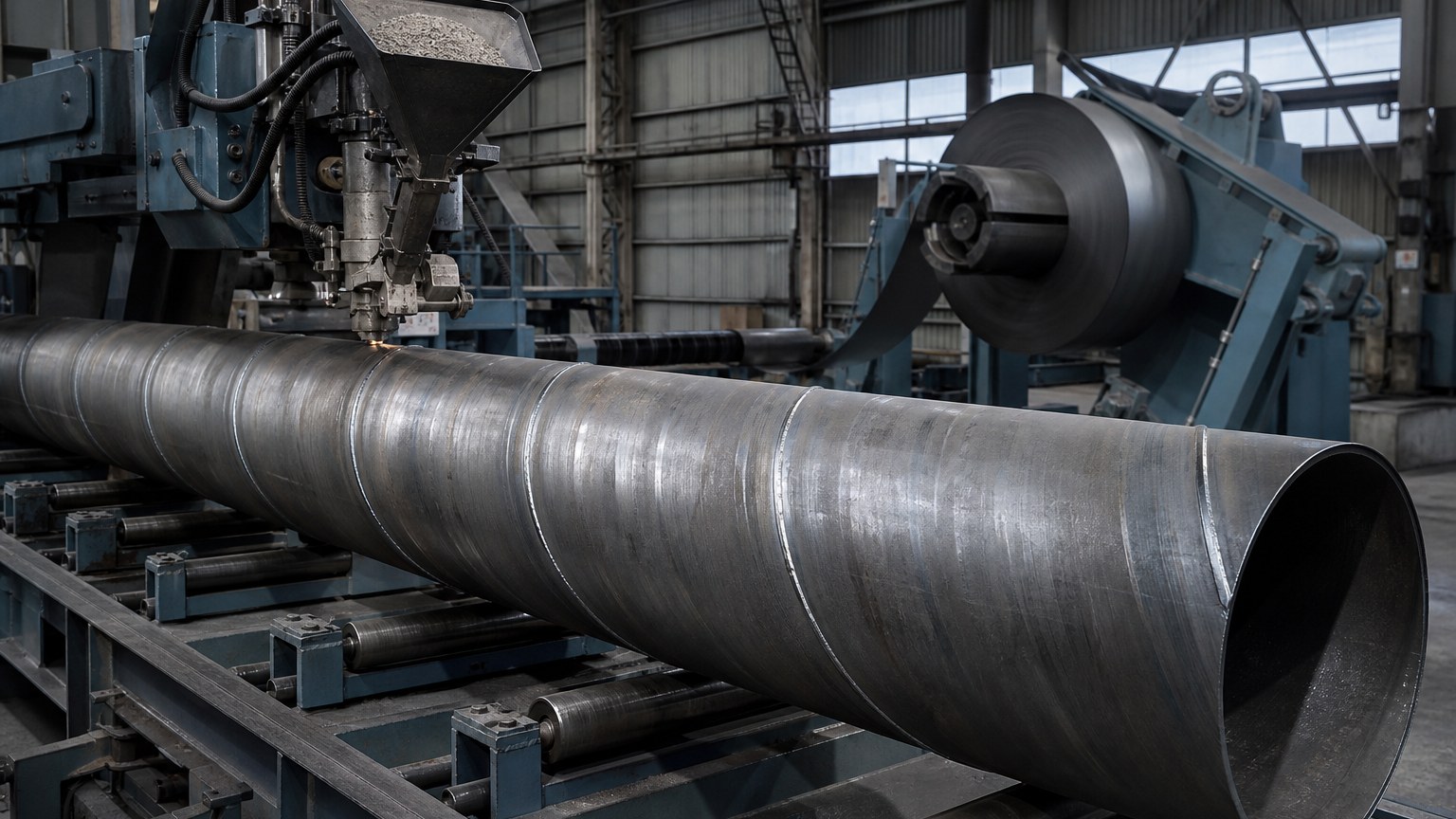
The spiral mill is a continuous process in a way the plate-fed line is not. A coil is loaded on the uncoiler, the strip is levelled to remove coil set, and it is fed into the forming machine at an angle to the machine axis. That angle — the forming angle — sets the relationship between strip width, pipe diameter and the pitch of the spiral, which is why a spiral mill can change from one diameter to another by adjusting the angle and the strip width rather than by rebuilding tooling. The same shell can therefore be produced across a very wide diameter range on one line, and that flexibility is the commercial foundation of the SSAW route.
Welding happens immediately behind the forming point. The inside weld is made first, followed by the outside weld, both by submerged arc welding, so the two passes on the two faces of the same seam form a complete joint. Because forming is continuous, the pipe is produced as an endless tube which is cut to length at the ordered figure, then end-faced and bevelled. The helical seam means that no weld runs parallel to the pipe axis at the ends, which is why spiral pipe ends are normally prepared so that field girth welding joins pipe body to pipe body.
Weld volume, inspection logic and the practical trade
The defining feature of an SSAW pipe is how much weld it contains. On a joint of a given length the helical seam is a multiple of the longitudinal seam used by an LSAW mill, and every metre of that seam has to be made, examined and accepted. That does not make the product inferior; it moves the risk. Spiral welded pipe is inspected by the same family of methods — ultrasonic examination of the seam, radiographic examination where specified, hydrostatic testing of every length, and dimensional and visual checks on roundness, straightness and end geometry — but the inspection coverage has to be planned against a longer weld, and a supplier who offers the same examination budget for a spiral pipe as for a plate-formed pipe is not offering the same assurance. The extra weld length also raises the consequence of any process instability, because a forming angle that drifts or a strip edge that wanders changes the seam geometry continuously rather than in one place.
The trade is worth stating plainly. The spiral process accepts more weld metal and a more complex seam geometry in exchange for continuous production from low-cost coil, an unusually wide diameter capability, and long mill lengths that reduce the number of field joints. Where a project is driven by diameter, volume and delivered cost — large water mains, medium-pressure transmission lines, piling, structural and general service — that exchange is usually correct. Where the driving requirement is weld economy and the tightest dimensional control at a moderate diameter, the plate-formed route wins. Comparing the two against the wider welded family is useful context, and our note on how ERW pipe manufacturing differs from the seamless route sets out the same trade-off for a smaller product.
Which Route Gives Better Dimensional Accuracy and Pressure Integrity?
A pipe that is round, concentric and on tolerance is cheaper to weld and inspect in the field than one that is merely strong.
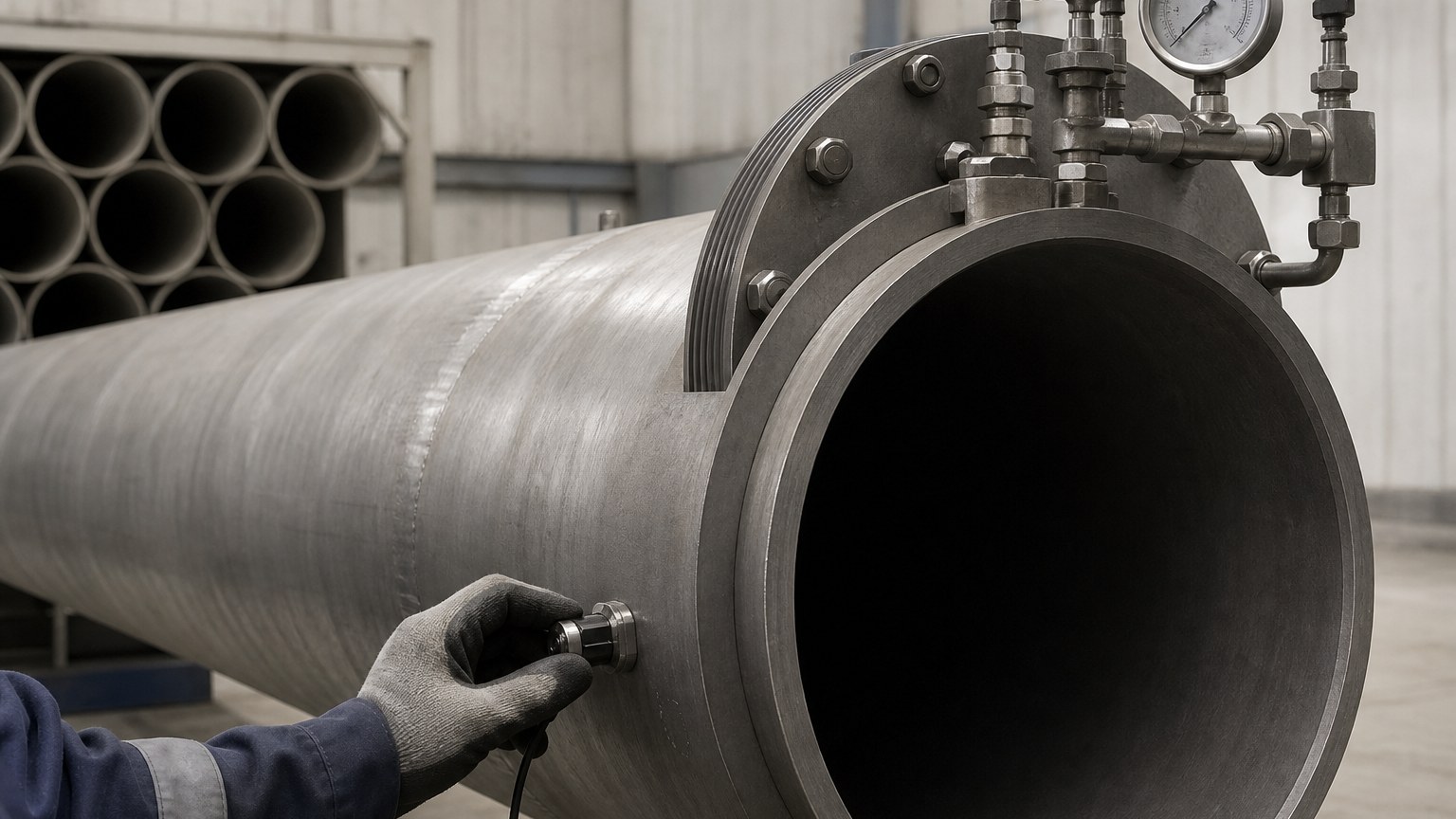
LSAW normally gives tighter diameter, ovality and wall-thickness control because the shell is welded and then mechanically expanded; SSAW holds good roundness but depends more on strip width and forming stability. Pressure integrity depends on weld quality and full-length examination rather than on the weld path itself.
Tolerances, roundness and what they cost you downstream
Dimensional accuracy is not a cosmetic issue; it converts directly into field cost. Out-of-round pipe closes the fit-up gap unevenly, which forces the welder to compensate with more passes, increases the risk of lack of fusion at the root, and slows automatic welding lines that assume a predictable joint. Variation in outside diameter makes clamp alignment harder and can leave high-low mismatch at the girth weld, a defect class that consumes inspection and repair time on site. The reason LSAW usually leads here is structural: the shell is welded from a discrete plate and then expanded, so the final geometry is set by a cold-working step after the heat of welding has already done its damage. The reason SSAW stays competitive is that the strip width is a known quantity and a well-controlled spiral mill holds roundness well — but the geometry is set during forming, so there is less opportunity to correct after welding.
Wall thickness control follows the same logic. Plate is bought to a specified thickness tolerance and is generally supplied thicker and flatter than strip; strip is rolled from coil and its thickness varies across the width and along the length. Since design pressure rises in direct proportion to wall thickness, a mill that delivers a nominal wall with a wide minus tolerance is delivering a lower-pressure pipe than the purchaser believes was ordered. The remedy sits in the specification rather than in the mill: state whether the wall is ordered as minimum or as average with a permitted minus excursion, because those two instructions produce materially different pipe from the same rolling schedule. The dimensional conventions for welded and seamless wrought steel pipe, including the relationship between nominal size and outside diameter, are standardised in ASME B36.10M, and it is worth using that reference when writing the dimensional basis into an enquiry.
Proving pressure integrity in both products
Pressure integrity is proven the same way in either product, and that is the point buyers most often miss. Hydrostatic testing demonstrates containment: every length is filled and pressurised to the specified test pressure for a specified hold time without leaking. It does not grade the seam, because a seam with lack of fusion can hold a proof pressure and still separate in service under bending, fatigue or low-temperature loading. What actually establishes pressure integrity is the combination of weld process control, full-length non-destructive examination of the seam, and destructive testing on sampled pipe — flattening, bend, tensile and hardness tests that load the joint directly rather than merely proving that it is leak-tight.
Applied to this comparison, the conclusion is that neither weld path is intrinsically stronger. An LSAW seam with a weld window that has drifted and an examination that sampled one pipe in twenty is a worse risk than an SSAW seam produced continuously with phased-array examination of every metre. The practical question for a purchaser is therefore not “which process is better” but “which process, at this mill, with this examination coverage, at this diameter and wall”. Our guide to choosing between welded and seamless pipe for a given service applies the same evidence-first approach to the larger family decision.
How Do Cost, Diameter Range and Logistics Compare?
Price differences between the two routes come from material yield, weld volume and mill productivity, not from one being a cheaper grade.
SSAW generally costs less per tonne because coil is cheaper than plate and the forming line is highly productive; LSAW costs more because plate, multiple weld passes and expansion add work. SSAW also reaches much larger diameters, while LSAW keeps better tolerance at moderate sizes.
Where the cost difference actually comes from
Start with the raw material. Coil is produced by continuous rolling and sold by the tonne with a thickness and width tolerance that suits spiral forming; plate is rolled, cut, inspected and sold in discrete lengths with edge condition and flatness requirements attached. On the same steel grade, coil normally costs less per tonne than plate, and the spiral process consumes less material per metre of finished pipe because the forming strategy wastes less at the ends. The plate-formed route, by contrast, cuts every shell from a discrete plate, so the off-cut, the crimping allowance and the end trim are all real material losses rather than a share of a continuous strip.
Then add the process work. LSAW requires edge milling, crimping, three forming strokes in a press, internal and external welding, and a mechanical expansion pass, and each of those steps consumes time and capital. SSAW runs continuously and changes diameter by re-setting angles and strip width, which means much higher output per shift and a far smaller share of fixed cost per tonne. The counterweight is weld volume and inspection scope: the spiral seam is longer, so more weld metal and more examination hours are consumed inside the same tonne of pipe, and that cost is real even though it does not appear as a line item on a quotation.
Diameter reach, length and freight
The diameter argument is simple and decisive for large projects. A spiral mill produces very large diameters from comparatively narrow strip, because the diameter is a function of the forming angle and strip width rather than of the plate size available. A plate-formed mill is limited by the plate it can buy, form and expand, so the practical diameter ceiling arrives earlier. For long transmission mains, outfall and water supply lines that live in the largest diameter bands, the spiral route is often the only commercially sensible welded option, and line pipe for petroleum and natural gas service is specified under a common framework — the requirements of the API Specification 5L family, with two product specification levels that differ mainly in toughness testing, chemistry limits and examination coverage.
Logistics follow the geometry. Mill lengths reduce the number of field joints, and fewer joints mean fewer welders, fewer inspection hours, less coating repair at each joint and lower installation cost per kilometre. Weight per metre, and therefore the transport cost of the same wall thickness at a larger diameter, rises quickly, so the commercial comparison should always be made on a delivered basis rather than on a mill price per tonne. A pipe that is cheaper ex-works but heavier to move, longer to weld and slower to inspect may cost more than the alternative before the first girth weld is completed, which is why the honest comparison is cost per metre installed rather than price per tonne supplied.
Which Pipe Should You Choose for Your Project?
Selection is not a preference question; it follows from pressure class, diameter, tolerance demand and delivery schedule.
Choose LSAW for high-pressure transmission and where diameter and wall tolerances must hold tightly; choose SSAW for large-diameter, medium-pressure transmission, water mains and structural work where cost and diameter range dominate. Treat the weld path as a design input, not a default.
A selection rule you can apply in the enquiry
Work down the requirements in order and the answer usually presents itself. If the design pressure is high and the wall is thick, and if the line will be welded and inspected automatically in the field, the plate-formed route gives the tighter jacket the project needs. If the diameter is very large, the pressure class is moderate, and the dominant constraint is delivered cost across a long main, the spiral route is normally the better engineering and commercial answer. If the service demands an unbroken wall — high-temperature boiler and process lines, hydraulic cylinders, precision tubing, or any design that refuses to credit a weld — then the question is not LSAW against SSAW at all, and the enquiry belongs in the seamless product family. In every case the deciding evidence is the examination scope, because that is what the code credits and what your inspector can actually verify.
Write six things into the specification before requesting quotations: the product specification and edition; the grade and, for line pipe, the product specification level; the wall thickness basis as minimum or average; the seam examination method and its coverage; the destructive test schedule including impact temperature; and the marking and traceability requirement on each length. Offers that do not answer all six are not comparable with each other, whatever their headline price. A worked example of that specification logic for the plate-formed route is our API 5L X65 LSAW line pipe in 20 inch, which carries the testing and documentation package a transmission project expects. Buying behaviour in this market is otherwise shaped by forces outside the mill, and the background on how pipelines are built, coated and inspected is useful context if you are new to the segment; the wider picture is summarised in this reference on pipeline transport.
For enquiries on large diameter line pipe, welded or seamless, send your specification to our export team with diameter, wall thickness, length, grade, standard and quantity. We will confirm which forming route the mill will run, the examination scope that goes with it, and the delivery window, so that the quotation you receive can be compared against the others line by line.
Conclusion: Which Large Diameter Pipe Should You Specify?
Conclusion: Match the weld route to pressure class and diameter: LSAW for tight-tolerance, high-pressure lines, SSAW for large-diameter, cost-driven transmission. Verify the seam by examination, not assumption.