
304 vs 316 Stainless Steel: Which Grade Wins on Corrosion Resistance and Cost?
Specify 304 where chlorides attack and the surface pits within months. Specify 316 where it was never needed and you overpay on every tonne. The difference is one alloying element.
316 stainless steel resists chloride pitting and crevice corrosion far better than 304 because it contains 2–3% molybdenum, and it costs more for the same reason. Choose 304 for general indoor, food and architectural work; choose 316 for marine, chemical, pharmaceutical and high-chloride service.
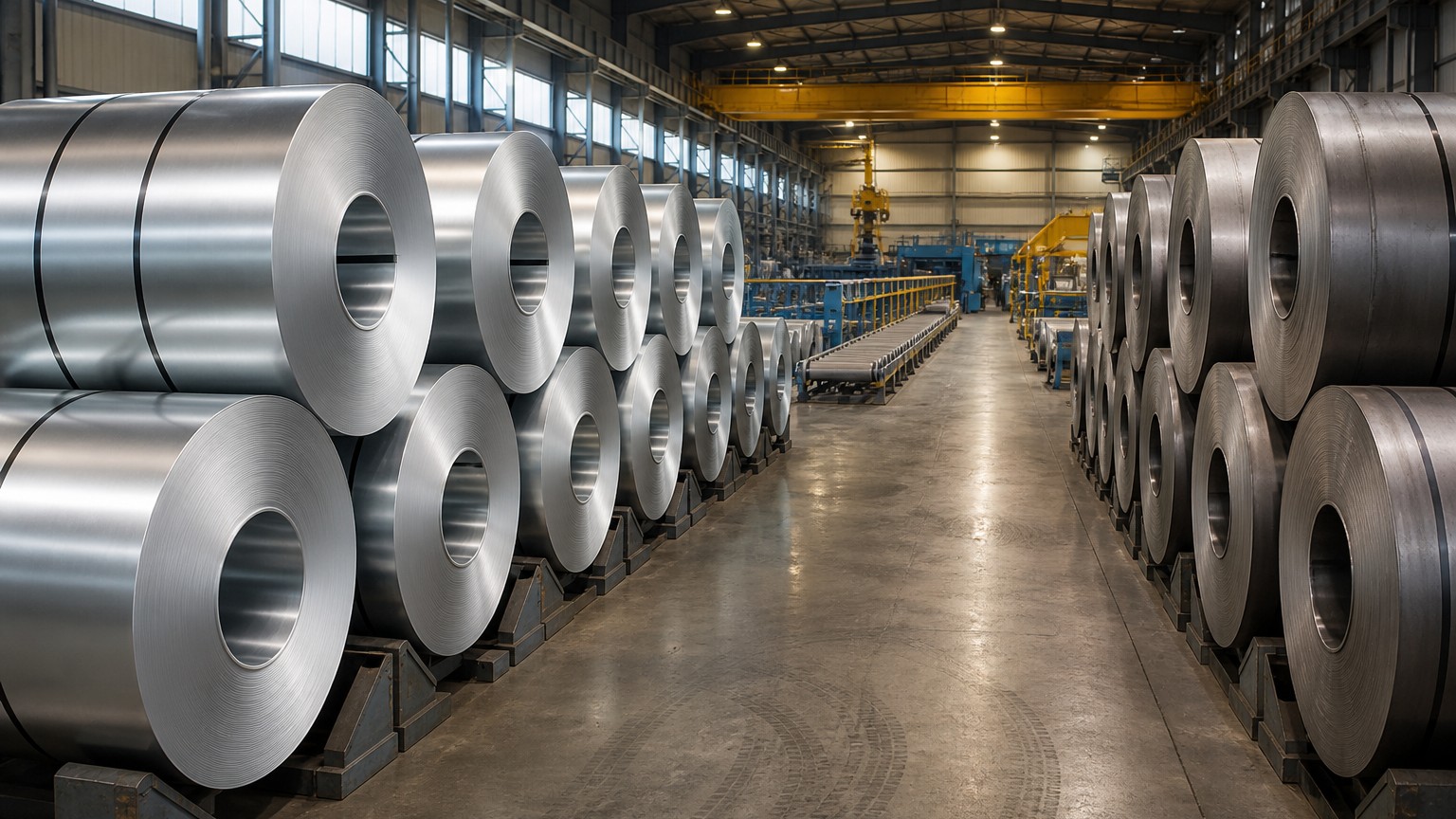
In the warehouse the two grades look identical: the same silver-grey surface, the same non-magnetic response, the same ability to sit outside for a month without rusting. That similarity is exactly why the choice goes wrong so often. Buyers treat 304 and 316 as one material at two price points, and the penalty for guessing appears years later, when a welded tank develops pinholes or a coastal handrail bleeds rust streaks down a rendered wall. The sections below separate the two grades by chemistry, by measurable corrosion performance, by the applications that genuinely need each one, and by the purchasing and specification decisions that follow from all of it.
What Actually Separates 304 From 316 Stainless Steel?
Both grades are austenitic, both are non-magnetic in the annealed condition, and both depend on the same self-repairing chromium oxide film. The difference sits in the alloying table.
Type 304 carries roughly 18–20% chromium and 8–11% nickel with no deliberate molybdenum. Type 316 holds a similar chromium level, adds 2–3% molybdenum and slightly more nickel, and that single addition is what changes its behaviour in chlorides.
Dive deeper: one element, two very different service lives. Chromium is what makes stainless steel stainless. At roughly 10.5% and above it forms a thin, continuous oxide layer that seals the surface off from the atmosphere, and because that layer rebuilds itself within seconds after a scratch, the material keeps protecting itself as long as oxygen is available. Nickel stabilises the austenitic crystal structure, which is what keeps the steel ductile, tough at low temperature and formable rather than brittle. Neither element is good at holding off chloride ions, and chloride is the most common single cause of stainless steel failure in service. Molybdenum is. It reinforces and stabilises the passive film in the presence of chlorides, which is why a grade carrying 2–3% molybdenum tolerates chloride concentrations and temperatures that will eventually break down 304. The published composition ranges make the gap easy to hold in mind. On the widely specified AISI 304 grade, carbon sits at 0.08% maximum, chromium runs 18–20%, nickel runs 8–11%, and there is no molybdenum line in the table at all. The 316 family shifts chromium slightly down to 16–18%, lifts nickel to 10–14% and adds 2–3% molybdenum, while the low-carbon 316L variant holds carbon at 0.030% maximum so that welds do not sensitise. Two practical consequences follow. The first is that the grades cannot be told apart in the yard by eye, by magnet or by a casual spark test; only chemical analysis separates them, which is why grade verification on incoming material is normal practice rather than a sign of distrust. The second is that the composition ranges overlap so heavily that dual certification is legitimate: plate supplied as 304/304L or 316/316L is common, and a mill test certificate listing both designations is not a warning sign. What matters at purchase is the heat analysis and the standard the material is certified against, not the label on the bundle, so when you compare 304 vs 316 stainless steel plate options from any supplier, the analysis sheet is the document that settles the question.
Where does molybdenum come from, and why does it matter so much?
Molybdenum is a deliberate, expensive addition, typically made with ferromolybdenum during steelmaking, which is why it shows up in the price of the finished coil. Its job is narrow but decisive: it makes the passive film more resistant to localised breakdown by chloride ions. Nothing else in the alloy performs that function, so the presence or absence of molybdenum, more than any other single variable, decides whether a stainless component survives a coastal, chemical or de-icing-salt environment.
How Much Better Is 316 Stainless Steel at Resisting Corrosion?
The gap is not uniform. In clean, cool, flowing fresh water the two grades behave almost identically. In warm, stagnant, chloride-bearing service the gap opens fast.
316 resists pitting and crevice corrosion in chlorides far better than 304, and 304 becomes vulnerable to stress corrosion cracking above roughly 60 °C. In benign water, food and indoor atmospheres the two grades perform similarly.
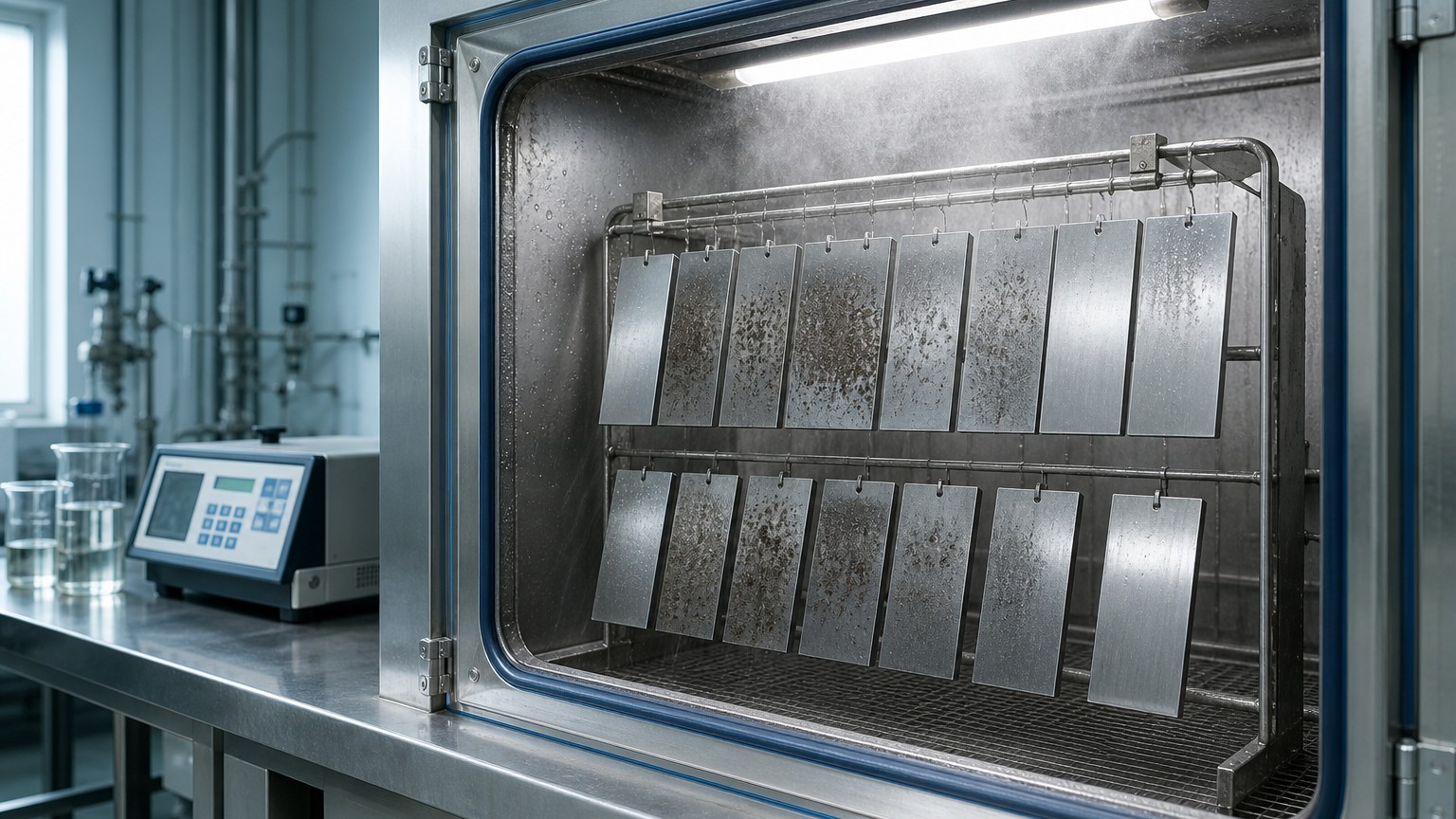
Dive deeper: pitting, crevice attack and cracking are three separate failures. Pitting corrosion is localised, deep and often invisible until it perforates: the passive film breaks down at a single point, a small anode forms in a large cathode area, and the pit grows inward while the surrounding surface looks untouched. Crevice corrosion is the same mechanism, but driven by a geometry rather than a random weak point; under a gasket, a bolt head, a weld spatter or a lap joint the local environment becomes oxygen-depleted and chloride-enriched, and attack begins where no one is looking. Both are chloride problems, and both are dramatically worse on 304 than on 316, because molybdenum suppresses the film breakdown that starts them. The published chloride guidance is unusually concrete. Type 304 is considered resistant to pitting in water carrying up to about 400 mg/L chlorides at ambient temperature, but that figure collapses to roughly 150 mg/L once the temperature reaches 60 °C. Type 304 also becomes susceptible to chloride stress corrosion cracking above about 60 °C, which is the failure mode that changes the outcome in insulated hot-water lines, steam-traced piping and near-shore marine hardware. Stress corrosion cracking is the most dangerous of the three because it is essentially invisible: a crack propagates through the wall with no measurable metal loss, no surface staining and no warning, and the component simply fails. Where 304 is too sensitive to chloride pitting, crevice attack or cracking, 316 is the recognised substitution – which is precisely why 304 must not be used in tropical salt-water conditions such as offshore platforms, and why 316 is the preferred alloy there. A useful way to rank the grades before buying is the pitting resistance equivalent number, an index built directly from the composition table. Using the common form, %Cr + 3.3 × %Mo + 16 × %N, a plain 304 with roughly 18.5% chromium and a little nitrogen lands near 19, while a 316 with 2.5% molybdenum climbs into the mid-20s. The accepted threshold for useful seawater service is generally taken as a PREN above 32, with values above 40 specified where crevices are unavoidable – which is a numerical way of saying that neither 304 nor 316 is a genuine seawater material, and that both are adequate for the far milder chloride loads of potable water, food processing and inland architecture.
Does 316L behave differently from 316?
On corrosion resistance alone, hardly at all. The L stands for low carbon, and the purpose is to prevent sensitisation – the precipitation of chromium carbides along grain boundaries when the material is held in the 480–820 °C range during welding, which strips chromium from the surrounding metal and leaves a corrosion-prone band. 316L is therefore the safer specification for fabricated assemblies, and it is also slightly softer. Where a thicker section needs to be welded and then used in a chloride environment, 316L is the normal choice rather than plain 316.
Where Does 304 Stainless Steel Still Beat 316?
Paying for molybdenum in an environment that will never contain chlorides is the most common over-specification in fabrication.
304 is the better buy for indoor architectural work, food and beverage equipment, kitchenware, potable water systems and general sheet metal. It delivers long service at lower cost, forms and welds easily, and is available in far wider stock.
Dive deeper: the service envelope 304 actually covers. The useful question is not whether 316 is better, but whether the service condition ever combines chloride with warmth, stagnation or a crevice. Indoor architecture, dry atmospheric exposure, most food-contact surfaces, brewing and dairy equipment that is cleaned regularly, commercial kitchen benchtops, sinks and splashbacks, potable water pipework and tanks, and a long list of fabricated frames, enclosures and covers all sit comfortably inside 304’s capability, and every one of them is routinely run for decades without incident. Two material properties make 304 convenient beyond its cost. The first is formability. 304 work-hardens at a predictable rate and takes deep drawing, roll forming and tight bending radii well, which is why sink bowls, cookware, catering panels and profiled architectural sections are overwhelmingly made from it rather than from 316. The second is availability. Because 304 accounts for the largest share of austenitic stainless production, it is stocked in more thicknesses, finishes and widths than any other grade, so a project specified in 304 usually avoids the lead-time penalty that accompanies a 316 special size. Finish then becomes the next decision, and the visual and price differences between mill finishes are set out in our guide to 2B and No.4 surface finishes. Choosing 304 twice as often is not a compromise on quality; it is a decision to stop paying for an alloying element the environment cannot use. The counter-argument is always the same, and it is worth taking seriously: the cost difference per tonne looks small against the cost of a failure, and designers who have been burned once tend to over-specify permanently afterwards. The discipline that solves this is to write down the actual service condition at specification stage – is chloride present, at what concentration, at what temperature, and is the surface able to drain and dry? If the honest answer to all four is benign, 304 is the correct engineering choice rather than the budget one. The British Stainless Steel Association’s reference library on stainless steel types and grades follows the same logic, treating the presence of chlorides and the service temperature as the deciding inputs rather than the prestige of the grade.
Is 304 acceptable for food contact and drinking water?
Yes, for the overwhelming majority of applications. 304 has been the standard fabrication material for dairy, brewery, bakery and general food processing equipment for decades, and it is widely accepted in potable water service. The limits appear at the edges: heavily chlorinated or chloraminated water, hot stagnant water in an unflushed branch line, and salt-heavy products such as brine and seawater-based marinades are the cases where specifying 316 is the sounder decision.
Which Applications Genuinely Require 316 Stainless Steel?
Some service conditions leave no realistic choice, and recognising them early is cheaper than discovering them during commissioning.
316 is the default for chemical and petrochemical plant, pharmaceutical and sanitary equipment, marine and coastal structures, desalination and wastewater treatment, pulp and paper mills, and medical devices.
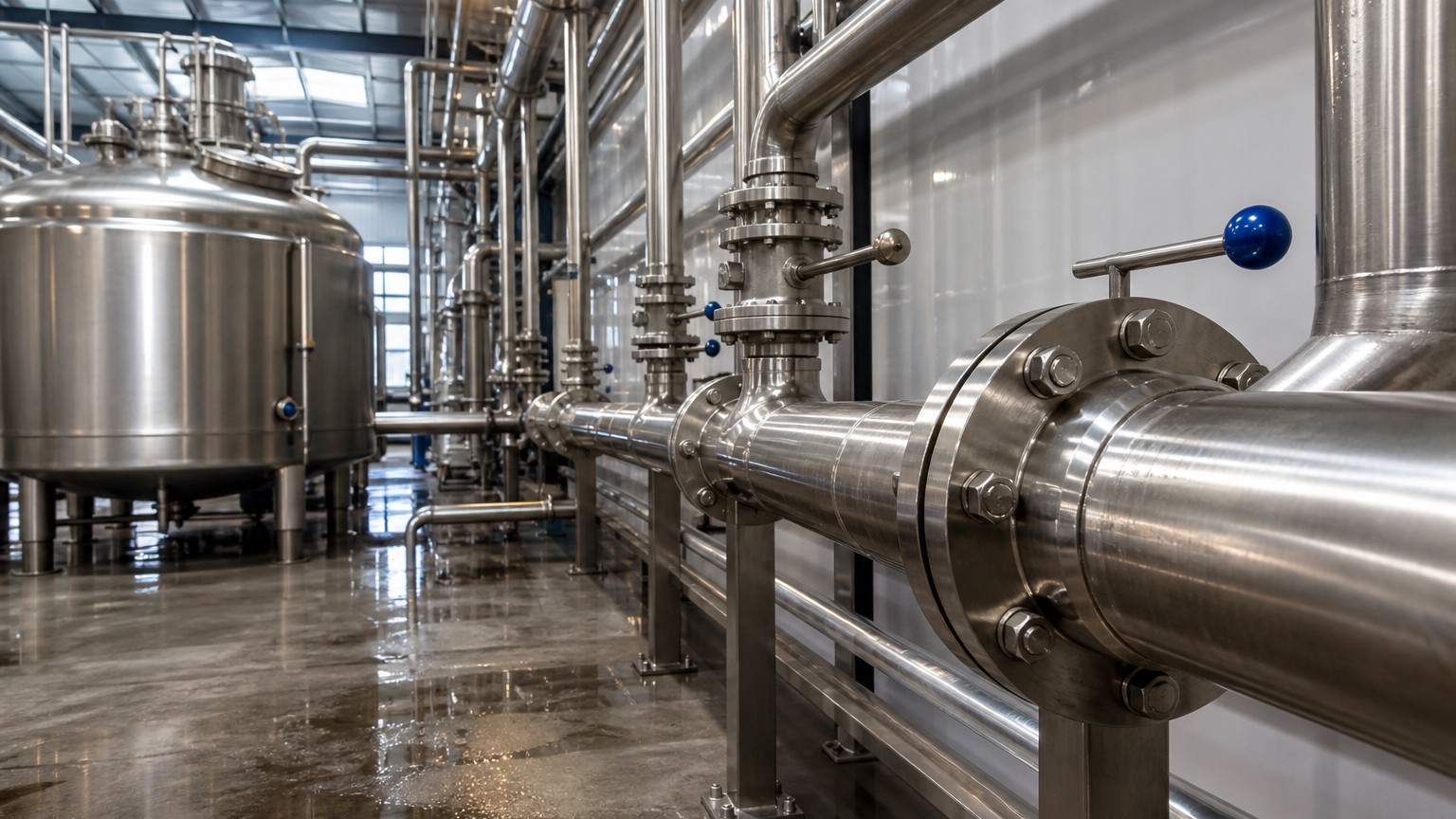
Dive deeper: the four conditions that settle the grade question. The first is chloride concentration combined with temperature. Brine, seawater, chloride-rich process streams and de-icing salt residues all sit far outside 304’s envelope once they are warm, and 316’s molybdenum content is the reason it is chosen instead. The second is acid exposure. Where the process stream is acidic, particularly in reducing acids such as sulfuric acid at moderate concentration, molybdenum again improves performance, and 316L is the standard starting point for tanks, vessels and process piping. The same logic applies in coil form: a 304 stainless steel coil in 0.8 mm and 1219 mm is a sound specification for benign duty, while the 316L equivalent is the safer purchase where the finished part will see chlorides. The third is hygiene combined with aggressive cleaning. Pharmaceutical, biotech and sanitary installations are cleaned with chloride-bearing caustic and acid detergents on a daily cycle, frequently at elevated temperature, and the repeated wet-dry cycling in crevices around gaskets and tri-clamp joints is exactly the condition that destroys 304. The fourth is architectural exposure near the coast or next to heavy de-icing salt use, where 316 has become the routine specification for handrails, cladding fixings, balustrades and street furniture because the visible rust staining from a failed 304 component is a maintenance and reputational problem disproportionate to the cost saving. It is worth being clear about the ceiling as well as the floor. 316 is not the strongest corrosion answer available. In genuinely aggressive chloride service – hot seawater, high-chloride process streams, environments where crevices cannot be eliminated – duplex grades such as 2205 or super-austenitic and super-duplex alloys with far higher PREN values take over, and 6% molybdenum grades or nickel alloys are used where even duplex is insufficient. Recommending 316 beyond its limits is as much an error as recommending 304 beyond its limits. The practical outcome is a three-step ladder: 304 for benign environments, 316 and 316L for moderate chloride, acid and hygiene-critical duty, and duplex or higher alloys where chlorides are hot, concentrated and unavoidable.
Does the surface finish change the corrosion answer?
It does, and often more than buyers expect. A smoother, cleaner surface drains better, holds fewer deposits and offers fewer initiation sites for pitting, so a bright cold-rolled finish consistently outperforms a rough hot-rolled or as-welded surface in the same grade. Weld scale, grinding marks and embedded iron contamination are frequently the real starting points of an attack that later gets blamed on the wrong grade.
How Much More Does 316 Stainless Cost, and When Is It Worth It?
316 is not more expensive because it is made to a higher quality standard. It is more expensive because of what is inside it.
316 carries a clear price premium over 304 because it contains more nickel and adds molybdenum, both of which cost considerably more than iron and chromium. The premium is worth paying only where chlorides, acids or hygiene-critical cleaning are genuinely present.
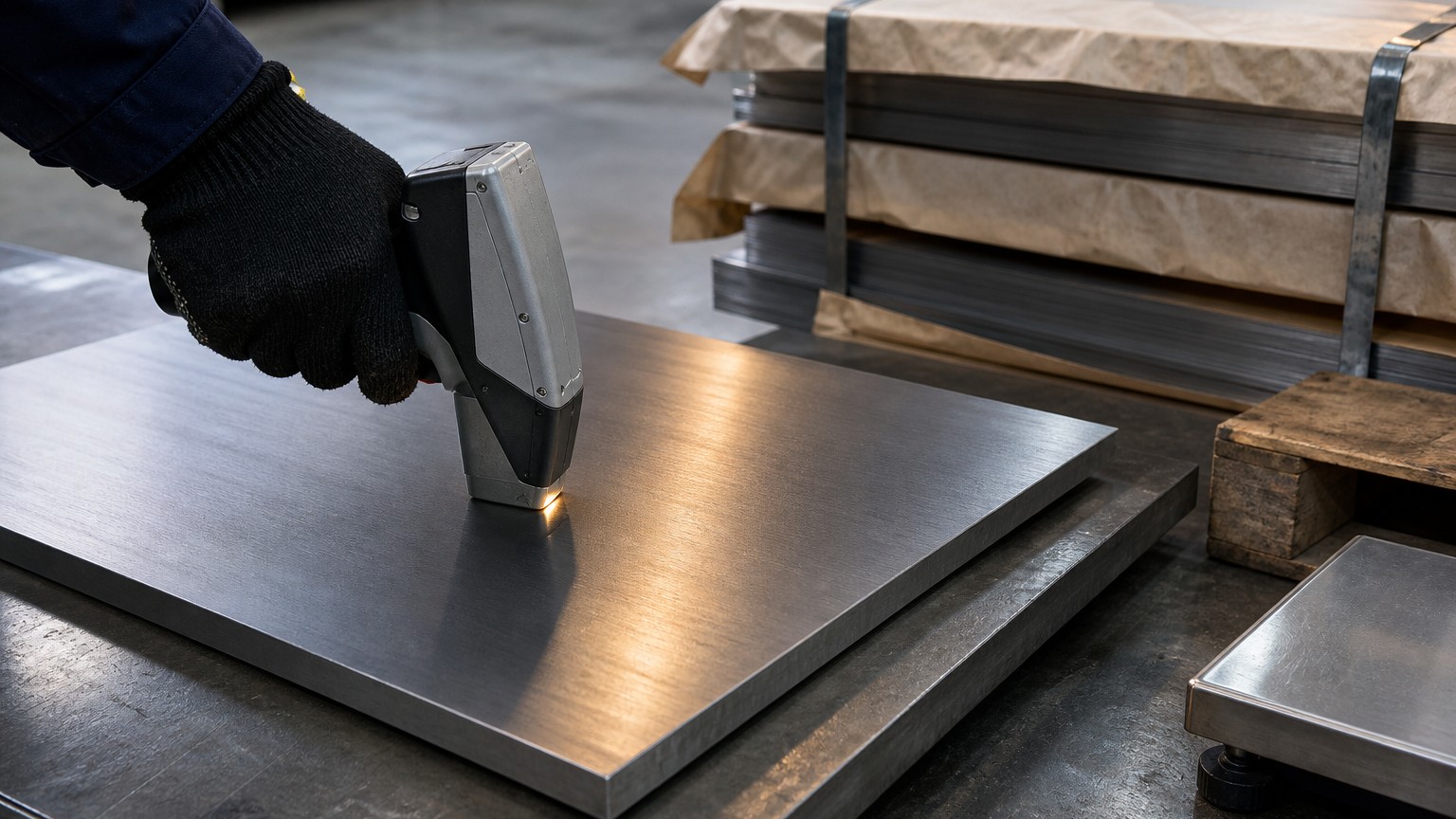
Dive deeper: what actually drives the price difference, and how to decide. Stainless steel pricing follows the alloy content, and the alloy content is dominated by nickel, molybdenum and chromium. Nickel and molybdenum are both traded commodities with volatile prices, and because 316 contains more nickel and adds 2–3% molybdenum on top, its raw material cost base sits structurally above 304’s. That gap then moves independently of anything the mill does: when nickel and molybdenum prices rise, the 304–316 spread widens, and when they fall it narrows. This is why the answer to “how much more” changes month to month and why a firm quotation is worth more than any published percentage. It is also the reason a cheaper-than-expected 316 quote deserves scrutiny rather than celebration, because grade substitution – selling 304 as 316 – is one of the oldest problems in the stainless trade, and the price gap is what makes it worth attempting. On the benefit side, the decision is not a straight comparison of plate cost. If 304 fails in service, the replacement cost includes draining and cleaning the system, cutting out and re-welding the failed section, disposal, downtime and possibly product loss, and in a processing plant that multiple can exceed the original material cost of the whole installation. Against that, the premium on a single consignment is usually the smaller number, which is why the sound rule is to specify 316 whenever a chloride or acid exposure is credible and to specify 304 only when it has been positively ruled out. Verification is the last step and it is cheap. Ask for a mill test certificate that states the heat number and the chemical analysis, confirming that the molybdenum content actually present in the heat corresponds to a 316 rather than a 304. Where the material is critical, verify it again on arrival with a handheld analyser, which takes seconds per piece and resolves the grade question permanently.
Is it ever cheaper to specify 316 everywhere?
Occasionally, yes. Where a fabricator runs one grade through design, purchasing and the shop floor, the administrative saving, the reduced risk of mixed material and the elimination of substitution errors can outweigh a modest plate premium, particularly on small projects with mixed environments. On large tonnage, though, the premium compounds quickly enough that matching grade to condition remains the cheaper route.
Which Grade Should You Specify for Your Project?
Most grade failures are decided long before a purchase order exists, at the moment someone writes a material line on a drawing.
Match the grade to the worst credible service condition, not the average one. Use 304 unless chlorides, acids, elevated temperature or hygiene-critical cleaning are genuinely present; where any of those apply, specify 316 or 316L and verify it on delivery.
Dive deeper: a short, defensible decision sequence. Start by naming the environment in the most hostile condition it will ever see, not the one it will normally sit in. Ask whether chloride is present at all, in what concentration, at what temperature, and whether the surface can drain and dry or will hold deposits in crevices. Ask the same four questions about acids and about cleaning chemicals, because a plant that is washed down daily with a chloride-bearing detergent is a chloride environment even if the process stream itself is benign. Then apply the ladder. Benign and dry, or clean water below 60 °C with no trapping geometry: 304 is correct, and paying more is waste. Chloride present at meaningful concentration, warm or stagnant conditions, acid exposure, coastal atmosphere, or hygiene-critical cleaning duty: specify 316 or, where the assembly will be welded and later exposed, 316L. Hot, concentrated chlorides or unavoidable crevices in seawater service: neither grade is sufficient, and duplex or a higher alloy is the honest answer. Once the grade is chosen, write the requirement so that it can be verified. Name the grade and the standard, most commonly ASTM A240/A240M for plate, sheet and strip, or the equivalent EN designation, and require a mill test certificate with the heat analysis. Record the finish, because a rough or contaminated surface can fail where the grade itself would have held. Finally, verify on arrival rather than on the drawing board: a two-minute check with a handheld analyser on a few pieces from each bundle costs almost nothing and closes the substitution loophole permanently. The pattern behind nearly every stainless failure that reaches a claims desk is the same – a benign grade chosen for an aggressive condition, or a correct grade ruined by a defective surface, an unfavourable geometry or a lack of verification. Fixing the specification stage fixes most of it.
Which is the more common specification error?
Over-specification is the more common error, because specifying a higher grade always feels like the safe decision and rarely attracts challenge. Under-specification is by far the more expensive one, because its consequences arrive later and at a scale the original saving never anticipated. A coastal project that over-specifies 316 has slightly more capital tied up in handrails; the same project specified in 304 will produce rust staining, repeated replacement labour and a maintenance item that never goes away.
Buying 304 or 316 stainless in coil, sheet or plate and unsure which grade your service condition actually requires? Send your specification to our export team and we will confirm the grade, finish, thickness and standard available, and the equivalent material for your market.
Conclusion: 304 handles benign, dry and food-contact duty at the lowest cost; 316 pays for itself where chlorides, acids or coastal exposure appear. Match grade to condition.