
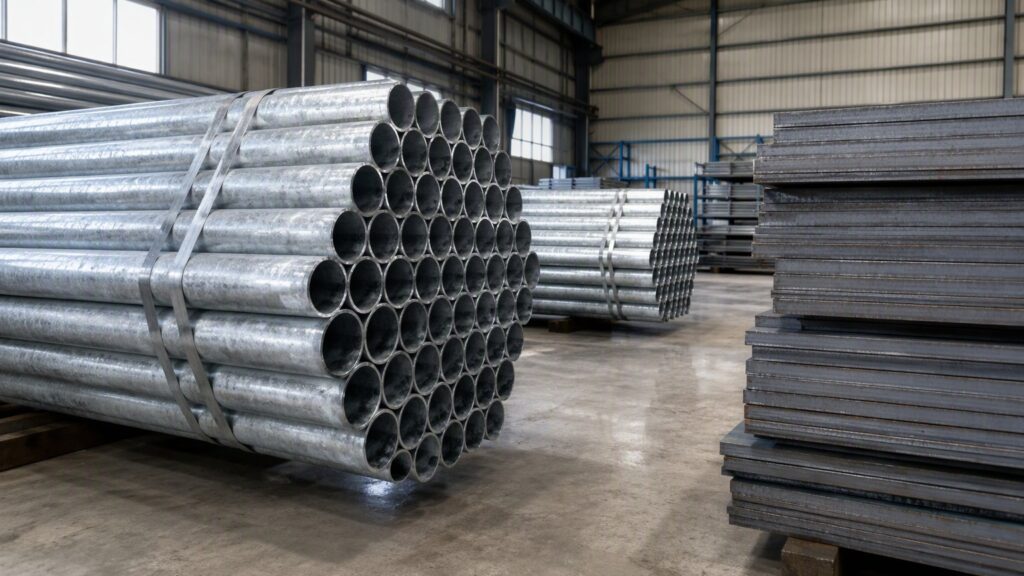
Steel Corrosion Protection: Zinc, Chromate or Paint — Which System Is Right for Your Project?
A rusted tube bundle fails inspection before it ever reaches site, and the surface treatment usually decides that outcome far more than the steel grade does.
Steel corrosion protection works on two principles: a barrier that keeps water and oxygen off the surface, and — wherever zinc is used — a sacrificial layer that corrodes instead of the steel. Zinc, chromate and paint or powder systems are the three building blocks, used alone or stacked.
Most enquiries name a grade, a size and a quantity, then leave the surface to chance. That is where the corrosion performance of a shipment is actually decided, because the same tube behaves very differently under a 60 µm zinc layer than under a thin passivation film alone. The sections below explain what each system does, how zinc, chromate and paint differ where it matters, how to match a system to an environment, and how to write a protection clause that still holds up when the container is opened.
What Is Steel Corrosion Protection and Why Does It Decide Service Life?
Rust is not a defect that appears late; it starts the first time the surface is wet and warm, and the coating decides it more than the grade does.
Steel corrosion protection is any system that slows the electrochemical reaction between steel, water and oxygen. It acts as a barrier, as a sacrificial anode, as a passivating or inhibitive treatment, or as a combination of all three.
Three mechanisms, one goal
Almost every commercial system uses at least two of the three mechanisms, and knowing which one you are buying prevents the most expensive mistake in this field. A barrier — paint, powder, bitumen, or a dense, tightly adhering oxide — physically blocks water, oxygen and chlorides from reaching the steel. It is effective while it is intact, and it fails where it is scratched, where it is applied over a surface that was not properly cleaned, or where it is too thin at an edge or a weld. A sacrificial coating works electrically rather than physically. Zinc sits below steel in the electrochemical series, so it corrodes preferentially and keeps protecting the steel even where the coating has been cut or drilled. This is why a scratched galvanized surface normally shows a white or grey zinc corrosion product instead of red rust at the damaged spot, and it is the reason zinc coatings tolerate site damage that a paint film of the same thickness would not. A passivating or inhibitive treatment — a chromate conversion film, a phosphate layer, or an inhibitive pigment inside a primer — changes the chemistry at the surface or in the thin film of moisture on it, so that the corrosion reaction itself is slowed rather than merely blocked. Commercial systems mix these effects deliberately. Continuous galvanized tube relies on sacrificial zinc while the layer also acts as a barrier; a chromate film on top of that zinc adds passivation and improves paint adhesion; a paint or powder topcoat adds a barrier that takes the weather so the zinc beneath it is consumed more slowly. Read a supplier’s surface description against those three mechanisms and it becomes obvious whether the offer is protective or merely cosmetic.
Why the environment sets the clock
Service life follows the environment far more closely than it follows the steel grade. Rural and indoor atmospheres are the mildest; urban and industrial atmospheres add sulphur dioxide; coastal and marine atmospheres add chlorides, which are aggressive to zinc and can defeat some paint films; and de-icing salt, fertilizer dust, acid spillage and condensation inside closed sections are more demanding still. Steel that stays dry and clean lasts a very long time in any of these places, which is why the internal faces of a sealed hollow section often need no coating at all while the external faces of the same tube need the full stack. Wet-and-dry cycling is frequently more damaging than continuous immersion in fresh water, because every drying cycle pulls fresh oxygen into the surface film and every wetting cycle renews the electrolyte. Form also matters: water sits in crevices, behind washers, inside lap joints and at the bottom of a horizontal section, so a well-specified coating on an ill-designed joint still fails first at the joint. A buyer who states the end use — rooftop railing on a coastal site, greenhouse frame inland, chemical plant handrail, buried foundation cage — gives the supplier enough information to propose a system that matches the site. Without that sentence, the offer defaults to whatever surface treatment sits at the bottom of the price list, and the first rainy season becomes the inspection.
How Does Zinc Coating Protect Steel From Rust?
An enquiry that specifies galvanized but never states a coating weight is an enquiry that will be inspected against whatever the line happened to run that week.
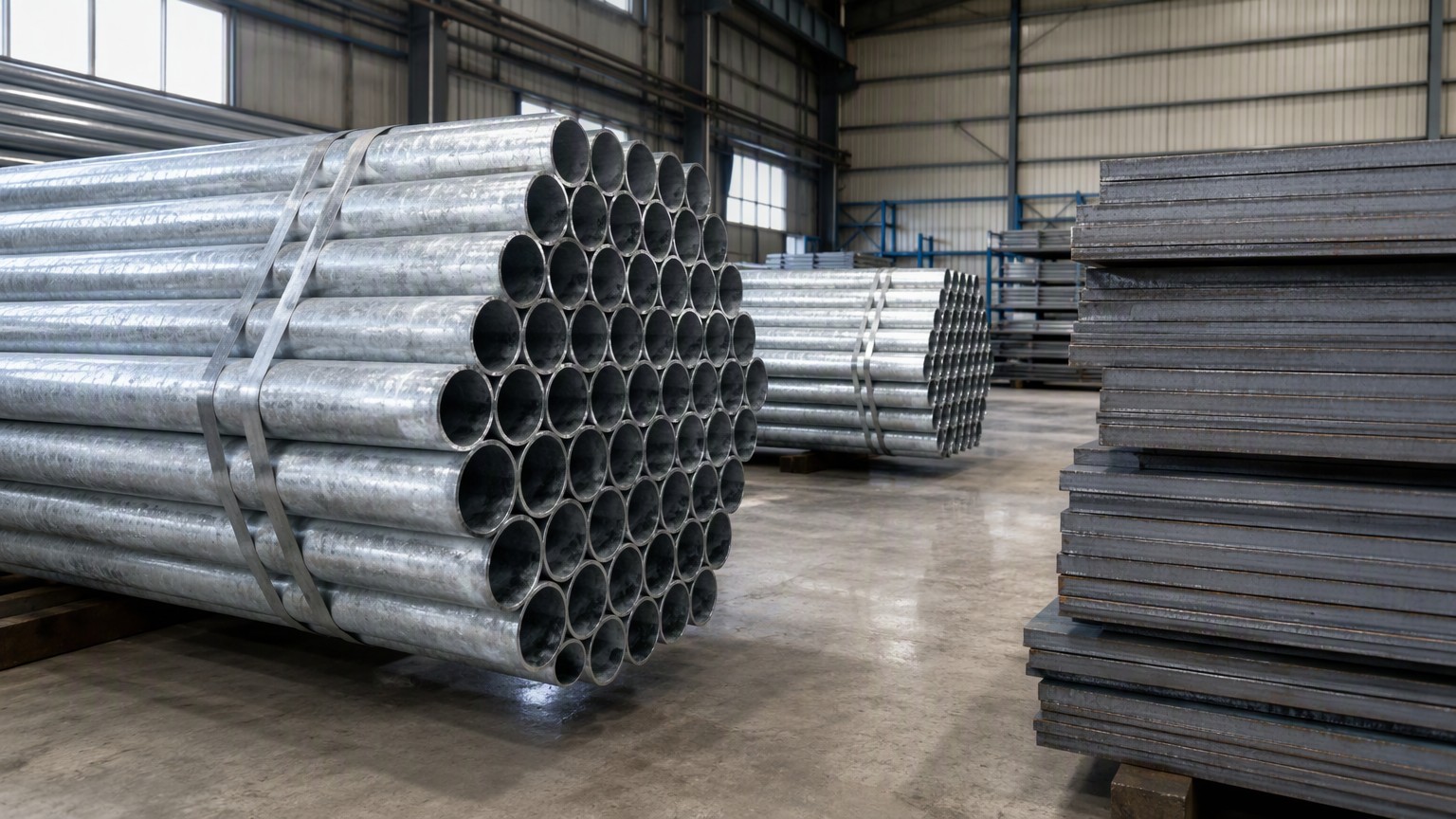
Zinc protects steel sacrificially: the coating corrodes in place of the steel and continues to protect cut edges and scratches. Hot-dip galvanizing forms a thick zinc-iron alloy layer on fabricated parts, while electro-galvanizing and continuous lines apply a thinner, smoother zinc layer better suited to forming, painting and coil products.
Hot-dip and electro-galvanized are not interchangeable
The two routes produce different coatings with different jobs. Hot-dip galvanizing, described for fabricated iron and steel articles in ISO 1461:2022, immerses the finished part in molten zinc so that zinc reacts with the steel surface to form a metallurgically bonded alloy layer topped by zinc. The coating is thick, abrasion resistant and well suited to structural and outdoor work, but the process is a batch operation and the part must fit in the kettle. Electro-galvanizing deposits zinc from a solution, giving a thinner, smoother and more uniform coating that forms and paints cleanly — the usual choice for sheet and tube that will be roll formed or coated. Continuous lines that galvanize coil and tube in one pass sit in a third category, and the standards reflect that split: the hot-dip standard for fabricated articles explicitly does not cover tube and pipe galvanized in automatic plants, which are governed by their own product standards. ASTM A123/A123M takes the same position for hot-dip coatings on iron and steel products. Knowing which route produced the material tells a buyer what surface to expect, how it will behave when cut, and whether it can be welded without removing the coating.
Coating weight is the number that matters
Inside each route, the protection level is set almost entirely by coating mass. A designation such as Z180 or Z275 states the total zinc mass on both surfaces per square metre, so Z275 carries roughly half again as much zinc as Z180 and lasts proportionally longer in the same atmosphere. Because the two numbers look equally “galvanized” on an offer sheet, they are the usual source of disputes about thickness that was never written down. Coating weight also has limits: a heavier coating is less tolerant of tight bending and of welding, and it takes a slightly different welding procedure, so specifying the heaviest available grade by default is not automatically the best decision. Two practical rules follow. First, state the coating designation, the standard it is measured against, and the test method, then require the result on the inspection document. Second, size the coating to the environment: a light coating inside a finished building and a heavy coating on a coastal structure are both correct answers to different questions. The full comparison of how zinc coating weight affects corrosion protection covers the intermediate grades and the environments each one suits. For tube work specifically, our range of steel corrosion protection in galvanized tube is supplied with the zinc mass declared per order, so the surface can be checked against the purchase order rather than against a photograph.
What Does Chromate Conversion Coating Add to a Zinc Surface?
Chromate is the least visible layer in the stack and the one most often ordered by habit rather than by function.
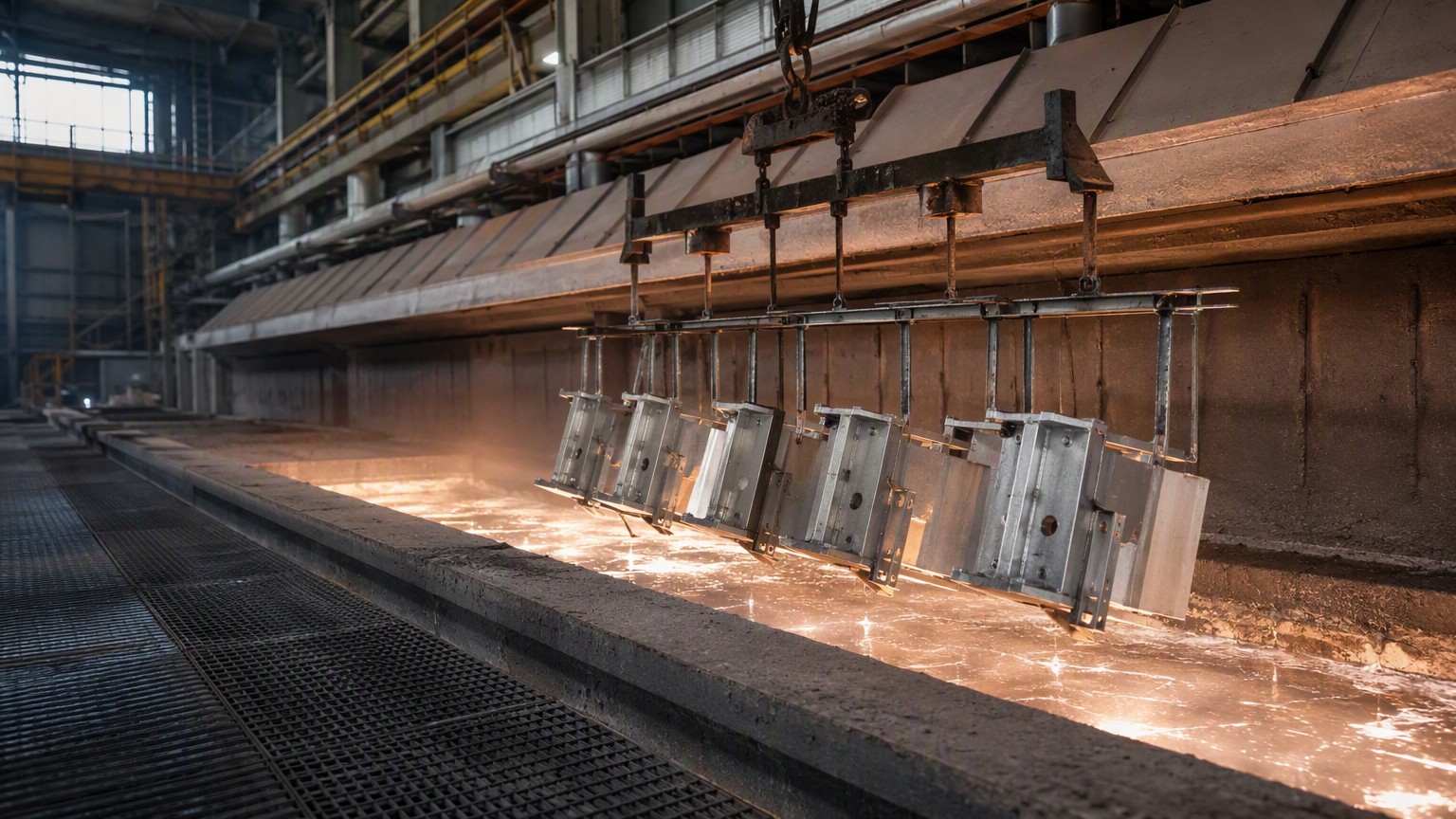
A chromate conversion coating is a thin chemical film formed on zinc or aluminium by dipping or spraying. It passivates the metal, slows white rust on bare zinc in humid storage, and gives paint a better key. Trivalent chromate has largely displaced hexavalent chromate in export supply.
What the film actually does
The film is measured in fractions of a micrometre, so it changes appearance and chemistry rather than adding meaningful barrier thickness. Its first job is to slow the reaction between zinc and humid air, which is what produces the white, voluminous zinc hydroxide that makes galvanized material look damaged in a warehouse even though the steel beneath is untouched. That matters commercially: a coil or a bundle of tube can spend weeks in a container or at a port, and a passivated surface leaves the destination with a cleaner surface and less surface staining to explain. Its second job is to hold paint. A conversion film presents a chemically active, slightly roughened surface that a primer can bond to, which is why galvanized steel that will be painted is normally passivated or phosphated first — painting directly over a smooth, freshly galvanized surface is a classic route to premature coating loss. Chromate conversion coating is best understood as a preparation layer rather than a corrosion protection system on its own: alone, it buys handling time, not years of outdoor service. Where the end use is bare, exposed and long-term, the film supports the zinc but does not replace it.
Hexavalent versus trivalent, and the paperwork
Chromate chemistry has changed for compliance reasons. Hexavalent chromium compounds are restricted in electrical and electronic equipment under the RoHS directive and are controlled under REACH, so most export-oriented galvanizing and coil coating lines now use trivalent chromate, which provides passivation without the same regulatory burden. The change has practical consequences for buyers: trivalent films are often lighter in colour and may be less vivid than the older yellow passivates, so an inspection that relies on the classic yellow tint can be misleading. For a project where the surface is only a process step on the way to paint, the sensible clause names the treatment type, the reason it is there, and the fact that it is not the corrosion barrier. For a project where the surface stays bare, the sensible clause spends the money on zinc mass and leaves the chromate film as a handling aid. Buyers who need to know which of those two situations they are in can state the site and the expected service life when requesting a quotation, and we will confirm the surface treatment that fits before the order is placed.
How Do Paint and Powder Systems Compare for Steel Corrosion Protection?
Paint is the only common protection system that can be renewed on site, and the only one that regularly fails because of what is underneath it.
Paint and powder protect steel with a barrier film. Zinc-rich primers add sacrificial protection, epoxy primers seal the surface, polyurethane topcoats resist weather and ultraviolet light, and powder coating gives a thick, factory-applied single coat for formed and finished parts.
Liquid systems: the primer does the work
In a liquid system the primer carries most of the corrosion duty and the topcoat carries the weather duty. A zinc-rich primer keeps a sacrificial mechanism in the film, so a scratch does not immediately expose bare steel to the atmosphere; an epoxy primer provides a dense, water-resistant barrier over it; and a polyurethane or polyester topcoat supplies colour, gloss and ultraviolet stability, because epoxy alone chalks in sunlight. The reason painted steel fails early is almost never the topcoat. It is surface preparation: mill scale, rust, oil, salt carried in from the coast, or a zinc surface that was never passivated, so the film loses adhesion from the underside and comes away in sheets while it still looks intact from above. A secondary cause is edge coverage. Paint pulls back from sharp edges and welds, so the thinnest film on a fabricated part sits exactly where corrosion starts, which is why stripe coats and a rounded edge condition are written into good specifications. Touch-up is the genuine advantage of liquid paint: a damaged area can be prepared and recoated locally with the same product, in the field, without dismantling the structure, which is not possible with a metallurgically bonded zinc coating.
Powder coating and the prepainted route
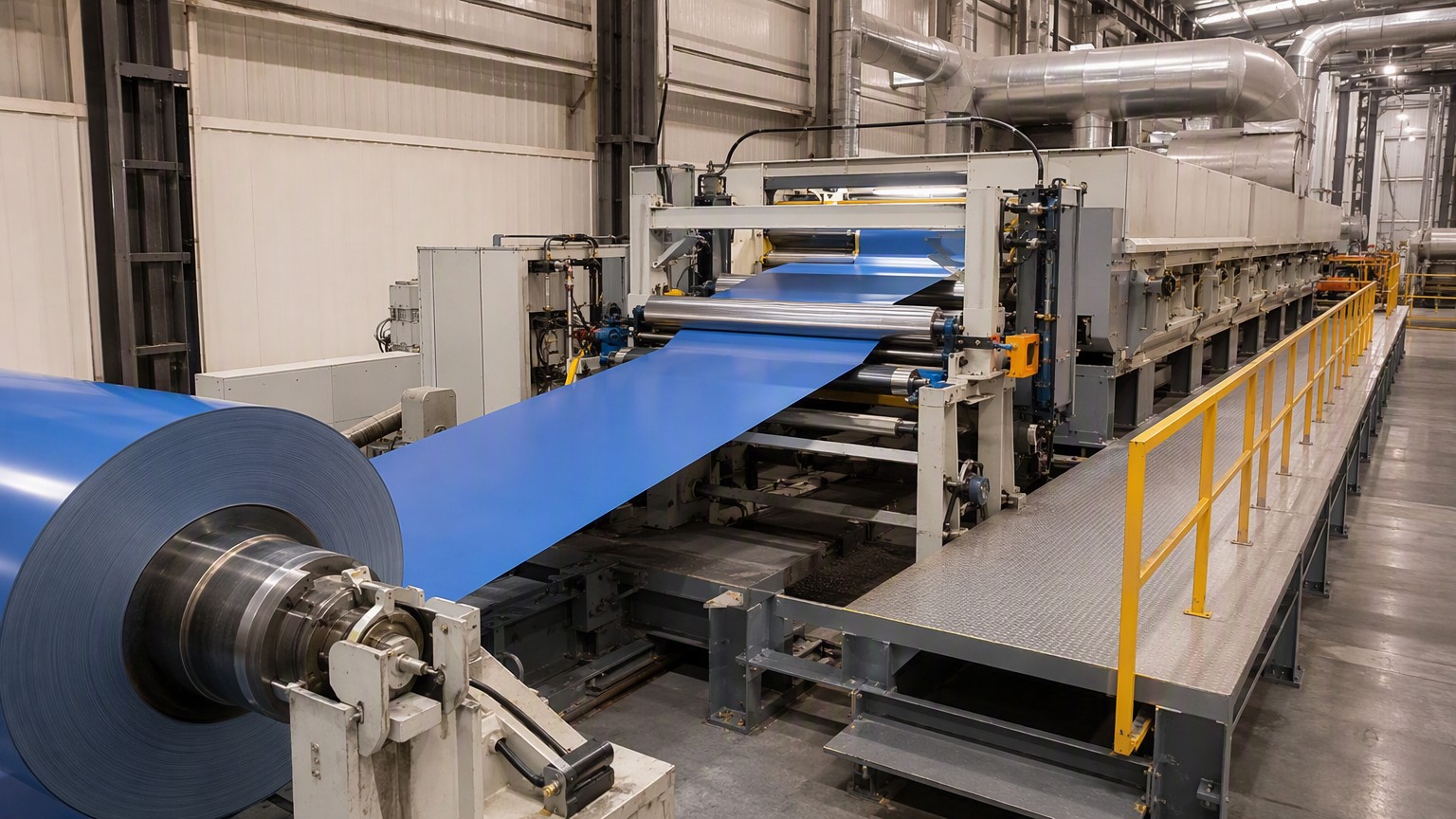
Powder coating applies a dry, electrostatically charged polymer that is cured in an oven, producing a thicker single-layer film without solvent. It is tough, uniform and free of runs, which suits factory-made parts, frames and enclosures. The trade-offs are that it needs an oven, so it cannot be repaired on site, and that very thick films can chip in a way that lifts the coating over a wider area if the substrate was not properly pretreated. The industrial answer for flat product is the prepainted coil route, where coil is cleaned, chemically pretreated, primed and topcoated on a continuous line and then cut or roll formed. Because the process is continuous, film thickness and cure are held far more consistently than any site application, and the coil can be delivered already coated, which removes a whole stage from the fabricator’s workshop. Powder and prepainted systems sit at opposite ends of the same logic: one protects finished shapes, the other delivers protected material to be shaped. Both depend on pretreatment, and both should be compared against a galvanized alternative before the specification is fixed, as set out in our comparison of corrosion protection of galvanized steel versus Galvalume, which looks at how zinc and aluminium-zinc coatings behave in the same environments. Background on the process itself is available at powder coating.
| System | How it protects steel | Typical use | Main limitation |
|---|---|---|---|
| Hot-dip zinc | Sacrificial zinc plus a thick layer of zinc and zinc-iron alloy | Fabricated structural parts, outdoor frames, poles, railings | Batch process; kettle size limits part dimensions; needs a welding procedure |
| Electro-galvanized zinc | Thinner sacrificial zinc with a smooth, paintable surface | Sheet and tube that will be formed, painted or powder coated | Lower coating mass, so shorter life if left bare outdoors |
| Chromate conversion film | Passivates zinc, slows white rust, improves paint adhesion | Handling and storage protection before painting | Far too thin to act as a corrosion barrier on its own |
| Liquid paint | Barrier film; zinc-rich primers add sacrificial action | Large structures and anything that will be recoated on site | Depends on surface preparation; thinnest film at edges and welds |
| Powder coating | Thick, uniform polymer barrier cured at high temperature | Factory-finished parts, frames and enclosures | Not repairable on site; needs an oven and reliable pretreatment |
How Do You Specify Steel Corrosion Protection Before Ordering?
Most coating disputes are documentation disputes: the material arrives, and nobody can agree what surface was actually ordered.
A workable protection clause names the system, the standard it is measured against, the coating weight or dry film thickness, the pretreatment, and the evidence to be supplied. Without those five items, the surface is open to interpretation at the port.
Writing the clause
The system is named in full rather than by a single adjective. “Galvanized” is not a specification; “hot-dip galvanized to the named standard, minimum zinc mass 275 g/m² total both surfaces, chromate passivated, no chromate in the cut faces” is one, because every element can be measured or inspected. The standard matters because it fixes not only the coating but the test method, so a zinc mass quoted under one standard cannot be judged by the acceptance rules of another. The weight or film thickness converts the promise into a number, and where both a minimum average and a minimum single reading apply, both should be quoted, because a high average can hide a thin patch. Pretreatment belongs in the clause for anything that will be painted or powder coated, since the coating below the coating is what most failures trace back to. The evidence is the last item and the one buyers forget: coating mass results, dry film thickness records, and any agreed accelerated test report should be named on the inspection document, and the document should identify the heat or the batch it applies to. A clause written this way is checkable at the mill, at the port, and at the fabrication shop, and it removes the argument that normally follows a surface that looks duller than a sample photograph.
Checking on arrival and in storage
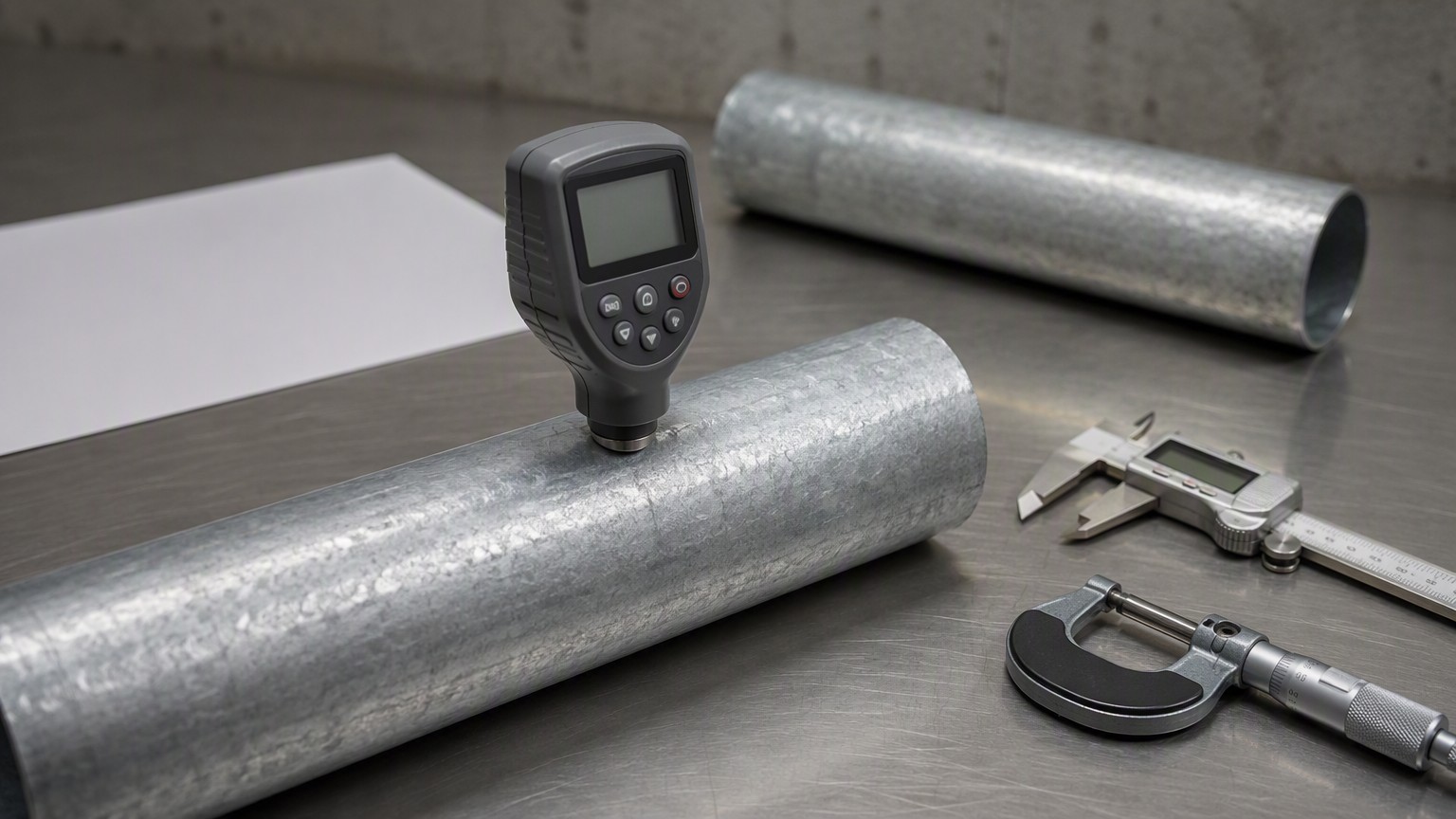
Inspection needs no laboratory. Compare the inspection document with the purchase order; confirm the coating weight or film thickness values are stated rather than implied; check the surface for bare patches, pitting, roll marks or heavy white corrosion product; and measure film thickness with a magnetic gauge at several points, including an edge, a weld and the middle of a face, because the thin readings are the informative ones. Storage is part of protection. Galvanized and coated steel should be stacked clear of the ground, ventilated so that condensation can escape, and interleaved with paper or dry separators where a bundle would otherwise trap moisture between contacting surfaces; bundles that sit in humid air with no airflow develop white rust between the layers, which is a storage problem rather than a coating failure. Stainless steel is the alternative where coatings are impractical, and in chloride-bearing environments a molybdenum-bearing grade such as 316L stainless steel coil in 1.0 mm by 1250 mm is often selected precisely because it does not depend on a consumable layer. Where a project has to satisfy several environments at once — a coated structure outdoors and bare stainless components inside — send us the site conditions and the surface you need and we will confirm what can be supplied against a stated, checkable clause.
Conclusion: Which Steel Corrosion Protection System Should You Choose?
Choose zinc where steel is exposed and scratched, chromate where zinc will be painted, and paint or powder where appearance and renewal matter. Specify coating weight, not just the name.