
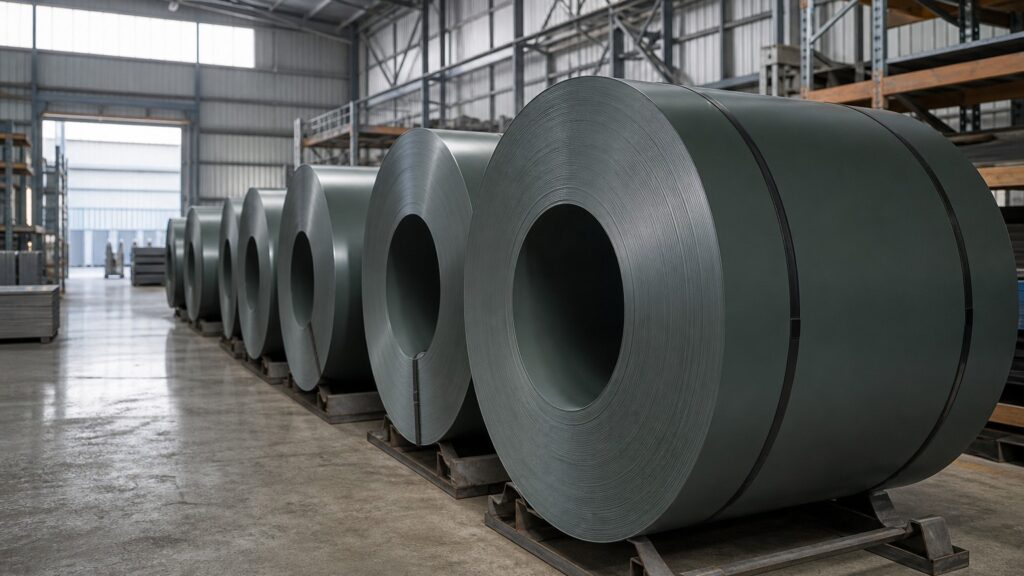
Metal Roofing Lifespan: How Long Do Coated Steel Roofs Actually Last?
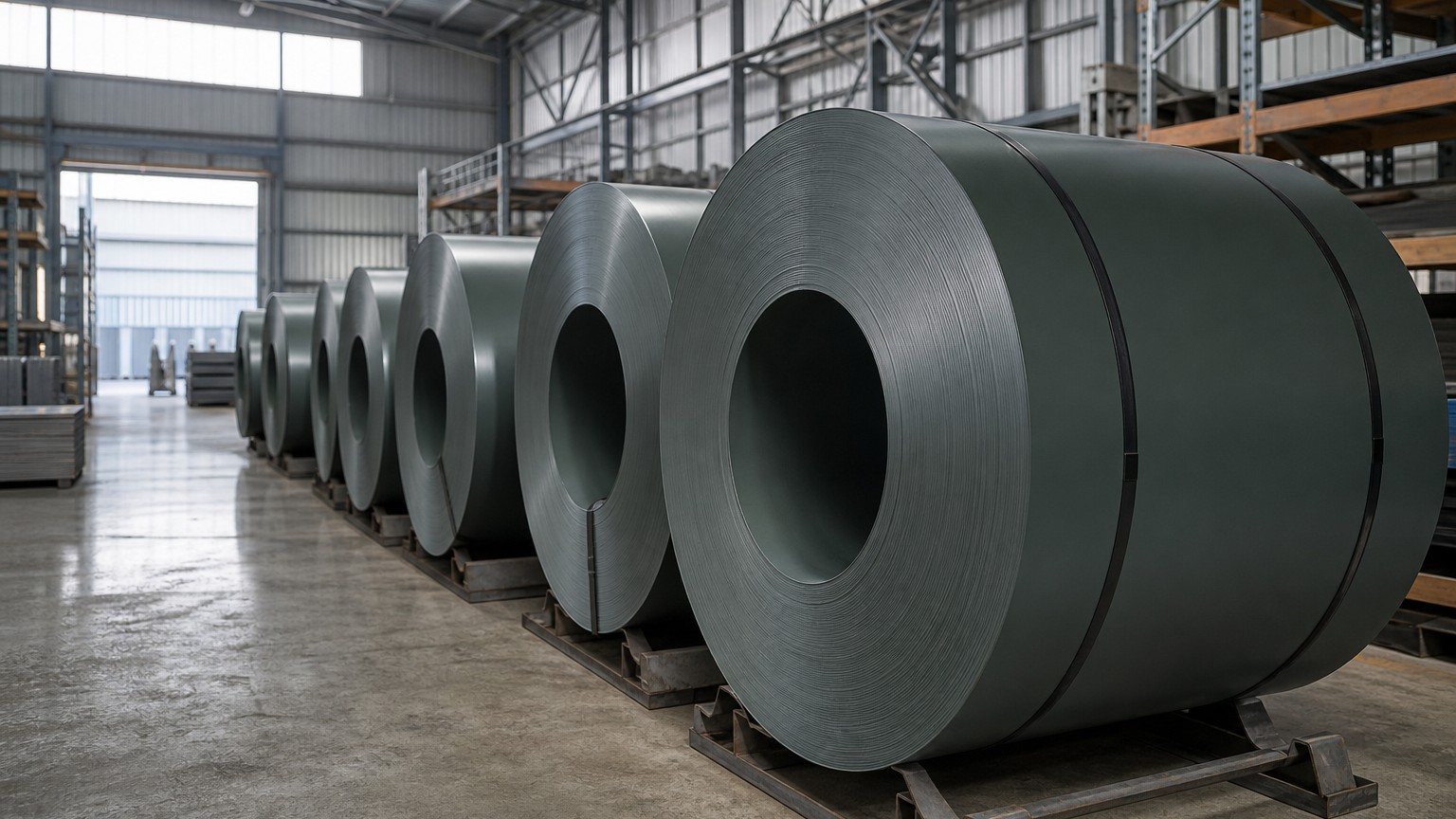
A roof that fades or rusts at the fixing line within a few years is rarely a bad sheet — it is a coating chosen before the environment was described.
Metal roofing lifespan depends on four things: the metallic coating mass on the steel, the paint system cured over it, the substrate family, and how the roof is detailed, installed and maintained. Get all four right and a coated roof outlasts the building’s first mortgage.
Transition: everything a buyer controls about roof life is settled at the inquiry stage — substrate, coating mass, paint chemistry, film thickness — and then handed to a building site where pitch, laps, cut edges and fixings either protect that investment or waste it. This guide follows that order. It explains what really drives metal roofing lifespan, how galvanized and aluminium-zinc substrates behave differently, which paint system suits which climate, why environment and detailing shorten a roof’s life faster than any mill defect, and which inspection and maintenance habits add years to a coated steel roof instead of merely postponing a repaint.
What Actually Drives Metal Roofing Lifespan?
Roof failures are usually described as rust, but rust is the symptom; the cause is a protective layer too thin for the place it was installed.
Metal roofing lifespan is set by the protective system, not by the steel: a metallic coating mass, a primer and a topcoat, each protecting the next layer. In aggressive air, thicker coating mass and a higher-grade paint system both buy years.
Dive deeper: a coated roof is a stack of layers, and the weakest one decides the outcome. Read a coated steel roofing sheet in cross-section and you find a stack rather than a single material. At the core is the steel substrate, chosen for structural capacity and formability. Around it sits the metallic coating — zinc on a galvanized product, an aluminium-zinc alloy on a galvalume product — applied by hot dipping and quantified as coating mass in grams per square metre. Above that comes a thin chemical pretreatment whose only job is to make the organic film adhere to metal rather than lift from it after a few hundred thermal cycles. Then the primer, which carries a corrosion inhibitor and does most of the work against under-film corrosion creeping inward from a cut edge. Finally the topcoat: the colour you see, the film that absorbs ultraviolet radiation, resists chalking, and keeps a building looking maintained. Each layer protects the one below it, so a roof does not fail all at once. It fails where the stack is interrupted — a sheared edge, a drilled fixing, a scratch left by a dragged sheet — and the failure then travels sideways underneath the paint rather than through it. That is the single most useful mental model for anyone specifying or buying coated roofing, because it explains why two roofs made from visually identical sheet can differ by a decade of service, and why the cheapest quotation is usually cheaper in a layer that nobody photographs.
Why the metallic coating is the layer buyers most often under-specify
Paint is visible, so it gets negotiated; the metallic coating underneath is quoted as a designation and rarely discussed. That is the wrong way round. Once the paint film is breached — and every roof is eventually drilled, walked on and cut — the metallic layer alone decides whether the exposed steel corrodes, and it does so by consuming itself. A heavier coating therefore represents a longer sacrificial reserve in exactly the places a roof is most likely to be damaged. Under-specifying here is also hard to detect later: the coil arrives looking correct, the colour matches the agreed reference, and the deficiency only becomes visible years afterwards as rust staining that begins at fasteners and cut edges rather than in the middle of a pan. When a supplier offers a discount against an agreed coating designation, the saving is usually made precisely in this invisible layer, which is why the designation belongs on the purchase order, on the mill certificate and on the receiving inspection record rather than in a conversation.
What lifespan should mean in your own specification
The word lifespan hides three different promises that suppliers make about the same sheet. The first is structural service life: how long the panel continues to carry design loads. The second is coating service life: how long the metallic layer and paint film keep the steel protected. The third is appearance retention: how long the building keeps the colour and gloss the client approved. A roof can reach the end of its appearance life while still being structurally sound and fully protective, and that is normally the point at which maintenance, not replacement, is the rational response. Writing the three apart in a specification forces the conversation onto the right ground. It also changes which numbers matter: for structural life you discuss thickness and section; for coating life you discuss metallic coating mass; for appearance retention you discuss paint chemistry, film thickness and colour performance. A supplier who can answer all three specifically is usually one who can also tell you which combination is over-specified for your site, and that advice is worth more than a small discount on the coil.
How Does Coating Mass Decide How Long a Metal Roof Lasts?
A coating designation looks like an internal mill code. It is actually the single number that governs how many years of corrosion the sheet can absorb.
Coating mass is the weight of metallic coating per unit area, quoted as Z classes for zinc and AZ classes for aluminium-zinc. Heavier classes resist corrosion longer because there is more sacrificial metal to consume, and they matter most at cut edges, fasteners and scratches.
Dive deeper: the designation is a budget of metal, and the roof spends it. Hot-dip coating works by placing a layer of metal that is electrochemically more active than the steel beneath it, so that when moisture and oxygen arrive at a breach in the paint, the coating corrodes instead of the substrate. That is not a permanent shield; it is a reserve. The heavier the coating, the longer the reserve lasts, which is why standards such as ASTM A653/A653M for zinc-coated steel sheet express the coating as a series of designations rather than a single value — the purchaser is expected to choose a class matched to the corrosion category of the site, not to accept whatever sits on the line that week. The reserve is also spent unevenly. On the flat face of a panel the coating is rarely challenged, because the paint film keeps moisture out and the surface drains clean. At a sheared edge or a drilled hole the coating is interrupted, and the exposed steel depends on nearby coating to protect it; the further the breach sits from a healthy coating, the faster the visible rust stain appears. This explains a pattern that puzzles first-time importers: the same product performs perfectly on one project and disappoints on another, because the two roofs differ in exposure and in how much cutting and piercing was done on site. It also explains why coating mass is a design decision rather than a purchasing preference — it is the only variable in the whole specification that directly buys sacrificial protection where the roof is most vulnerable.
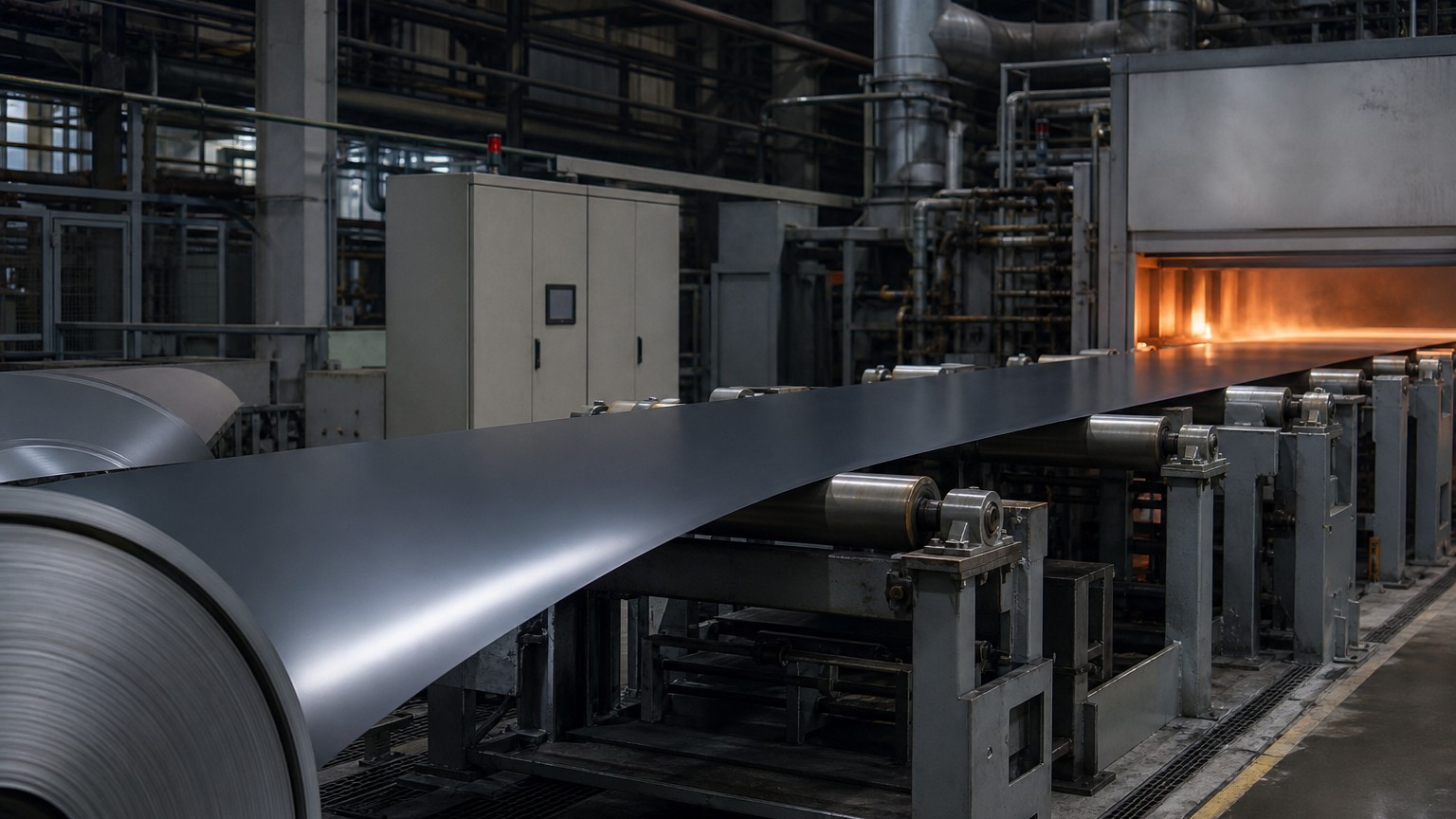
How the designation system works when you compare quotations
Coating designations are written as a letter code and a number, and the number is the total coating mass, typically expressed as grams per square metre across both faces. Zinc coatings use Z classes and aluminium-zinc coatings use AZ classes, and the two are not interchangeable, because the densities and the protective mechanisms differ. When two quotations arrive for the same building, the comparison should be made designation by designation: the substrate family, the coating class, the paint system and the total dry film thickness. If one offer states only a colour and a thickness in millimetres, it has not really been specified yet, and any price difference between it and a fully specified offer is largely unexplained. A practical habit that costs nothing is to ask for the mill test certificate to carry the coating designation, then to check on arrival that the delivered coil matches it. Coils are substituted in transit and in handling more often than most buyers assume, and a consistent shortfall against the stated coating mass is grounds for a serious commercial conversation rather than a discount.
Where extra coating mass stops helping
Heavier coating is not a substitute for good detailing, and it will not compensate for a paint system that is wrong for the climate. A thick zinc coating under a polyester film that chalks within a few seasons still leaves a roof that looks tired and is, in the client’s eyes, failing. Nor does coating mass protect a roof against standing water, blocked gutters, over-driven fixings that crush the washer and crack the film, or cut edges left unsealed on a coastal site, because those conditions concentrate attack in a small area and consume the local reserve long before the rest of the sheet is challenged. The sensible approach is to specify coating mass for the corrosion category of the site, choose a paint system for the ultraviolet and chemical load, and then spend the remaining effort on detailing and site discipline — because that is where most of the variation between otherwise identical roofs is created.
Is a PPGI or PPGL Substrate Better for Long Roof Life?
Two coils can carry the same paint, the same colour and the same film thickness, and still behave completely differently after eight years on the same street.
PPGI is prepainted galvanized steel with a zinc coating that protects sacrificially at edges; PPGL is prepainted galvalume steel with an aluminium-zinc coating that protects mainly as a barrier. PPGL generally performs better in open, humid or coastal exposure; PPGI is economical in dry, sheltered service.
Dive deeper: the substrate decides what happens at the first scratch. The two families share a paint line, a primer chemistry and the same topcoat options, so the paint is rarely the reason a roof behaves differently from the one next door. The difference sits one layer lower. A zinc coating gives up electrons readily, so when a fastener is driven through the sheet or a panel is sheared, the zinc nearby corrodes preferentially and the steel stays intact — the mechanism behind hot-dip galvanizing, which binds the coating to the strip metallurgically rather than as a surface film. An aluminium-zinc coating, specified for steel sheet under ASTM A792/A792M, works differently: its aluminium-rich phases form a dense, stable oxide that blocks moisture and oxygen far more effectively over large, unbroken surfaces, which is why it holds up so well on long roof runs exposed to years of rain, ultraviolet radiation and temperature cycling. The trade-off appears precisely where the coating is interrupted. Because the alloy is less electrochemically active than pure zinc, it sacrifices less to protect a bare cut edge, so an untreated PPGL edge in a marine splash zone can show early staining unless the edge distance, the fixing pattern or an edge treatment compensates. In sheltered, dry industrial interiors the barrier advantage is never tested, and a galvanized substrate with a sensible coating class is the rational purchase. The practical conclusion is not that one family wins, but that the environment should choose: describe the site honestly, then let the substrate follow. Our own range of metal roofing sheet coating systems is quoted with the substrate family written out separately from the paint system precisely so that this decision stays visible, and how PPGI and PPGL substrates compare is covered in more detail for buyers who are still weighing the two.
Reading the building before reading the quotation
A warehouse in a dry inland climate is the easiest case: a galvanized substrate with a moderate coating class and a sound paint system will outperform the environment’s demands, and paying for an aluminium-zinc alloy buys protection the site never tests. A poultry or livestock shed, a fertiliser store or any building where ammonia and condensation attack the metal from the inside as well as the outside is the opposite case, and builders in those sectors frequently standardise on the alloy substrate for that reason alone. Coastal sites deserve the most careful reading, because salt-laden wind attacks fasteners, cut edges and lap lines simultaneously; there the answer is usually a heavier metallic coating on the alloy substrate, or a change of material strategy altogether, rather than an economical galvanized sheet near breaking surf. The one mistake that costs the most is selecting the substrate after the colour has been chosen, because colour has nothing to do with the corrosion decision and cannot rescue it.
How colour and substrate get confused in specification
Buyers frequently describe what they need by naming a colour, then accept whatever substrate the supplier offers to meet that colour. The two decisions are independent, and the ambiguity is easy to remove: state the substrate family, the metallic coating class, the paint system, the total dry film thickness and the colour reference as five separate lines, and require all five on the mill certificate. Written that way, an offer comparison becomes a technical exercise instead of an act of faith, and a substitution is detectable on arrival. It also prevents the most common disappointment in coated roofing import — a coil that matches the approved colour exactly and fails the site it was installed on.
Which Paint System Protects a Coated Steel Roof Longest?
The paint film is the only part of the roof the client will ever see, and the part that decides whether the roof still looks maintained in year fifteen.
Polyester is the economical standard for moderate climates, SMP handles high ultraviolet and tropical exposure, HDP is the usual choice for industrial and coastal roofing, and PVDF fluoropolymer is specified where long colour retention matters most. Film thickness and cure discipline matter as much as the resin name.
Dive deeper: the standard asks for substrate, coating and forming to be judged together. It is tempting to treat the paint as a cosmetic finish applied at the end of the process, but the governing specification for this product class is explicit that it is not. ASTM A755/A755M for metallic-coated, prepainted steel sheet for exterior exposed building products states that the properties of the substrate and the organic coating system, combined with the method of forming, determine the life expectancy and the general appearance of the final product. That single sentence describes the whole specification problem, because it says that a decision made in a mill, a decision made in a coil coating line and a decision made by a roll former or an installer are three inputs to one outcome. In practice the four common topcoats cover most of the market. Standard polyester is the economical workhorse and performs well where ultraviolet intensity is moderate and the building’s appearance expectations are practical. Silicone-modified polyester, usually sold as SMP, adds ultraviolet resistance and is the usual answer for tropical and high-altitude markets where chalking is the first visible failure. High-durability polyester, or HDP, is the fastest-growing specification for industrial roofing because it balances film integrity, chemical resistance and price for buildings expected to be maintained rather than replaced. PVDF fluoropolymer sits at the top of the range and is chosen where colour retention over a long horizon genuinely matters, such as architectural cladding and landmark projects. Above the resin, two process variables decide how any of them actually perform: the total dry film thickness, which must be stated rather than implied, and the cure discipline of the coating line, because an under-cured film will not develop the cross-linking its chemistry promises and will lose colour and adhesion early despite carrying the right name.
Why film thickness and back-coating are part of the lifespan decision
Two coils can carry the same resin and differ in service by several years purely because one has a thinner film build. Film thickness is what resists ultraviolet radiation, chalking, chemical attack and mechanical damage during installation, and it is also the easiest item to reduce quietly when a quotation needs to come down. The reverse side deserves the same attention. Most roofing coils carry a thinner backing coat or a bare metallic reverse finish, and on a roof the reverse faces the building interior, where condensation collects. A wet, poorly ventilated interior behind a reverse surface that was specified only as an afterthought will corrode a roof from below while the visible face still looks new. Ask for the reverse-side specification in writing, and where the building will be warm and humid inside, treat it as a real part of the design rather than a line item. The five numbers a coated coil quotation should carry covers the same ground from the buyer’s side of the table, and it is worth reading before a specification is frozen.
Matching the paint system to the site instead of the budget
The most reliable rule is to choose the paint system from the exposure, then choose the budget. A dry inland warehouse with a moderate ultraviolet load rarely justifies a fluoropolymer topcoat, and an economy polyester rarely survives a coastal industrial site without premature chalking. Between those extremes the decision is genuinely commercial, and the useful question is not which system lasts longest in a laboratory but which system reaches the end of the building’s intended service interval still looking maintained. Tying the paint decision to a stated appearance horizon forces a real discussion, and it usually reveals that one grade higher than the minimum acceptable is the cheapest choice over the life of the roof. As an example of how the layers are written out together on a real order, a PPGL roofing sheet in 0.5 mm RAL 7016 is quoted with its substrate family, coating class, paint system, film thickness and colour reference as separate items, which is the format that makes an offer comparison meaningful.
How Do Environment, Pitch and Installation Shorten Roof Life?
A coating chosen for a dry inland warehouse fails first at the coast, and a roof installed without draining its laps fails in any climate.
Salt, industrial fumes, ammonia and standing water attack the coating directly, while low pitch, blocked laps, over-driven fixings and cut edges left untreated give corrosion a starting point. Both the exposure and the detailing must be written into the specification together.
Dive deeper: exposure sets the clock, detailing decides when it starts. Environment acts on a coated roof continuously and cannot be negotiated away, so it should be described in the same terms a corrosion engineer would use: how close the site sits to the sea and whether it is sheltered from prevailing wind, whether the area is industrial or rural, whether ammonia or other aggressive chemicals are present inside the building, and how much rain and how many freeze-thaw cycles the roof will see each year. Reference guidance on how metal roofing systems are built and how they perform over time notes that metal roof surfaces retain the great majority of their reflective capacity over a long service life while other roof types lose a substantial share of it — useful context for owners weighing replacement against the long service intervals a correctly specified coated roof can reach. Detailing then decides how quickly the exposure is allowed to bite. Low pitch reduces the velocity of water moving down the pans, so debris settles and moisture lingers at laps; blocked gutters and outlets back water up the sheet from below; fixings driven past the washer crush the sealing ring, crack the film around the hole and create a permanent entry point; every cut edge left unsealed on a coastal site is a place where the metallic coating is interrupted and the steel is briefly exposed. None of these is a property of the coil, and all of them shorten service life more reliably than a small difference in coating class. That is why the cheapest way to lengthen a roof’s life is usually to spend an hour on detailing before installation rather than to upgrade the steel after the first leak.
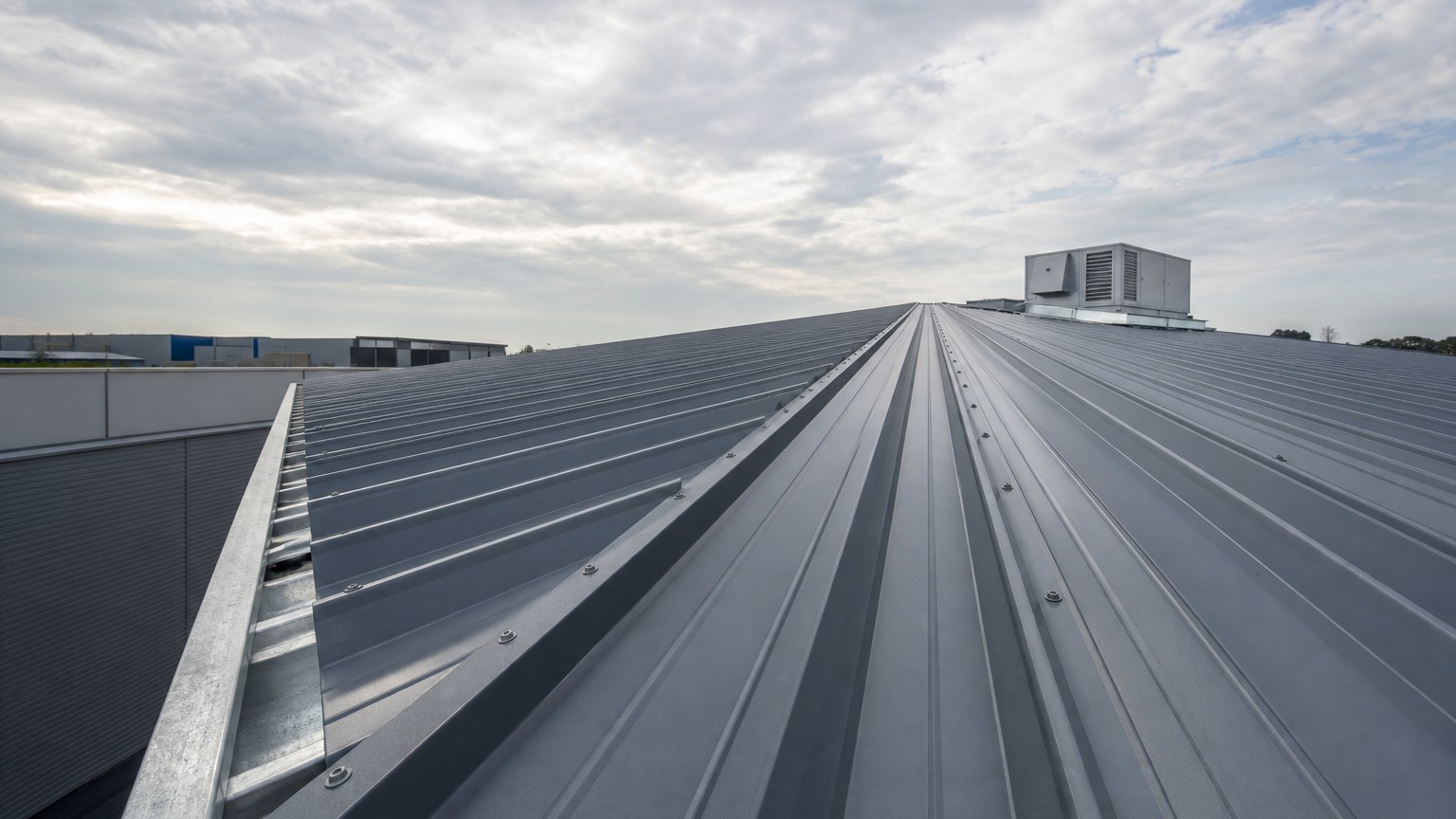
Detailing mistakes that shorten life the most
Four detailing failures account for most premature roof failures on coated steel. The first is a lap that has not been sealed and supported properly, so water travels by capillary action into a joint that cannot drain. The second is a fixing pattern designed for speed rather than for wind uplift, leaving the sheet free to work at every fastener, which slowly loosens the washers that were supposed to keep water out. The third is mixing metals carelessly — a stainless or bare-steel fixing in a coated sheet, or a galvanized component in contact with an alloy-coated sheet in a wet location, sets up a galvanic couple that attacks the less noble material locally. The fourth is site cutting with an abrasive disc, which throws hot particles that burn through the paint film and leaves a burr that holds water at the cut. Each of these has a straightforward remedy, and each is far cheaper to apply before the roof is closed than to repair afterwards. Industry guidance from organisations such as the Metal Construction Association covers correct installation practice for metal roofing and cladding, and it is worth reading before a specification is finalised rather than after a leak appears.
Why pitch and profile are a paired decision
Pitch and profile cannot be chosen independently, because the shallow channels of one profile and the deep pans of another carry different volumes of water at different velocities. A steep, short run drains quickly, and a shallower profile performs perfectly well on it. A long, low-pitch roof on an exposed site is the opposite case: flow is slow, water lingers at laps, and the drainage cross-section has to be generous. Choosing the profile for structural economy and then accepting a marginal pitch is how roofs develop persistent end-lap leaks that no amount of maintenance resolves. Treating pitch and profile as one decision, made early while the structure can still be adjusted, removes the problem entirely.
What Maintenance Actually Extends Metal Roofing Lifespan?
Most coated roofs are lost to a handful of small, cheap repairs that were never done, not to the coating they were built from.
Extend metal roofing lifespan by inspecting fasteners and cut edges annually, clearing debris from pans and gutters, re-tightening or replacing loose washers before water enters, and touching up handling damage while the steel beneath is still sound.
Dive deeper: inspection is cheap, and it is the only maintenance that really changes the clock. A coated steel roof needs very little attention in absolute terms, which is exactly why problems are allowed to run. The useful habit is a short, scheduled inspection rather than an urgent one, and it does not require specialised equipment. Walk the roof if access permits, or view it from the eaves and with binoculars, and look at four specific things. Check the fasteners first, because a washer that has dried, cracked or backed off is the most common entry point for water; replacing it costs a fraction of repairing the ceiling below, and it should be done in the same season it is noticed. Check cut edges and any site-worked areas, because those are where the metallic coating was interrupted and salt or pollution does its work; a touch-up on clean, dry steel that has not yet started to rust is a genuinely permanent repair, while the same touch-up over an advancing rust stain is only cosmetic. Check the pans and gutters for debris, leaves and silt, since material that holds moisture creates a permanent wet patch that consumes the local coating reserve and defeats an otherwise adequate specification. Finally, check the building interior after heavy rain, because the first sign of a lap problem is usually a stain on a purlin or a ceiling, and it appears long before the exterior gives any indication. Build the same four checks into an annual routine, keep a simple record of what was found and repaired, and the record itself becomes the evidence a buyer needs when a warranty claim is discussed. Maintenance of this kind does not upgrade a roof; it prevents a sound roof from being classified as a failed one because of a hundred dollars of neglected washers.
What to check, and how often
A practical schedule for coated roofing is annual inspection for the first two years, when installation-related issues surface, and then every twelve to twenty-four months depending on exposure. Coastal and industrial sites should sit at the shorter end, because both salt and airborne pollution accelerate the localised corrosion that inspection is designed to catch. After any significant storm, inspect the windward elevations and the fixings along the edges, since uplift damage concentrates there. If the roof carries equipment, walkways or solar mounting rails, check the penetrations annually as well, because each one is a deliberate interruption of the coating system and deserves the same attention as a cut edge.
When repair stops being economic, and how to plan for it
At some point maintenance becomes replacement, and the honest signal is not a single defect but a pattern. Widespread chalking and colour loss across the sun-facing slopes, rust staining appearing at most fasteners along a whole elevation, or film breakdown that spreads faster than it can reasonably be touched up together indicate that the coating system has reached the end of its service life rather than suffering a local failure. The right response then is planned replacement, phased so that it follows the building’s maintenance budget rather than a leak. Owners who know from the beginning which of the three lives their roof is approaching — structural, coating or appearance — can plan that decision years ahead instead of making it in an emergency, and that is the practical reason the specification discussion at the start of this guide matters as much as the maintenance at the end. If you are specifying a coated roofing system now and want the substrate, coating class, paint system and film thickness written out on one quotation, send us your coating specification for a mill-direct quotation and we will respond with the technical details and test documents alongside the price.
Conclusion: Metal roofing lifespan is decided by coating mass, paint system, substrate and detailing, then protected by inspection. Write all four into the order — the roof then outlasts its warranty.