
Hot Rolled vs Cold Rolled Stainless Steel Plate: Which Do You Need?
You specify “stainless steel plate”, the mill quotes a price, and the plate arrives with the wrong finish, the wrong tolerance, or a surface you cannot polish out.
Short answer: hot rolled stainless steel plate is formed above the recrystallisation temperature and supplied in thicker gauges with a rough, pickled No.1 surface. Cold rolled plate is reduced below that temperature, giving a smooth 2B or BA surface and much tighter tolerances at a higher cost per tonne.
The two routes are not competitors, they are stages. Almost every cold rolled sheet begins life as a hot rolled coil, which is why the real question is not which process is “better” but which condition your drawing, your forming operation and your end user actually require. The sections below work through the metallurgy, the finishes, the tolerances and the cost, and finish with a specification routine you can put on a purchase order today.
What Actually Changes Between Hot Rolled and Cold Rolled Stainless Steel Plate?
Both routes start from the same cast slab. Everything that separates them happens out of sight, at different temperatures.
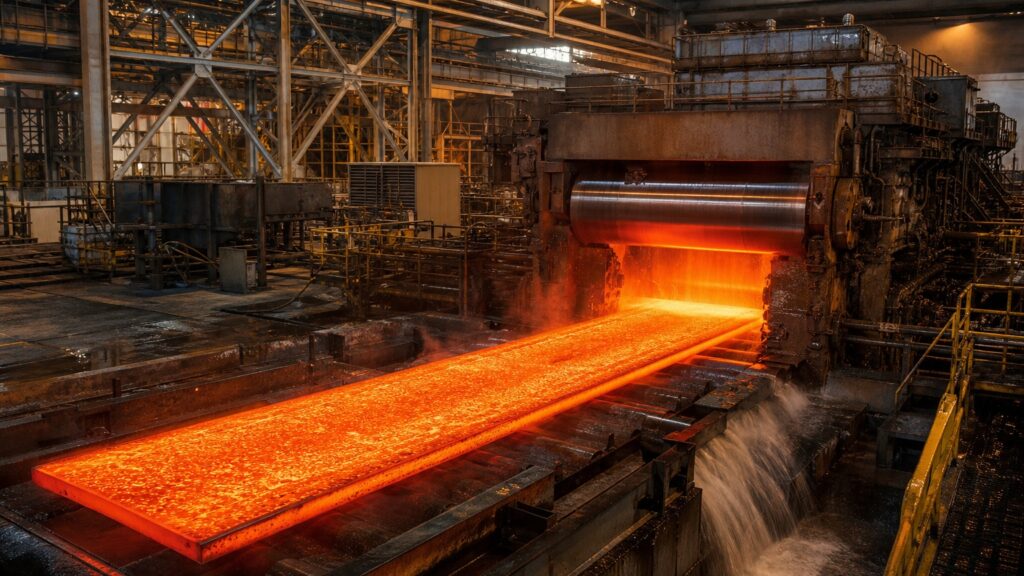
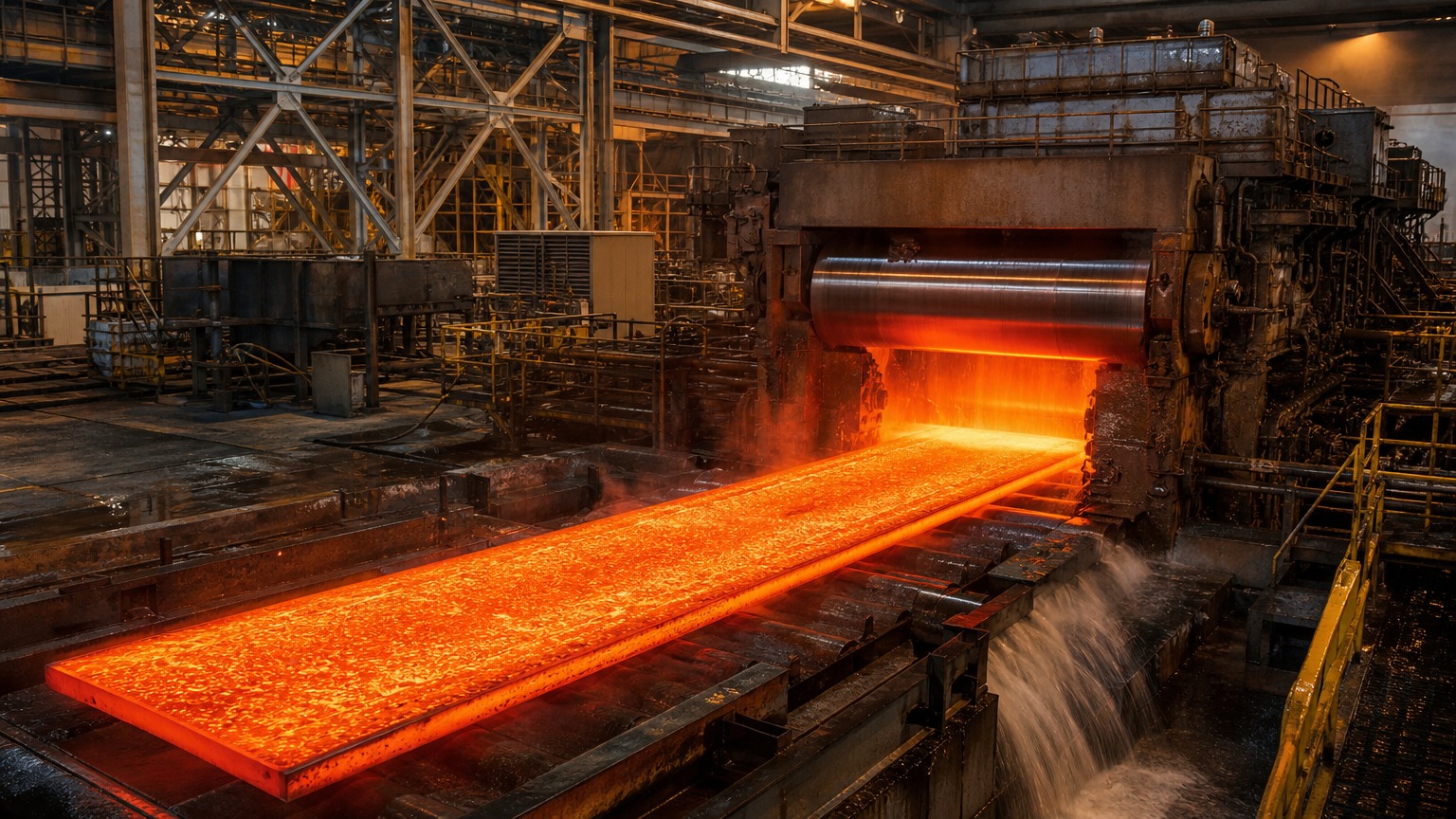
Hot rolling shapes stainless steel above its recrystallisation temperature, so the grains reform continuously and the plate comes out with a rough, oxide-covered No.1 surface. Cold rolling reduces an already hot rolled, pickled coil below that temperature, giving a smooth 2B or BA surface and tighter dimensional control.
Why the temperature decides everything downstream
Above the recrystallisation temperature — roughly 1,000 °C and higher for austenitic stainless — the crystal structure rebuilds itself as fast as the rolls deform it. The material stays soft, the mill can take heavy reductions in a few passes, and the finished grain structure is equiaxed rather than stretched. That is what makes hot rolling the economical way to convert a 200 mm slab into a 4 mm plate, and it is the branch of the process described in the reference material on hot and cold rolling. The penalty is surface quality: at those temperatures the steel oxidises, and the layer of mill scale that forms has to be removed afterwards by pickling, which is also why a hot rolled stainless plate is normally delivered in the “annealed and pickled” condition rather than as-rolled. Below the recrystallisation temperature, the picture reverses. The metal no longer recovers, so every pass increases work hardening, the rolls must take light reductions, and the mill needs many more passes plus intermediate annealing steps to keep the strip soft enough to continue. That extra sequence is the reason cold rolled plate and sheet cost more per tonne than hot rolled material of the same grade. It also explains a point that catches buyers out: the difference between the two products is a process history, not a grade. Grade 304 hot rolled and grade 304 cold rolled carry the same chemistry and the same specification minimums. What changes is the surface, the tolerance band, the thickness range available and the amount of residual stress left in the plate.
How Do the Mechanical Properties and Tolerances Differ?
If both products are supplied annealed, the specification minimums look almost identical — the differences hide in tolerance, flatness and residual stress.
Annealed hot rolled and annealed cold rolled stainless plate of the same grade meet identical tensile and yield minimums. Cold rolled material in a hard or spring temper is stronger and less ductile because of retained cold work. Thickness tolerance, flatness and camber are tighter on cold rolled product.
Reading the difference in the numbers
The mechanical comparison is straightforward once the condition is stated. Both routes are usually delivered annealed, because an annealed product is the one that forms predictably; an annealed 304 plate, hot rolled or cold rolled, is expected to reach the same minimum tensile strength under the flat-product specification for the grade. Where cold rolling does change the mechanical story is in the tempers: strip and sheet supplied in a quarter-hard, half-hard or full-hard condition has been deliberately left with part of its cold reduction in place, so it is stronger and harder but far less able to be bent or drawn. If your application involves forming after delivery, that trade is almost never worth taking. The dimensional side is where the two products genuinely diverge. Hot rolled plate is produced to a thickness tolerance table that is deliberately generous, because the surface will be pickled and the customer is usually welding or machining the plate rather than measuring it. Cold rolled sheet is produced to a much tighter tolerance band, with better flatness and limited camber, because it is destined for visible panels, formed parts and equipment where gaps and ripples show up immediately. Flatness deserves particular attention: hot rolled plate can carry residual stresses from non-uniform cooling, and those stresses release when the plate is cut or welded, which is a common cause of distortion in fabricated tanks. Buyers who need both a thick section and a stable, tight surface often solve the problem in two steps rather than one — ordering a heavier hot rolled and cold rolled stainless steel plate combination, with the structural thickness in a hot rolled condition and the visible face in a cold rolled, 2B condition.
Which Surface Finish Comes With Each Process?
Finish is the most visible difference between the two products, and the one most often mismatched to the drawing.
Hot rolled stainless plate is normally finished as No.1 — annealed, pickled and descaled, with a matte grey surface. Cold rolled stainless is normally 2B, a smooth, bright, mildly reflective surface produced by skin passing. BA, No.4, hairline and mirror finishes are all built on cold rolled base material.
What each finish looks like and where it belongs
No.1 finish is the honest, industrial face of stainless steel. After pickling, the surface still shows the mill texture from rolling; it is matte, non-reflective and often described as grey or dull. It is completely adequate for tank shells, structural brackets, base plates and anything that will be painted, lagged or hidden inside a structure — and it costs less, because it skips the cold reduction and skin-passing steps entirely. Finish 2D is a related hot rolled finish that has been pickled and then lightly rolled to a duller, smoother surface, typically chosen when the plate must be reasonably uniform for painting or lining. On the cold rolled side, 2B is the workhorse: a bright, smooth surface with low reflectivity but excellent uniformity, produced by skin passing the annealed strip through polished rolls. It is the default for sheet metal fabrication, kitchen equipment bodies and appliance panels. BA (bright annealed) goes further, annealing in a controlled atmosphere instead of pickling, which leaves a highly reflective, near-mirror surface intended for reflectors, medical equipment and decorative trim. A No.4 polish gives the brushed, satin appearance familiar on elevator interiors and commercial kitchens, and a true mirror 8K finish is a polishing operation applied on top of cold rolled stock. The practical rule is that every polished finish depends on a sound cold rolled base: polishing a rough, pickled No.1 surface wastes abrasive and rarely removes the deeper texture. If you are choosing between the duller hot rolled finishes and their cold rolled counterparts, this explains how No.1 and 2D finishes differ in appearance and where each is normally specified.
When Should You Choose Hot Rolled Stainless Steel Plate?
Choose the hot rolled route when the section is thick, the surface is secondary and the budget matters more than the reflection.
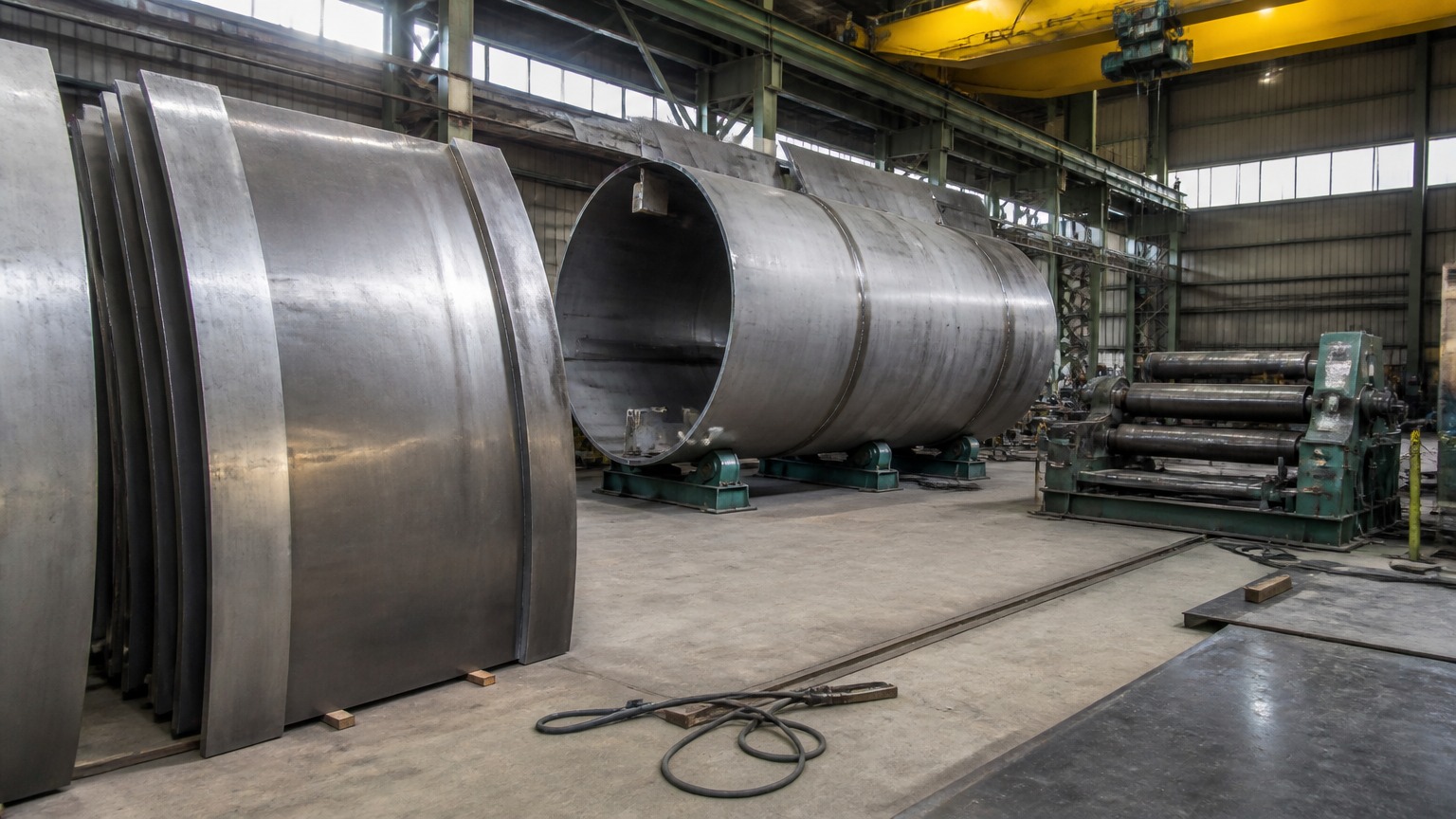
Hot rolled stainless steel plate suits heavy sections — broadly from about 3 mm upward, especially above 10 mm — including pressure vessel shells, storage tanks, base plates and heavy fabrication. It costs less per tonne, comes in thicker gauges and tolerates welding and machining without surface concerns.
The applications where hot rolled plate wins
The first argument for hot rolled plate is availability. Cold reduction is not commercially practical at heavy gauges, so once the requirement passes roughly 3 mm the market simply supplies hot rolled material; asking for a 12 mm cold rolled plate in a standard stainless grade is a route to long lead times rather than a cheaper price. The second argument is cost. Because the process skips cold reduction, intermediate annealing and skin passing, hot rolled plate carries a lower conversion cost, and on a large tonnage order that difference is worth real money. The third argument is fit for purpose: in a tank shell, a structural gusset or a machined flange, the surface will be covered by insulation, lining, paint or a mating component, so paying for a bright finish is a pure waste. A No.1 finish on 304 or 316L is also perfectly acceptable where corrosion resistance rather than appearance is the goal, since the passive chromium oxide film forms on a pickled surface just as it does on a bright one — provided the pickling itself was done properly and no embedded iron or heat tint is left behind. Where hot rolled plate does need watching is distortion and weld preparation. Because the plate is made to a wider tolerance and can carry residual stress, fabrication shops normally allow for machining the edges, and any area to be welded should be cleaned back to sound metal. For pressure service, the plate will be ordered to a plate specification such as ASTM A240/A240M, and the mill test certificate will state the grade, heat number, chemistry and mechanical results for the heat actually supplied.
When Is Cold Rolled Stainless Steel Plate the Right Choice?
Choose cold rolled material whenever the surface, the gauge or the fit-up tolerance is part of what the customer is buying.
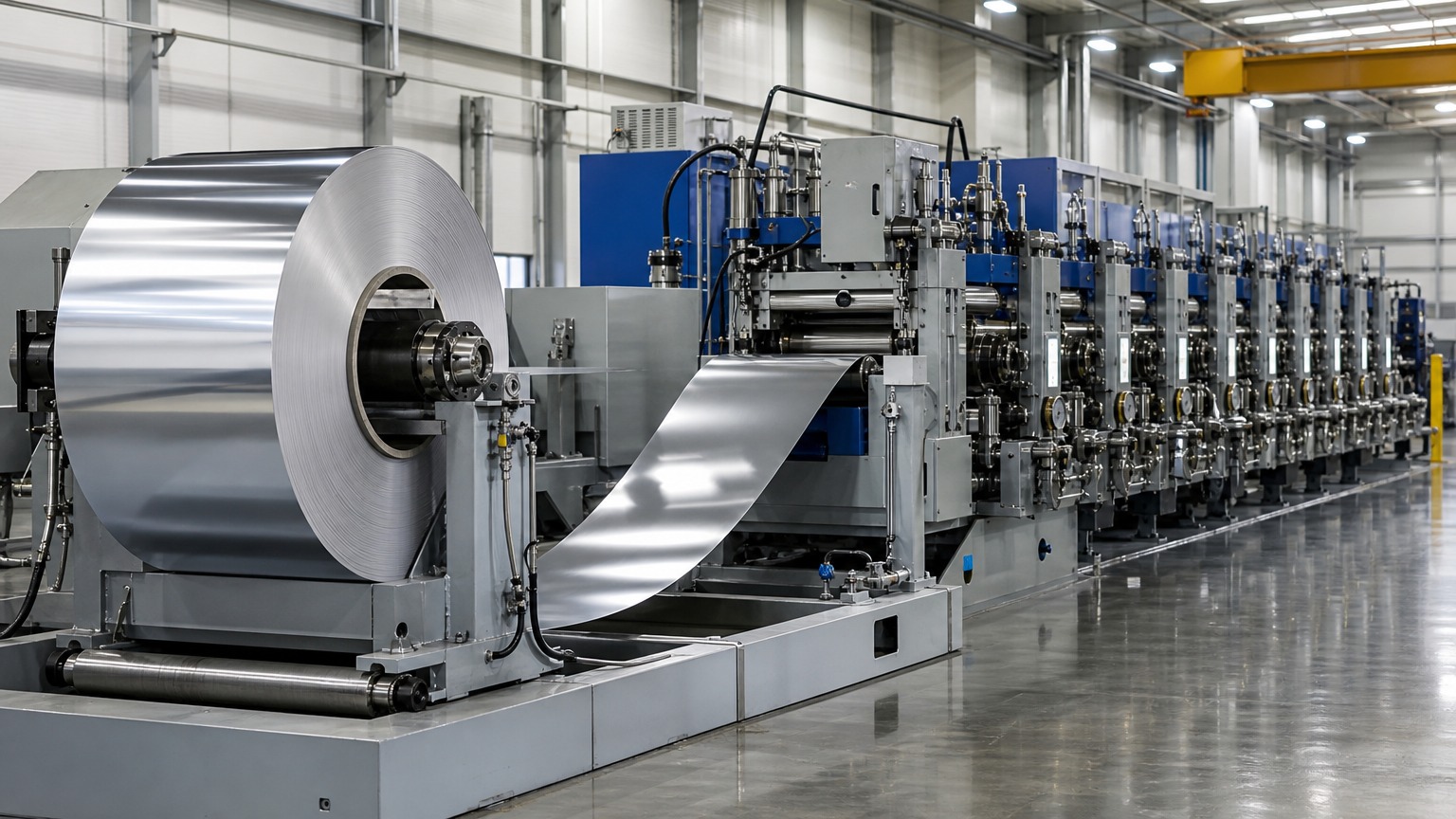
Cold rolled stainless steel sheet and thin plate suits visible panels, kitchen and food equipment, appliance bodies, architectural cladding and any part that will be formed, drawn or polished. It offers a smooth 2B surface, tight thickness tolerance, better flatness and gauges from about 0.3 mm to 3 mm.
The applications where cold rolled plate wins
The first reason is cosmetic, and it is not vanity — it is specifiable. A 2B surface is uniform enough that two panels from different heats can sit side by side without a visible mismatch, whereas a pickled No.1 surface will show texture variation. For elevator cladding, restaurant counters and pharmaceutical equipment, that uniformity is a purchasing requirement, not a preference. The second reason is gauge consistency. Forming tools, press brakes and roll-forming lines are set to a nominal thickness, and a tighter tolerance band means fewer rejects and less scrap; you also get better control of bend allowances and of gaps in assembled products. The third reason is formability in the annealed state combined with better flatness, which matters for deep-drawn sink bowls and appliance doors. Cold rolled stainless also takes polishing, brushing and bright annealing far better, which is why almost every decorative finish is built on it. The trade-offs are equally clear: cold rolled product is more expensive per tonne, generally unavailable in heavy gauges, and hard tempers lose the ductility that fabricators rely on. There is also a handling point — a bright annealed surface shows scratches and fingerprints immediately, so sheets should be kept in protective film until installation. The same logic applies to coil and strip, where the sequence of hot rolling, pickling, cold reduction and annealing is unchanged; if you buy coil rather than plate, the comparison in hot rolled vs cold rolled steel coil explains how that processing route affects width, edge condition and mechanical properties.
How Do You Specify and Verify the Right Plate Before You Buy?
A process route only becomes enforceable when it is written into the order with a finish, a condition and a tolerance standard.
State four things: the grade and condition (for example 304, annealed), the manufacturing route or finish (No.1 pickled or 2B cold rolled), the thickness tolerance standard you are accepting, and the document that proves compliance. Vague wording such as “stainless steel plate, good surface” is not a specification.
A specification and inspection routine
Start by asking what the plate has to do. If it will be welded into a pressure boundary, the governing question is the plate specification and the certificate, and the finish is incidental; if it will be visible, the finish is the specification and the certificate is incidental. Once that is settled, the specification lines write themselves. Name the grade and the annealed condition, because a hard-temper product can satisfy a thickness requirement while failing every forming operation that follows. Name the finish explicitly — “No.1, annealed and pickled” or “2B, cold rolled” — rather than leaving the mill to infer it from the thickness, since a 3 mm order sits close to the boundary where either route could be quoted and the price difference is real. Name the tolerance standard, and state whether thickness is measured at any point of the plate or only at a defined distance from the edge, because hot rolled plate is permitted more variation than sheet. Finally, name the evidence: a mill test certificate to the relevant plate specification for the heat supplied, plus a dimensional check on arrival. In practice, inspection at goods-in is short and cheap. Measure thickness at several points with a calibrated gauge, confirm the finish visually against an agreed sample, and if the grade is safety-critical ask for a PMI check before the plate goes into production. Two failure modes account for most disputes: a hot rolled plate that was assumed to be cold rolled because the thickness was in an overlapping range, and a cold rolled sheet ordered without stating the temper and delivered hard. Both are avoided by putting the process route on the purchase order. Send the grade, thickness, finish and end use to tell us what you need and we will confirm the route, and we will confirm what the mill can supply from stock and what has to be produced to order.
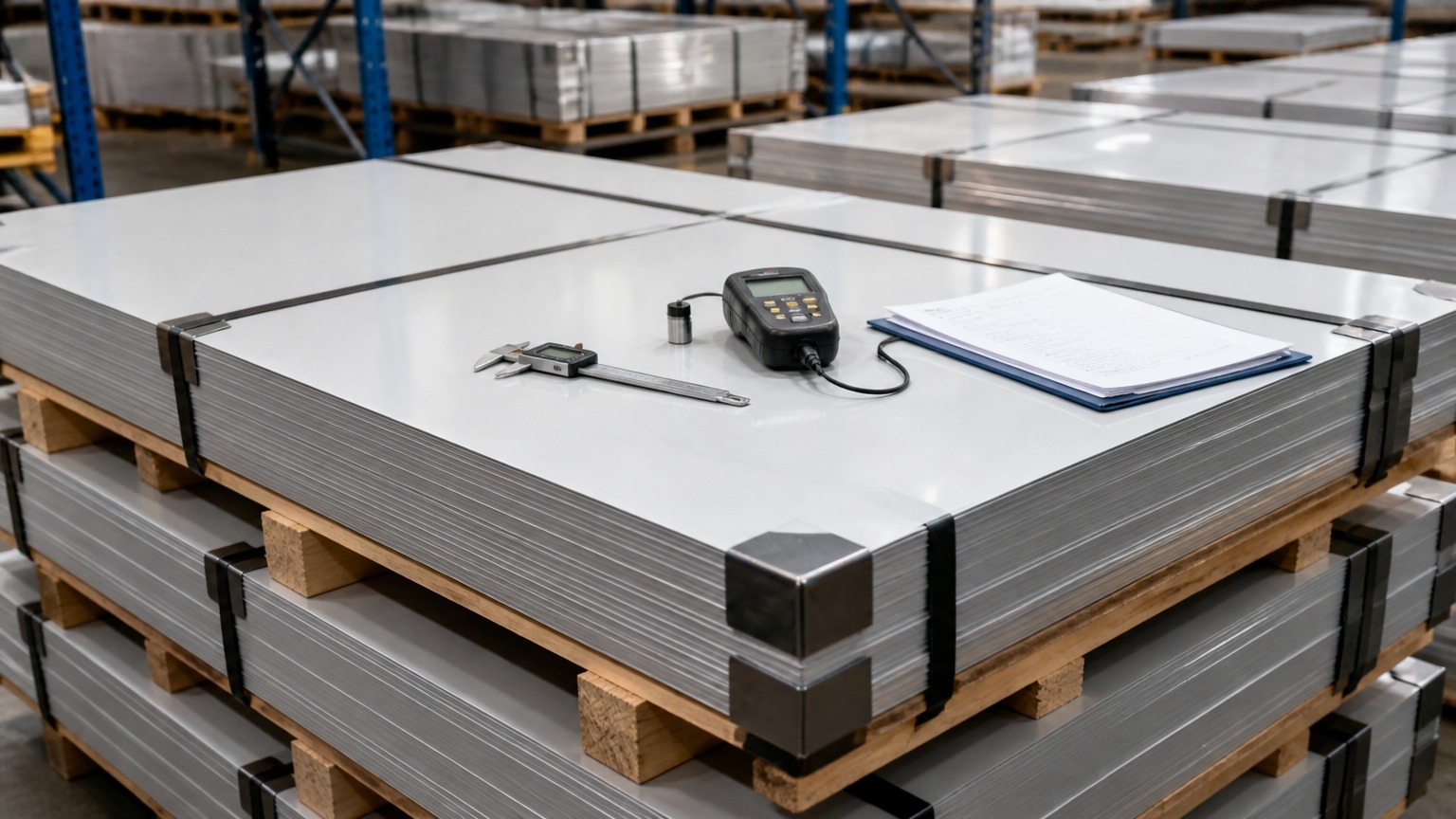
If your application sits in the overlap zone where the two routes are both technically possible, the deciding factors are almost always finish control, flatness and the forming operation that follows. Our export range covers both, and a typical cold rolled starting point is 304 stainless steel plate in 12 mm 2B finish, supplied in standard 1500 × 6000 mm sizes with a mill test certificate; heavier sections and pickled No.1 finishes are available to the same specification. Tell us the grade, gauge, finish and quantity, and we will quote the route that fits your drawing rather than the one that is easiest to ship.
Conclusion: Hot rolled plate delivers thick sections, a pickled No.1 surface and lower cost; cold rolled plate delivers a 2B finish and tight tolerances — always specify finish and condition.