
No.1 vs 2D Stainless Steel Finish: Which One Fits Your Hot Rolled Application?
One finish code decides whether your plate arrives dull grey or bright, and a wrong assumption can stop a shipment at inspection.
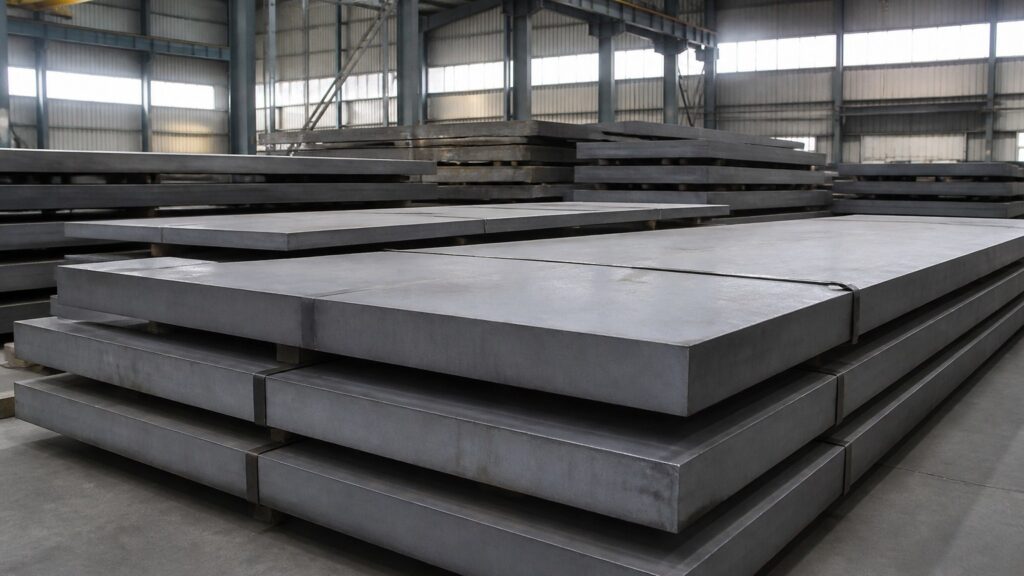
No.1 is a hot rolled, annealed and pickled finish with a dull matte surface on heavier plate. 2D is the cold rolled equivalent — annealed and pickled with no skin pass, so it stays matte instead of turning smooth and bright like 2B.
Most buyers meet these two codes on the same enquiry sheet and assume they are alternatives at the same thickness. They are not. No.1 belongs to the hot rolled route and 2D to the cold rolled route, which means the choice normally follows the product the mill has to make rather than the appearance the buyer prefers. The sections below set out what each code actually describes, how the two surfaces are produced, how they compare on the points that reach a purchase order, where each one belongs, and how to verify the finish you receive.
What Do No.1 and 2D Stainless Steel Finishes Actually Describe?
The finish code looks like a cosmetic detail until a rejected delivery proves it is a specification item.
No.1 is a hot rolled surface, heat treated and descaled, supplied dull grey and non-reflective. 2D is a cold rolled surface that is annealed and descaled but never skin passed, so it keeps a matte appearance with a smoother texture than No.1.
Dive deeper: the finish code names a processing route, not a colour. When a mill writes “No. 1” or “No. 2D” it is not describing a treatment applied at the end of the line. It is naming the sequence of operations the steel has already been through, and that sequence is what fixes the roughness, the reflectivity and the flatness you receive. ASTM A480/A480M, the specification that carries the general requirements for flat-rolled stainless steel plate, sheet and strip, lists the standard mill finishes as No. 1, No. 2D, No. 2B, No. 3, No. 4, No. 6, No. 7 and No. 8. Everything below No. 3 is an as-produced mill surface; No. 3 and above are deliberately polished or patterned surfaces. No. 1 and No. 2D therefore sit in the same family: both are unpolished, non-directional, industrial surfaces that exist because the steel needed to be descaled, not because anyone wanted a decorative look.
Why a dull cold rolled finish exists at all
After cold rolling and annealing, stainless strip carries a thin oxide film that has to be removed before the material is usable. That removal is done by pickling. If the line stops there, the surface is left matte, slightly rough and completely free of directional grain — that is 2D. If the mill adds one more step, a light temper pass on polished rolls that takes off only a few percent of thickness, the surface closes up, the reflectivity rises and the result becomes 2B. The step that is missing is the whole difference between the two codes. European buyers will recognise the same pair under the designations used in BS EN 10088-2, where the hot rolled and descaled finish is written as 1D and the cold rolled matte finish as 2D.
Where each finish sits in the thickness range
This is the point that decides most enquiries. No.1 is a hot rolled finish, so it is available on hot rolled product, which is why it dominates heavier gauges. A mill supplying ASTM A240 material in 3 mm to 100 mm thickness across grades such as 304 and 316 is normally delivering No.1 on the thicker part of that range. 2D comes out of the cold rolling line, and cold rolling is used to reach lighter gauges, so 2D is normally supplied in the thinner range that hot rolling cannot hold economically. A buyer asking for 2D in 20 mm, or for No.1 in 0.8 mm, is asking for a route the mill does not run for that thickness. Our No.1 vs 2D stainless finish on our stainless steel plate range is built around the hot rolled end of that split, and the finish is confirmed against the standard on the mill certificate.
How Are No.1 and 2D Finishes Produced at the Mill?
Both finishes start from the same slab of stainless steel, and the difference is created after hot rolling.
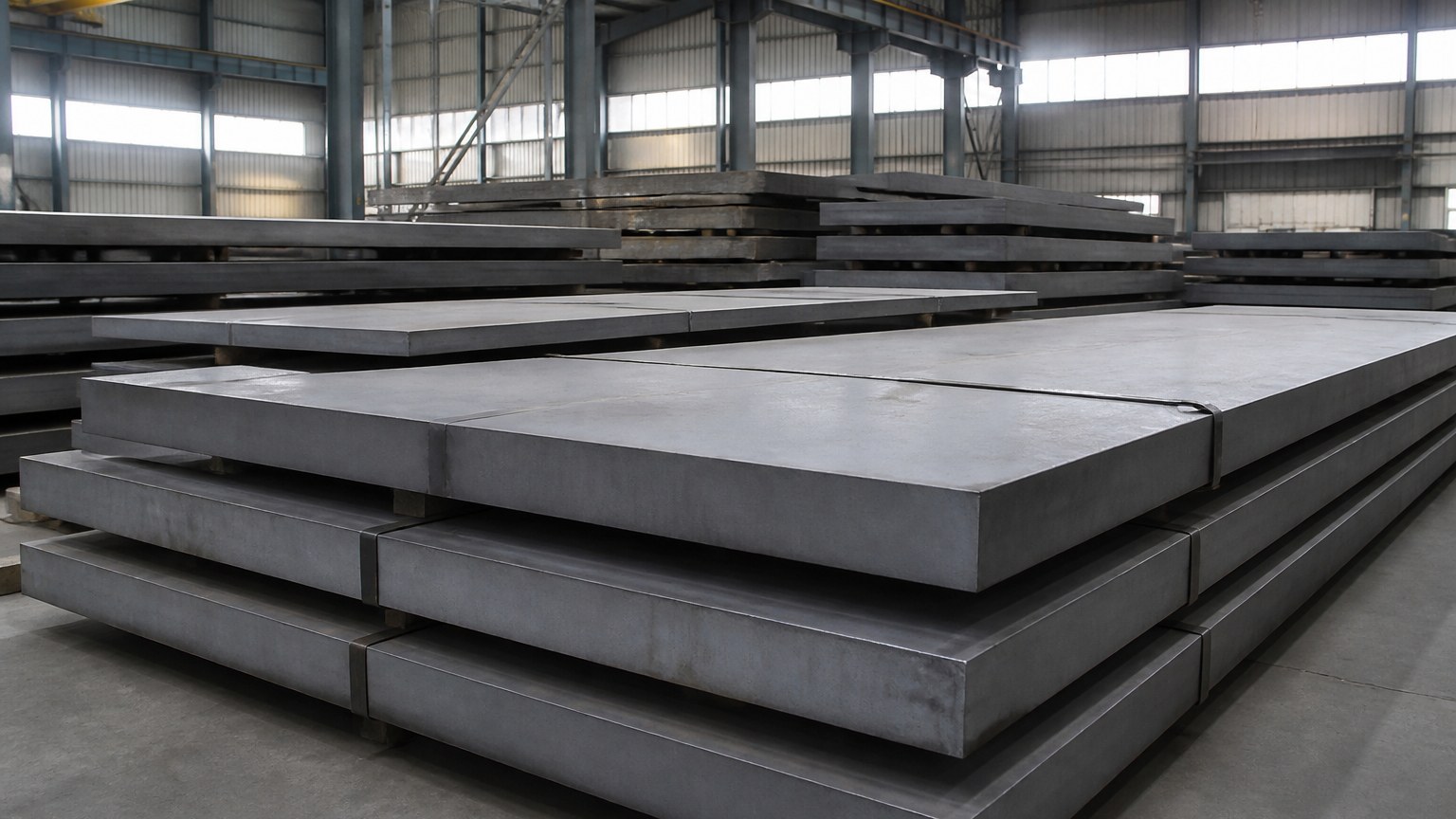
No.1 is hot rolled to gauge, annealed to restore ductility and pickled in acid to remove mill scale. 2D continues from that pickled coil: it is cold rolled thinner, annealed again and pickled again, then shipped without the final skin pass.
Dive deeper: two routes, one chemist, no cosmetic step. The route to No.1 begins with a reheated slab entering a hot rolling mill, where it is reduced in successive passes from slab thickness to coil or plate at temperatures high enough for the steel to deform plastically. The surface that leaves the last stand is covered in mill scale, a mixed iron-chromium oxide that forms the instant hot metal meets air. Scale is not stable in service and it is not a surface a fabricator can weld or pickle through, so the coil or plate is annealed and then descaled in an acid pickling line, typically based on nitric and hydrofluoric acid chemistry. What remains is a clean, rough, dull grey surface: No.1.
How 2D is made from the No.1 coil
2D starts with exactly that pickled coil. It is fed through a tandem cold rolling mill, where reduction at ambient temperature thins it to the ordered gauge and simultaneously work hardens it. Cold work consumes ductility, so the coil is annealed again to soften the metal and relieve internal stress, then pickled again to remove the light oxide produced by annealing. At this point the surface is matte, uniform and grain-free. A skin pass would flatten it and brighten it, so the line simply does not perform one, and the material is finished as 2D. Because no material is removed by abrasion or polishing at any stage, neither finish carries a directional pattern, and neither can be re-created by a fabricator after delivery. The mechanisms behind the hot and cold finishing sequence, and the way the traditional finish designations map onto them, are set out in the BSSA guide to standard hot and cold mill surface finishes.
What the pickling step means for the end user
Because both finishes are chemically descaled rather than mechanically abraded, the surface chemistry is the same passive chromium oxide film that gives stainless steel its corrosion resistance. The difference between them is geometrical: how much surface area is exposed and how much residue the profile can hold. That has practical consequences for cleaning, for weld preparation and for the adhesion of any coating applied later. If you need to compare these two matte surfaces against a brighter cold rolled option before you commit to a specification, the practical differences are covered in how 2B and No.4 finishes differ visually and commercially.
How Do No.1 and 2D Finishes Compare Side by Side?
Side by side the two surfaces are easy to separate — but only if you compare them at the same thickness.
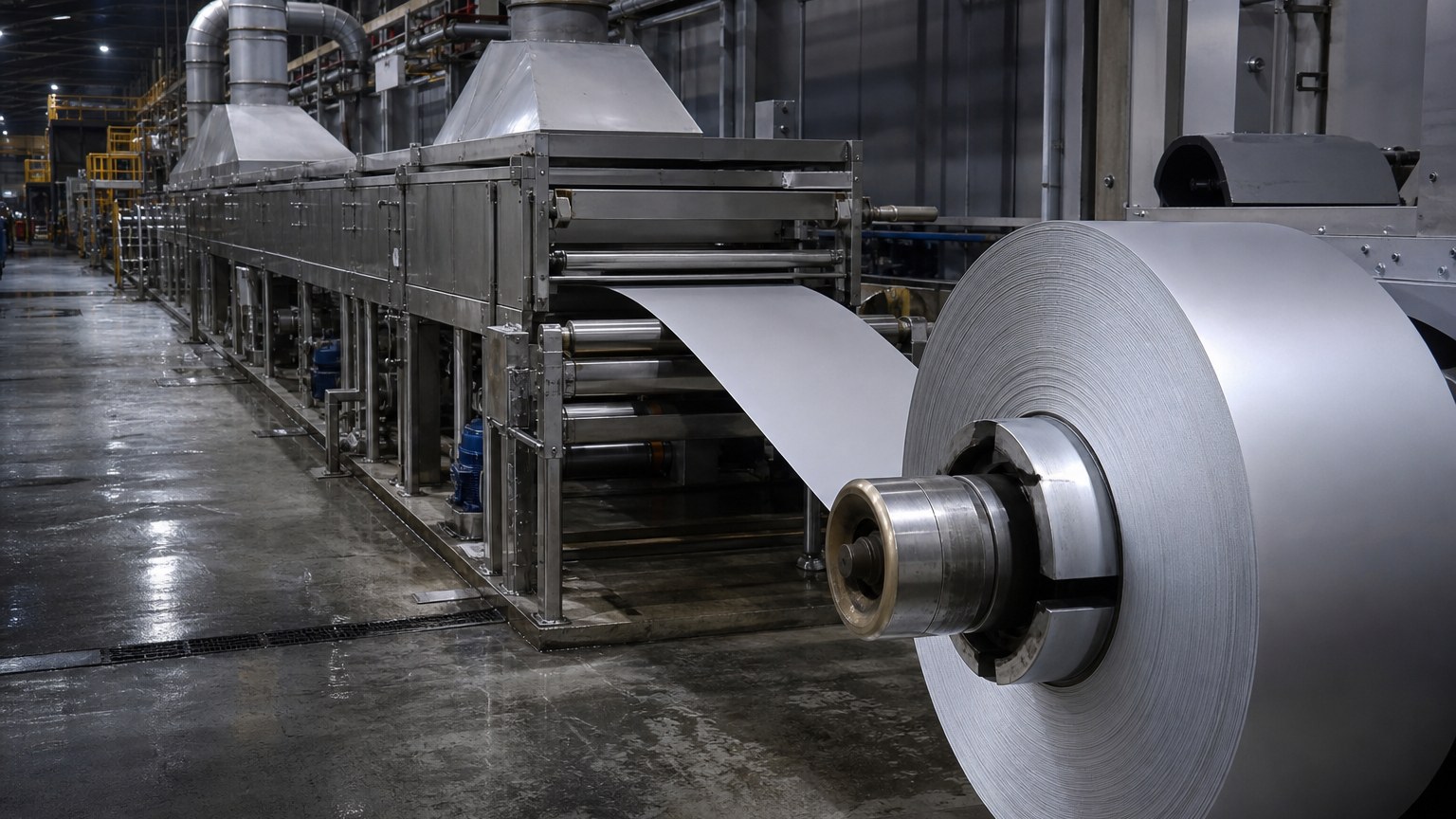
No.1 is rough, dull and hot rolled, with normal hot rolled tolerances. 2D is smoother and matte, produced cold rolled with tighter thickness tolerance. Neither has a directional grain, and neither is a decorative finish.
Dive deeper: compare the specification, not the sample. The mistake that costs money is comparing a No.1 sample against a 2D sample and choosing on appearance alone. The two surfaces come from different product routes, so the sample tells you almost nothing about the dimensional behaviour, the flatness or the available thickness of the material you will actually be quoted. The comparison that matters is the written specification, and the table below sets out the fields that should be settled before an enquiry goes out.
| Point of comparison | No.1 finish | 2D finish |
|---|---|---|
| Standard designation | ASTM A480 No. 1; EN 10088-2 1D | ASTM A480 No. 2D; EN 10088-2 2D |
| Production route | Hot rolled, annealed, pickled | Hot rolled, pickled, cold rolled, annealed, pickled — no skin pass |
| Appearance | Dull, rough grey matte | Dull, matte, smoother than No.1, no directional grain |
| Product gauge | Hot rolled plate and coil, commonly 3 mm and heavier | Cold rolled sheet and coil, commonly in the lighter gauges |
| Thickness tolerance | Normal hot rolled tolerance | Tighter cold rolled tolerance |
| Cleanability | Rougher profile holds more residue | Smoother profile cleans more easily |
| Typical use | Heat exchangers, process vessels, storage tanks, industrial plate | Matte cold rolled sheet for coating, forming or low-glare work |
Read the table as two tracks, not two grades
The rows do not rank the finishes. A No.1 plate is not a cheaper version of a 2D sheet and a 2D sheet is not a downgrade of a No.1 plate; they are the standard matte surface produced on two different product routes. Where the routes overlap in the thinner gauges, a buyer may genuinely have a choice, and then the deciding factors are the dimensional tolerance required, the flatness the process needs and whether the surface has to be cleaned or coated later. The flat-rolled stainless steel requirement that governs the material itself, independent of which finish is chosen, is defined in ASTM A240/A240M for chromium and chromium-nickel stainless steel plate, sheet and strip.
The commercial consequence of choosing the wrong track
If a drawing asks for a finish the supplier cannot make on the ordered thickness, three things happen. The supplier substitutes whichever finish the route produces and the delivery fails inspection, or the enquiry is requoted at a different thickness, or the schedule slips while the specification is clarified. All three are avoidable, and all three start with a finish code written on a drawing without a processing route behind it. Writing the standard designation alongside the finish name removes the ambiguity at the point where it is cheapest to remove.
Which Hot Rolled Applications Suit a No.1 Finish?
Where the plate is thick and appearance is not the specification, No.1 is usually the only sensible answer.
No.1 suits heat exchangers, chemical and process vessels, storage tanks and thick industrial plate where the surface is further processed, coated, lined or simply not seen in service.
Dive deeper: the thickness requirement usually makes the decision for you. Above roughly 3 mm, hot rolling is the economical route to produce stainless steel, so the finish that comes with it — a pickled, matte No.1 surface — is what the application will receive whether or not anyone specified a finish. That is why No.1 dominates heavy industrial plate: not because engineers prefer a dull surface, but because a dull surface is what the most efficient route to a 12 mm or 25 mm plate produces.
Heat exchangers and process vessels
Shell-and-tube heat exchangers, reactor bodies, columns and separators are built from plate that is rolled, welded and often stress relieved, then either pickled, passivated or left as supplied depending on the service. The controlling properties are thickness, grade, flatness and weldability, not reflectivity. A No.1 surface welds normally, is straightforward to pickle or passivate after fabrication, and is produced in the thickness range these vessels need. Where the internal surface must be cleaned or inspected regularly, the plate is usually descaled further at the fabricator rather than bought in a polished condition.
Tanks, ducts and structural plate
Storage tanks, silos, ductwork, marine structural plate and heavy industrial frames follow the same logic. The surface will be coated, lined, welded or hidden, so paying for a brighter mill finish achieves nothing. What matters is that the material is correctly identified, within thickness tolerance and supplied with traceable documentation. For a specific combination in this family, such as 304 stainless steel plate 16 mm No.1 finish, the finish is defined by the route and the plate is supplied with a mill test certificate recording grade, heat number and dimensions.
Where a hot rolled surface is not enough
Two situations push buyers off No.1. The first is a hygienic or high-purity surface, where a rougher profile retains residue and cleaning validation becomes difficult; those duties move to a smoother cold rolled finish. The second is a gauge thin enough that hot rolling is no longer practical, which is where the cold rolled route — and therefore 2D or 2B — takes over. Recognising which of the two constraints applies tells you immediately which finish family you are actually shopping in.
When Is a 2D Finish the Better Choice?
2D is the finish many buyers never order because nobody ever offered it against 2B.
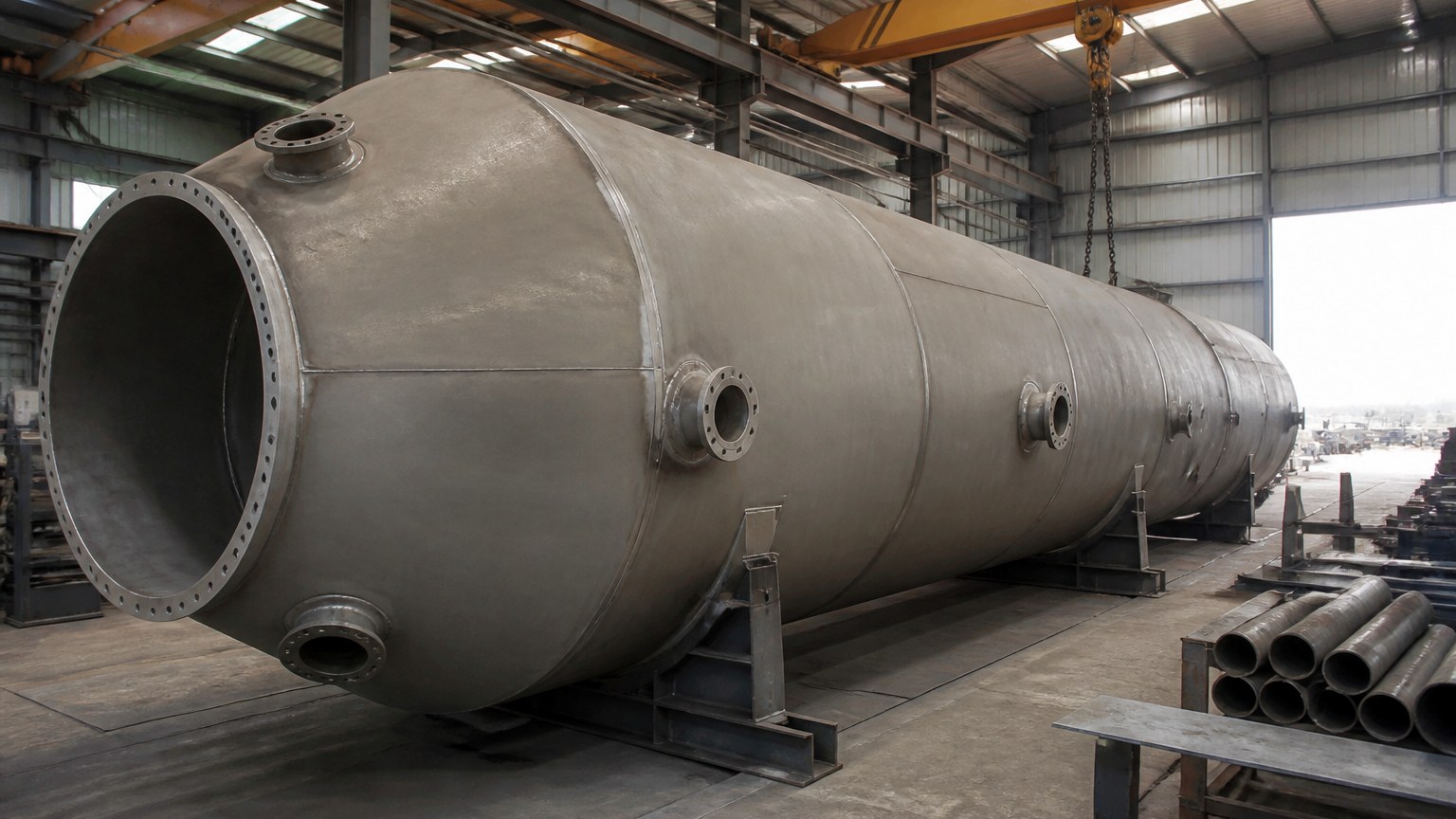
Choose 2D when you need a matte, low-reflectance cold rolled surface — typically where the sheet will be coated or painted and a keyed surface helps adhesion, or where reflected glare has to be avoided.
Dive deeper: matte is a functional choice, not a downgrade. Because 2B is the volume finish in cold rolled stainless, most enquiries default to it and 2D is never discussed. That default is reasonable for general fabrication, where a smooth bright sheet is pleasant to handle and universally available. It becomes the wrong default wherever the surface is judged by something other than appearance.
Where a matte cold rolled surface earns its place
Painting and organic coating are the clearest cases. Abrasive blasting or a chemical conversion coating is frequently applied before painting to key the surface, and a matte as-pickled finish starts closer to that condition than a skin-passed 2B surface does. Glare control is the second case: a non-reflective sheet is preferable in applications where reflected light creates a safety or visual problem, and 2D delivers that without the directional grain that a brushed finish introduces. Formability and welding behaviour are unchanged between 2D and 2B because both are produced from the same annealed cold rolled material; only the final temper pass differs. That is worth remembering when a fabricator worries that a matte sheet will form differently.
What you give up by specifying 2D
Two things. Availability is narrower, because mills run 2D in smaller volumes than 2B and stock is thinner on the ground; lead times can be longer and minimum order quantities larger. Handleability is the second: a matte surface shows handling marks, fingerprints and light scuffs less starkly than a bright one, but it cannot be dressed out the way a brushed finish can, and smears from oily hands are harder to remove because the profile holds them. Neither drawback is decisive, but both should be acknowledged before the specification is frozen. If the sheet will be fabricated and then polished or brushed anyway, the base finish is largely irrelevant and the simplest available option is the right one. Where the shape of the part is the real constraint rather than the surface, the sequence of operations is covered in our guide to stainless steel plate fabrication.
2D versus 2B in one sentence
Same material, same cold rolled route, same mechanical properties; 2D stops before the skin pass and stays matte, 2B continues through it and becomes smooth and brighter. If neither matte nor glare control is a requirement, 2B is normally the cheaper and more available answer, and there is no technical reason to insist on 2D.
How Do You Specify and Inspect No.1 or 2D Finish Before Ordering?
A finish specification is only useful if it can be checked when the truck arrives.
Write the standard, the finish designation, the processing route and any roughness requirement into the purchase order, then confirm the same wording appears on the mill test certificate and matches the material you receive.
Dive deeper: put the finish where it can be verified. The reason finish disputes are so common is that the finish is the one line of a specification that is often left implicit. Grade, thickness and quantity are always written down; the surface is frequently assumed. Closing that gap costs nothing and removes an entire category of claim.
Write four lines, not one word
State the product specification first, for example ASTM A240/A240M for stainless plate, sheet and strip. State the finish by its standard designation rather than by description: No. 1 or No. 2D, and where a European order is involved, 1D or 2D. State the processing route in plain language so there is no room for substitution — hot rolled, annealed and pickled, for example, or cold rolled, annealed and pickled without skin pass. Finally, state any measurable surface requirement you actually need, such as a maximum roughness, and note whether a roughness measurement will form part of the inspection. If you intend to coat, pickle or passivate the material after delivery, say so on the order, because it can change the mill’s recommendation.
Inspect against the same four lines
On receipt, compare the mill test certificate against the purchase order line by line, then compare the material against the certificate. Check that the finish designation and the processing route are stated, that the heat number and dimensions match the packing list, and that the surface condition of the plate or sheet is consistent across the batch. Visual variation between packs is normal for an as-pickled surface and is not by itself a defect; what is not normal is a directional grain on a product ordered as No.1 or 2D, or a bright skin-passed surface on a product ordered as 2D. Record what you find, photograph the identification marks, and keep the file. The wider background on how stainless steel resists corrosion, and why the passive film matters more than the finish in aggressive service, is described in the Wikipedia article on stainless steel.
Ask before you commit
If the finish, the thickness and the application do not obviously line up, send the specification to the mill for confirmation before the order rather than after the delivery. As a supplier of ASTM A240 stainless steel plate, we confirm the grade, thickness, finish and standard in writing so the certificate can be checked against a documented order, and we will tell you when the requested finish is not the route your thickness actually runs on. Send your grade, thickness, size, finish and intended application through the contact form, or send us your finish specification and we will return a written confirmation with the standard stated explicitly.
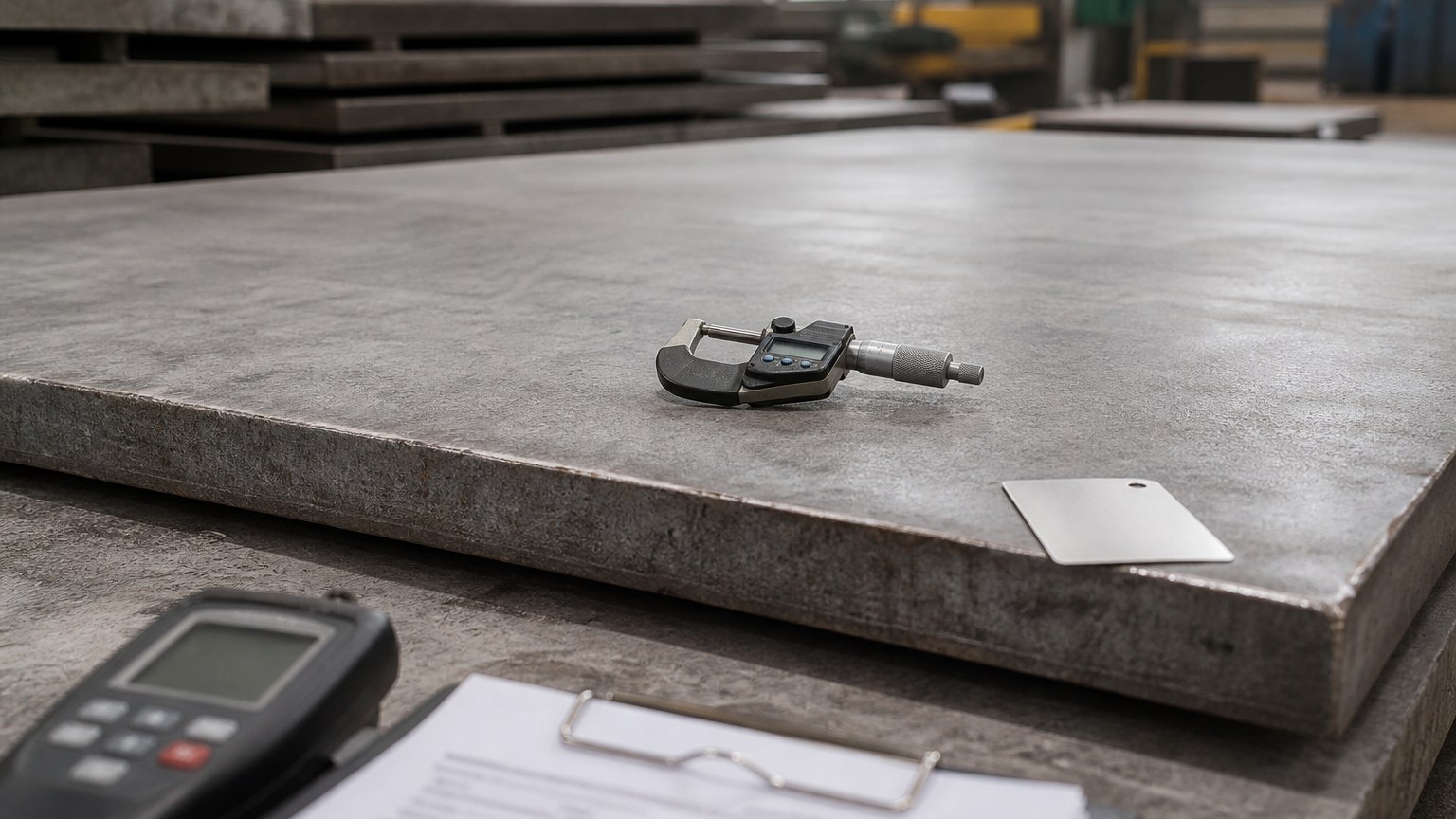
Conclusion: No.1 is a hot rolled, pickled matte finish for heavier plate; 2D is its cold rolled, unskinned counterpart. Match finish to product route, then verify certificate and plate.