
Hydraulic Tubing: What Makes Seamless Steel Pipe the First Choice?
Your hydraulic line fails and the machine stops, spraying oil at pressure. The tube was the weak point — here is why seamless steel pipe is the safer first choice.
Short answer: Seamless steel pipe is the first choice for hydraulic tubing because it has no weld seam to fail under pressure. A single pierced, cold-drawn wall gives uniform strength, tight dimensional tolerance, a smooth bore and dependable fatigue life at high working pressures.
That answer is only the start. The sections below look at what a weld seam actually does to fatigue life, how a precision hydraulic tube is drawn and tested, which grades and tolerances to write on a purchase order, where these tubes are used, how they are inspected and installed, and which buying mistakes cost the most. If you buy seamless hydraulic tubing for machine building or oil and gas equipment, follow the sequence from the top.
Why Does a Weld Seam Matter in Hydraulic Tubing?
A weld seam is a metallurgical discontinuity, and a hydraulic circuit loads its tubing millions of times.
Short answer: A welded seam introduces a stress raiser and possible inclusions that can initiate cracks when the tube is pressure-cycled, whereas a seamless wall has continuous, homogeneous grain structure in every direction.
Dive deeper: A hydraulic cylinder on an excavator does not see one steady pressure; it sees a pressure pulse every time the operator moves a lever, and those pulses can run into millions of cycles over a machine’s life. Fatigue is therefore the design driver, not static strength. Fatigue cracks start where stress concentrates, and the two most common concentration sites in tubing are a longitudinal weld seam and the heat-affected zone beside it. In an electric-resistance-welded tube the weld is made and the flash is trimmed, but the grain structure at that line is never the same as the parent metal, and the seam remains the location where inclusions, porosity or incomplete penetration most often survive. Seamless tubing removes that question entirely. The billet is pierced and worked into a hollow shell without a longitudinal joint, so the wall is metallurgically continuous around its circumference. When the tube is subsequently cold drawn, the deformation is uniform through the wall, which produces a fine, oriented grain structure, higher yield strength from cold work and far fewer potential initiation sites. There is no seam to align with the highest tensile hoop stress, which is precisely the direction a crack prefers. Fluid power and the way it is transmitted are described in the general material on hydraulic machinery, where fluid is pushed under pressure through pumps, tubes, hoses and cylinders; the tube is the boundary that has to contain that pressure cycle after cycle.
That is not to say welded tubing is unusable — it has its place where pressure is modest and cost dominates. The point is that the service condition decides. Where a circuit is pressure-cycled at high working pressure, where leakage is unacceptable, or where the tube forms part of a cylinder barrel, the seamless wall is the conservative engineering choice, and it is the reason hydraulic tubing specifications so often call for it.
The practical check sits in the wall calculation. Whether you use the Barlow relationship or a code-based formula, a tube’s design pressure scales with wall thickness and allowable stress and inversely with diameter; a seam reduces the allowable stress you can honestly claim. Buyers who specify a seamless tube are buying margin against fatigue, not just a longer list of mill certificates. Specifications such as ASTM A519/A519M, the standard specification for seamless carbon and alloy steel mechanical tubing, exist precisely because mechanical tubing is bought for structural and pressure duty rather than simple conveyance: they define the grades, conditions and tests so that the tube you receive matches the duty you designed for.
How Is Seamless Hydraulic Tubing Actually Made?
Precision in a hydraulic tube is manufactured, not inspected in — the drawing sequence decides the final dimensions.
Short answer: A steel billet is pierced and hot rolled into a hollow shell, then cold drawn over a mandrel through dies to shrink it to final size, with annealing between passes and straightening at the end.
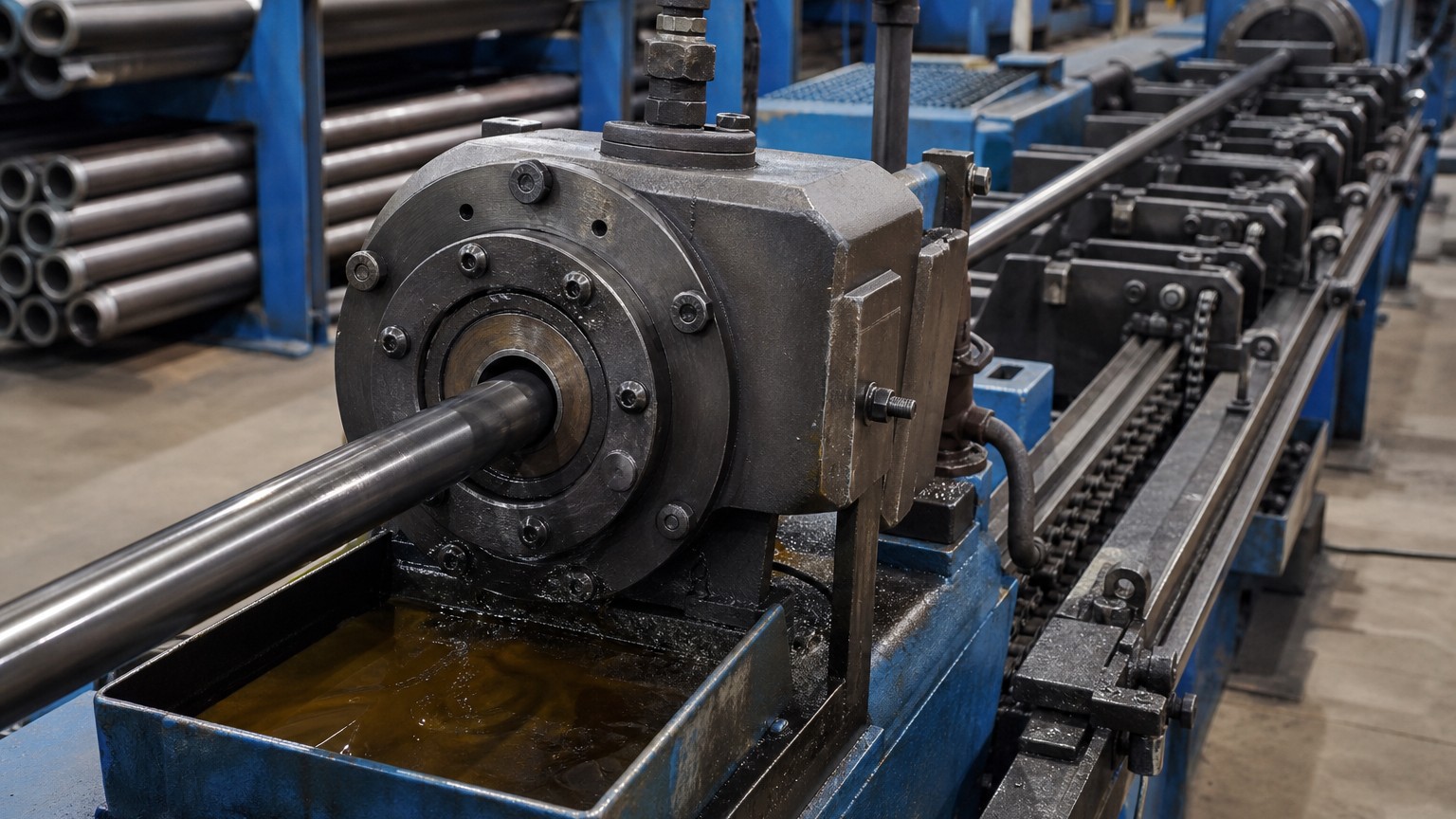
Dive deeper: The classic route begins with a solid round billet heated to rolling temperature. A rotary piercing mill pushes the billet over a pointed plug between two barrel-shaped rolls; the combined compressive and tensile stress at the centre opens a hole without drilling. What comes out is a thick-walled hollow shell, still oversize and still rough. That shell is then hot rolled — normally on a mandrel mill or a plug mill — to bring the wall close to the ordered size. Hot finishing leaves a scale-covered surface and tolerances that are acceptable for a pipe, but not for a hydraulic line. Precision tubing therefore continues into the cold finishing department, and this is where a hydraulic tube is really separated from a general-purpose pipe. In cold drawing, the hot-finished shell is pickled and lubricated, then pointed at the end so it can be gripped. It is pulled through a tungsten carbide or diamond die while supported internally by a fixed plug or a floating mandrel. The die sets the outside diameter; the plug or mandrel sets the wall and the inside diameter. Because the metal is deformed below its recrystallisation temperature, the operation simultaneously reduces the section, tightens the dimensional tolerance, improves the surface finish and raises the yield strength through cold work.
A single pass can only do so much. Where a heavy reduction or a very tight wall tolerance is required, the tube is drawn in several passes with an intermediate anneal — normally in a controlled-atmosphere furnace — to restore ductility before the next draw. Then come straightening, usually on a multi-roll machine, cutting to length, end chamfering or threading, and a protective coating of oil or, for some grades, phosphating. The result is a tube whose outside diameter, wall thickness, concentricity and straightness are controlled to much closer limits than a welded pipe, with a bore smooth enough to keep flow losses and contamination under control. That combination of dimensional precision and a continuous wall is exactly what a hydraulic circuit needs, and suppliers who explain how seamless hydraulic tubing is manufactured generally make the same point — the mill route is the reason the tolerances can be held at all.
For stainless hydraulic lines the logic is the same but the specification shifts. ASTM A269/A269M, the standard specification for seamless and welded austenitic stainless steel tubing for general service, covers the grades plus the mechanical and non-destructive tests that a 304 or 316 tube is verified against, and it requires the material to be furnished in the heat-treated condition. European buyers work instead from the precision tube series, in which the part covering seamless cold drawn tubes for hydraulic and pneumatic power systems defines the dimensions, tolerances and delivery conditions for exactly this application.
Which Grades and Tolerances Should You Specify?
Specification is where a hydraulic tube project succeeds or fails, and it starts with the pressure, not the price.
Short answer: Specify a grade matched to pressure and environment, a defined cold-drawn or cold-rolled condition, an agreed wall and concentricity tolerance, a stated surface finish, and the test certificate that proves it.
Dive deeper: Start with the duty. Working pressure, pressure peaks, the fluid, ambient temperature, and whether the tube sees chlorides or repeated wash-down all narrow the list before you look at grades. A low-pressure return line and a high-pressure cylinder barrel do not need the same tube, and specifying the premium option everywhere is as poor a decision as under-specifying the critical line. For carbon steel hydraulic tubing the common choices are low-carbon and low-alloy mechanical tubing grades. Chinese mills supply grade 20# for general hydraulic and mechanical duty, European specifications use grades such as E235 and E355 for precision tubes, and North American buyers often work from a mechanical tubing grade to ASTM A519. The exact designation matters less than the fact that the grade is stated together with its condition — hot finished or cold finished — and its mechanical properties, because that is what the mill will certify. Outside diameter, inside diameter and wall thickness tolerances are quoted separately, and a tube that meets the outside diameter tolerance can still sit outside the permitted wall range. Where the tube has to enter a machined gland, a ferrule fitting or a seal, the wall and concentricity tolerances do the real work. European precision tube specifications separate tight and normal tolerance classes for precisely this reason, so a purchase order that names the standard without naming the class leaves the mill free to choose the looser one. Surface finish and cleanliness come next: a drawn tube has a smoother bore than a hot-finished one, and critical circuits may call for a honed bore or a pickled and oiled condition. For stainless lines, a passivated or bright-annealed surface is often written into the order, because on stainless steel a contaminated surface is a corrosion initiation site rather than a cosmetic issue.
Finally, decide the evidence you want with the tube. A mill test certificate carrying heat analysis and mechanical properties, a hydrostatic or non-destructive electric test result, and a stated surface condition are the minimum for a pressure-bearing line. Ordering against a named standard turns all of this into a verifiable requirement instead of a conversation, and it gives you a basis for a claim if the delivered tube does not match what was ordered.
Where Is Seamless Hydraulic Tubing Used?
Anywhere fluid pressure must be moved, controlled and contained under load, the tube carries the risk.
Short answer: Seamless hydraulic tubing is used in construction and mining machinery, injection moulding and press equipment, agricultural and marine systems, offshore and oilfield equipment, and any circuit where leakage or fatigue failure is unacceptable.
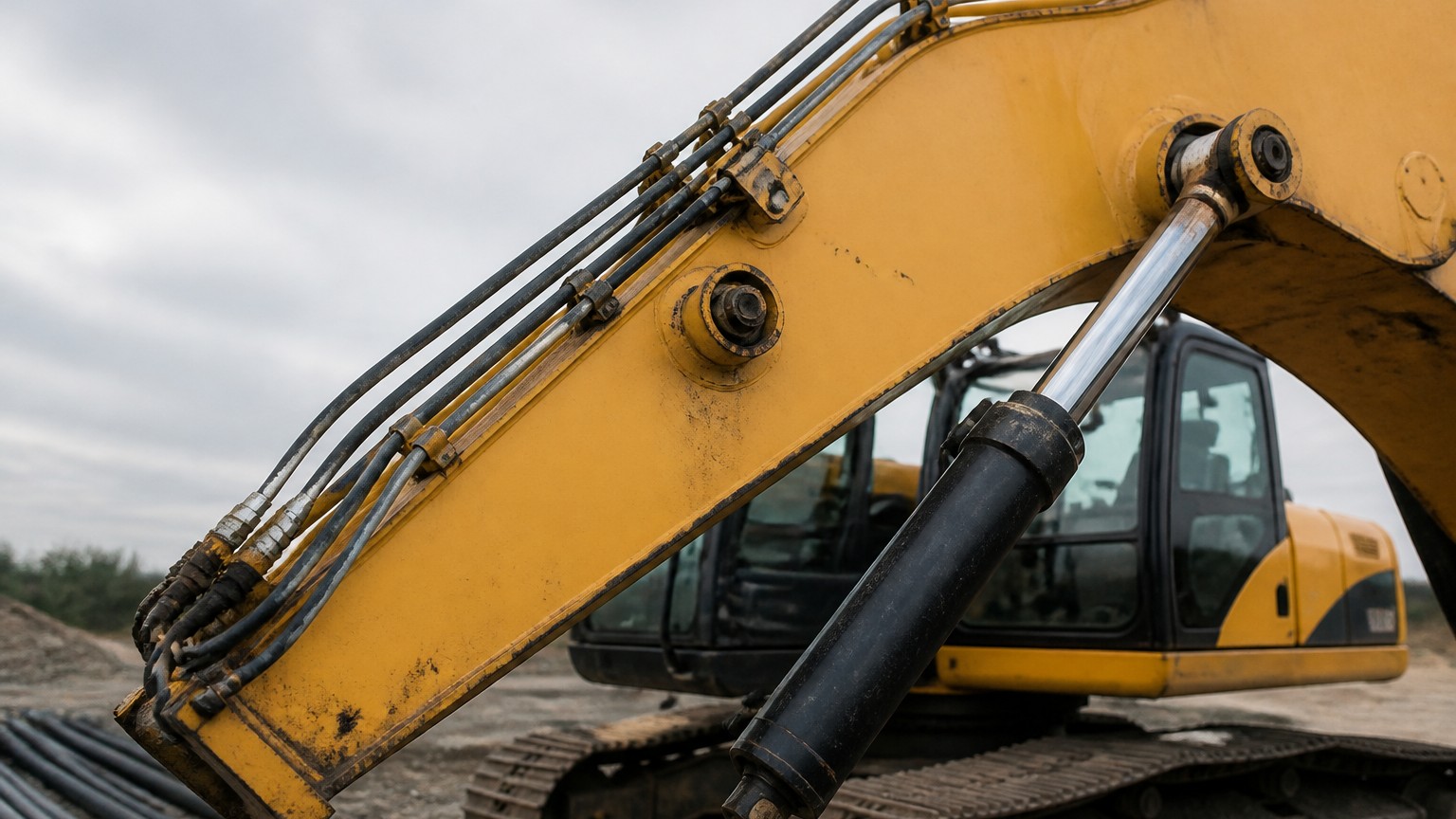
Dive deeper: Mobile machinery is the largest user. On an excavator, the pressure lines run the full length of the boom and arm, flexing and pressure-cycling with every bucket stroke, and the hydraulic cylinder at the end of that circuit depends on a honed seamless tube for its barrel, because the bore has to act as a wear surface for the piston and its seals. The same pattern repeats on wheel loaders, cranes, drilling rigs and mining trucks, where downtime cost dwarfs the price difference between tube grades. Fixed plant is the second big group. Injection moulding machines, hydraulic presses, die-casting machines, machine tools and steel mill equipment all use tube-and-fitting circuits rather than hose wherever the line is fixed and long. Here the priorities move towards dimensional stability, resistance to vibration, and a bore clean enough that the tube does not shed contamination into servo valves, which are far more sensitive to dirt than a simple directional valve. Then come the environment-driven applications. Offshore and marine systems, subsea equipment and offshore wind installations use corrosion-resistant grades because chloride exposure will destroy a plain carbon line. Oilfield equipment uses seamless tube for control lines, manifolds and pressure-transmission jackets, where reliability in a location nobody can inspect is worth far more than the price gap between a welded and a seamless tube. Food, dairy and pharmaceutical plants use stainless hydraulic and pneumatic tubing because the outside of the line must survive repeated wash-down with caustic and acid cleaners. Automotive and agricultural equipment sit in the middle: high-volume and cost-sensitive, but still pressure-cycled for years.
In every one of these cases the common thread is that the circuit is expected to hold pressure without leaking for the life of the machine, so the tube is bought as an engineering component rather than as a commodity. If your requirement is a standard mill item, seamless carbon steel pipe 20# in 4 inch Sch 40 is representative of the kind of line item hydraulic and process projects order most often — a defined grade, a defined schedule and a defined length.
How Do You Inspect and Install Hydraulic Tubing Correctly?
A perfect tube can still fail at installation — bending, contamination and fitting practice decide the outcome.
Short answer: Verify the tube with hydrostatic or non-destructive electric testing and a mill certificate, then bend to a controlled radius, clean and flush the circuit, and make up fittings to the manufacturer’s torque and alignment rules.
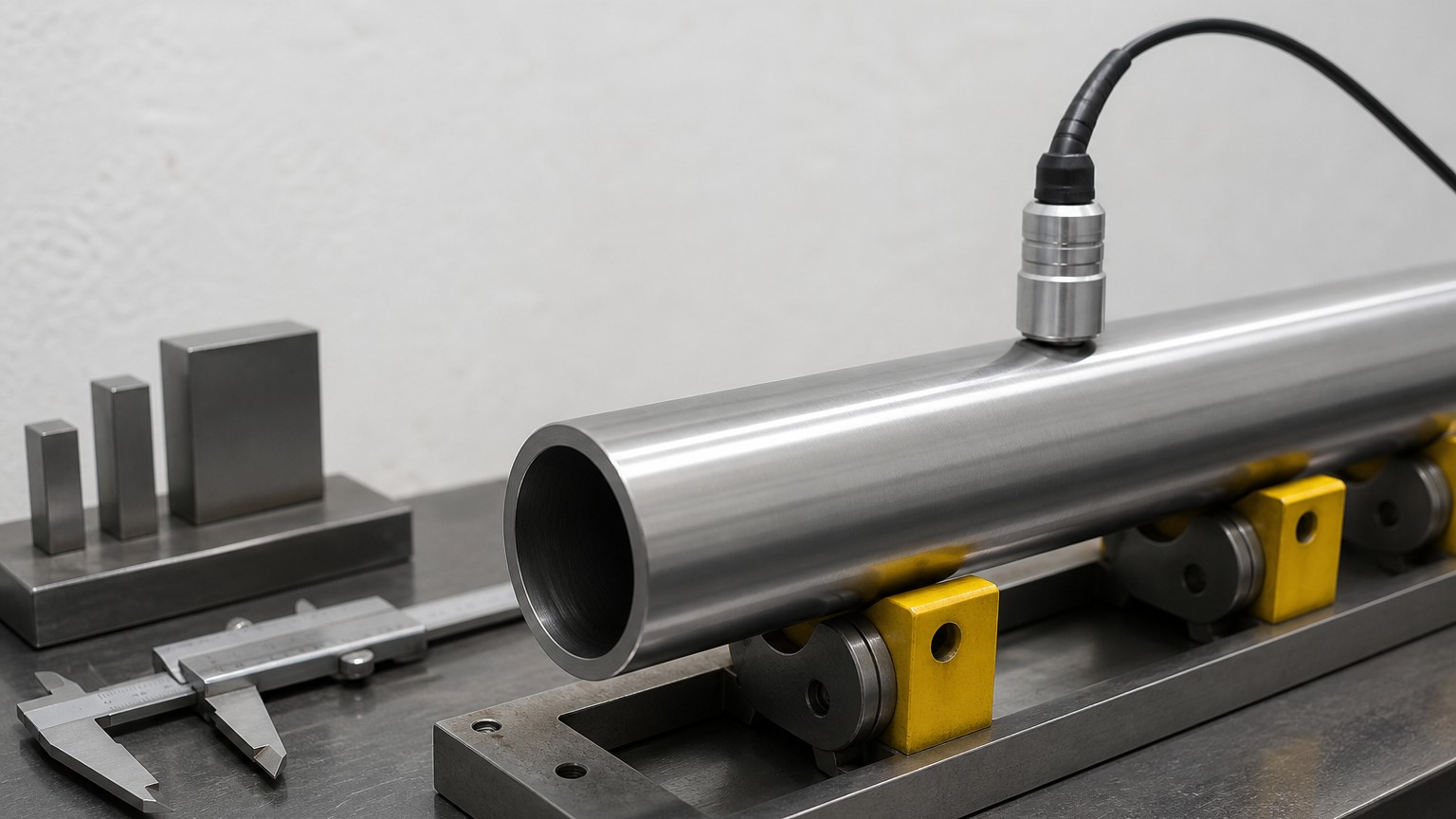
Dive deeper: Inspection starts at the mill and continues at goods-in. A hydrostatic test proves the tube holds pressure without leaking or deforming beyond the defined limit, while a non-destructive electric test — eddy current on smaller sizes, ultrasonic on heavier walls — is aimed at discontinuities in the wall that a pressure test alone may miss. A mill test certificate matched to the heat number marked on the tube is what links the delivered item to those results. Buyers who check dimensional tolerance on receipt, rather than only accepting the certificate, catch the rare but expensive case of a tube that is correct on grade and wrong on wall. Installation is where most field failures are actually created. The first rule is bend radius. A tube bent too tightly on too small a die will flatten on the inside of the bend, thin on the outside and wrinkle on the inner curve; all three reduce pressure capacity, and none of them is visible from outside once the line is installed. Tubes should be bent on a mandrel bender or with tooling sized to the tube, with the bend radius agreed against the tube diameter rather than chosen for convenience on site. Cleanliness is the second rule. Hydraulic components are built to clearances measured in micrometres, and debris left inside a tube will eventually find a valve, a pump or a cylinder seal. Cutting with an abrasive saw drives swarf into the bore; cutting with a wheel-type cutter leaves a burr; both have to be followed by deburring, blowing through, and, for critical systems, a proper flush of the assembled circuit before the machine is run.
The third rule is the connection. Whether the tube is flared, brazed into a fitting or joined with a bite-type ferrule, the joint depends on the tube end being square, clean and free of hardness change from overheating. Fittings have defined torque and alignment requirements, and a cross-threaded or under-torqued joint will leak at precisely the pressure peak the tube was designed to survive. The practical discipline is to treat the tube as part of a system: storage with capped ends, careful handling to avoid dents, and a documented flush before commissioning prevent failures that no amount of mill testing can catch.
What Are the Common Buying Mistakes and Cost Traps?
Most hydraulic tubing problems are buying problems, and they surface months after the order is placed.
Short answer: The common traps are substituting welded tube for seamless on pressure-cycled lines, ignoring wall and concentricity tolerance, specifying a grade without a condition, and accepting packaging that lets tube ends arrive damaged.
Dive deeper: The first and most expensive mistake is buying on price alone for a duty that needs a seamless wall. A welded tube can be perfectly adequate for a low-pressure return line, and specifying seamless there wastes money. Reverse the situation and the cheap tube is a false economy: the fatigue failure it eventually produces costs a machine, a production day and possibly a person. The second trap is tolerance drift. Two tubes can both claim the same nominal size and the same standard while sitting at opposite ends of the permitted wall and outside-diameter range. One fits the fitting and the gland; the other does not, or fits but does not seal reliably. Buyers who write only a standard number and a nominal size on the order, without a tolerance class and without a dimensional check on receipt, have no basis for a claim when the tube will not assemble. The third trap is misleading documentation. A mill test certificate should be traceable to the heat number marked on the tube. A certificate supplied with no traceability, or with mechanical properties copied from a specification table rather than measured, gives no assurance about the material actually delivered. On projects where the tube is a pressure boundary, traceability is not paperwork — it is the only link between the purchased item and the tested sample.
The fourth trap is packaging and transport. Precision tubing is easily damaged at the ends: dents, ovality and rust all start at an unprotected end or on a tube that has been lifted with a chain or dropped on a bundle. Light surface rust on a carbon tube is recoverable if it is removed before installation; ovality in a fitting area is not. Export orders should specify end caps, strapping, a moisture barrier and a documented packing method, because the tube that arrives damaged was never cheap. The way to avoid all four is to buy against a specification rather than a description, which is why a careful seamless versus welded steel pipe comparison should be an engineering decision recorded on the order rather than a guess made on price.
Conclusion: Seamless steel pipe earns its place as the default choice for hydraulic tubing because a continuous wall resists the pressure cycling that makes fatigue the real design limit.
Ready to specify? Send us your tube specification — grade, outside diameter, wall thickness, length and working pressure — and our team will confirm the drawing route, tolerance class and test certificate for your application.