
Cold Drawn Seamless Tube: How Is Precision Tubing Made?
Bought a “precision” tube that would not fit the fitting? The fault is usually the drawing process, not the grade. Here is how cold drawn seamless tube is actually made.
Short answer: a cold drawn seamless tube is made by piercing a solid steel billet into a hollow shell, then drawing that shell cold — over a mandrel, through a die — to shrink it to the exact outside diameter, wall thickness and surface finish the application needs.
The steps sound simple, and that is exactly why the tolerances are so easy to lose. A draw bench that runs a few hundredths of a millimetre out, an annealing cycle that is cut short, or a die that has worn past its limit will all produce a tube that looks correct on the bundle and fails at the fitting. The sections below follow the process from billet to finished tube, then translate each stage into the purchasing language you can actually specify — diameter, wall, tolerance class, temper, test and certificate.
What Exactly Is a Cold Drawn Seamless Tube?
Three words, three separate promises — cold, drawn and seamless. Miss any one of them and you are buying a different product.
A cold drawn seamless tube has no longitudinal weld, is reduced in size at room temperature by being pulled through a die, and therefore offers tighter tolerances, a smoother surface and a work-hardened wall that a hot-finished tube cannot match.
Seamless means there is no weld anywhere in the body
The word “seamless” describes the origin of the body, not its finish. A seamless tube starts as a solid billet that is pierced and rolled into a hollow shell, so the wall is one continuous piece of steel around the full circumference. There is no longitudinal weld seam, no heat-affected zone and no weld metal chemistry to verify. That is why seamless tube is the default wherever a hidden seam defect could become a failure: hydraulic cylinders, high-pressure process lines, boiler and heat-exchanger tubes, and oil-country tubular goods. A welded tube can be every bit as strong when it is made and tested correctly, but the seam always exists and always has to be proven — which is the practical difference buyers pay for when they specify seamless.
Cold drawn is a finishing route, not a grade
The second word describes how the shell is sized. Hot-finished tube is produced at high temperature, where the metal is soft and the dimensions are generous. Cold drawing then takes a slightly oversize shell and pulls it — at room temperature — through a hard die, optionally over a mandrel, so the metal is squeezed to a smaller diameter and a tighter wall. Because the steel is worked below its recrystallisation temperature, the process produces the same effects described in this overview of cold working: better surface finish, superior dimensional control and measurable work hardening. The important consequence for buyers is that cold drawing changes the tube’s properties, not just its size. A drawn tube is stronger and harder than the hot-finished shell it came from, it is usually straighter, and it can be supplied in much lighter, more consistent walls. The trade-off is cost and the need for intermediate annealing. If a project needs a ductile, easily bent tube rather than a precise one, hot finished is still the sensible default; if it needs a tube that fits a machined fitting on the first attempt, cold drawn is the only realistic route. For a wider view of how these products differ from a general welded or hot-finished seamless steel pipe, the differences come down to exactly these two words.
How Is a Cold Drawn Seamless Tube Made, From Billet to Finished Tube?
The route is a sequence of hot forming, cold reduction and heat treatment — and each step leaves its fingerprint on the finished tube.
The billet is first pierced hot into a hollow shell, then cold drawn over a mandrel and through a die, annealed to restore ductility, and finally straightened, cut and inspected to the ordered tolerance class.
Stage one — piercing and hot rolling the shell
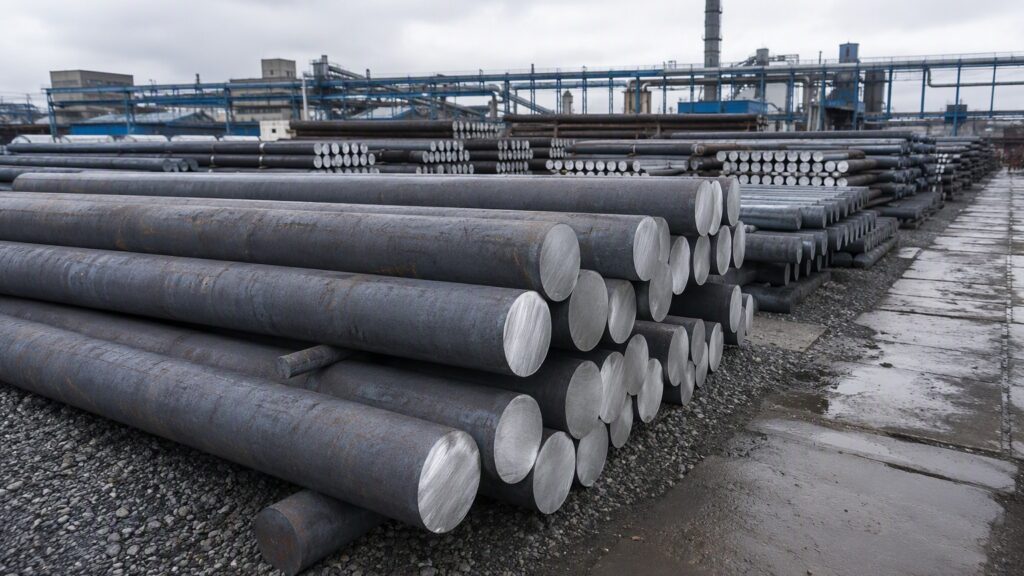
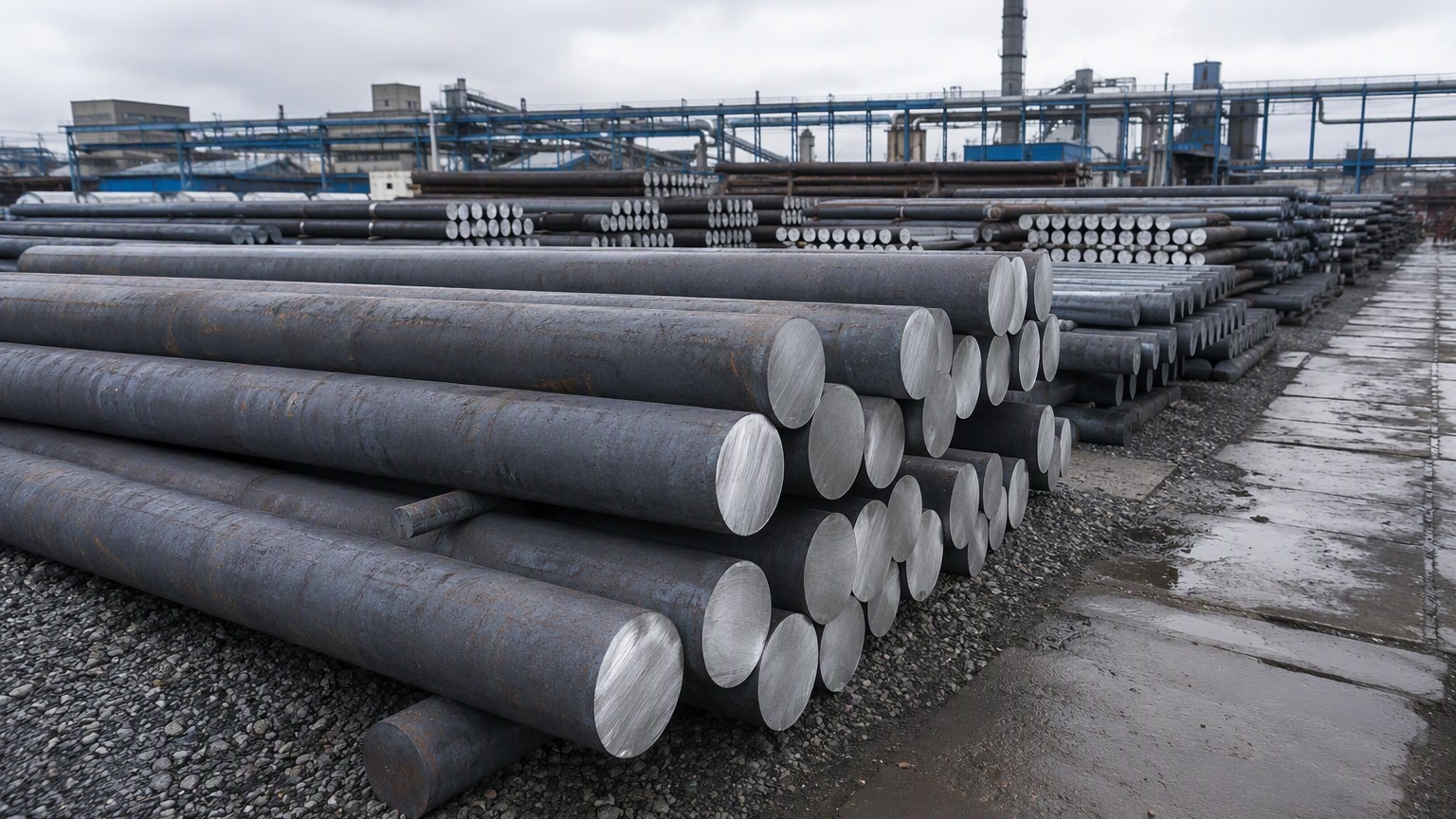
Production begins with a solid round billet, heated to forging temperature and pierced by a rotating mandrel to open a hollow shell. The shell is then elongated on a mandrel mill or plug mill, reduced and sized to a “mother tube” that is deliberately a little oversize for the finished product. At this stage the tube is dimensionally ordinary: the wall varies, the surface is scaled, and the ovality is whatever the mill produced. Everything that follows exists to correct that.
Stage two — cold drawing the shell to size
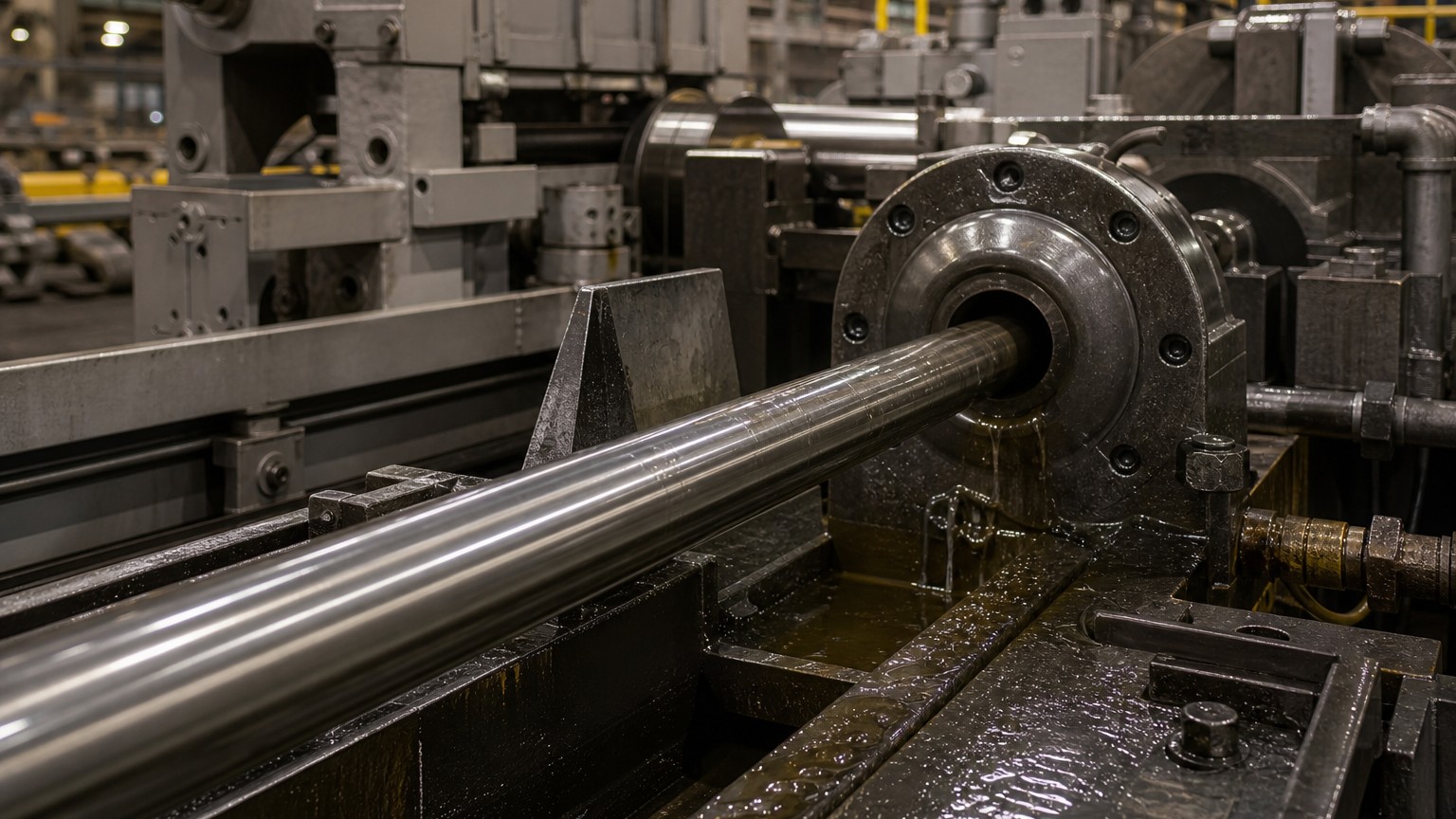
This is the step that gives the product its name. The shell, cleaned and coated with a drawing lubricant, is pointed at one end and pulled through a tungsten-carbide or diamond die. Several methods are used, and they differ in how the inside of the tube is controlled — from free sinking, where the diameter is reduced without an internal tool, to mandrel, plug and floating-plug drawing, each described on this reference page for tube drawing. What the methods share is the mechanism: reducing the outside diameter and wall thickness by pulling the metal through a smaller opening. Because a single pass can only reduce the section so far before the metal work-hardens and risks cracking, tube is normally drawn in several passes separated by annealing.
Stage three — annealing, straightening and finishing
After each drawing pass the tube is annealed — heated and cooled under control — to relieve the work hardening that the drawing introduced and to restore the ductility needed for the next pass. The final heat treatment sets the delivered condition: soft-annealed for bending and flaring, or left in a controlled cold-worked temper when higher strength is wanted. The tube is then straightened on a roller or rotary straightener, cut to length, and, where the order requires it, finished by pickling, passivation, bright annealing, oiling or a protective coating. Every one of these steps is a specification choice, which is why a purchase order that names only “cold drawn seamless tube” is not yet a specification — it is an invitation to quote the cheapest combination the mill can supply. By contrast, a working example of the same product family supplied with fixed dimensions is the 8 inch Sch 40 seamless carbon steel pipe, where the grade, size and schedule are named up front instead of left to interpretation.
What Tolerances and Surface Finish Can Cold Drawing Achieve?
Tolerance is the buying decision, because it is what separates a tube that fits from one that has to be re-machined.
Cold drawing commonly holds the outside diameter to a fraction of a millimetre and the wall to around ±5% to ±10%, where hot-finished tube is typically several times looser — so always state the tolerance class, not just the nominal size.
The dimensions that are actually controlled
Four dimensions matter on a drawn tube. The outside diameter is the easiest to hold and is normally the reference dimension. The wall thickness is the harder one, because the metal flows through the die rather than being machined, and it directly governs pressure rating and weight. Ovality — the difference between the maximum and minimum diameter at one cross-section — matters for anything that has to seal or roll. Eccentricity — the variation of wall thickness around the circumference — matters for heat transfer and for a clean internal bore. A good drawing operation tightens all four at once, which is why cold drawn tubing is specified for instrument lines, hydraulic cylinders and heat exchangers rather than for structural frames.
Surface finish, straightness and length
Drawing also improves the surface. The die polishes the outside diameter as it reduces it, and a mandrel polishes the inside, so a drawn tube can be supplied with a smooth, scale-free bore and a fine external finish, sometimes described as bright. Straightness improves for the same reason: the pulling action tends to remove the residual curvature of the hot-rolled shell, and the product is straightened again before delivery. Length can be supplied as random, as fixed lengths, or cut to a tight length tolerance, and the ends can be left plain, deburred, chamfered or prepared for a specific joint. The formal definitions of these dimensions and the permitted deviations for stainless tube are set out in the international dimensioning standard ISO 1127, which tabulates diameters, thicknesses and tolerance classes per unit length. If you want the tunnel dug from this side first, the general product explained in our guide on cold drawn seamless tube shows how the dimensional envelope shapes everything an engineer can do downstream.
Which Standards and Grades Apply to Cold Drawn Seamless Tubing?
Two selections decide the order: which standard defines the product, and which grade defines the steel.
The standard fixes the dimensions, tolerances, tests and delivery condition, while the grade fixes chemistry and mechanical properties — a low-carbon grade for heat-transfer and general mechanical tube, an alloy grade for high temperature, or an austenitic stainless grade for corrosion resistance.
Common carbon and low-alloy specifications
For seamless cold-drawn low-carbon heat-exchanger and condenser tube the reference document is a specification such as ASTM A179/A179M, which covers minimum-wall seamless cold-drawn tube for tubular heat exchangers, condensers and similar apparatus and requires tube made by the seamless process and cold drawn, with chemical analysis plus hardness, flattening, flaring, flange and hydrostatic tests. Higher-temperature and higher-strength duties move into the A213 or A519 families, while general mechanical tube may be ordered to a structural or pressure specification. The point for a buyer is that each standard carries its own test package: a tube that satisfies one standard has not automatically satisfied another, and the mill test certificate records which one applies.
Pipe versus tube, and where the line falls
The same steel mill may make both pipe and tube, but they are ordered differently. Pipe is dimensioned by nominal pipe size and schedule, and general pressure pipe made as seamless and welded black steel pipe under ASTM A53 is intended for mechanical and pressure applications in steam, water, gas and air lines. Tube is dimensioned by exact outside diameter and wall thickness, which is what allows a drawn product to hit a machining tolerance. When the choice is still open, our side-by-side comparison of seamless and welded pipe explains how the manufacturing route changes strength, cost and testing, and it is the quickest way to confirm that seamless is genuinely required before you pay a premium for it. Stainless orders add a further layer, because the grade — 304L, 316L or a duplex — decides corrosion performance, and the delivery condition decides whether the tube can still be formed after it arrives.
Where Is Precision Cold Drawn Tubing Used in Industry?
Precision tubing earns its cost wherever the inside or outside of the tube does a job that a loose dimension would spoil.
Cold drawn seamless tube is standard for hydraulic and pneumatic lines, boiler and heat-exchanger bundles, instrumentation and control tubing, automotive and machinery components, and hygienic process lines — anywhere a seal, a clean bore or a predictable pressure rating is essential.
Fluid power and machinery
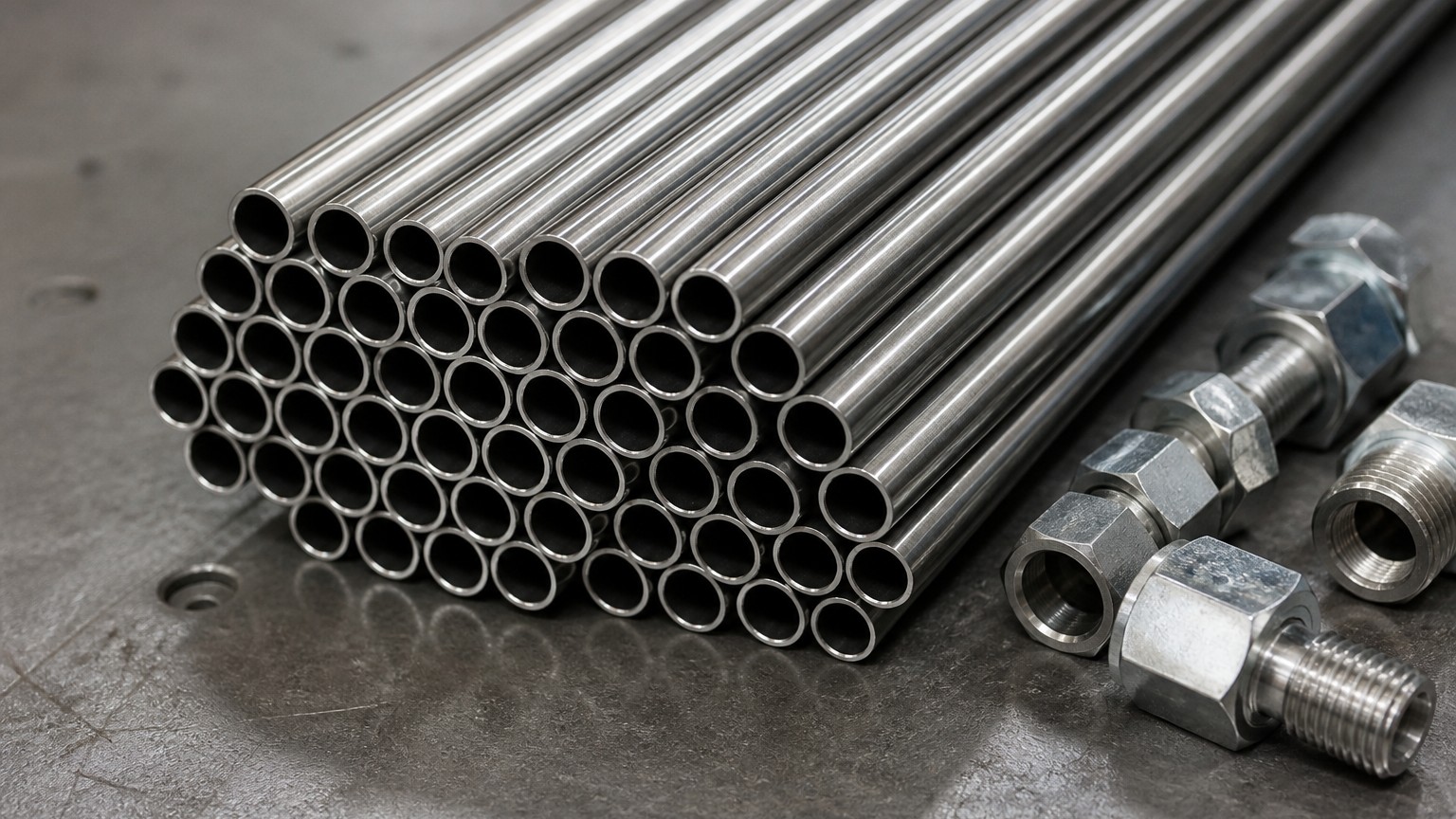
Hydraulic systems are the classic application. A cylinder barrel or a high-pressure line has to hold pressure without leaking, seal against a piston or fitting, and resist fatigue as the pressure cycles, so the tube is specified by exact bore, wall and surface finish rather than by nominal size. The same logic applies to pneumatic actuators, fuel and lubrication lines, and the tube-and-fitting assemblies used on mobile machinery. In each case a rougher or less concentric tube costs the user money further down the line — in seal wear, in poor flow, or in a joint that weeps under pressure.
Heat transfer and process industries
Heat exchangers, condensers and boilers use drawn tube by the kilometre because the wall must be thin enough to transfer heat efficiently yet consistent enough to be pressure-rated and rolled or welded into a tube sheet. A wall that varies around the circumference creates a hot spot and a weak point at the same time, which is why eccentricity is controlled as carefully as thickness. In hygienic services — food, dairy and pharmaceutical lines — the smooth, readily cleanable bore of a drawn tube is a hygiene requirement as much as a dimensional one, and it is normally supplied in a stainless grade with a finished, passivated surface.
Instrumentation and light engineering
Small-diameter drawn tubing carries instrument air, sampling lines and control signals, where a neat, repeatable bend radius matters more than pressure capacity. Precision drawn tube also appears in automotive components such as fuel rails, in furniture and bicycle frames where a clean look is wanted, and in the manufacture of bearings, shafts and hydraulic fittings. The common thread is not the industry but the requirement: a tight, repeatable dimension that a hot-finished product cannot guarantee.
How Do You Specify and Inspect a Cold Drawn Seamless Tube Order?
Most disputes trace back to a purchase order that named the product but not the tolerance, temper or test.
Specify the standard, grade, exact outside diameter and wall with a tolerance class, the length and end finish, the delivery condition, the required tests and the certificate, then inspect the delivered tube against that written baseline.
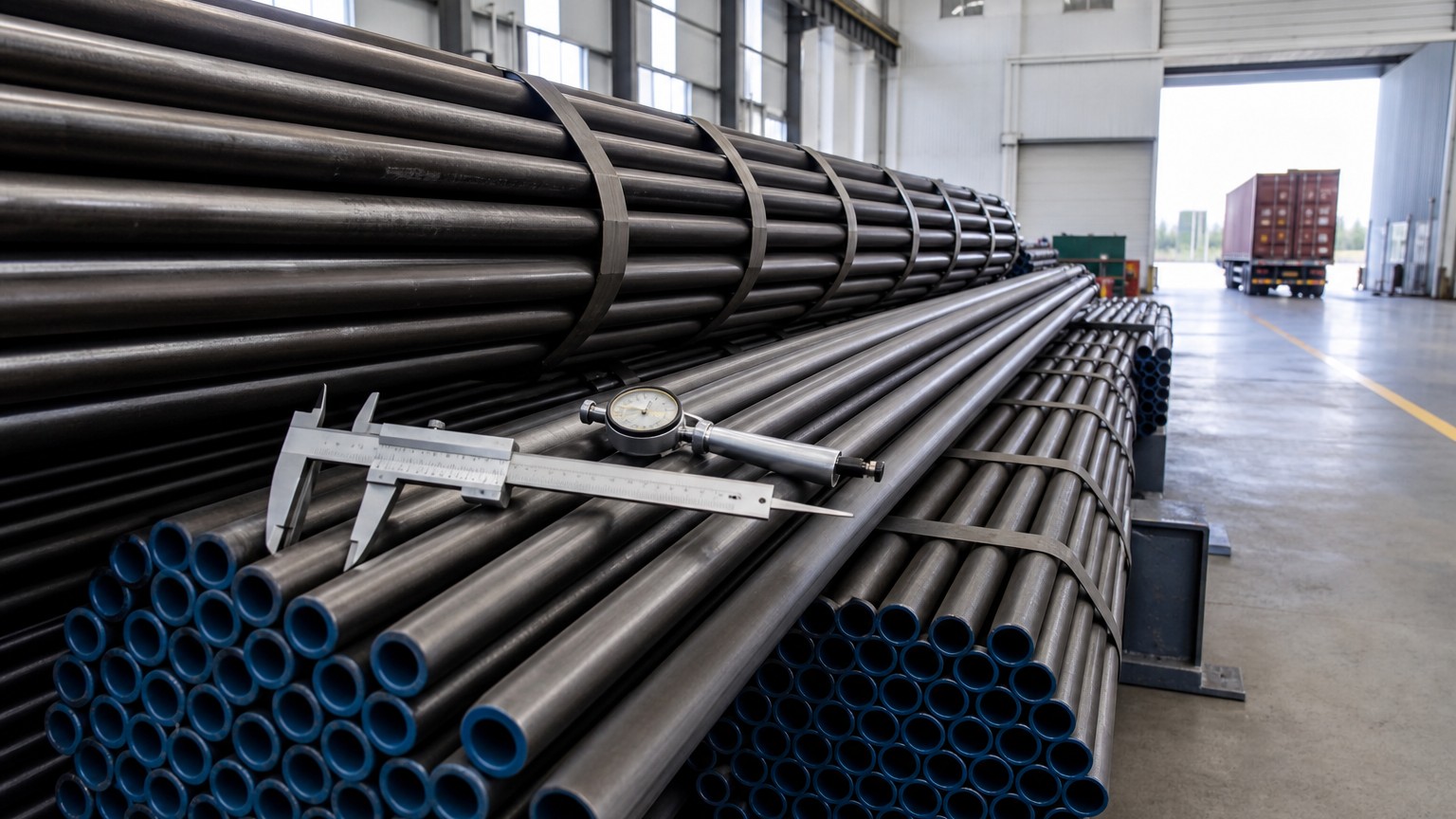
A specification checklist that holds up
Start with the function and work backwards. Name the product standard and the grade, then the exact outside diameter and wall thickness together with the tolerance class you need — not just the nominal figures. State the length, whether it is random or fixed, and the end preparation. State the delivery condition: annealed for forming, or a specified cold-worked temper for strength. State the surface requirement: pickled, bright annealed, oiled or bare. Then state the testing: hydrostatic or non-destructive examination of the body, mechanical tests such as flattening, flaring or tensile, and any third-party inspection. Finally, state the documentation — a mill test certificate traceable to the heat number, and any language or format the destination market requires. A short written specification of this kind is what turns a quotation into a comparison, because it forces every supplier to price the same product.
Inspection on arrival
When the tubes land, check them against the baseline before the container is unpacked and signed off. Measure the outside diameter and wall at several points along a length and at different positions around the circumference, since a single reading at one end proves very little. Confirm straightness and the absence of dents, ovality or a visible weld line. Verify the markings and match them to the certificate — grade, heat number, size and standard — and confirm that the tests the certificate claims are the tests the order required. Cold-drawn tube is a highly traceable product, and a supplier who cannot produce a coherent certificate is a risk regardless of how good the sample looks. When the tube is destined for a pressure or heat-transfer duty, a witnessed test or a routine third-party inspection is inexpensive compared with a rejected installation.
Getting the order right the first time
The cheapest tube in a quotation is rarely the cheapest tube in the plant. A drawn tube that is dimensionally correct on arrival saves machining, seal replacement and rework; a cheaper substitute that is a few tenths of a millimetre out of tolerance costs all three. That is why the practical habit is to keep the specification short but complete, to ask for the test certificate with the offer rather than after the order, and to compare grades and conditions like for like. If you are unsure which standard, grade or tolerance class a project needs, send the working pressure, temperature, fluid and the critical dimensions to contact our technical team and we will confirm what can be supplied from stock and what has to be drawn to order, with the certificate package that matches the duty.
Conclusion: cold drawn seamless tube is a pierced shell, cold-drawn over a mandrel to a precise diameter and wall. Specify the tolerance, temper and tests, and it will fit.