
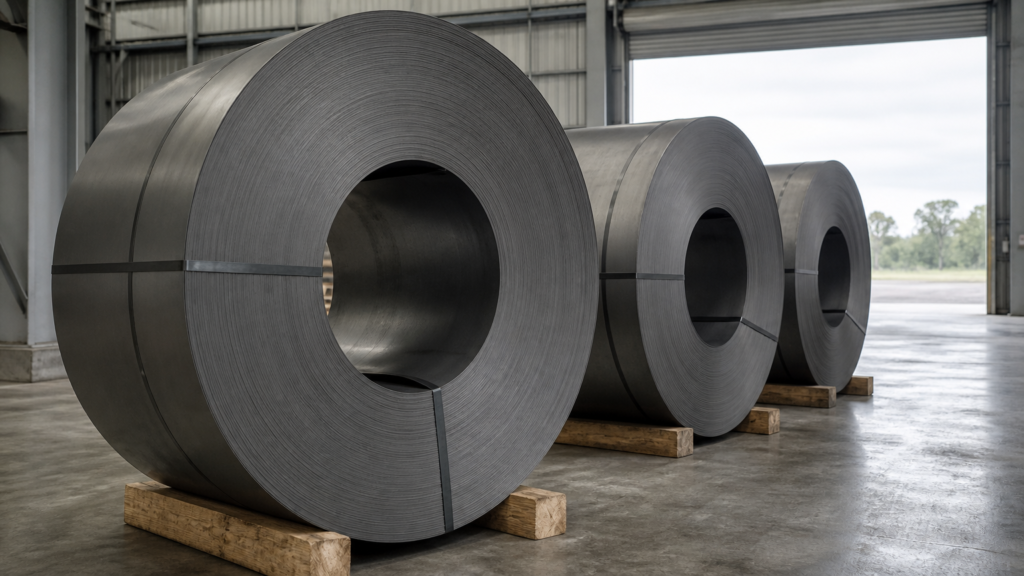
Galvanized Sheet Gauge Chart: What Do G60, G90 and Z275 Really Mean?
Specify a galvanized sheet by gauge alone and a coastal roof can rust through early. Gauge fixes thickness; the coating number fixes how long the zinc lasts.
A galvanized sheet gauge chart pairs two unrelated numbers: sheet thickness in gauge or millimetres, and zinc coating mass written as G60, G90 or Z275. G90 and Z275 are approximately the same coating, while G60 carries roughly a third less zinc on the same steel.
Transition: the reason one chart confuses so many buyers is that it prints two different kinds of measurement side by side — one geometric, one chemical — and both are written in codes that look like grades. Gauge came from the sheet-metal numbering tradition, where a larger number means thinner metal. The G and Z designations came from coating standards, where a larger number means more zinc. An order that mixes those two directions is the most common root cause of coated sheet that fails years before its design life. The six sections below follow the order a buyer actually works in: what the chart measures, how the designations convert, which one suits a given environment, how to verify the coating on arrival, where the expensive mistakes come from, and how to write an order line that cannot be substituted.
What Does a Galvanized Sheet Gauge Chart Actually Measure?
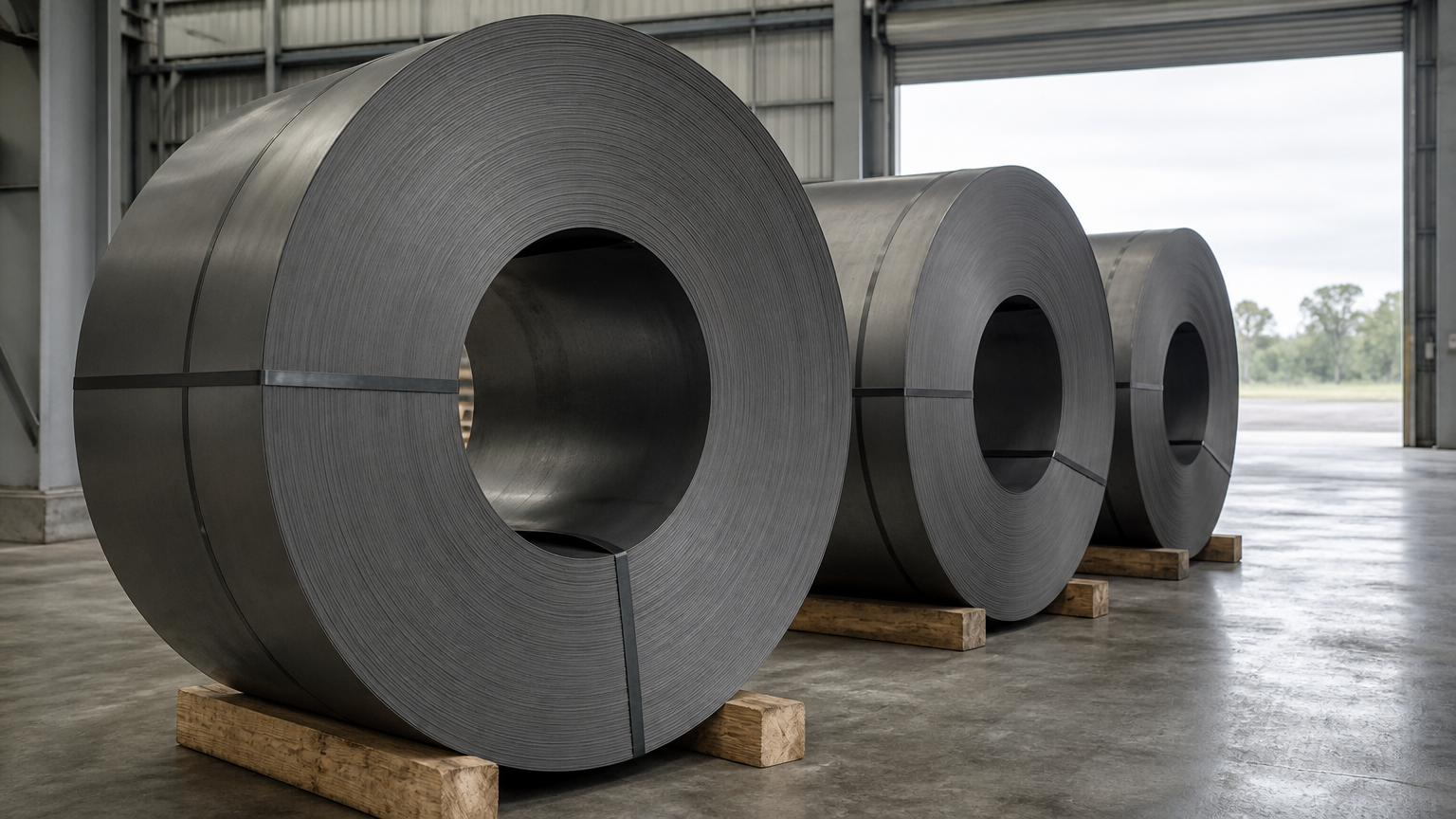
A gauge chart answers two questions at once: how thick is the base steel, and how much zinc sits on its surface.
It lists base-metal thickness — gauge number, millimetre or inch — beside a zinc coating designation such as G60, G90 or Z275. Thickness governs strength and forming; the coating designation governs corrosion life.
The first column of the chart is a thickness convention rather than a measurement of the finished sheet, and that distinction is where most conversion errors begin. North American gauge numbers come from a historical sheet-metal scale in which a larger number means thinner metal, and the steps between adjacent numbers are not equal: the physical difference between 26 and 24 gauge is larger than the difference between 16 and 14 gauge. Two suppliers working to different gauge conventions can both quote “20 gauge” and ship sheet that differs by several tenths of a millimetre, which is enough to change both the weight of a delivered tonne and the behaviour of the material in a roll former. There is a second subtlety hidden in the first column. The thickness written on a certificate is normally the total of base steel plus coating, not the thickness of the steel alone, so a sheet ordered 0.8 mm and a sheet measured 0.8 mm are not automatically the same material once a heavy coating has been applied. The practical answer is to order metrically, to state the tolerance explicitly, and to name the standard the tolerance belongs to, because that combination removes an entire class of disputes before the container is loaded and leaves the coating as the only remaining variable worth negotiating.
The second column decides service life, and it is a mass rather than a grade of quality. A coating designation states how much zinc is present across both faces of the sheet, expressed in ounces per square foot in the ASTM system or in grams per square metre in the EN and ISO systems, and it says nothing at all about the steel underneath. Two sheets can both be certified to G90 and still behave completely differently on the same roll former, because their substrates were different grades with different yield strengths, elongations and forming behaviour. Understanding why the mass matters so much comes down to the two mechanisms zinc provides at the same time. As a barrier it keeps water and oxygen away from the surface; as a sacrificial metal it corrodes in place of the steel at every scratch, sheared edge and drilled hole, which is the mechanism described in the standard reference on galvanization. That second mechanism is what separates a coated sheet from a painted one, because a painted panel fails at the first deep scratch while a coated panel keeps protecting the exposed steel around the damage until the nearby zinc is consumed. It also explains why the coating figure must never be read as a surface finish: a coating that is thick in the zinc-iron alloy layer and thin in the remaining free zinc can measure a respectable total thickness and still weather far faster than its designation implies, and a micrometer reading taken across the sheet cannot tell the two apart.
How Do G60, G90 and Z275 Convert Into Coating Mass?
The two designation systems measure the same thing in different units, so the conversion is arithmetic rather than promotional.
One ounce per square foot equals about 305 grams per square metre, so ASTM G90 corresponds to roughly Z275 and G60 to roughly Z180. Both systems state the total coating on both faces, not the thickness on one side.
| ASTM A653 designation | Coating mass (oz/ft², both faces) | Approximate EN / ISO equivalent | Service usually specified for |
|---|---|---|---|
| G40 | 0.40 | ≈ Z120 | Interior panels and mild indoor service |
| G60 | 0.60 | ≈ Z180 | Ducting, tube, racking and general fabrication |
| G90 | 0.90 | ≈ Z275 | Roofing, cladding and exposed outdoor steelwork |
| G115 | 1.15 | ≈ Z350 | Humid and mildly aggressive industrial atmospheres |
| G140 | 1.40 | ≈ Z450 | Severe marine and heavy industrial atmospheres |
Read that table as a set of floors rather than as a price list, and then go one level down into where the numbers are actually defined, because the designations are not a mill convention that each producer may interpret. ASTM A653/A653M covers steel sheet, zinc-coated or zinc-iron alloy-coated by the hot-dip process, in coils and cut lengths, and it is that document which carries the coating designations in its own tables, together with the mechanical designations, the tension and bend tests and the thickness tolerances that go with them. The general rules behind those designations — sampling, coating weight testing, mechanical testing and tolerance practice — sit in a companion document, ASTM A924/A924M, the general requirements for hot-dip metallic-coated steel sheet, and that standard settles one point buyers argue about constantly: except for differentially coated sheet, the coating figure is always expressed as the total of both surfaces, never as the thickness measured on the face the customer happens to inspect. The conversion between systems is approximate in both directions because each one rounds to its own preferred numbers. A 0.90 oz/ft² coating computes to roughly 275 g/m², which is where the Z275 designation comes from, so a buyer comparing a G90 quotation with a Z275 quotation is comparing the same nominal class rather than two identical quantities.
The more useful distinction is not between the two systems but within them, because on a continuous line the coating mass is a machine setting and not an intrinsic property of the steel. The strip passes through a molten zinc bath, where the metallurgical reaction that bonds zinc to iron takes place, and the surplus metal is then wiped from both faces by air knives positioned just above the pot. Knife pressure, nozzle gap, bath composition and line speed therefore decide how much zinc stays on the sheet, which is why two coils of identical substrate produced an hour apart on the same line can carry visibly different coating masses. The process itself is described in the reference article on hot-dip galvanization. Testing follows the same logic, because the standard specifies two ways of establishing what actually landed on the sheet — the weigh-strip-weigh method and the X-ray fluorescence method — and a certificate should always state which method was used and whether the reported figure is an average of several readings or a minimum. That single sentence on the certificate changes what the buyer is guaranteed. For the designations, coating types, surface treatments and supplied dimensions that can be certified in each format, our galvanized sheet gauge chart and galvanized product range set out what is available in coil and cut length.

Which Coating Should You Specify: G60, G90 or Z275?
Choose the coating from the atmosphere the finished part will live in, then confirm the sheet can still be formed and fastened without damage.
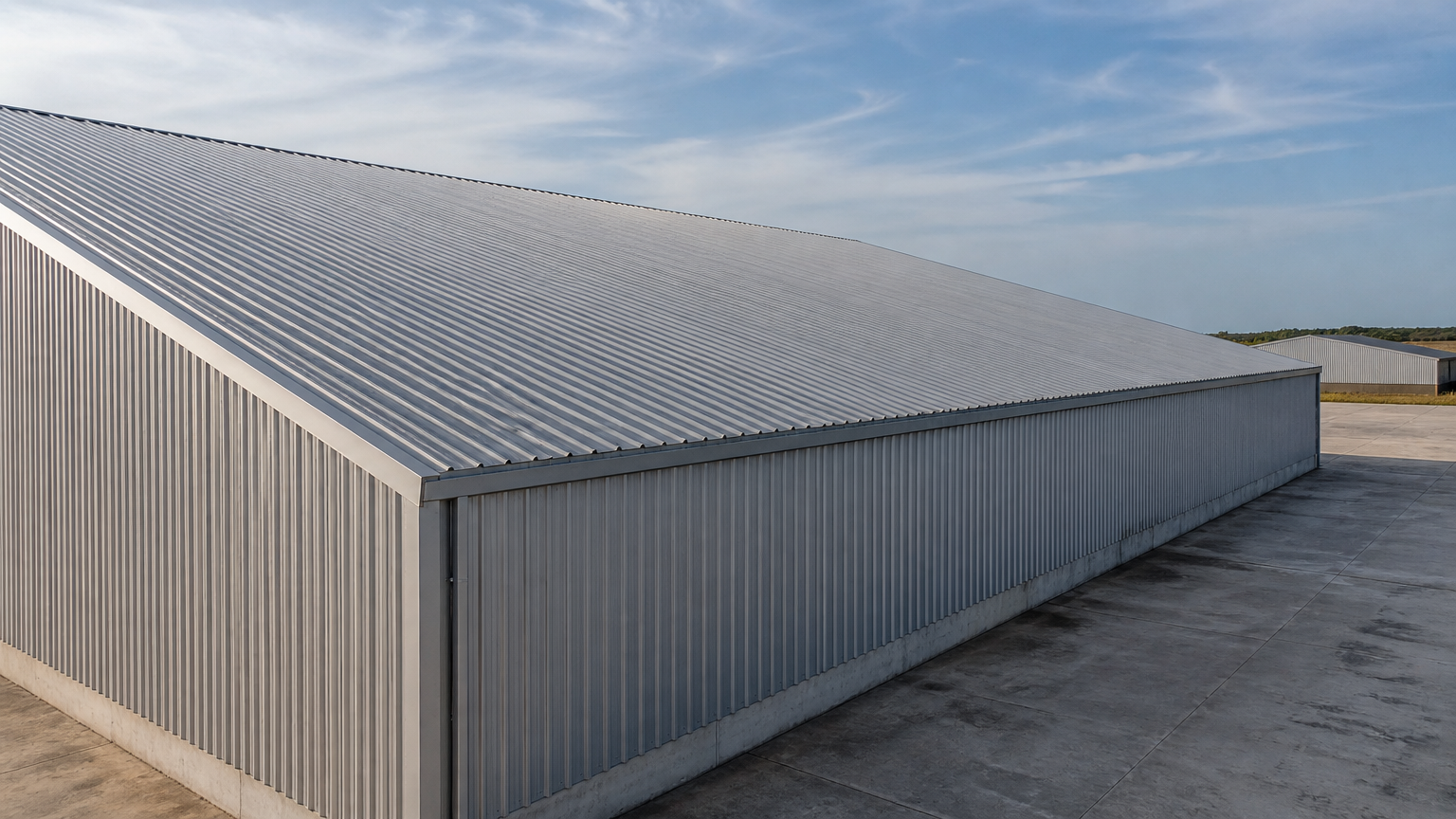
Indoor ducting, racking and general fabrication usually stop at G60. Exposed roofing, cladding and outdoor steelwork generally justify G90 or Z275, and coastal or heavy industrial sites move one step higher again.
Selection is an exercise in exposure rather than in engineering preference, and the useful thing about a gauge chart is that it forces the exposure question to be answered before the price question. Corrosivity classification systems such as ISO 9223 describe atmospheres from dry interior space through rural, urban, industrial and marine conditions, and the practical rule behind them is that each step towards salt and sulphur compounds consumes zinc faster. Two consequences follow that no chart will show directly. The first is that the cut edge is the vulnerable part of profiled sheet, because roll forming, guillotining and on-site drilling all expose bare steel, and the zinc protects that exposed edge only within a limited distance of sound coating, so a lighter coating loses the edge-protection argument before it loses anything else. The second is that a roof has two sides. Condensation on the underside of a profile keeps the hidden face wet for long periods in buildings with poor ventilation, which is why specifying a heavy coating on the weather face and leaving the reverse face unconsidered is one of the most common and avoidable failures in clad construction. Reading the chart with those two facts in hand usually narrows the choice to one or two designations instead of a range.
The sensible place to economise is not the designation itself but the assumption behind it. Where the sheet will be painted, powder coated or laminated, formability, adhesion and surface consistency matter more than the maximum zinc mass, and an unnecessarily heavy coating can actually complicate forming and increase tool wear. Where the environment is genuinely aggressive, one step up in coating mass is normally cheaper than one step up in coating chemistry, and only when both routes have been exhausted does it make sense to consider a different coating family — aluminium-zinc, zinc-5 % aluminium or zinc-aluminium-magnesium sheet, which are covered by the same general requirements but are not the same product as galvanized sheet and should never be accepted as a silent substitute. In practice the fastest route to a decision is to state the environment, the expected service life and the forming route on the inquiry, and let the mill confirm which designation covers the risk. A stocked example of the heavier end of the zinc range is Z275 galvanized sheet supplied in 0.8 mm, the class most often ordered for exposed cladding and roofing work, and a sensible reference point when you are comparing quotations that arrive written in different designation systems.
How Do You Verify the Coating on a Galvanized Sheet You Received?
Most coating disputes are settled by three measurements and one document, and all four can be checked in under an hour.
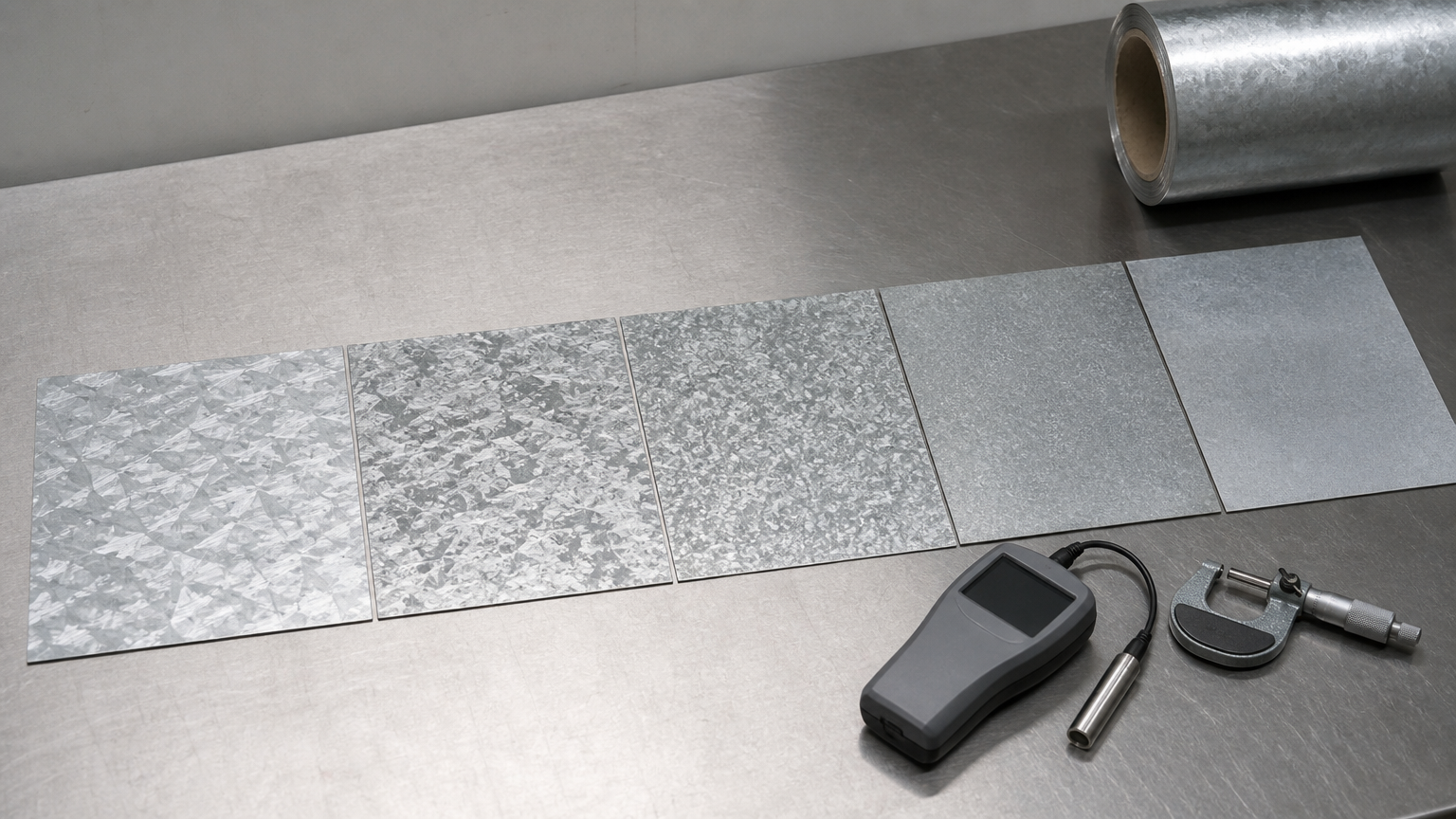
Read the mill certificate for the coating designation and the test method, then confirm with a magnetic gauge or a weigh-strip-weigh sample. Take readings across the width of the sheet, not only at the centre, and inspect the coil ends for white rust before unloading.
Start with the paperwork, because a certificate that never mentions the coating test method, the coil identity or the heat number cannot be traced to the material in the container. The certificate should connect chemical composition, mechanical properties and coating mass to one specific coil, and it should state whether the coating figure is an average or a minimum. Then move to measurement. Coating thickness on the flat of the sheet is normally checked non-destructively with a magnetic or electromagnetic gauge, a practice described in ASTM E376, while coating mass is confirmed either by the weigh-strip-weigh method of ASTM A90 or by X-ray fluorescence — the two methods that the general requirements allow. Which method was used matters less than the discipline applied to it, because the single most common verification mistake is to take one reading in the middle of a sheet and accept it as representative. Coating weight varies across the width and along the length of a coil, and a sheet can pass comfortably at the centre while running thin towards the edge, which is precisely where a profiled section will later be sheared, punched and drilled. Inspection is not a formality bolted onto the end of the process either; it is one of its three stages, as the American Galvanizers Association process overview sets out, and it is the stage the buyer owns rather than delegates. A pre-shipment inspection performed on the buyer’s account before loading is the cheapest insurance available on coated material.
Appearance is the second signal and it costs nothing to read. A uniform grey spangle with no dark patches, no white rust and no visible roll marks indicates a coating that solidified normally. Whiteness blooming between the wraps of a coil is early zinc corrosion, and it usually means the coil was exposed to moisture while still warm or stored in a humid warehouse after transport. The coil end face is the most informative surface on the whole delivery: the wrap should be tight and even with no telescoping and no slack wraps, the edge should be free of burrs and heavy edge build-up, and the eye should be round and unobstructed. Finally, weigh and measure what you can, because paperwork errors surface as quantity errors. Coil weight and piece count should reconcile against the packing list, and the area actually supplied should reconcile against the thickness tolerance achieved, since a sheet at the negative end of its permitted range yields more square metres per tonne than one at nominal and that difference is invisible on a delivery note. The full sequence from coating mass to storage condition is the same one followed in how strip is coated on a continuous hot-dip line, where the machine settings behind the certificate are described in detail.
Where Do Gauge and Coating Mistakes Cost the Most?
Five patterns account for most of the expensive coated-sheet failures, and every one of them is visible on the paperwork before the container is loaded.
The costly cases are thickness bought at the negative tolerance, G60 substituted where G90 was specified, electrogalvanized sheet mistaken for hot-dip, and coated sheet stored wet. Each one surfaces as edge rust or yield loss rather than as a clean failure.
The first pattern is a purely arithmetic loss. Thickness tolerance is written as a range, and a supplier who habitually ships at the low end of that range is selling less steel per tonne than a supplier at nominal while quoting the same unit price, so the loss never appears as a defect. It appears instead as fewer finished panels than the order was costed for, and once a fabricator has built a quotation on the wrong yield figure the error propagates through the entire job. The second pattern is coating substitution, which is harder to detect because G60 and G90 look identical in a photograph and differ by only one digit in a designation. A downgrade surfaces years later at exactly the places where zinc was doing the work: sheared edges, fastener holes, unwashed cut ends and handling scratches. The third pattern is family confusion. Electrogalvanized sheet carries a much thinner zinc layer applied electrically and is normally intended for painting rather than for exposed service, so it is not interchangeable with hot-dip coated sheet even when both are loosely described as galvanized. The same caution applies to the aluminium-zinc and zinc-aluminium-magnesium families, which solve different corrosion problems and should never be accepted as a substitute for a specified zinc coating without a written agreement. None of these three failures announces itself at the receiving bay, which is why the specification and the certificate carry more weight than the appearance of the coil.
The fourth pattern is storage, and it is the cheapest of the five to prevent. Zinc corrodes in humid air even without rain, forming white rust, and the reaction accelerates when moisture is trapped between tightly wound wraps while the coil or stack is warm. Sheet should be kept under cover, raised off the floor on dunnage, with free air movement around it, away from drips and condensation, and ideally used in the order it was received. The fifth pattern is the quiet one: a buyer reads the chart once, chooses a designation, and then reorders by part number for years without noticing that the service environment has changed, because a project that began inland now ships to a coastal yard or a ventilated roof space has quietly become an unventilated one. A coating decision is only as durable as the exposure assumption behind it, which is the argument made in why the coating system decides service life. The habit worth building is to restate the environment, the expected service life and the forming route on every repeat order, and to verify coating mass and thickness on arrival with actual readings rather than trusting a photograph of a coil end or a part number carried over from an earlier project.
How Should You Order Galvanized Sheet by Gauge and Coating?
Write the order so that substitution is impossible rather than merely discouraged: state the standard, the coating and the test method.
An order line should name the product standard and its edition, the steel grade, the coating designation, the thickness and its tolerance, the surface treatment, the dimensions, the packing and the inspection regime. Nothing left unstated can be substituted.
A specification that cannot be substituted covers eight points, and each one closes a specific gap rather than adding paperwork. Name the product standard and its revision, so that the coating designations and the test methods are fixed by reference instead of by discussion. Name the steel grade and its designation class, because the substrate decides how the sheet forms, how it welds and what load the finished part can carry. Name the coating designation together with its test basis, so that a G90 average cannot be supplied as a G60 minimum, and state whether the figure is a minimum or an average. Name the thickness with an explicit tolerance band, because otherwise the yield that the job was costed on is not the yield that will arrive. Name the surface treatment — passivated, oiled or anti-fingerprint — since it decides whether the sheet can be stacked, painted or stored humid without white rust forming between the wraps. Name the dimensions and the coil geometry: width, length, inner diameter and coil weight each affect how the material runs on the customer’s own line and how much of a container it fills, so they belong on the order rather than in a follow-up email. Name the packing and the shipping orientation, so the material arrives as dry as it left. Finally, name the inspection regime and confirm whether a third-party pre-shipment inspection on the buyer’s account is permitted, because a supplier who resists that check on coated sheet has told the buyer most of what the certificate does not. A practical way to run a first order is to ask for a sample length together with the mill certificate for the exact coil class you intend to use, then verify coating mass and thickness yourself before releasing the tonnage. That single step converts the gauge chart from a reference table into a measured decision for your own application, and it is the difference between ordering a number and ordering a material. It also builds the internal record that makes repeat orders safe, because the next buyer inherits a measured baseline instead of a description carried over from an earlier project.
Conclusion
Conclusion: treat the coating as a measured quantity of zinc, not a finish. Fix the thickness, the coating designation and the verification method on the order, then confirm all three on arrival.
For a quotation on galvanized sheet in coil or cut length, or to have a coating designation checked against your exposure conditions before you commit to a tonnage, send your specification and tonnage for a quotation and we will confirm the coating class, the substrate grade and the dimensions that can be certified for your market.