
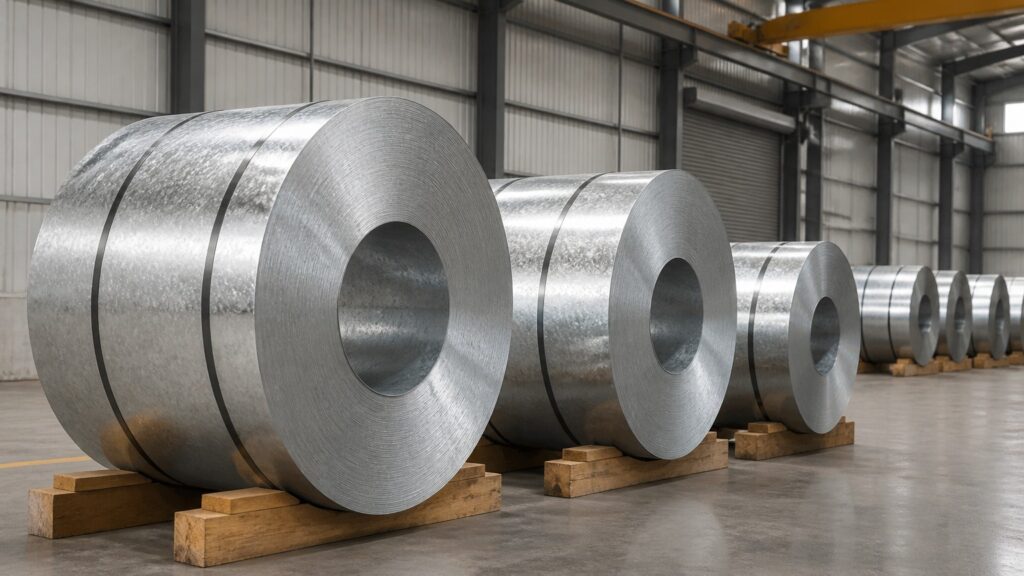
Galvanized Steel in Construction: Where Do Roofing, Cladding and Framing Fit?
Specify galvanized steel by habit and a coastal roof can fail in a decade. The coating, not the steel, decides how long construction work lasts.
Galvanized steel serves three main roles in construction: roofing and wall cladding, where profiled coated sheet sheds water, and framing, where coated hollow sections and profiles carry load. Performance depends on coating mass, cut-edge protection and the corrosivity of the site, not on thickness alone.
Transition: the awkward part of galvanized steel in construction is that one material is asked to do three different jobs with three different failure modes. A roof fails from the outside in, through coating loss and rust at the cut edge. A clad wall fails where moisture sits behind the panel. A galvanized frame fails at the drilled hole or the site-welded joint, not on the flat face the specifier inspected. The six sections below follow the order a project team actually works in: the corrosion mechanism that makes the coating worth paying for, then roofing, cladding and framing as three separate design problems, then how to write a specification that survives a substitution attempt, and finally why the same material performs well on one site and badly on another.
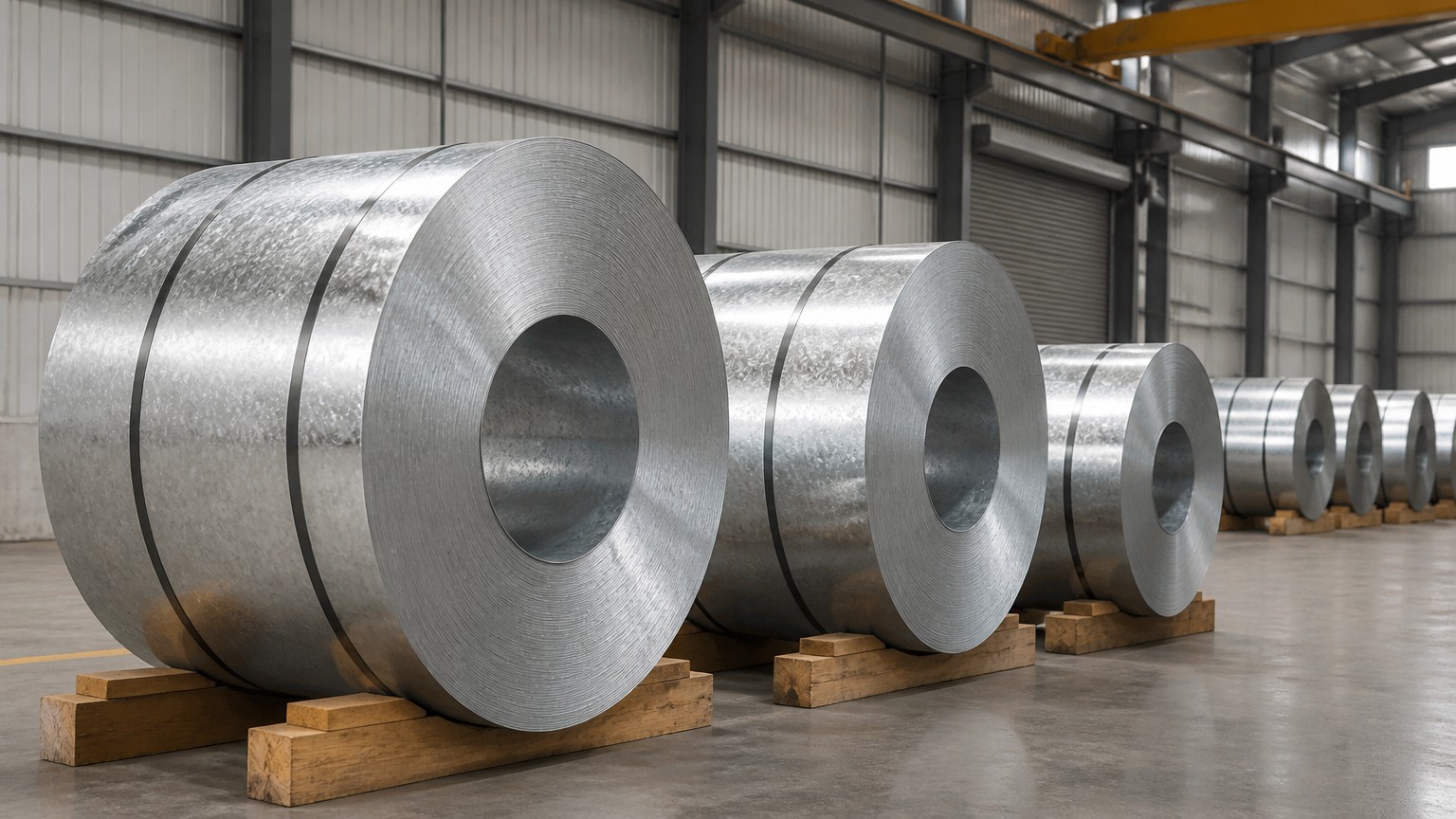
Why Does Galvanized Steel Hold Up in Construction Environments?
Because zinc protects steel twice over: as a barrier while the coating stays intact, and as a sacrificial metal at every scratch and cut edge.
Zinc corrodes preferentially to steel, so a damaged coating keeps protecting the exposed metal beside it until the local zinc is consumed. That dual action — barrier plus cathodic protection — is what separates galvanized steel from a painted finish.
The mechanism is worth understanding precisely, because it explains why two galvanized components in the same building can age at completely different rates. The standard reference on galvanization describes the zinc coating as a barrier that keeps water and oxygen away from the steel while it remains continuous, and as a sacrificial anode once it is broken: zinc is the more reactive metal, so it oxidises in preference to iron and continues to protect a scratch, a sheared edge or a drilled hole even after the coating has been interrupted. The protective effect is local rather than unlimited, and that is the first practical consequence for a construction detail — protection extends only a short distance from sound coating, so the density of cut edges and holes in a component matters as much as the coating mass printed on the certificate. The second consequence is that atmospheric exposure is a consumption process rather than an on-off switch. Corrosion of zinc accelerates with time of wetness, airborne chloride near coasts, and sulphur dioxide in industrial air, which is why classification systems such as ISO 9223 separate atmospheres into categories from dry interior space through rural, urban, industrial and marine conditions. A component sheltered under a dry canopy and the same component on an exposed coastal elevation are not the same engineering problem, even when both carry identical coating designations. The third consequence is subtler and catches out more projects than the first two combined: the hidden side of a galvanized element usually fails before the visible side. Condensation on the reverse of profiled sheet, or trapped moisture inside a closed hollow section, keeps the coating wet for long periods and consumes it steadily, while the weather face dries between rain events. The visible spangle is therefore a poor indicator of remaining life, and the coating figure on the certificate describes what was supplied rather than what will survive. Treat coating mass as the budget for a consumption process, and selection stops being a question of appearance and becomes a question of how fast that budget will be spent on this particular site. For suppliers and fabricators the practical route is to buy the coating class to match the exposure, which is why a stocked range such as our galvanized steel in construction supply is organised by coating designation rather than by surface look.
How Is Galvanized Steel Used for Roofing?
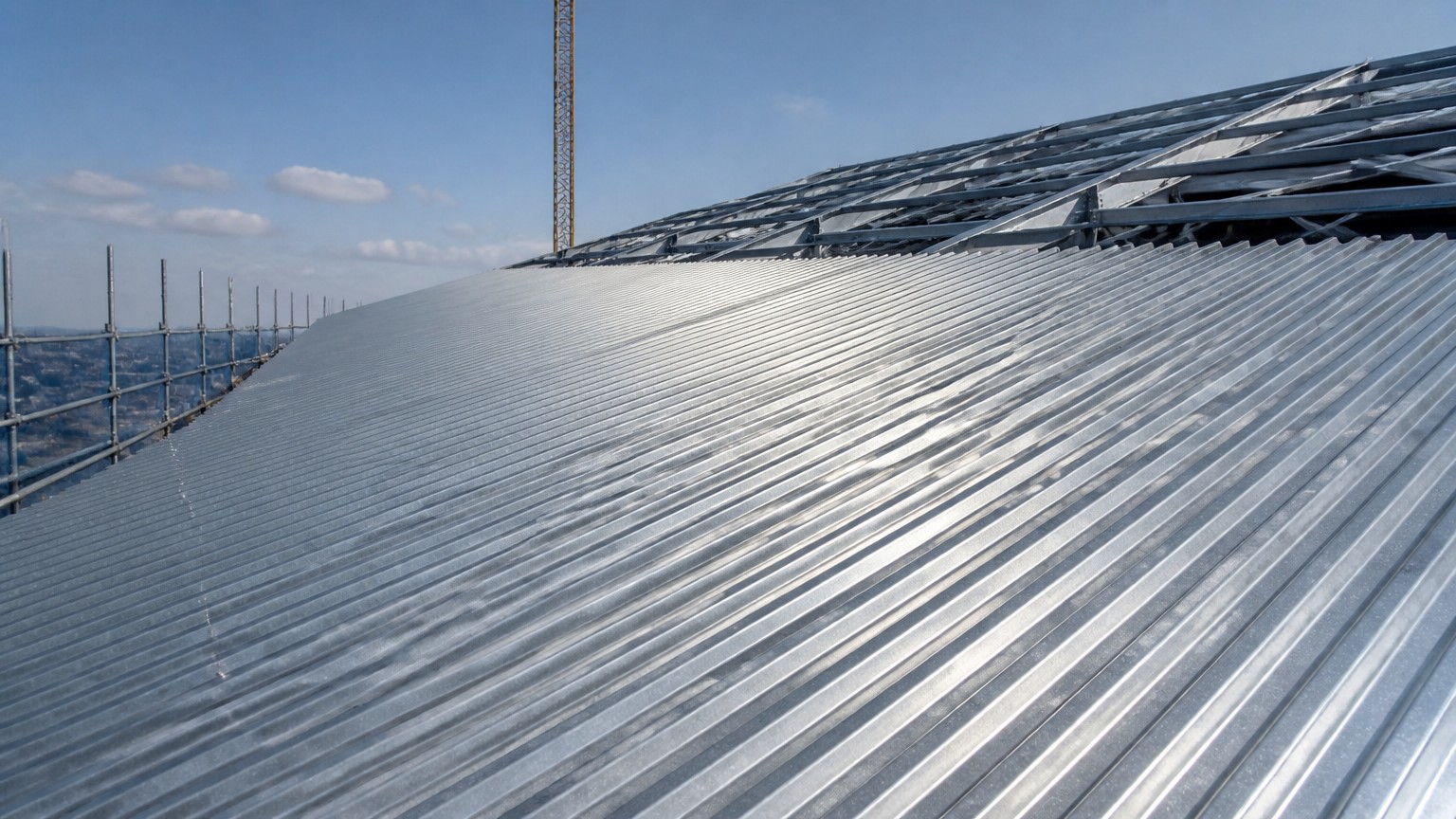
Roofing is the largest single use of coated sheet in construction, and also the application with the least tolerance for a thin coating.
A galvanized steel roof uses profiled coated sheet, commonly 0.4 to 0.8 mm thick, fixed to purlins with fasteners through the ribs. It must survive rain, condensation, cut edges and foot traffic, so an exposed roof generally justifies a heavier coating than an interior liner does.
Three properties decide how a coated roof ages, and only one of them is chosen at the order stage. The first is coating mass, because the roof is the most exposed element in the building and takes the full time of wetness of the site. The second is the forming and fixing route, because profiling stretches the coating over the ribs, shearing cuts fresh steel at every sheet end, and each fastener punctures the coating and leaves a small area of bare steel that depends entirely on nearby zinc for protection. The third is the roof’s second face. Underside condensation is the single most under-specified condition in clad construction: in a building with poor ventilation, the reverse of a profiled sheet stays wet far longer than the weather face and can consume its coating first. The same principle governs how the coating itself is produced in the first place, since the zinc mass on a continuous line is set by the molten bath and the air knives rather than by any intrinsic property of the steel, a process described in the reference article on hot-dip galvanization. That matters to a buyer because it means coating mass is a machine setting subject to normal process variation across the width and along the length of a coil, so a single reading taken at the middle of a sheet proves very little. On practice, the roof details that determine service life are rarely the sheets themselves: they are the end laps, the ridge and verge closures, the fastener washers and the gutters, because each of those is where water lingers. A roof specified with a heavy coating but detailed with unsealed laps will still fail at the laps, and a roof specified with a moderate coating but detailed to drain freely will usually outlast its nominal expectation. The right way to buy the sheets is therefore to match the coating to the site atmosphere and the underside condition, then spend the remaining attention on flashings, fasteners and drainage. A heavier coating class such as galvanized steel coil 1.2 mm Z180 supplied in coil form is the usual starting point for roll-formed roof profiles, because it gives the profiler a full-width coil rather than cut lengths and keeps the coating figure consistent across the run.
Where Does Galvanized Steel Work Best for Cladding?
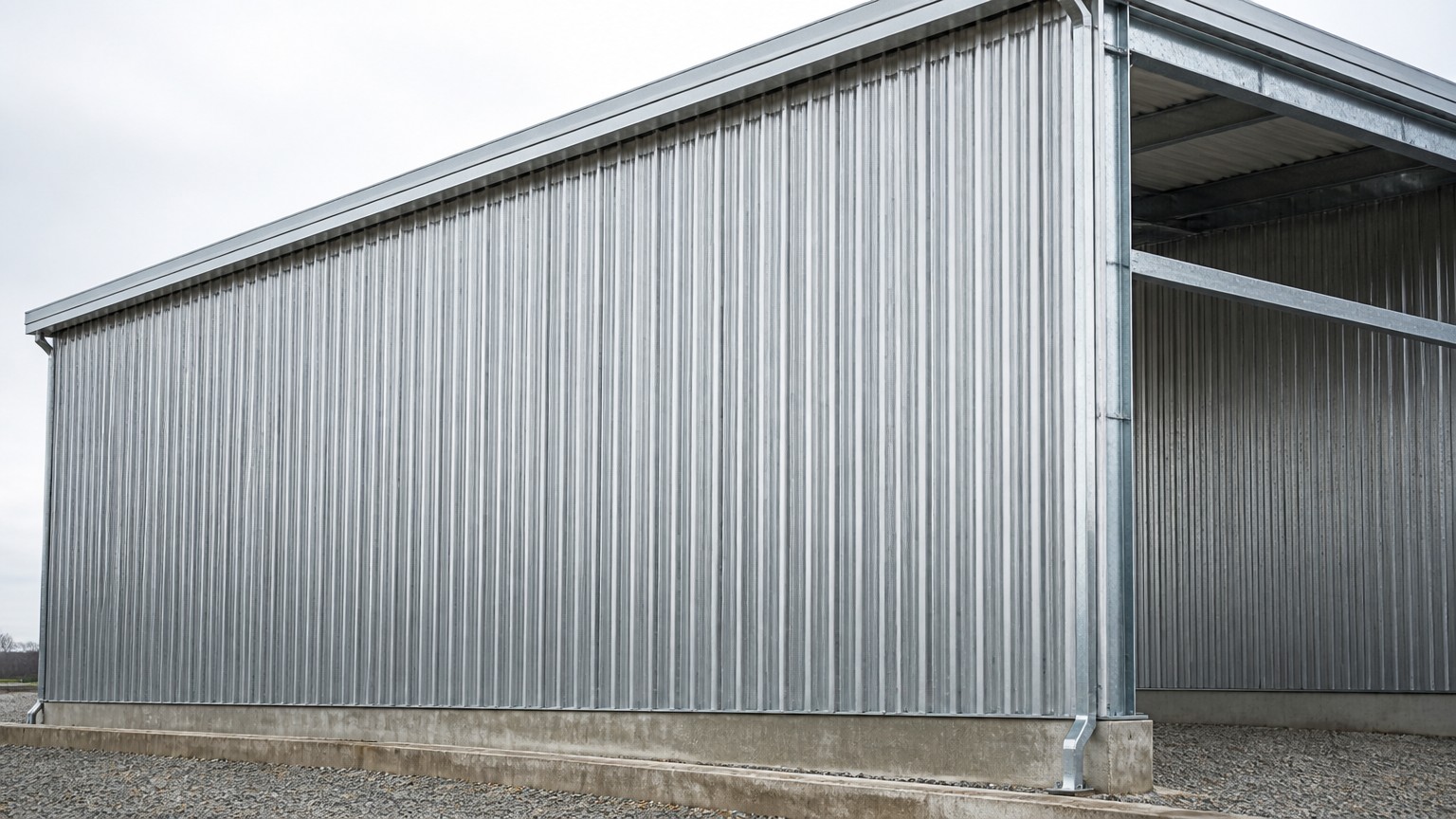
Cladding suits galvanized steel wherever a wall must shed water, resist impact and stay economical over a large area.
Profiled galvanized sheet, often with an additional factory-applied paint or laminate, is used on industrial warehouses, agricultural buildings, plant rooms and cold-store envelopes. Where the sheet stays unpainted, the coating does all the work, so the exposure of both faces decides the class.
Cladding differs from roofing in one important respect: water spends more time on a wall than on a pitched roof, but it arrives with less energy and much less mechanical damage. That changes which failure mode leads. On a roof, coating loss is driven by run-off, standing water at laps and foot traffic during installation. On a wall, the leading cause is crevice moisture — the film of water that sits between the sheet and the structure behind it, held there by capillary action and refreshed slowly. Because that film has no way to dry, the inner face of a cladding panel can consume coating faster than the outer face, which is the opposite of what most site inspections assume. Two details follow from that. First, the substructure matters: a galvanized panel fixed over untreated timber or over a dissimilar metal creates a permanent wet contact, and where that contact involves a more noble metal the coating is consumed galvanically and much faster than by atmosphere alone. Second, orientation matters less than people expect and ventilation matters more, because a shaded north wall with an unventilated cavity is a harsher environment than a sun-facing wall with an open one. The coating class should be selected on that basis rather than on appearance, which is why the conversion between designation systems matters at the inquiry stage: a buyer comparing Z180 and Z275 coating weights is comparing roughly one third more zinc on the same steel, not a different product. Cladding also tolerates a wider range of substrates than roofing does, so it is the place where a moderately coated sheet with good detailing usually beats a heavily coated sheet with poor detailing. What the wall cannot tolerate is a bare cut edge left in a wet cavity, an unsealed penetration, or a fastener without a sealing washer at a lap — all three are local defects that consume coating from a small area until perforation begins, and none of them is visible from outside the finished building.
Which Galvanized Steel Products Suit Framing and Support Structures?
For framing, galvanized steel is chosen where the frame will be exposed, humid, or difficult to repaint once the building is in service.
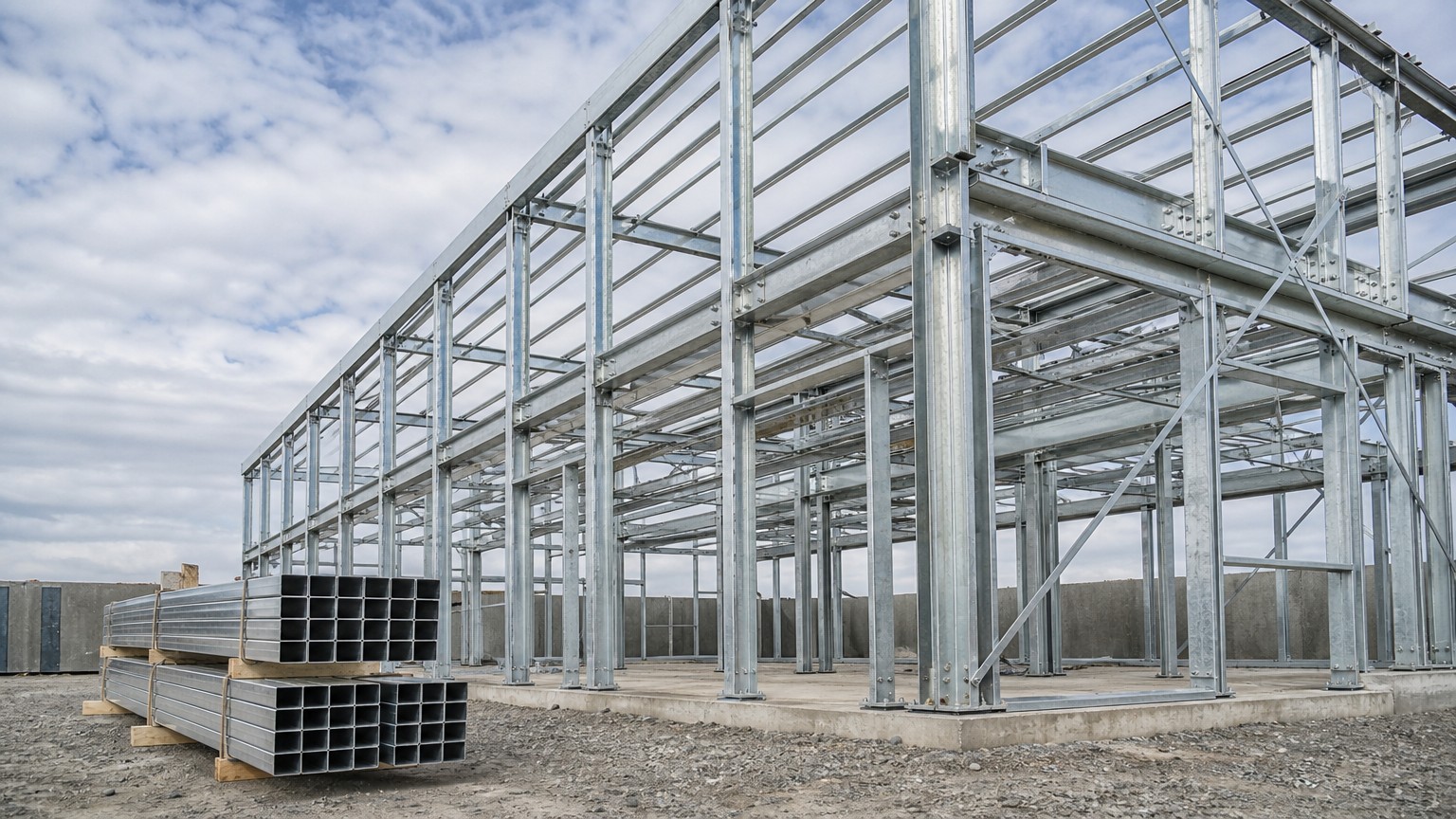
Hollow sections, angles, channels and purlins in coated steel are used for industrial sheds, mezzanine frames, canopies, racking, stair and handrail structures, and agricultural buildings. In these applications the coating must survive drilling, bolting and occasional site welding rather than continuous run-off.
The reason coated steel frames fail is almost never the coating class they were bought to. It is the site operations applied to them afterwards. Drilling and punching expose bare steel across the full wall thickness, so a connection with many holes has many small galvanic sites, and the nearby zinc is consumed more quickly at each one. Bolted connections add a second effect, because the interface between two coated surfaces retains moisture and creates a crevice that stays wet for years. Welding is the most damaging operation of all: it burns away coating in a heat-affected zone on both sides of the joint and leaves a bare area far larger than the coating can protect locally, so a welded galvanized frame must be repaired at the weld with a suitable zinc-rich coating, and a frame designed on the assumption that no site welding will occur is a better frame than one repaired after the fact. Handling damage deserves the same attention as fabrication damage, since drag marks, crane slings and stacked bundles all abrade the coating before the frame is erected, and a heavily spangled surface hides that damage well. Where the design genuinely needs a closed profile that will be exposed to condensation on the inside, an open section or a drained detail is usually the cheaper answer, because an unventilated hollow section is a corrosion chamber. Fabricators who understand this will also push back on the last-minute instruction to cut a member to length on site, since a clean factory cut with a dressed, coated end is worth more than the minutes it saves. Readers comparing a coated frame with a painted one will find the surrounding detailing conventions familiar, and it is worth checking how a similar profile behaves in other structural roles in how steel tube hollow sections are framed and supported before assuming the coating alone decides the outcome.
How Should You Specify Galvanized Steel for a Construction Project?
Write the specification so that a lighter coating cannot be delivered without the buyer noticing, because coating classes are visually indistinguishable.
Name the product standard, the steel grade, the coating designation with its test basis, the thickness with an explicit tolerance, the surface treatment, the dimensions, the packing and the inspection regime. Anything left unstated is available for substitution.
| Coating class (ASTM A653 designation) | Approximate EN / ISO equivalent | Typical construction use |
|---|---|---|
| G40 | ≈ Z120 | Interior liners, ductwork and concealed panels |
| G60 | ≈ Z180 | General framing, purlins, racking and site-fabricated supports |
| G90 | ≈ Z275 | Exposed roofing, cladding and outdoor steelwork |
| G115 | ≈ Z350 | Humid and mildly aggressive industrial atmospheres |
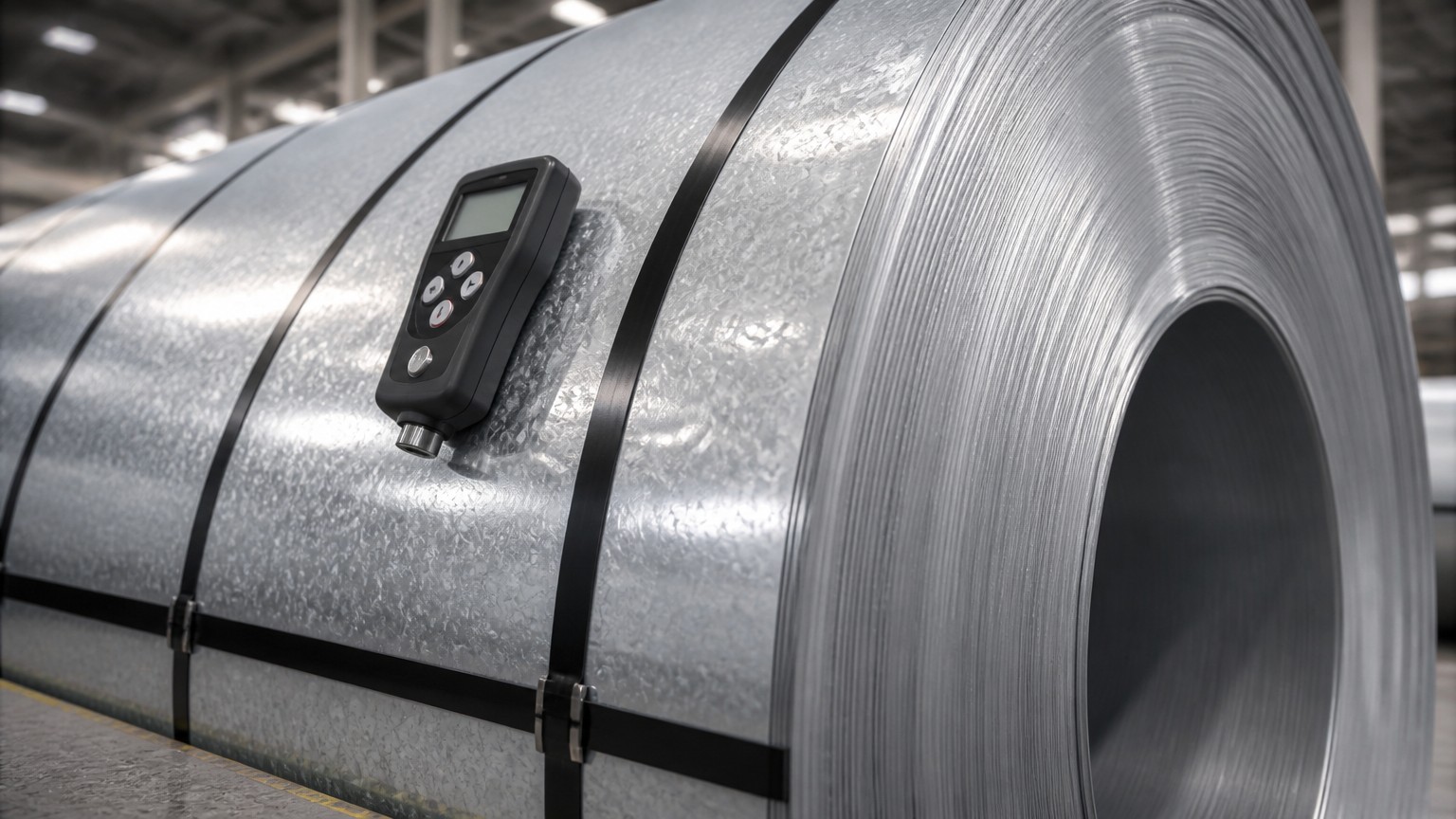
The table is a starting point for the conversation, not the specification itself, and the standards behind it are what give it force. ASTM A653/A653M covers steel sheet, zinc-coated or zinc-iron alloy-coated by the hot-dip process, in coils and cut lengths, and it is that document which carries the coating designations, the mechanical designations and the accompanying bend and tension tests. The general rules behind them — sampling, coating weight test methods, mechanical testing and thickness tolerance practice — sit in a companion document, ASTM A924/A924M, the general requirements for hot-dip metallic-coated steel sheet, which settles one point buyers argue about constantly: except for differentially coated sheet, the coating figure is always the total of both surfaces, never the thickness measured on the face the inspector happens to check. For fabricated articles rather than flat sheet, the relevant family of documents is different again, and hot-dip coating of finished steel products is governed by standards of the ASTM A123/A123M type and by ISO 1461, which set minimum coating thicknesses for articles of different material thickness. Because those standards all place inspection at the end of the process rather than in the middle, the galvanizer’s own description of the three-stage hot-dip process is a useful reminder that coating quality is fixed by preparation and bath conditions long before anyone measures it. A specification that names only a class, and not the standard and its edition, leaves the test method and the sampling rule open, and those are exactly the variables a substitution would exploit. The useful habit is to write the order line as a short clause that cannot be satisfied by a lower class: product standard and edition, steel grade, coating designation stated as minimum or average with the test method, thickness with tolerance, surface treatment such as passivated or oiled, dimensions and coil geometry, packing, and the buyer’s right to a pre-shipment inspection. That clause is what turns a coating class from a preference into a contractual requirement, and it costs nothing but an extra paragraph on the inquiry.
Why Does Galvanized Steel Fail Early on Some Sites?
Most premature failures are traceable to one of five causes, and four of them are decided before the material leaves the supplier.
The recurring causes are a coating class chosen for the wrong atmosphere, a lighter class substituted at the mill, bare cut edges left unprotected, moisture trapped in a cavity or between wraps, and site welding or cutting that removes coating without repair.
Work through those in order and the pattern becomes clear. Choosing the class for the wrong atmosphere is an error of assessment rather than of material: a frame specified for a dry inland store and then re-used on a coastal or ventilated-but-humid site has not changed grade, but its expected life has changed completely. Substitution is the second and hardest to detect, because G60 and G90 differ by one digit on a certificate and are indistinguishable in a photograph, so the failure only appears years later at the sheared edges and fastener holes where the missing zinc was doing the work. Bare cut edges are the third, and the most avoidable: every guillotine cut, every punch and every site drill leaves exposed steel on a coated component, and the coating can only protect it from close range, so a detail with many edges in a wet location is a detail with many corrosion initiation sites. Trapped moisture is the fourth, and it takes two forms that have very different fixes: water held in a cavity behind cladding or inside a closed hollow section needs a design change, while water held between the wraps of a coiled or sheeted product needs only correct storage — under cover, raised on dunnage, with air movement around the stack, and used in the order received. Zinc forms white rust in humid air even without rain, and the reaction is fastest when the material is warm and tightly wrapped. The fifth cause is repair, or the absence of it. A welded or heavily abraded galvanized component needs a zinc-rich repair at the affected area, and a project that leaves those areas bare has effectively removed the protection from the point of highest stress. Set against all five, the coaching point for a project team is that galvanizing rewards decisions taken early — at specification, at detailing and at unloading — and offers very little chance to correct them once the building is clad. A supplier who will confirm a coating class against a stated exposure, and who permits inspection before loading, removes three of the five causes on the spot.
Conclusion
Conclusion: galvanized steel in construction is a coating budget the site spends. Match the class to the exposure, protect cut edges and cavity moisture, and specify to block substitution.
For a quotation on galvanized steel for roofing, cladding or framing, or to have a coating class confirmed against your project’s exposure conditions before you commit to a tonnage, send your specification and tonnage for a quotation and we will confirm the coating designation, the substrate grade and the dimensions that can be certified for your market.