
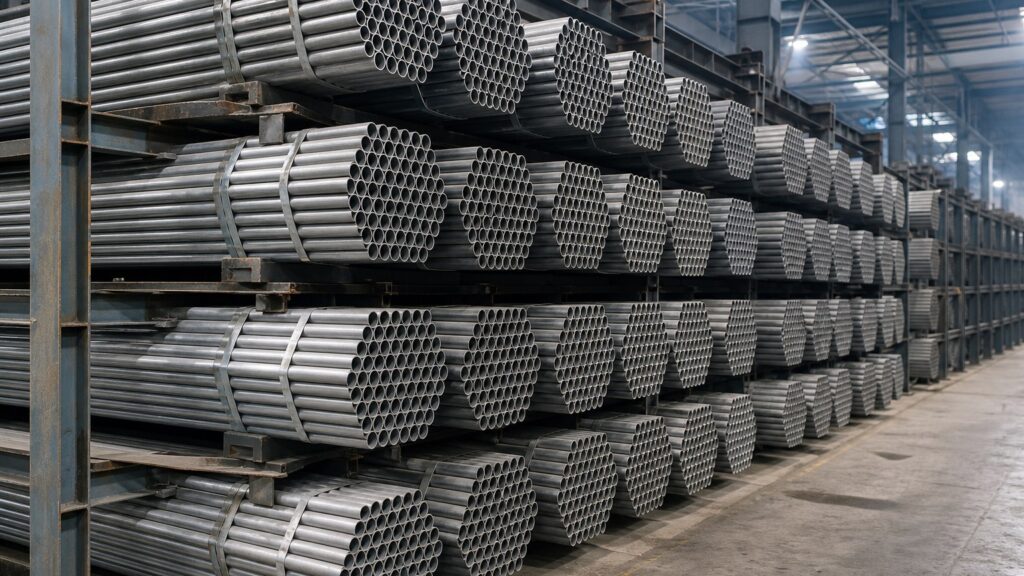
NPS vs DN Pipe Size: How to Convert Metric and Imperial?
Sizing pipe wrong costs money. One NPS-to-DN mix-up can mean flanges that will not bolt up, gaskets that leak, and a container of unusable steel. Here is the fix.
Short answer: NPS is North America’s nominal pipe size, DN is the ISO metric equivalent — dimensionless labels, not measurements. Conversion is a direct lookup: NPS 3 is DN 80, NPS 6 is DN 150. Real outside diameter comes from the schedule, not the label.
The table further down turns that rule into something you can use on a quotation sheet. But a table is only useful if you know why the numbers behave the way they do — so we will first look at where each label comes from, then work through the mistakes that actually cause rejected shipments, because mislabelled sizes are the most common paperwork failure in pipe procurement.
What Do NPS and DN Actually Mean in Practice?
NPS and DN both describe pipe with a round-number label instead of a real measurement. NPS belongs to North American practice; DN is the ISO 6708 metric counterpart.
Short answer: NPS is the nominal pipe size used in ASME-based documentation and is written as NPS 3 or NPS 6. DN is the nominal diameter defined by ISO 6708 and is written as DN 80 or DN 150. Neither figure equals the pipe’s real inside or outside diameter.
That distinction sounds academic until a drawing leaves your desk. The moment a label is treated as a measurement, someone orders against the wrong number and the error only surfaces at site.
Readers who want the full product context before drilling into labels can start with our overview of NPS vs DN pipe size terminology and how it maps onto the seamless and welded pipe families we supply.
Where each label comes from
NPS grew out of the iron pipe size system that American manufacturers standardised in the early twentieth century, when a small set of wall thicknesses — standard, extra strong and double extra strong — covered almost every job. The label was a shop-floor shorthand for a family of pipe, not a dimension callout. Because that shorthand was already embedded in drawings, catalogs and tooling, it survived the later introduction of schedule numbers, and it is still the normal way pipe is described in North American documentation.
DN took a different route. When ISO needed one designation system that could be used across national standards in Europe and Asia, it defined the nominal size as a dimensionless figure that is only indirectly related to any real diameter. ISO 6708 is the document that fixes that definition, and it is why a DN number does not carry a unit and cannot be converted by arithmetic.
Why the number is deliberately vague
The label is vague on purpose. If the designation were tied to a real dimension, every change in wall thickness would force a change in the designation, and an entire installed base of drawings, valves and fittings would need re-identification. By keeping the label independent of wall thickness, standards let a piping engineer specify one size and then choose the schedule separately, which is exactly how pressure ratings are adjusted in practice.
The practical consequence for buyers is that NPS and DN are a naming layer, and the real geometry lives in a dimensional table. Both labels point at the same pipe; neither of them tells you the wall, the bore or the pressure rating. Those come from the schedule and the material standard, and they have to be written down explicitly on the order.
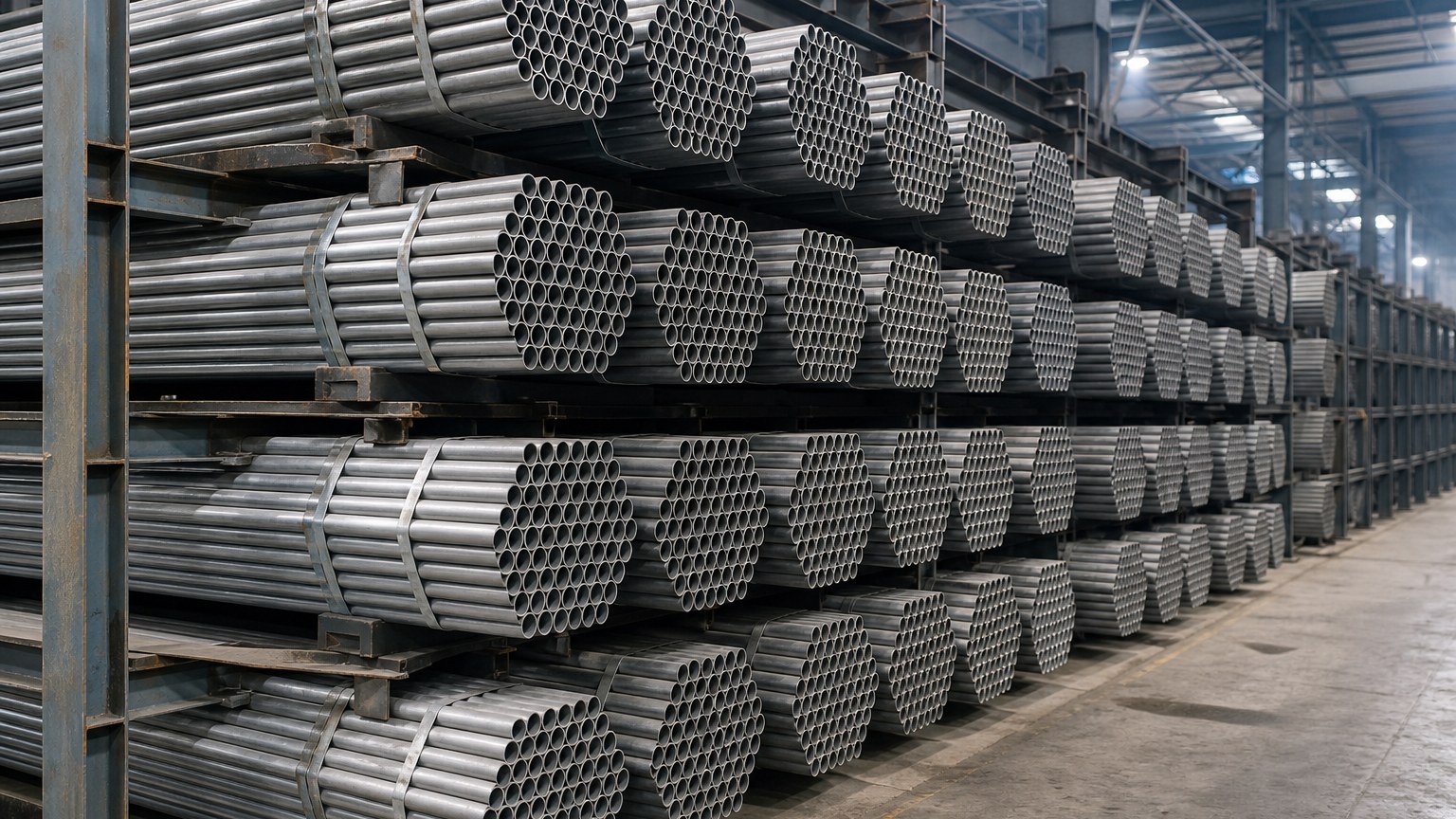
Why Doesn’t the NPS Number Match the Outside Diameter?
Because the original number described the bore, not the wall. Schedules later changed the bore, and the label never followed it.
Short answer: From NPS 1/8 to NPS 12, the outside diameter is larger than the label — NPS 2 pipe actually measures 2.375 in (60.33 mm) outside. From NPS 14 upward, the label and the outside diameter match exactly.
This split behaviour is the single biggest source of confusion for first-time importers. A quick reference on nominal pipe size shows the same pattern, and the reason behind it is historical rather than technical.
The historical reason for the mismatch
When the original pipe sizes were fixed, the number was chosen so that pipe of standard wall at that time had a convenient inside diameter. A 2-inch pipe was meant to flow like a 2-inch bore, and the outside diameter was whatever the standard wall produced. Then wall thickness options multiplied, pressure classes were refined and heavier schedules appeared for high-temperature and high-pressure service. Each addition changed the inside diameter of that nominal size, while the outside diameter stayed locked.
The outside diameter had to stay locked, because that is the dimension that has to match everything around it. A valve, a flange, a butt-weld fitting and a pipe support are all sized to the outside diameter, and they are made in enormous volumes with fixed tooling. Freezing the outside diameter is what allows pipe from one mill to bolt up to a valve from another supplier. The labels were never updated because no one needed them to be: by then the industry was buying by schedule and grade, and the designations had become names rather than measurements.
What it means for flange and fitting selection
In daily work, the practical rule is to treat the label and the outside diameter as two separate facts. NPS 3 and DN 80 both describe one family of pipe with an outside diameter of 88.9 mm (3.500 in), and every Schedule 10, 40 or 80 item in that family shares that same outside diameter. If you are matching pipe to a flange, the outside diameter and the wall are the numbers that must agree; the label is only how you find them in the catalog.
Note also that tubing is excluded from this convention. Tubing is normally ordered by its actual dimensions, so a “2 inch” tube really is 2 inches across. Mixing pipe labels into a tubing conversation is a common and expensive slip, especially when a project uses both.
How Do You Convert NPS to DN Step by Step?
Conversion is a lookup, not a calculation. Every common NPS value maps to exactly one DN value, and no arithmetic is involved.
Short answer: Find the NPS figure in the table, read across to the DN column, and confirm the outside diameter in the third column. NPS 1/2 is DN 15, NPS 2 is DN 50, NPS 6 is DN 150, NPS 12 is DN 300. Round-tripping works in both directions.
Because the mapping is one-to-one, a nominal pipe size guide is enough for day-to-day procurement. The dimensional authority behind the figures is ASME B36.10M, which covers welded and seamless wrought steel pipe.
NPS to DN conversion table
| NPS | DN | Outside diameter, mm |
|---|---|---|
| 1/8 | 6 | 10.29 |
| 1/4 | 8 | 13.72 |
| 3/8 | 10 | 17.15 |
| 1/2 | 15 | 21.34 |
| 3/4 | 20 | 26.67 |
| 1 | 25 | 33.40 |
| 1 1/4 | 32 | 42.16 |
| 1 1/2 | 40 | 48.26 |
| 2 | 50 | 60.33 |
| 2 1/2 | 65 | 73.03 |
| 3 | 80 | 88.90 |
| 4 | 100 | 114.30 |
| 6 | 150 | 168.28 |
| 8 | 200 | 219.08 |
| 12 | 300 | 323.85 |
| 14 | 350 | 355.60 |
| 16 | 400 | 406.40 |
| 24 | 600 | 609.60 |
How to use the table on a quotation sheet
Write both labels on every line of the enquiry, the quote and the purchase order. A line that reads “NPS 3 / DN 80, Sch 10S, OD 88.9 mm, ASTM A312 TP316L” is unambiguous to a North American buyer, a European engineer and a mill in Asia, and it removes the single most common reason for a specification query after order placement. When a drawing shows only one label, add the other yourself before sending it out; it takes seconds and prevents a clarification round that can cost days.
Two edge cases are worth knowing. First, the smallest sizes are not identical across every standard — the DN series does not carry every value that appears in ASME tables, and some documents list designations that others omit. Second, the DN values are preferred numbers rather than a linear scale, so the jumps between them are not uniform. If you are working at the small end, quote the outside diameter alongside the label and the ambiguity disappears.
For the wall thickness side of the same drawing, the companion article on steel pipe dimensions explained walks through how OD and wall are read together from a schedule chart.
Is DN the Inside Diameter in Millimetres?
The DN number often looks like a millimetre figure, which is exactly why mistakes happen. It is a designation, not a measurement.
Short answer: No. For NPS 4 / DN 100 in Schedule 40, the calculated bore is about 102.3 mm — close to but not equal to 100 mm. For NPS 3 / DN 80 in Schedule 40, the bore is about 77.9 mm, which is well below 80 mm.
Those two examples point in opposite directions, which is the clearest proof that the DN figure is a name and nothing more.
Where the confusion comes from
The confusion is understandable, because for one slice of the size range the numbers happen to sit close together. Take NPS 4 / DN 100 with a Schedule 40 wall of 6.02 mm: subtracting two wall thicknesses from the 114.30 mm outside diameter leaves 102.26 mm of bore. That is close enough to 100 mm for the label to feel like a measurement. Now take NPS 3 / DN 80 with a Schedule 40 wall of 5.49 mm: 88.90 mm minus 10.98 mm leaves 77.92 mm, and the label overshoots the bore by more than two millimetres. In the small sizes the gap can be proportionally larger still.
There is also a naming overlap that predates the metric system. Earlier practice referred to nominal bore and used narrow size ranges that were described as approximate bores in inches, and some sectors still speak of bore rather than nominal size. When “DN” is read as “nominal bore”, the assumption that the figure is a bore measurement becomes automatic, and a purchasing decision built on that assumption can go wrong.
How to specify bore when bore matters
If the bore genuinely governs your duty — flow capacity, pigs and inspection tools, instrument insertion, or a lined pipe where the lining eats into the free area — then specify it as a calculated requirement rather than relying on a designation. State the outside diameter and the wall thickness, or state the nominal size, the schedule and the standard, and let your supplier confirm the arithmetic in writing.
For critical lines, ask for the minimum wall and internal diameter on the mill test documentation and check that the calculated bore clears your corrosion allowance plus your tooling envelope. That is a much safer position than assuming DN 100 means 100 mm. It also protects you at the change-order stage, because any schedule change proposed after award can be evaluated against a real bore figure instead of a label.
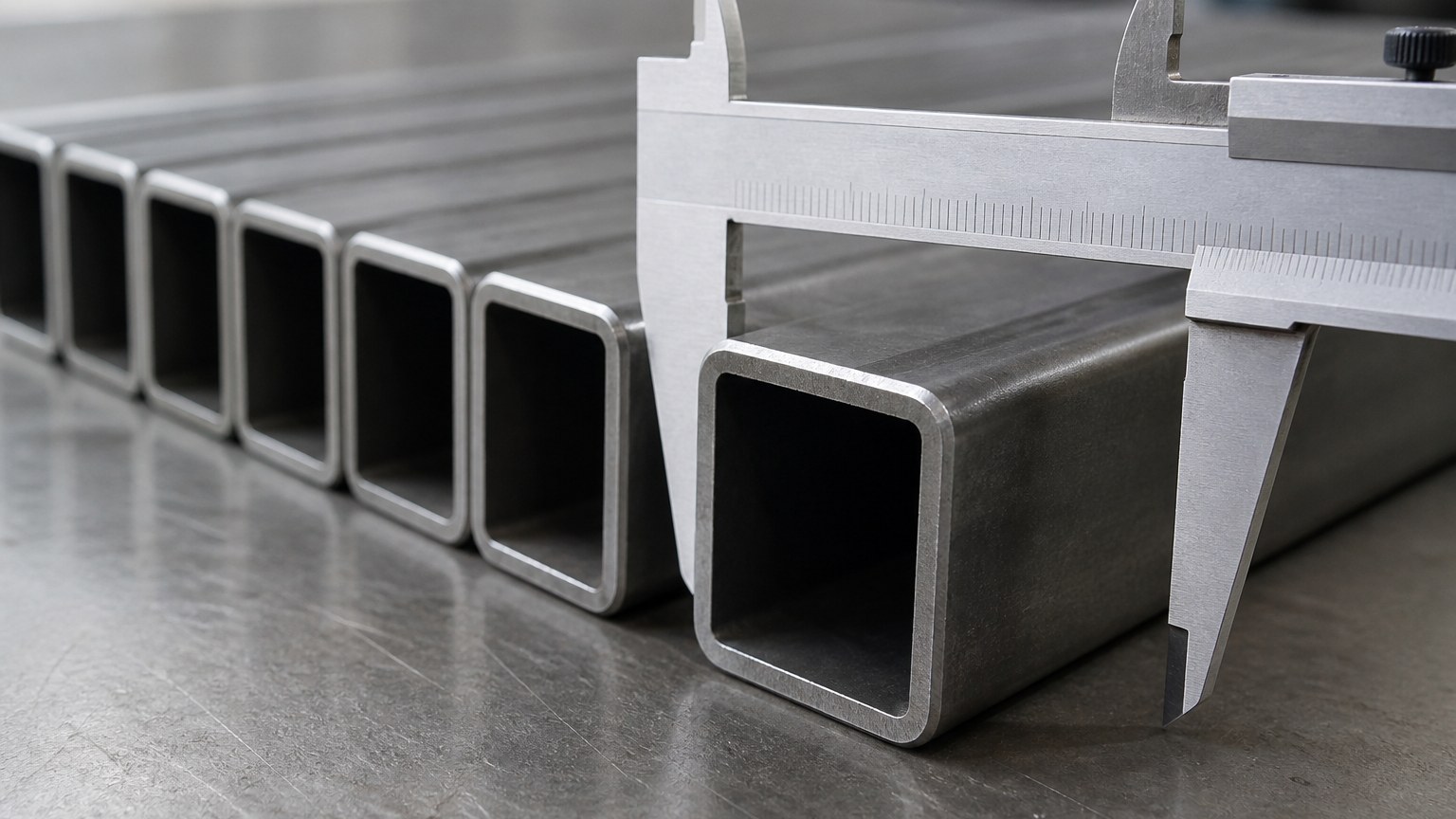
How Do Schedules and Wall Thickness Fit Into NPS and DN Sizing?
The label fixes the outside diameter, then the schedule sets the wall. Two pipes can share NPS 3 and DN 80 and still not interchange.
Short answer: NPS and DN identify the size family; the schedule identifies the wall. NPS 3 / DN 80 exists in Schedule 10 at 3.05 mm wall and Schedule 40 at 5.49 mm wall — the same 88.9 mm outside diameter, very different pressure capability and weight.
For stainless grades, the applicable product standard is ASTM A312/A312M, which covers seamless, welded and heavily cold worked austenitic stainless steel pipe.
Schedules and the “S” series
Schedule numbers were introduced to replace the older standard, extra strong and double extra strong designations with a continuous series of wall thicknesses. As stainless steel became common in process service, thinner walls became practical because the material resists corrosion without needing a corrosion allowance. That produced the “S” series — Schedule 5S, 10S, 40S and so on — where the wall is set by pressure requirement rather than by carbon-steel convention. The two series coincide for many sizes, but not all of them, and the differences matter most in the small sizes.
For example, a 3 inch stainless pipe ordered in Schedule 10S carries a nominal wall of 3.05 mm against an 88.9 mm outside diameter, while the carbon steel Schedule 40 version of the same nominal size carries 5.49 mm. Same label, same outside diameter, roughly eighty percent more wall in the heavier item. Weight, cost, weldability and pressure rating all follow from that one number, which is why the schedule belongs on the enquiry and not in a phone conversation.
What this means for stainless pipe orders
Stainless pipe is routinely supplied as 316L stainless steel pipe in 3 inch Sch 10, a combination that is popular in process lines, water treatment and food-grade systems because it balances corrosion resistance against weight and cost. When you order a size like that, the purchasing line should carry four things: the nominal size in both labels, the schedule including the S designation where relevant, the outside diameter in millimetres, and the grade with its standard.
One more caution: thin-wall stainless pipe cannot always be threaded to the same pressure class as its heavier carbon steel equivalent, so threaded connections may not be an option at the lighter schedules. If your joint design depends on threading, confirm the wall before the order is placed rather than discovering the limit at the threading machine.
What Ordering Mistakes Should Importers Avoid?
Most pipe claims are paperwork claims. Wrong labels, mismatched standards and unstated schedules cause more rejections than any metallurgical defect.
Short answer: State NPS or DN, the schedule, outside diameter, standard and grade together. A line reading “3 inch pipe, Sch 10” is ambiguous if the supplier works to DN 80; a line reading “NPS 3 / DN 80, Sch 10S, OD 88.9 mm, ASTM A312 TP316L” is not.
That single line of discipline removes most of the back-and-forth. The remaining risk sits in a handful of recurring assumptions.
Three ambiguity traps
The first trap is using the word “inch” as though it were a size system. Inch figures appear in NPS labels, in outside diameters and in tubing dimensions, and the three are not interchangeable. Writing “3 inch pipe” invites a supplier to interpret it in whichever system their catalog uses. The second trap is assuming that a schedule is implied by a size: a drawing that shows NPS 6 without a schedule will be quoted against whatever the mill runs most, which may not be what the line needs. The third trap is mixing standards across a bill of materials, so that pipe arrives to one dimensional document and fittings to another, and the mismatch only appears during fit-up.
Underneath all three is the same habit: treating a designation as though it were a specification. A designation says which family the pipe belongs to. A specification says exactly what you are buying, and it is the only thing a mill can be held to if a dispute arises.
A short checklist before you confirm an order
Put both size labels on the line. Add the schedule, including the S designation for stainless. Add the outside diameter, the wall and, where it matters, the calculated bore. Name the dimensional standard and the material standard separately, because ASME B36.10M and ASTM A312 answer different questions. State the grade with its suffix, since a suffix can change the corrosion behaviour of the delivered pipe. Then confirm the test and certificate requirement, and check that the packing and marking will carry the same designation that appears on the purchase order.
Run that list once against your standard enquiry template and it becomes a habit rather than a chore. Buyers who do it rarely see a specification query after award, and they spend their time on price and lead time instead of on renegotiating what the label was supposed to mean. If you would like a second pair of eyes on a specification before you issue it, our team reviews pipe specifications in both labelling systems every day and can confirm the dimensional line in writing.
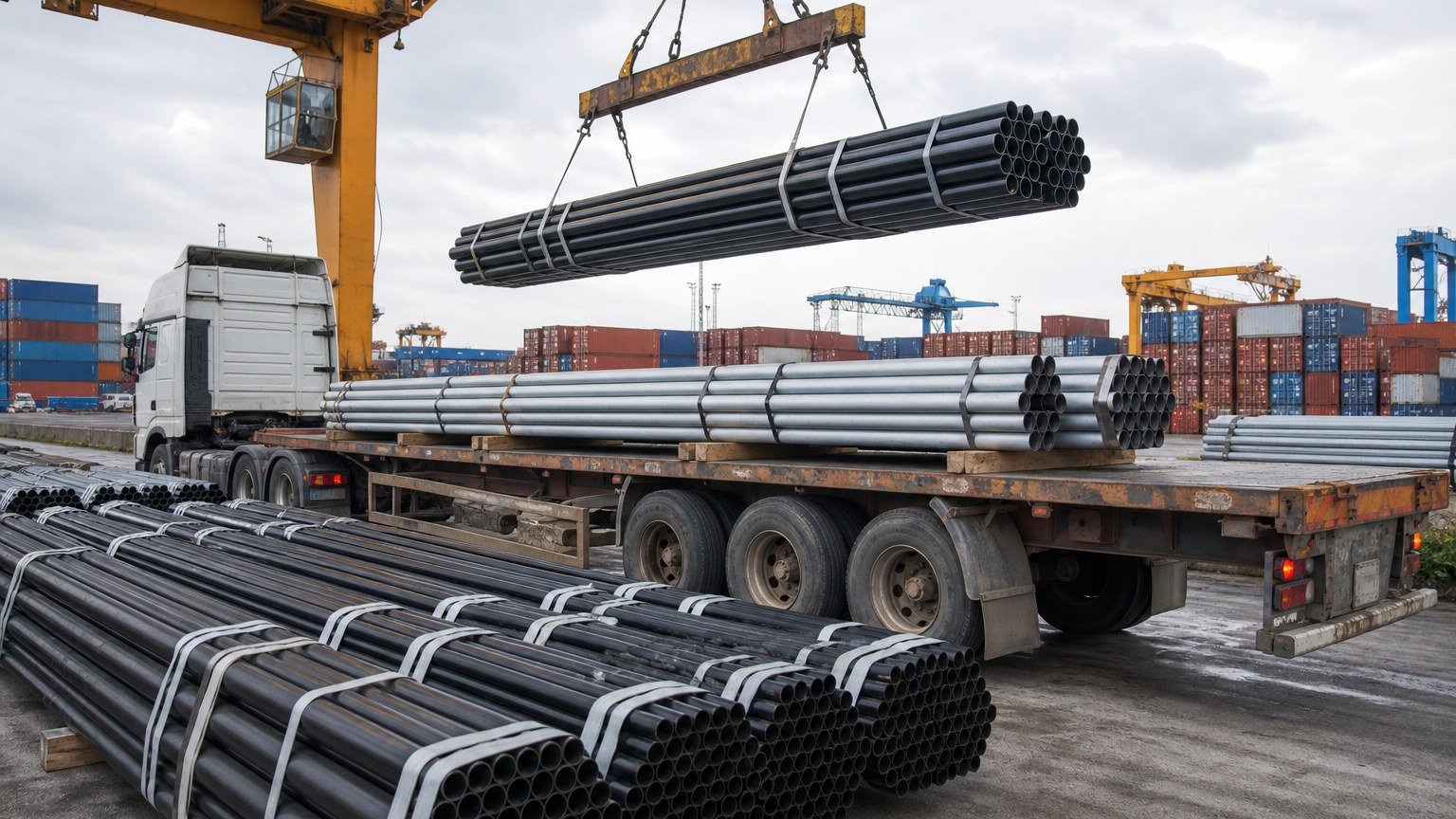
Conclusion: NPS and DN are interchangeable labels for pipe size, not measurements. Convert with a table, confirm the schedule separately, and write both labels on every purchase order.
Ready to quote? Send us your specification with both labels and we will confirm outside diameter, wall thickness, grade and standard before the order moves — request a quotation from Shuncheng Steel.