
Stainless Steel Pipe for Petrochemical Industry: Which Grade, Standard and Size Do You Need?
One wrong grade in a refinery line means chloride cracking, an unplanned shutdown and a full re-pipe. Petrochemical service punishes material guesses.
Petrochemical steel pipe is corrosion-resistant or alloy pipe specified for refining and chemical plants, most often to ASTM A312 in grades such as TP304L and TP316L, with size and wall thickness fixed by nominal pipe size and schedule.
The rest of this guide answers the questions buyers actually ask before they commit a purchase order: what the product is, which grades and standards apply, how corrosion decides the material, how the pipe is made and tested, and how to specify size, schedule and quantity so that the quotation you receive matches the line you are building.
What Is Petrochemical Steel Pipe, and Where Is It Used in a Plant?
Petrochemical plants move aggressive fluids at temperature and pressure. The pipe that contains them is selected by chemistry, not by convenience.
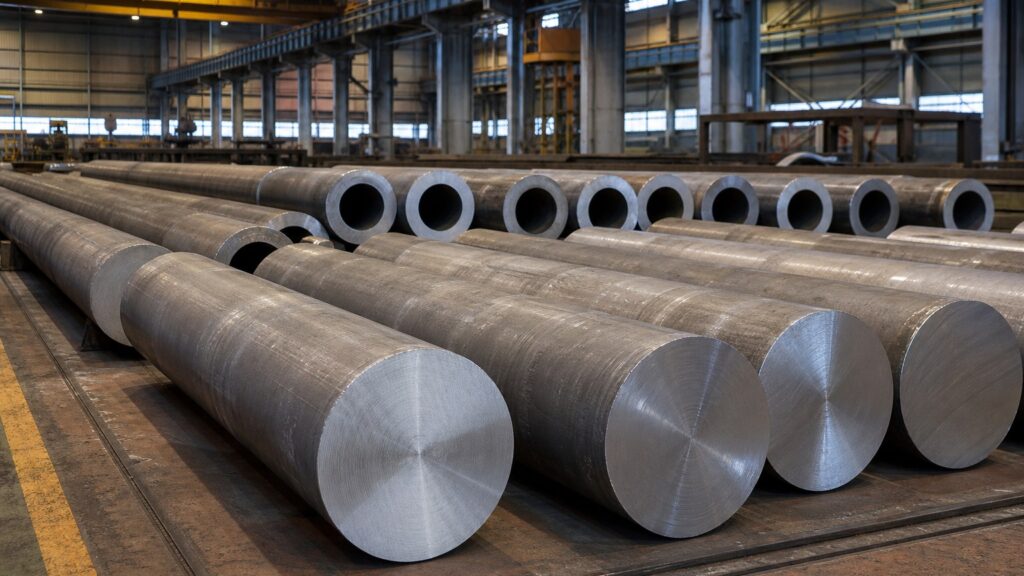
Petrochemical steel pipe is the pipe used inside refining and chemical processing units to carry hydrocarbons, acids, solvents, gases and steam. In corrosive service it is normally austenitic stainless steel pipe made to ASTM A312, in grades such as TP304L and TP316L.
Where stainless pipe sits in a petrochemical flow scheme
A petrochemical complex takes crude oil, natural gas, coal or biomass and converts it into chemicals, polymers and fuels. Piping touches every step of that chain. Feedstock arrives through tank farms and transfer lines, then distillation, cracking, reforming and hydrotreating units split and upgrade it, and downstream units polymerise, oxidise or otherwise convert intermediate streams into saleable product. Piping also serves the utility systems that keep the plant alive: steam and condensate, cooling water, nitrogen, instrument air and flare headers. Each of those duties has its own fluid, its own temperature band and its own corrosion mechanism, and each one therefore has its own material answer.
Where the fluid is genuinely aggressive, stainless grades earn their cost. Hydrotreating is a useful example: hydrodesulfurization units run hydrogen at elevated pressure and temperature to strip sulfur from naphtha, diesel and other streams, and the resulting hydrogen sulfide makes the downstream section hostile to carbon steel. In those circuits, austenitic stainless pipe — and sometimes duplex or nickel-alloy pipe — becomes the practical specification rather than an upgrade.
Why material choice is a system decision, not a line decision
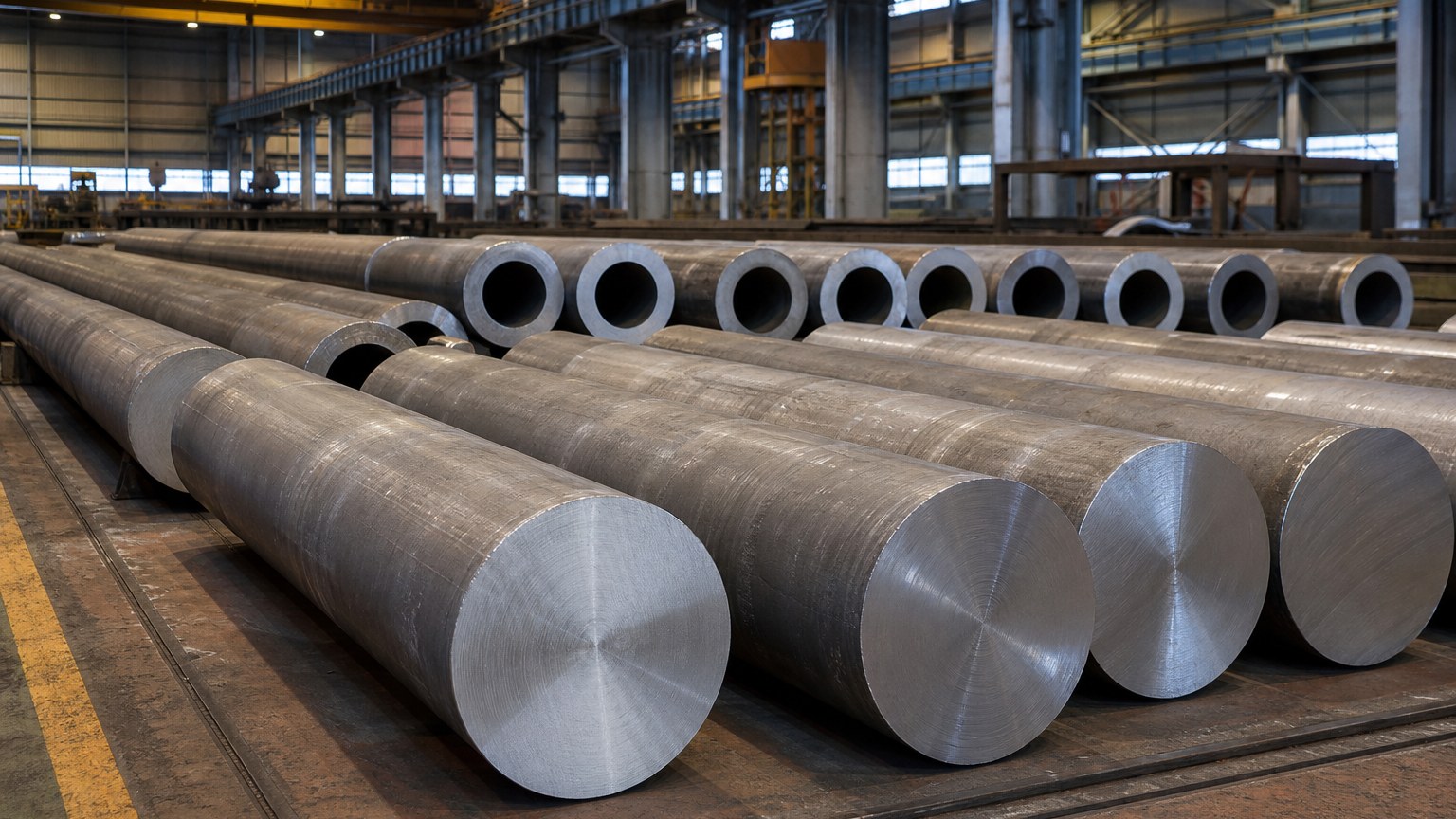
In a petrochemical plant, one failed line rarely stays a local problem. A leak forces the unit down, and a unit shutdown costs far more than the pipe that caused it. That is why material selection is treated as an engineering decision covering the whole circuit: the fluid and its concentration, the design and operating temperature, the pressure, the external environment, and the cleaning or steam-out cycles the line will see over its life. A grade that handles the process fluid but cracks under a chloride-containing cleaning regime has still failed the specification.
It also explains why buyers look at the fabrication route, not only the chemistry. Whether the pipe is seamless or welded, how it was heat treated, how its surface was finished and how it was tested all determine whether the delivered product behaves like the grade on the certificate. Our own petrochemical steel pipe programme is built around that idea — the specification conversation starts with the line conditions and the applicable code, and only then moves to tonnage. For the fundamentals of the product itself, our separate explainer on how seamless pipe is manufactured covers the mill route in detail.
Which Stainless Steel Pipe Grades and Standards Apply to Petrochemical Service?
Petrochemical piping standards are not interchangeable. Each fixes its own chemistry, mechanical limits and test package, and the design code decides which are acceptable.
The core standard is ASTM A312/A312M, which covers seamless, straight-seam welded and heavily cold worked austenitic stainless steel pipe for high-temperature and general corrosive service, with grades ranging from TP304 and TP304L to TP316, TP316L, TP321, TP347 and their high-carbon H variants.
The austenitic workhorses: 304L and 316L
TP304L and TP316L carry most petrochemical stainless piping. The L suffix denotes a restricted carbon content — 0.030% maximum is the usual limit — which reduces the risk of sensitisation and intergranular corrosion after welding, the single most common way a stainless line degrades in service. 304L is a chromium-nickel austenitic grade used where the fluid is mildly corrosive and chlorides are low. 316L adds molybdenum, which improves resistance to pitting and crevice attack, and it is the default choice where the stream is more aggressive or where the plant cannot guarantee a low-chloride environment.
| Grade | Typical composition highlights | Why it is chosen | Common petrochemical duty |
|---|---|---|---|
| TP304L | Chromium-nickel austenitic, carbon limited to about 0.030% | General corrosion resistance at moderate cost; good weldability | Utility lines, low-chloride process water, mildly corrosive hydrocarbon service |
| TP316L | As 304L plus around 2–3% molybdenum | Better pitting and crevice resistance; tolerates more chloride | Process lines, hydrotreater circuits, sour and chloride-bearing streams |
| TP321 / TP347 | Stabilised with titanium or niobium | Retains strength and resists sensitisation at elevated temperature | Hot process lines, high-temperature sections of process units |
| Duplex 2205 and similar | Ferritic-austenitic, higher chromium and molybdenum | High strength plus chloride stress-corrosion resistance | Aggressive chloride service, seawater-cooled circuits, high-pressure lines |
| 6% Mo super-austenitic and nickel alloys | Very high molybdenum, sometimes with nitrogen | Extreme pitting and general corrosion resistance | Severe acid, halide and mixed-acid environments |
How the standards fit together
The material standard and the design code do different jobs. The material standard defines what the pipe is; the design code defines how it may be used. For process piping, ASME B31.3 is the code that petrochemical and refinery projects most often build against, and its rules govern allowable stress, wall-thickness calculation, examination and testing. ASTM A312 itself points into this world — its own notes reference the chemical plant and refinery piping code when discussing low-temperature service exemptions for grades such as TP304, TP304L and TP347.
Around A312 sit companion specifications for narrower duties: ASTM A269 and A270 for general-service and sanitary tubing, ASTM A790 for duplex grades, ASTM A358 for welded austenitic pipe with filler metal, and nickel-alloy specifications where the chemistry leaves the stainless family altogether. Grade designations and their chemistry limits are catalogued internationally, as the reference entry on stainless steel and its ISO 15510 interchange table illustrate — useful when a European or Chinese project and an American specification have to be reconciled. The practical rule is simple: quote against a named standard and edition, and expect the technical review to check whether the code on the project accepts it.
How Does Corrosion Decide Material Selection in Refining and Chemical Plants?
Corrosion is the reason a stainless specification exists. The grade is chosen to defeat one or two dominant mechanisms, not every theoretical risk.
Four mechanisms dominate. General corrosion thins the wall uniformly. Pitting and crevice corrosion attack local points under chlorides. Stress corrosion cracking fractures a stressed pipe in a chloride or sour environment. And high-temperature attack — sulfidation, oxidation and polythionic acid cracking — degrades the material from the process side.
Chlorides, molybdenum and the pitting resistance idea
The single most common cause of premature stainless failure in a chemical plant is chloride-driven pitting and stress corrosion cracking. The process fix is molybdenum, which is why 316L outperforms 304L in chloride-bearing streams and why duplex and super-austenitic grades exist. Higher molybdenum, plus chromium and nitrogen, raises resistance to pitting; industry commonly expresses that balance as a pitting resistance equivalent number derived from the chromium, molybdenum and nitrogen content of the grade. The number is a screening tool, not a guarantee — but it explains in one line why the material list steps up from 304L to 316L to duplex to 6% Mo as the chloride load and the temperature rise.
Sour service, hydrogen and cracking
Sour service adds hydrogen sulfide. Where a stream contains H2S and water, the failure mode moves from pitting to sulfide stress cracking and hydrogen-induced cracking, and the material must satisfy additional metallurgical requirements: hardness limits, chemistry restrictions and a qualified heat-treatment condition. Projects write those requirements into the specification by reference to the recognized sour-service standards, and the mill must be able to demonstrate compliance on the certificate rather than by assertion. In these cases the correct question for a supplier is not “is it 316L” but “is this specific heat supplied against the sour-service requirement stated in the purchase order”.
Chloride and sour service can also combine. In a hydrotreater or a chloride-laden process line, a grade chosen for pitting resistance may still crack if it is highly stressed and hot; that combination is why duplex and higher-alloy grades appear in the same plants as 316L, and why petrochemical steel pipe grade comparison is worth understanding before choosing either. A second family of threats comes from the operating cycle rather than the fluid: polythionic acid cracking during shutdown and start-up in units that have seen sulfide scale, caustic embrittlement in concentrated alkaline service, and wet H2S cracking in the vapour space of vessels. Each one narrows the acceptable grade list, and each one is normally documented in the project’s corrosion review rather than discovered at the mill.
How Is Petrochemical Stainless Steel Pipe Made and Tested Before Shipment?
Chemistry gets you a grade on paper. The mill route and the test package decide whether the delivered pipe behaves like that grade in service.
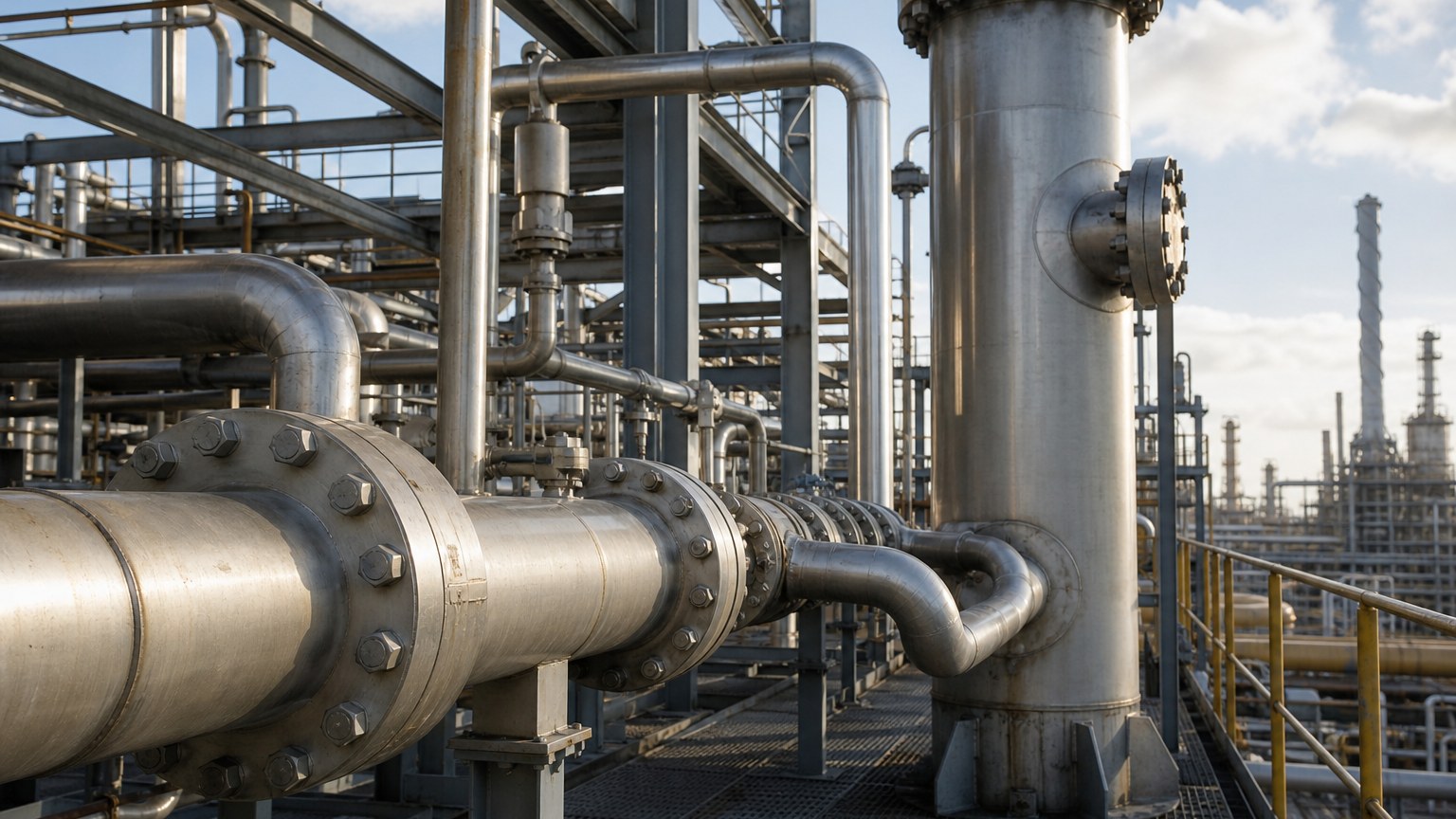
Seamless stainless pipe is pierced and rolled from a solid billet, then heat treated, finished, straightened and tested. The applicable specification requires every pipe to pass either a nondestructive electric test or a hydrostatic test before it leaves the mill.
From billet to finished pipe
In the seamless route, a round stainless billet is heated and pierced between rolls over a plug to create a hollow shell. Rolling stages then reduce the wall and extend the length toward the ordered dimension. Because austenitic stainless steel work-hardens rapidly, much of the finishing is done cold: cold pilgering or cold drawing delivers the closer wall tolerance and the smoother surface that process piping often calls for, at the cost of more annealing and pickling steps. Heat treatment matters more than buyers expect. An austenitic pipe that is not properly solution annealed can retain the effects of cold work and welding and be far more susceptible to stress corrosion cracking than the same chemistry supplied in the correct condition — a difference that never shows up on a chemistry report but does show up in service.
The welded route has its own logic. Straight-seam welded austenitic pipe is economical at larger diameters, and where the specification calls for it the seam is made with filler metal and radiographed; heavily cold worked welded pipe is covered by the same general specification and is used where cold working improves the finished mechanical properties. Choosing between seamless and welded is therefore a question about diameter, wall, pressure class and the code’s rules — not about which is universally better.
The test package and what the certificate must show
Under ASTM A312/A312M the finished pipe is furnished in the heat-treated condition, subjected to mechanical testing including transverse or longitudinal tension and flattening tests, checked for grain size, and either hydrostatically tested or examined by nondestructive electric test along its length. The detail is public, and the ASTM A312/A312M specification shows how those requirements are structured, including the standardized stainless pipe dimensions tabulated to ASME B36.19 and the additional supplementary tests that can be ordered where a greater degree of examination is wanted.
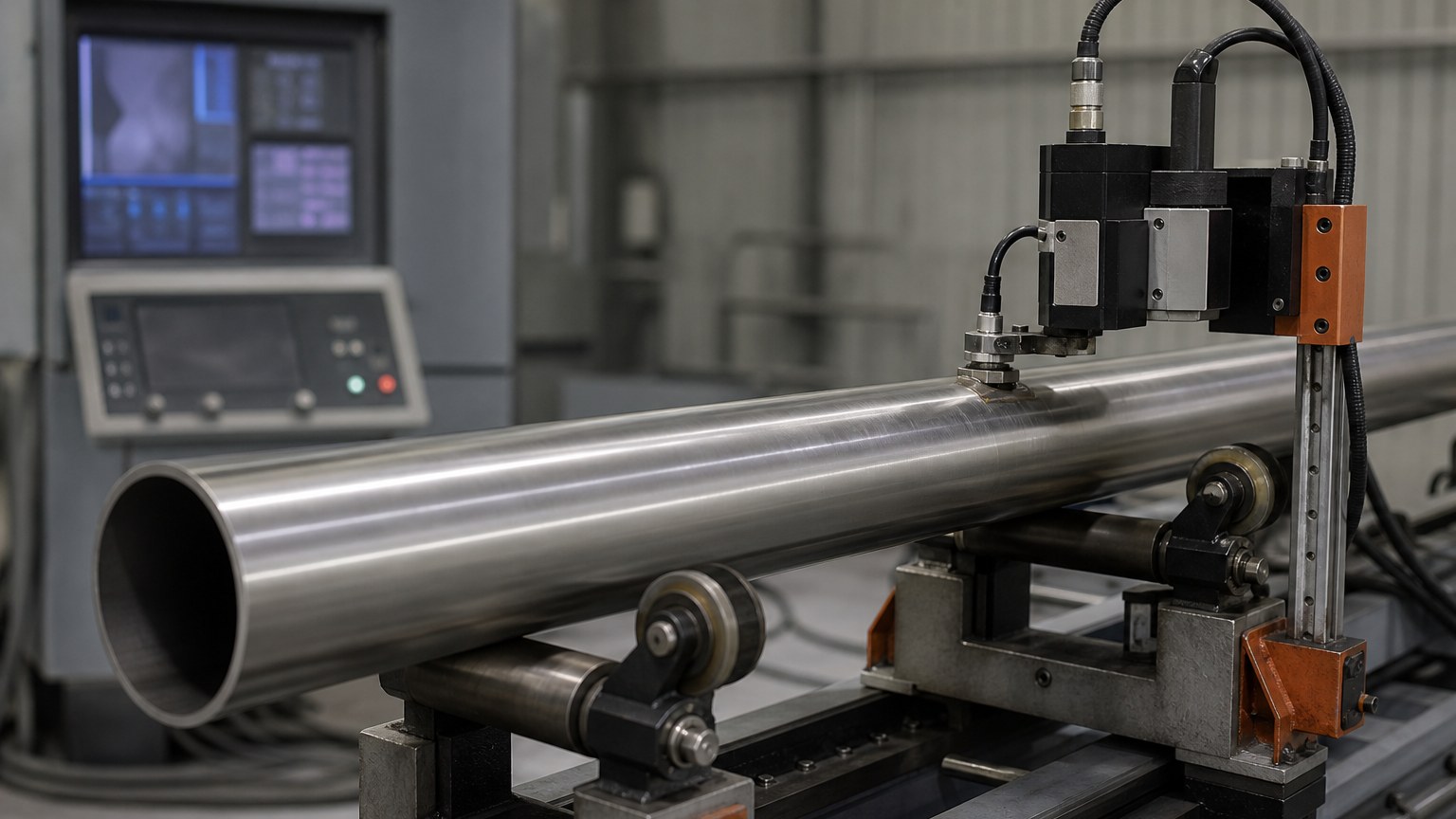
For a buyer, three checks catch most problems. First, confirm the specification number, edition and grade on the mill certificate match the purchase order — a certificate for TP304 is not a certificate for TP316L, and an L-grade requirement is a carbon limit, not a marketing label. Second, confirm the heat treatment condition is stated and matches what the standard requires for that grade. Third, confirm the test list covers the full package the standard calls for, including which permitted alternative was actually performed. Where the duty is critical, third-party witnessing of sampling and testing is inexpensive relative to the cost of a rejected heat arriving on site.
How Do You Specify Size, Schedule and Quantity for a Petrochemical Pipe Order?
Most procurement disputes begin at the inquiry, not at the mill. An incomplete specification produces offers that cannot be compared — or compared wrongly.
Fix six things before requesting quotes: the standard and grade; the nominal pipe size with schedule; the length and end finish; the heat-treatment and test requirements; the quantity; and the packing. Only then is a quotation technically comparable.
Sizes and schedules: the S-dimension question
Petrochemical piping is dimensioned by nominal pipe size and schedule, not by a single wall-thickness number. For stainless steel pipe, the standardized dimensions are tabulated to ASME B36.19, which is why stainless schedules are often written with an S suffix — 5S, 10S, 40S and 80S. In practice the S-schedules and the standard schedules coincide over the common sizes, so a 6-inch pipe with a Schedule 40 wall is 168.3 mm outside diameter with a nominal wall of 7.11 mm in the standard tabulation. State outside diameter and schedule together, never wall thickness alone, because the same wall figure can belong to different size systems and an inspector checking the wrong table will reject a conforming pipe.
A specification that survives the review
Start from the code, then work outward. Take the design pressure and temperature from the piping code, convert them into a grade and wall thickness, and confirm with the corrosion review that the grade suits the fluid. Then fix the mechanical details. Add the length, the end finish — plain or bevelled — the surface condition, and whether the order requires a particular heat-treatment or supplementary test. State the quantity in metres or in pieces, and describe the packing: stainless pipe is normally supplied with end protection because a dented or contaminated pipe may be rejected on arrival even with a perfect certificate.
If your project needs a concrete starting point, our 316L stainless steel pipe in 6 inch Sch 40 is supplied as seamless pipe in the 6-inch nominal size with a Schedule 40 wall, in the TP316L family — a combination widely used in process lines, hydrotreater circuits and other corrosive duty in refining and chemical plants. Review the specification table on that page to see how standard, grade and dimensions are laid out, then send your own line conditions. If any of the six items above is still open for your project, discuss your line conditions with our pipe engineers before you issue the inquiry — a short technical review at the inquiry stage is far cheaper than re-sourcing a rejected heat or replacing a line in service.
Conclusion: What Should You Specify for Petrochemical Service?
Fix code, grade, size, schedule and test package before comparing offers, then verify the certificate. Petrochemical pipe is chosen by chemistry and duty, never by price alone.