
Stainless Steel Sheet Size: Which Standard Dimensions and Tolerances Should You Specify?
Size errors seldom fail at quotation. They surface after the sheets are cut, when finished panels come up undersized and an entire batch goes to scrap.
Stainless steel sheet size means four numbers agreed together: thickness, width, length, and the tolerance band around each one. Common nominal sizes include 1219 × 2438 mm, 1500 × 3000 mm and 1500 × 6000 mm, with permitted deviation set by ASTM A480/A480M or ISO 9445.
Those four numbers decide how the material nests on your shear, how much of every sheet becomes product and how much becomes offcut, and whether a delivered batch passes incoming inspection without an argument. To make the decision easier to defend, the sections below separate what the size conventions actually mean, which dimensions a mill can supply, how tolerances are structured, what size does to cutting yield and landed cost, how to verify a delivery properly, and finally how to write a specification that survives the first production run – the same sequence we apply at Shaanxi Shuncheng Tian Steel before any sheet leaves the plant.
What Does Stainless Steel Sheet Size Actually Cover?
Buyers use one phrase for four different things, and that mix-up is what turns a routine order into a dispute.
Sheet size is the thickness, width and length of a flat-rolled stainless product, plus the tolerance applied to each dimension. Most of the world states thickness in millimetres, while US practice often uses gauge, which is a non-linear scale rather than a measurement.
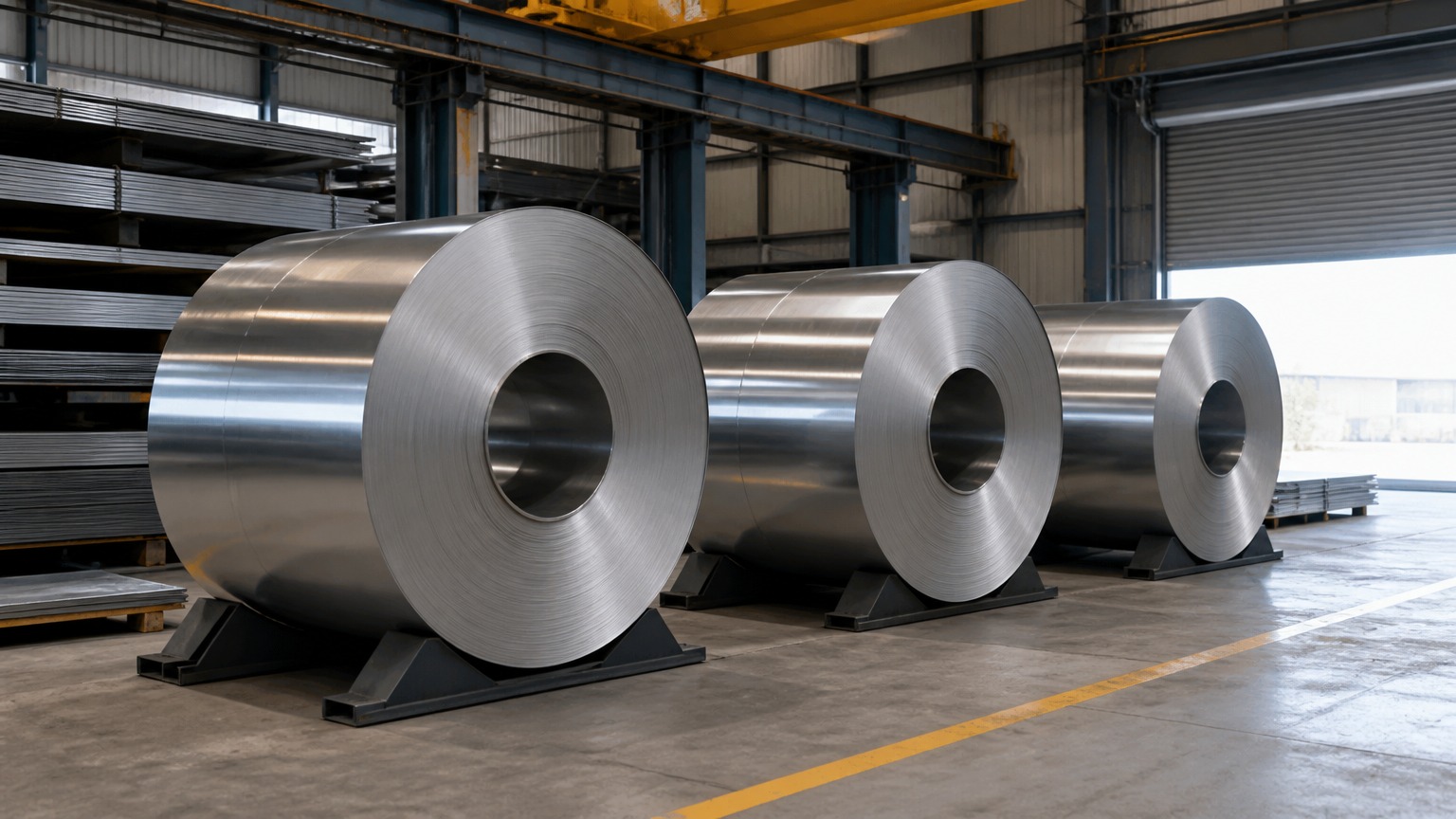
Dive deeper: four meanings hiding inside one phrase. The first meaning is the sheet-versus-plate boundary, because that single line decides which specification applies to your order. Pieces thicker than roughly 6 mm are generally traded as plate rather than sheet, a convention noted in the general overview of sheet metal, which also records that steel sheet commonly spans about 30 gauge (0.40 mm) up to roughly 7 gauge (4.55 mm). Once a mill classifies the product as sheet, ASTM A240/A240M – the standard specification for chromium and chromium-nickel stainless steel plate, sheet and strip for pressure vessels and general applications – governs the composition and mechanical properties, and the dimensional rules follow from the general-requirements standard referenced below. The second meaning is the unit of thickness. Outside the United States, millimetres or decimals of a millimetre are standard, and the numbers behave linearly. In the American market, gauge is traditional; the larger the gauge number the thinner the metal, and gauge tables differ between ferrous and non-ferrous metals. A buyer who quotes “18 gauge” to a metric mill without converting is specifying nothing precise, because that label resolves to different physical thicknesses depending on which table the supplier applies. The third meaning is ordered versus delivered size: the nominal figure on the purchase order and the measured figure on the pallet differ by whatever tolerance the material was produced to, and the tolerance is often the number that decides whether a claim succeeds. The fourth meaning is form rather than dimension. Cut-to-length sheets, continuous coil and longitudinally slit strip can share identical thickness and width and still be completely different products for purchasing and logistics purposes.
Which Standard Sheet Sizes Can You Realistically Buy?
Mill availability clusters around a handful of nominal sizes, and choosing from that list is usually cheaper than inventing a new one.
Widely traded nominal sizes include 1000 × 2000 mm, 1219 × 2438 mm, 1219 × 3048 mm, 1500 × 3000 mm and 1500 × 6000 mm. Thinner cold-rolled sheet is normally supplied in the tighter metric sizes, while heavier gauges support larger panels.

Dive deeper: reading a mill size list like a production planner. The dimensions available are not arbitrary; each one traces back to a rolling width, a legacy imperial footprint or a transport limit. The 1219 × 2438 mm size is the metric expression of four feet by eight feet, the sheet size that dominated North American fabrication for a century, and it remains the default for importers serving that market. The 1000 × 2000 mm size plays the same role in metric markets and in container loading, since it packs predictably and is light enough for two people to handle. The 1500 × 3000 mm size is the workhorse for architectural cladding, kitchen equipment and general fabrication, and 1500 × 6000 mm lets a fabricator produce long components without a longitudinal weld. Above that, 2000 mm wide material and lengths of 6000 mm and beyond appear on heavy plate, where the sheet is usually cut to a drawing rather than used whole. Our stainless steel sheet and plate range is quoted across these standard footprints, with cut-to-size supply available when a project drawing calls for something else. The commercial trade-off is straightforward. A standard size ships from stock or from a scheduled rolling programme, so lead time is short and price is at its sharpest. A non-standard size usually means cutting a standard sheet or a coil down, which recovers most of the material value but adds a cutting operation, a handling step and a scrap allowance that somebody must pay for. Where a project runs to thousands of identical parts, that extra processing is repaid immediately through better nesting and less offcut. Where a project needs twenty sheets for repairs, it is rarely worth the disruption. Compare the cost of the standard sheet plus your own cutting against the price of the oversize sheet before assuming the custom route is cheaper.
| Nominal size (mm) | Metric equivalent | Typical use | Usual thickness band |
|---|---|---|---|
| 1000 × 2000 | 1 × 2 m | Light fabrication, container-friendly packing | Thin cold-rolled gauges |
| 1219 × 2438 | 4 × 8 ft | General fabrication, North American import market | Thin to medium cold-rolled |
| 1219 × 3048 | 4 × 10 ft | Long components, ductwork, panels | Thin to medium cold-rolled |
| 1500 × 3000 | 1.5 × 3 m | Architectural cladding, kitchen equipment | Medium, cut from coil or plate |
| 1500 × 6000 | 1.5 × 6 m | Long runs without longitudinal welds | Medium to heavy |
| 2000 × 6000 | 2 × 6 m | Heavy plate work, tanks and vessels | Heavy |
How Do Thickness, Width and Length Tolerances Differ?
A nominal size without a tolerance is only half a specification, and the missing half is where most rejections originate.
Thickness tolerance is expressed as a permitted deviation from nominal and varies with thickness and width class. Width, length, camber, squareness and flatness are governed separately, with different limits for mill edge and cut edge.
Dive deeper: the five dimensions that carry tolerances. Thickness is the dimension buyers watch hardest, because it drives weight and stiffness, and its permitted deviation is banded rather than fixed: a thin, narrow sheet is normally held to a tighter allowance than a thick, wide one, since rolling a wide strip to a precise gauge is harder than rolling a narrow one. The general-requirements framework sits in ASTM A480/A480M, which collects the requirements that apply across the flat-rolled stainless product specifications, including the dimensional tolerances used when a purchase order names a nominal size. On the international side, ISO 9445-1 sets the tolerances on dimensions and form for continuously cold-rolled stainless steel narrow strip in thicknesses up to and including 3 mm and rolling widths under 600 mm, and it applies to cut lengths taken from that strip as well; the ISO 9445 series extends the same framework across other product forms and widths. Width and length tolerances are usually quoted as a permitted plus-or-minus allowance, and they differ depending on how the edge was produced, because a sheared edge and a mill edge are not measured the same way. Camber, sometimes called edge bow, is the lateral curvature of a sheet and is specified as a maximum deviation over a stated length; it matters more than most buyers expect, because camber in a long sheet destroys the straight-line feed of an automatic shear and shows up as progressively angled parts. Squareness is controlled by the difference between the two diagonals of the sheet, and flatness is controlled against a reference surface, expressed as a maximum deviation. A fourth practical distinction is tolerance class. Most mills quote standard tolerances by default, and many can supply restricted or half tolerances at a price premium when a critical part demands it. Ask for the class in writing: a quotation that names only a nominal thickness leaves you no basis for rejection, and no basis for a claim if the batch behaves badly on the line. Our own comparison of 304 and 316 stainless steel plate shows how grade selection and surface finish are usually specified alongside these dimensional limits, since the three decisions are normally taken at the same time.
Why Does Sheet Size Decide Cutting Yield and Landed Cost?
Two suppliers can quote the same price per kilo and still deliver very different material costs on the shop floor.
Sheet size controls how parts nest, how much offcut leaves the shear and how many handling steps a job needs. Weight is thickness multiplied by area and density, so cost per square metre is often a more honest comparison than cost per tonne.
Dive deeper: the arithmetic behind a size decision. Start with weight, because it drives freight, crane capacity and every price comparison you will make. A flat sheet weighs thickness × width × length × density, and for stainless work a density of about 7.9 g/cm³ is the figure commonly quoted for grade 304. Run the numbers on a 2 mm sheet measuring 1219 × 2438 mm and the answer is roughly 47 kg, which is also about 15.8 kg per square metre; the same calculation for a 3 mm sheet of the same footprint returns about 71 kg. Those figures explain why a quotation expressed only in price per tonne can mislead. Thinner material covers more area for the same weight, so a supplier charging more per tonne for a lighter gauge may still be cheaper for the part you are actually producing. Once weight is understood, move to yield. Yield is the share of every delivered sheet that becomes finished product, and it is decided almost entirely by how the ordered size relates to the component size. A part that divides cleanly into a 1219 × 2438 mm sheet can yield far more pieces than the same part cut from a nominally cheaper size that leaves an unusable strip. Shearing and laser cutting also consume material at the kerf, and every extra cut adds a handling step, a machine hour and a burr to remove. Nesting software answers this question precisely, but a rough check on paper takes two minutes and usually settles the argument. Finally, count the offcut. Remnants are only free if somebody can use them; otherwise they are scrap with storage costs attached. Buyers who plan around a standard size and sell their offcuts to a local fabricator routinely beat buyers who chase the lowest price per kilo on an awkward dimension. A practical reference point for the thin end of the range is our 304 stainless steel sheet in 2 mm BA finish, where a standard footprint and a defined tolerance make the yield calculation straightforward before you commit to a tonnage.
How Should You Verify Sheet Size on Delivery?
A bundle that measures correctly on the outside can still hide out-of-tolerance material in the middle of the stack.
Check the mill certificate against the purchase order, then measure. Use a calibrated micrometer for thickness at several points across the width, a steel tape for width and length at both ends of the sheet, and compare the two diagonals to test squareness. Record what you find.
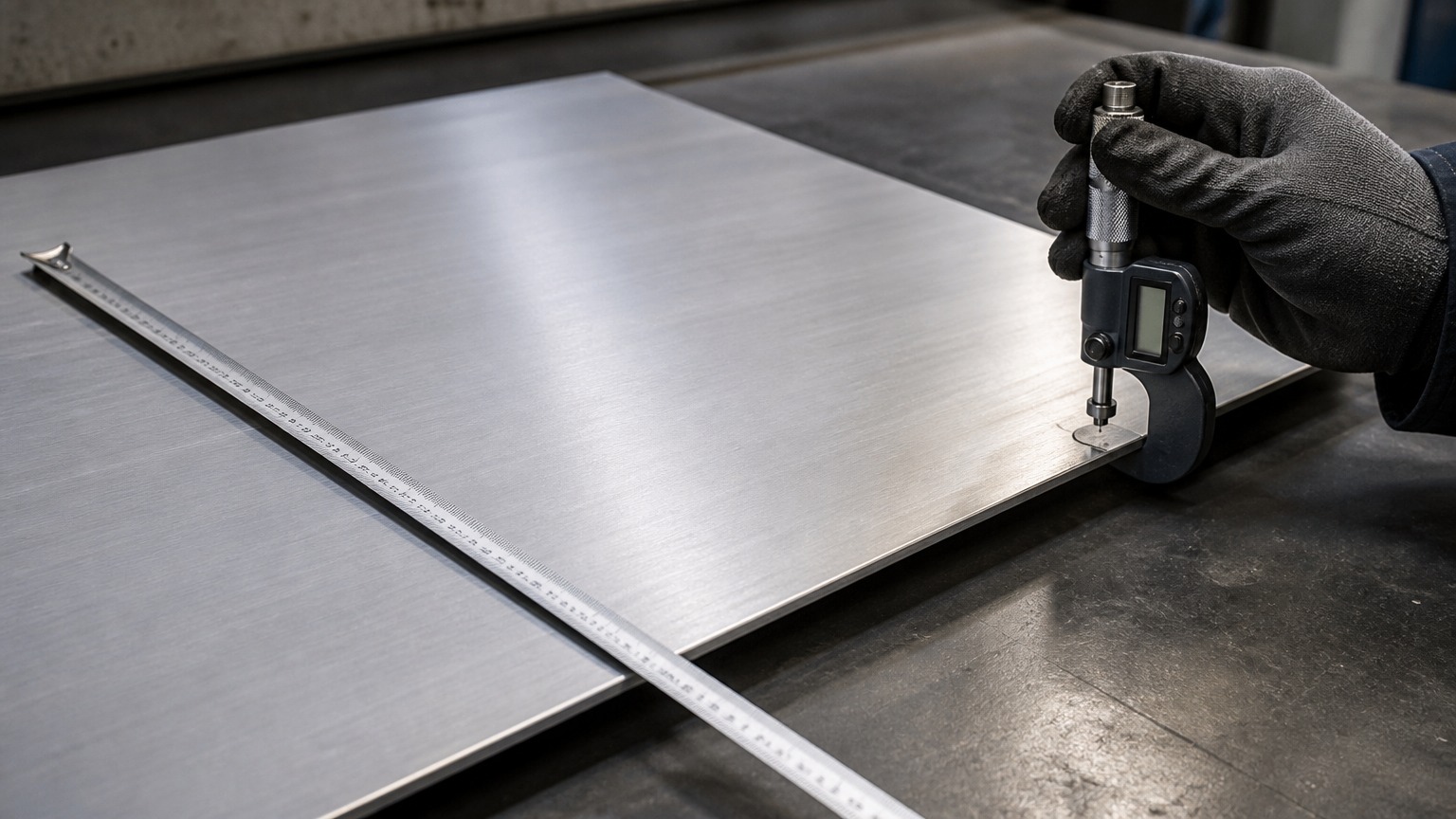
Dive deeper: a goods-in routine that produces evidence, not impressions. Verification begins before any instrument is picked up, with the mill certificate. Match it line by line against the order: grade designation, standard, thickness with its tolerance, width and length, heat number, quantity and the surface finish required. A certificate that lists no tolerance band for the dimensions you ordered is not evidence that the material conforms, and a supplier who cannot state the tolerance has not really quoted a specification. Then measure, and measure in a way that would survive a dispute. Thickness readings should be taken at several stations across the width and repeated at a few positions along the sheet, so a single low reading at one edge is distinguishable from a systematic gauge shortfall; that distinction determines whether the batch is an isolated problem or a rolling problem, and the two warrant different responses. Width and length are best checked at both ends of the sheet rather than once in the middle, because a sheared sheet that is split out of square will pass a single mid-point measurement and fail at the corners; comparing the two diagonals catches exactly this failure in one step. Camber needs a straight reference such as a taut string or a laser line along the edge, with the maximum deviation measured against it, and flatness is best judged on a surface plate or a known-flat bench rather than by eye in a warehouse aisle. Finish the routine with a visual pass over edges, surface and packing: burrs, edge nicks, roll marks, scratches from handling, water staining and inadequate interleaving between sheets cause more downstream problems than a marginally wide sheet. Physical storage matters too. The corrosion resistance of stainless steel comes from a chromium-rich passive film that forms and repairs itself in the presence of oxygen, as the overview of stainless steel explains, so sheets should be stored dry, ventilated and off the floor. Where a grade has to resist chlorides rather than fresh water, it is worth reading how 316L behaves in chloride service before writing the specification, because the grade and the dimensional tolerance are usually agreed in the same conversation.
Which Sheet Size Should You Specify for Your Project?
Choosing a size is a short sequence of questions rather than a preference, and following the sequence prevents most rework.
Work backwards from the finished part: identify the largest component, check the envelope your shear, press brake or laser can handle, compare a standard size against cut-to-size on total cost, then fix thickness and its tolerance class in writing.
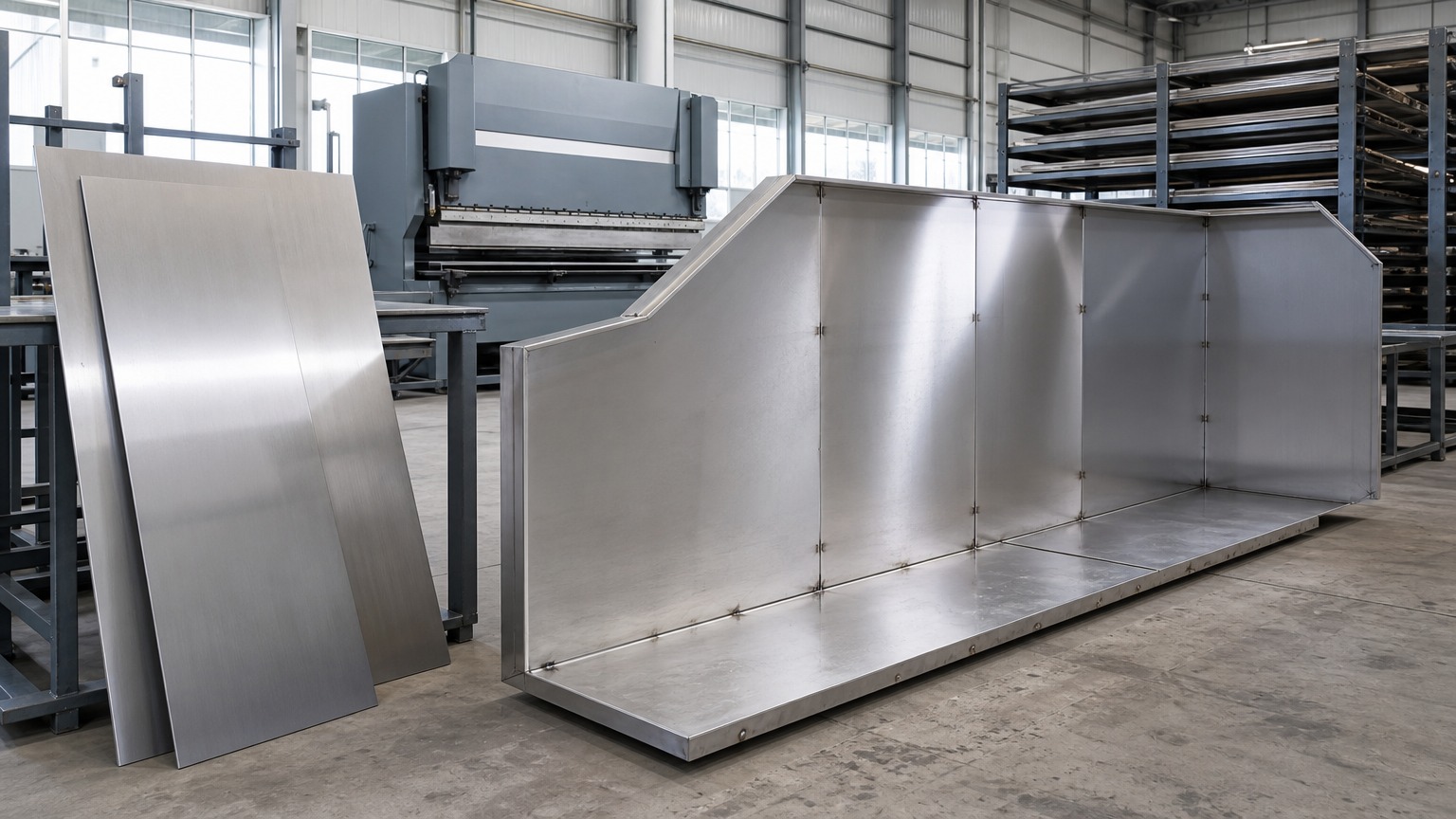
Dive deeper: the five questions that close a sheet specification. First, define the component. The largest single part, plus any trim allowance for squaring an edge or removing camber, sets the minimum sheet footprint, and a part list read alongside a nesting sketch usually reveals that one size serves the whole job while another forces two. Second, check the equipment envelope. Every shear has a maximum cut length, every press brake a maximum bend length, and every crane a safe lifting limit; a sheet that is nominally cheaper but exceeds any of those constraints is not a saving, it is an outsourced operation. Third, price the alternatives on one basis. Cost per finished part is the only figure that compares fairly, and it must include the sheet price, the cutting time, the offcut value or disposal cost, and the freight difference caused by the weight of the chosen size. Fourth, decide on grade and finish together with size, because they interact: the same footprint in a heavier gauge, or in a No.4 brushed finish rather than a smoother mill finish, changes both the weight and the processing route. Fifth, put all of it on the purchase order – thickness with its tolerance, width, length, edge condition, grade, finish, standard and quantity – and require a mill certificate that restates those values. That single discipline removes the most common source of rejections, which is not bad material but an incomplete specification that nobody can measure against. It also makes lead time predictable, because a mill can only schedule what has been defined, and it makes price comparable, because every quotation then prices the same product. For an order that will repeat, agree the wording once and reuse it, so that each subsequent delivery can be checked against a stable baseline rather than a fresh negotiation.
Working on a project that needs a specific sheet footprint? Send your drawing to our export team and we will return the available standard sizes, the tolerance each is supplied to, and the current price together.
Conclusion: Sheet size is a four-part specification: thickness, width, length and tolerance. State all four, verify them on arrival, and the batch you ordered is the batch you run.