
PVDF vs Polyester Coating: Which Lasts Longer on Roofing?
A roof that turns chalky in three summers is not a bad sheet. It is a coating chosen for price instead of sunlight.
Short answer: PVDF (fluoropolymer) coatings hold colour and gloss far longer than polyester on sun-exposed roofing, and suppliers commonly quote 20 years or more of appearance retention against roughly 5 to 10 years before a standard polyester topcoat chalks visibly — polyester simply costs less at the coil stage.
Everything that decides which of those two sentences applies to your building is settled before the coil leaves the plant: the resin chemistry, the film build, the primer under the topcoat and the metallic coating beneath both. The sections below work through the comparison in the order a buyer actually meets it — what the two coatings are, how each behaves under ultraviolet light, how they resist chemicals and corrosion, what they cost across a roof’s life, how to write the specification, and how to verify what arrives on site. Read to the end and you will know which system your project genuinely needs, and which one is being sold to you on price alone.
What Is the Difference Between PVDF and Polyester Coating?
Both are organic paint films applied to coil-coated steel. The difference is the binder — the resin that holds the pigment — and that single choice drives everything else.
PVDF coating uses a fluoropolymer binder, commonly a high-PVDF resin blended with an acrylic co-binder, while polyester coating uses a polyester resin binder. The binder determines ultraviolet stability, gloss retention, chemical resistance and cost.
What the binder actually does
The binder is the continuous film that carries the pigment, the fillers and the additives, and it is the part of the coating that has to survive sunlight. A polyester binder is built on ester linkages, and those linkages absorb ultraviolet energy and break. That is the mechanism behind the familiar pattern on an ageing roof: the surface resin erodes, pigment particles are left exposed at the surface, and the panel turns chalky and lighter within a few seasons in a high-ultraviolet climate. A fluoropolymer binder such as PVDF is built on carbon–fluorine bonds, which are exceptionally strong and chemically inert; the polymer does not readily absorb ultraviolet light and therefore does not decompose in the same way. That single difference in bond chemistry is why polyvinylidene fluoride (PVDF) paints are described in the reference literature as having extremely good gloss and colour retention, and why they are found on landmark cladding such as the Petronas Towers and Taipei 101 as well as on ordinary commercial and residential metal roofing. Polyester, by contrast, is a broad family of polyester polymers selected for economy, formability and a wide choice of finishes rather than for decades of ultraviolet exposure.
Substrate and system, not just topcoat
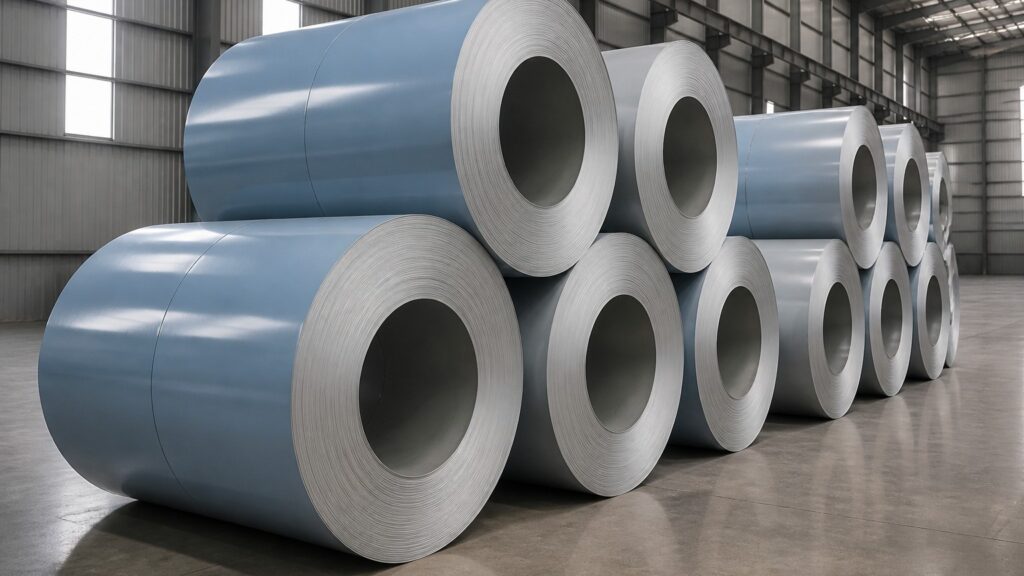
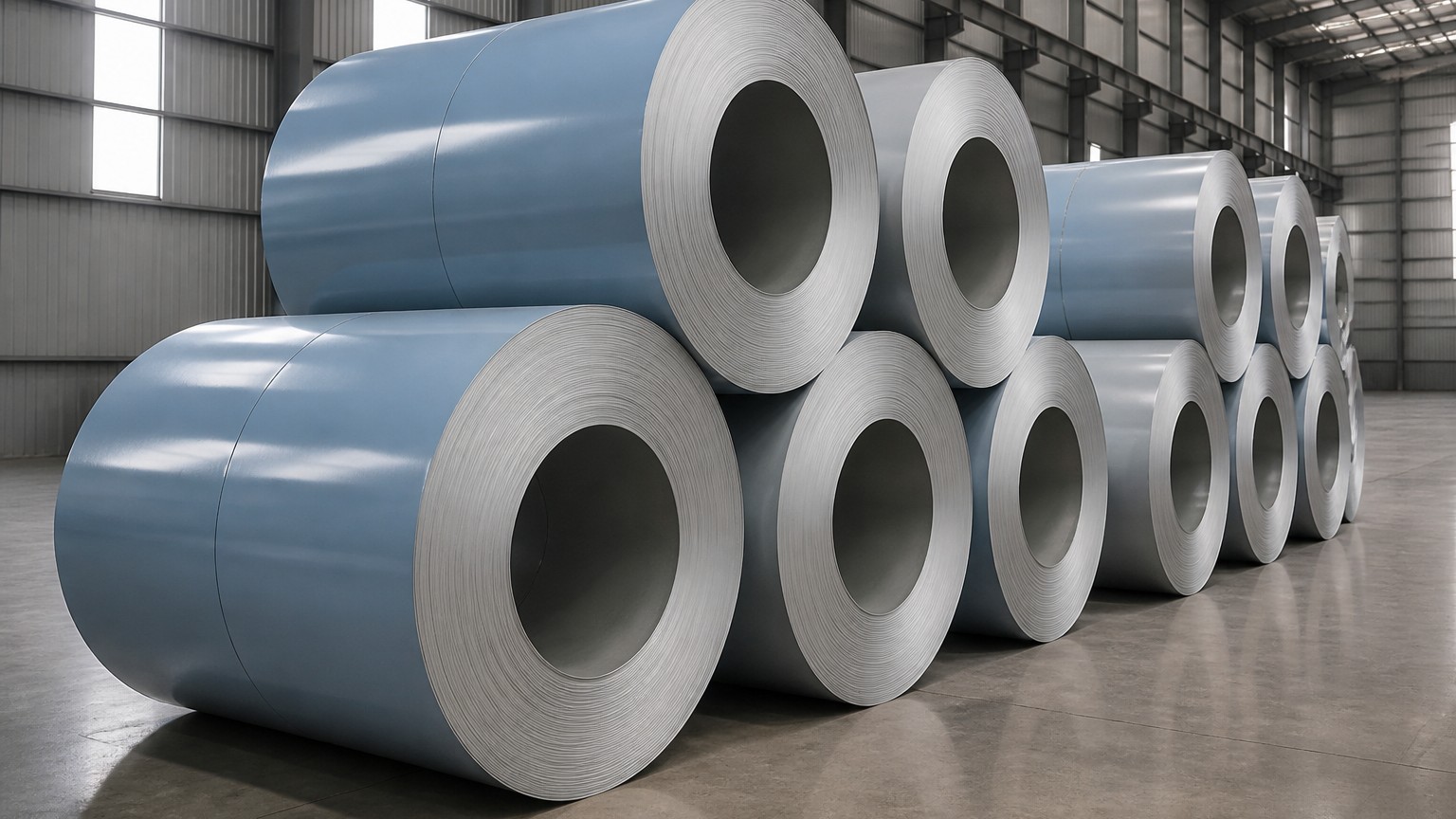
It is a mistake to compare topcoats in isolation. Every prepainted sheet is a stack: a metallic coating on the steel, a thin chemical pretreatment, a primer, and the topcoat you actually see. The binder decides appearance retention, but the metallic coating beneath decides whether the steel rusts once the paint is scratched or a panel is cut. That is why serious buyers specify the primer and the substrate alongside the topcoat, and why our own range of PPGI and PPGL color coated steel is quoted with the substrate family written out separately from the paint system. A premium PVDF topcoat over an under-specified metallic coating is a worse purchase than a well-built polyester system over a properly coated substrate: the paint protects the appearance, the metallic layer protects the steel, and a roof needs both. When a supplier cannot tell you which substrate sits under the film, the coating comparison has not really started.
Which Coating Resists Fading and Chalking Longer?
Fading and chalking are the two failure modes a building owner actually sees, and they are the clearest splitting point between the two systems.
PVDF resists fading far longer: suppliers commonly quote 20 years or more of colour and gloss retention, while a standard polyester topcoat usually begins to chalk visibly within 5 to 10 years.
Why chalk is a chemical failure, not dirt
Chalking is often reported as a cleaning problem, and that misreading costs buyers a warranty claim. The white powder that comes off on a hand is degraded binder resin, not dust. Ultraviolet radiation has broken polymer chains at the surface, and the loose resin fragments left behind are what you see. Once that process starts it does not reverse: washing a chalky panel removes the evidence for a few weeks and nothing else. The mechanical consequence matters more than the cosmetic one. As the binder erodes, the film becomes thinner and more porous, the pigment particles are exposed, and the coating’s ability to keep water away from the metallic layer underneath falls away with it. Appearance loss and corrosion protection therefore degrade together, which is why a chalky roof is usually a roof that will soon show rust staining at fixings and cut edges. This is also why the comparison cannot be reduced to a colour match at delivery. Both coatings look identical on day one, and the difference only becomes visible several summers later — on the roof, in front of the client.
Climate and colour change the maths
Ultraviolet dose, not calendar age, drives the failure, so the same prepainted steel coil behaves differently in different places. A high-altitude, high-insolation site with intense reflected light from sand or water will age a polyester film far faster than the same product under a humid, cloud-covered sky. Dark colours make it worse, because dark pigments absorb more radiation and the film surface runs at a higher temperature, accelerating both resin breakdown and pigment change; light greys and whites hide early chalking much better than deep reds or near-blacks, which is one reason fleet-standard colours drift toward pale tones in hot markets. The practical consequence for a specification is that the coating grade should be set by exposure and by how visible the roof is, not by a single company-wide standard. A warehouse nobody photographs and a client-facing showroom façade rarely deserve the same topcoat, and treating them identically either wastes money on the shed or embarrasses the showroom within five years.
How Do PVDF and Polyester Compare on Chemical and Corrosion Resistance?
Sunlight is only half the exposure. A roof also absorbs acid rain, salt spray, industrial fallout and cleaning chemicals, and the two binders react to those differently.
PVDF is the more chemically inert film and holds up better against solvents, acids and aggressive industrial atmospheres, while polyester weathers ordinary conditions well but degrades faster where airborne chemicals and repeated cleaning are part of daily life.
Corrosion starts where the film is interrupted
Paint protects steel by keeping water and oxygen away from it, and it does that job only as long as the film is continuous. Every roof is interrupted many times over: sheets are sheared to length, holes are drilled, fixings are driven, panels are walked on and dragged, and ladders are leaned against the ridge. Each of those events exposes bare metal, and from that point the metallic coating on the steel takes over as the sacrificial layer. This is the same protective mechanism that makes ASTM A653/A653M zinc-coated sheet the default substrate for exterior building products: the zinc corrodes preferentially so the steel does not. The topcoat’s contribution is to limit how often the interruption happens in the first place and how much of the surface is attacked when it does. A more inert binder resists chemical attack at the film edge, and a tougher, better-adhering film survives handling without cracking. That is why a chemically resistant topcoat changes the corrosion outcome even though it never touches the steel directly.
Matching the system to the corrosivity category
Because exposure varies so widely, the sensible approach is to classify the site first and then choose materials to suit it. The international framework for that is ISO 12944-2, which sorts atmospheric environments into corrosivity categories from very low to very high, so that a coastal industrial site and a dry inland warehouse are not treated as equivalent. Applying that logic to roofing, a high-corrosivity location justifies both a heavier metallic coating and a more inert topcoat, because the two layers fail together when one is outmatched. A low-corrosivity inland site can sensibly be served by a mid-range system. The failure pattern to avoid is the mixed specification: a premium fluoropolymer film over a thin metallic coating, which protects the part of the roof the client can see while leaving the part that actually corrodes under-protected. Chosen together and matched to the site, the layers reinforce each other; chosen separately and on price, they fail in whichever layer was cheapest.
What Do PVDF and Polyester Coatings Cost Over a Roof’s Life?
The purchase price is the easier number to compare and the less useful one. What decides value is cost per year of service, not cost per tonne of coil.
Expect a substantial premium on PVDF over polyester at the coil stage, but PVDF usually wins on whole-life cost because it delays repainting by a decade or more, while acrylic and siliconised polyester fill the middle ground at moderate extra cost.
Where the money actually goes
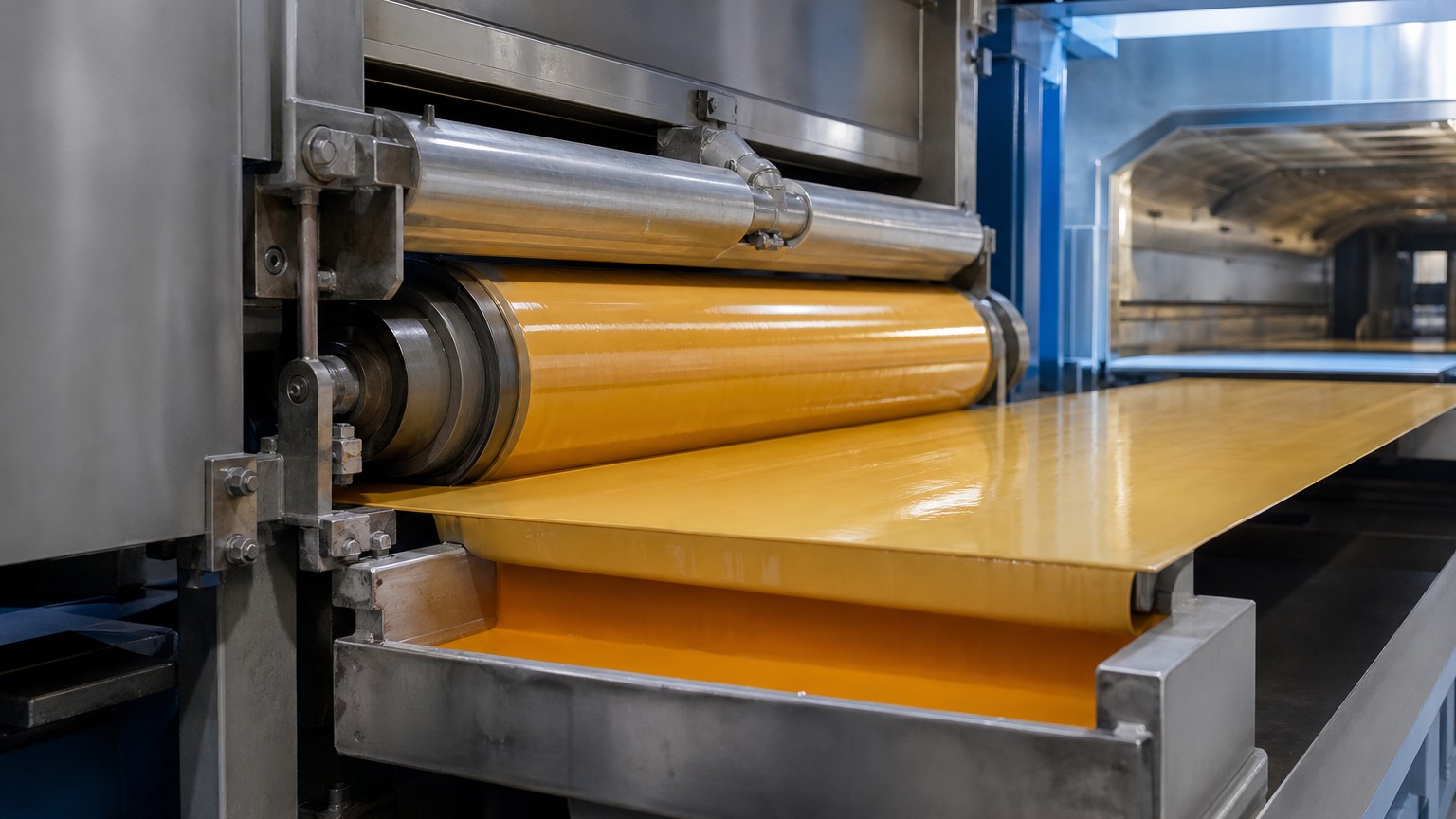
Two costs make up a roof’s life-cycle total, and only one of them appears on the coil quotation. The first is the coil itself, where a fluoropolymer topcoat carries a clear premium over a standard polyester film because the resin is more expensive and the coating line runs a more demanding cure schedule. The second is everything that happens after installation: access and scaffolding, surface preparation, re-coating, the operational disruption of closing a building to paint it, and the risk that a repaint is done badly and fails early. On a large industrial roof, the second group usually dwarfs the first, and it is spent at a date that is set almost entirely by the resin choice. Paint systems themselves are not a single ladder; the prepainted metal industry, represented by bodies such as the European coil coating industry association, groups products into families with quite different expected service lives, and most arguments about “which is better” are really arguments about which family was quoted.
The middle grades that complicate the choice
Between a basic polyester and a full fluoropolymer system sit the improved polyesters, often described as siliconised or silicon-modified, which trade a modest cost increase for meaningful gains in ultraviolet resistance. For many projects these are the rational answer, and the reason a two-way comparison misleads. The decision is not binary but a three-step ladder: standard polyester for sheltered, inland, budget-driven buildings that will be repainted anyway; an improved polyester where appearance matters but budgets are tight; and PVDF where long colour life is a genuine requirement rather than a preference. Framing it as PVDF versus polyester forces buyers to the extremes, when the real question is how many summers the client will judge the roof by — and how much it will cost to come back later.
Which Coating Should You Specify for Your Roofing Project?
There is no universal winner, only a correct match. Four inputs decide it: climate, building life, appearance expectation and maintenance access.
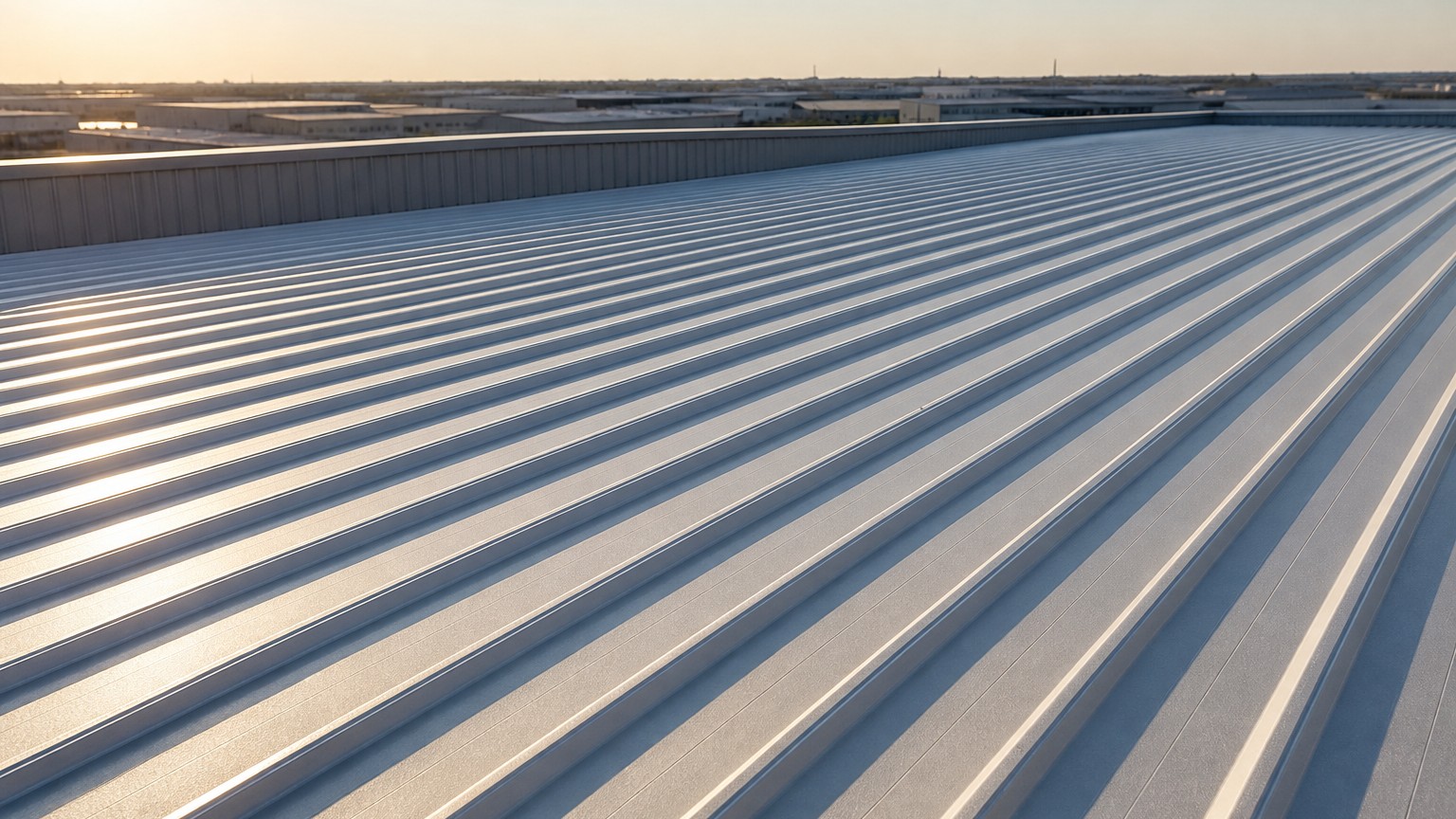
Specify PVDF where ultraviolet exposure, coastal salt or visible prestige cladding demand long colour life; choose polyester for sheltered, inland, cost-driven buildings, and treat acrylic or siliconised polyester as the practical compromise.
Reading the building before the sample book
Start with the site rather than the colour chart. Ask how much direct sun the roof receives, whether reflected light from water, snow or pale paving doubles the dose, how close the sea or a chemical plant is, how visible the roof is from the road or from upper floors, and whether anyone can reasonably get back up there to repaint. Those answers point to a coating family before a single sample is discussed. Then look at what the structure itself demands. The substrate must be chosen with the topcoat, because a heavy coating can compensate for a moderate film but never for a thin metallic layer. Section profiles, pitch and fixings set how much cutting and piercing will happen on site, and the more interruptions a roof has, the more a chemically inert film is worth. Finally, decide the appearance promise honestly. If the client will accept a repaint in year eight, a standard polyester system is a perfectly professional choice; if a colour must hold for two decades on a landmark façade, the fluoropolymer is not an upgrade but a requirement. Getting this order right is what makes the specification defensible, the same way a properly built PPGL color coated steel coil in 0.5 mm RAL 9006 is only half the answer until someone confirms the substrate and system behind it.
Writing a specification that cannot be substituted
A specification is only useful if a substitution is visible. Name the resin type explicitly rather than using a trade description such as “high-performance topcoat”, and state the coating system as separate lines: substrate family, metallic coating class, primer, topcoat resin, and total dry film thickness. State the back coating as well, because the underside of a roofing sheet is often the first surface to fail in a humid climate and is routinely left off the quotation. Define the colour to a recognised reference and require it to be declared on the certificate, since colour drift between batches is a common and legitimate complaint. Finally, set out the tests you expect to see: film thickness measurement, adhesion by bend or impact, and hardness, together with the mill test certificate. A specification written this way cannot be quietly satisfied by a cheaper family, and it turns every offer you receive into a genuine comparison — which is exactly what deciding how long a metal roof actually lasts comes down to in practice.
How Do You Verify Coating Quality Before Accepting Delivery?
A coating cannot be judged by eye at the container door. Colour looks right on both a premium film and a cheap one, until the second summer.
Ask for the mill test certificate with the coating designation and the paint system, check dry film thickness with a gauge, and confirm the resin type in writing — PVDF and polyester look identical in a photograph.
What the paperwork must say
The certificate is where the specification is either confirmed or quietly diluted. A useful certificate names the steel grade and heat number, the metallic coating designation, the paint system and the topcoat resin type, the total dry film thickness, the colour reference and the date of coating. If the resin family is missing, the document does not yet prove what you bought, and neither does a colour swatch. It is also worth checking the coating line’s own records against the certificate, because the commonest substitution in prepainted trade is not a different colour but a cheaper resin under an identical-looking film. Practical habits help here: keep the approved specification with the purchase order, ask for the certificate with the offer rather than after the shipment, and require the delivered coil markings to match the document. Batch consistency deserves the same attention, since two coils of the same nominal colour can sit visibly out of step when they are fixed on the same roof plane.
Tests worth witnessing
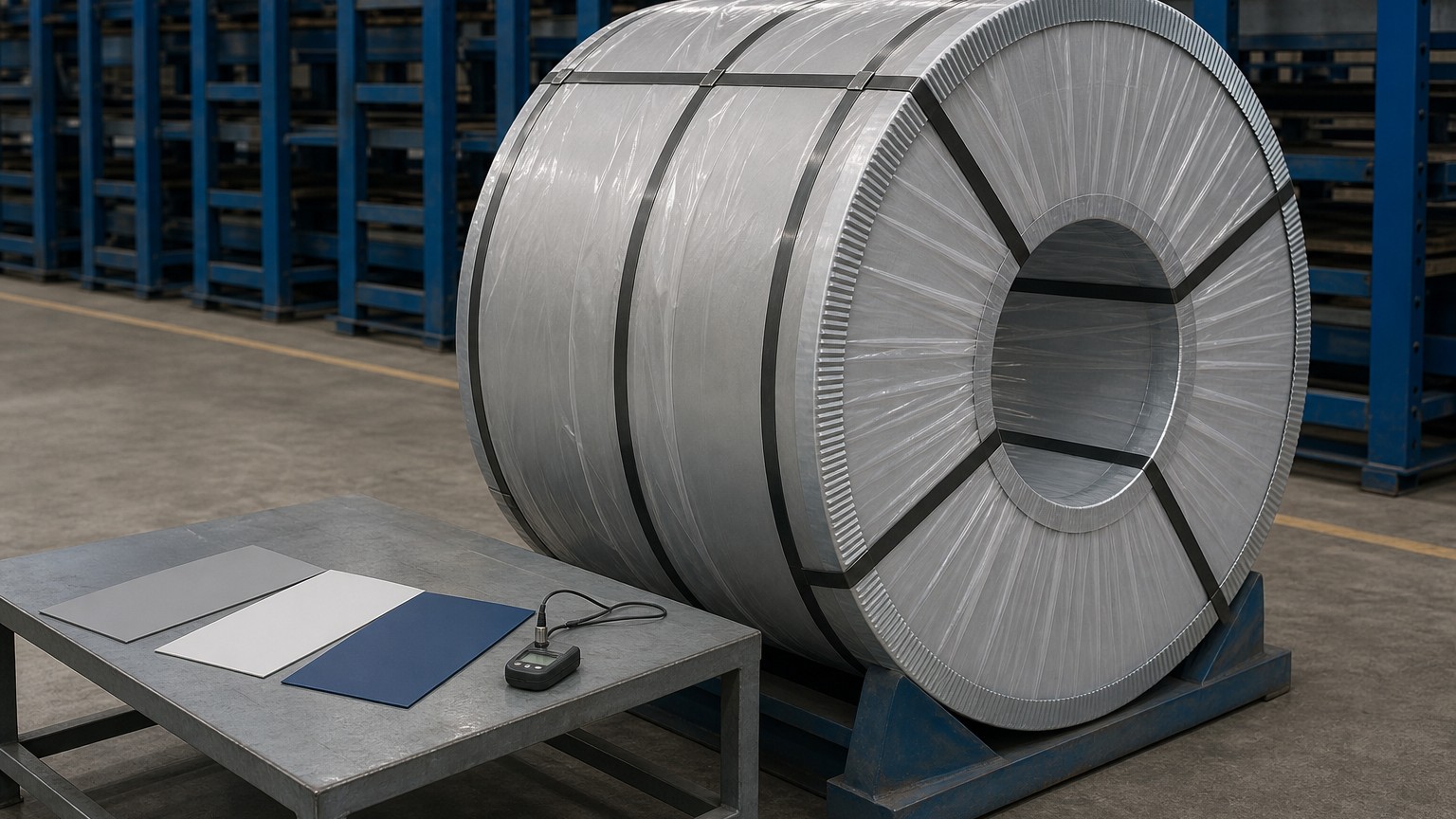
Three checks catch most problems and none of them is expensive. Film thickness measurement on a sample from each coil confirms that the wet film the line applied actually cured to the thickness specified. An adhesion test by bending or impact shows whether the primer and topcoat are properly bonded to the pretreatment, which is where a badly run coating line fails first. A solvent resistance check on the topcoat gives a quick indication of cure and resin type, since a fully cured fluoropolymer film resists solvents that will attack an under-cured polyester. Better still, have these tests run on a sample that the supplier draws from the delivered coil rather than on a showroom panel. If you would rather not manage that verification alone, send the drawing and site details to our technical team and we will confirm which substrate, coating system and test package suits the project, and what can be supplied from stock with the paperwork that matches it.
Conclusion: PVDF wins on sunlight, chemicals and time; polyester wins on first cost. Match the coating to the exposure, write it into the specification, and verify it on arrival.