
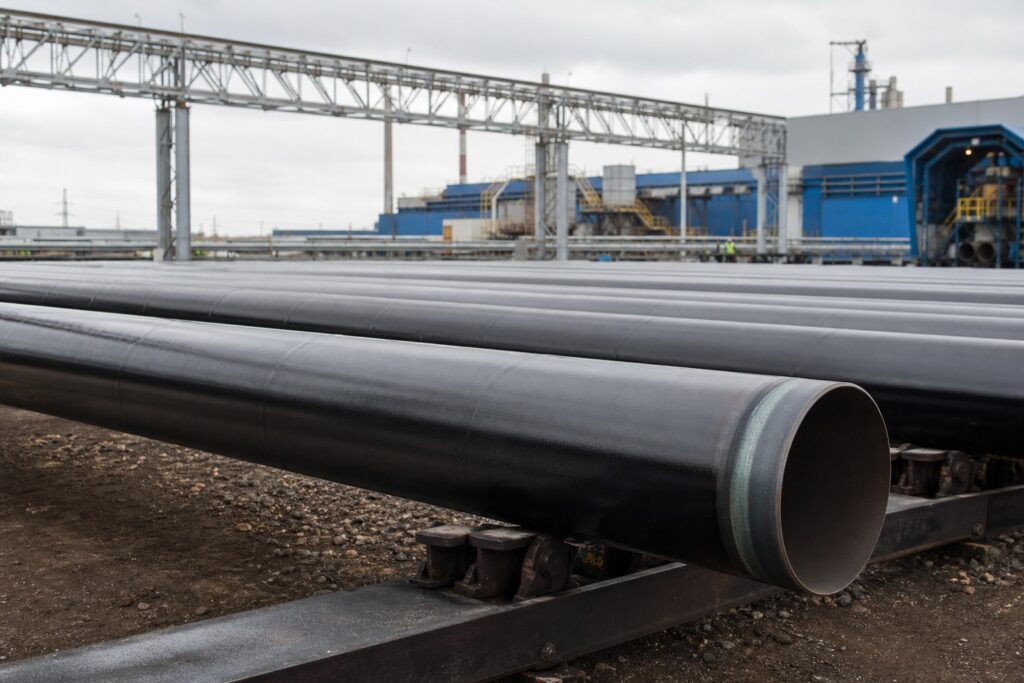
Pipeline Steel Coating: 3LPE, FBE and Field Joint Options
Bare steel corrodes. In buried and offshore service, an uncoated line pipe can lose measurable wall thickness within a few years, and a single corrosion failure in a hydrocarbon line is measured in environmental damage, not just repair cost. That is why pipeline steel coating is not an add-on — it is part of the pipe specification, decided at the same time as grade, wall thickness and joint design.
This guide explains the coating systems buyers encounter on real projects: single-layer and multi-layer epoxy systems, the three-layer polyethylene (3LPE) family that dominates buried pipelines, and the field joint coatings applied after welding. You will learn what each option protects against, where each is specified, and which questions to ask a supplier before committing to a coating spec.
Why Coat Pipeline Steel?
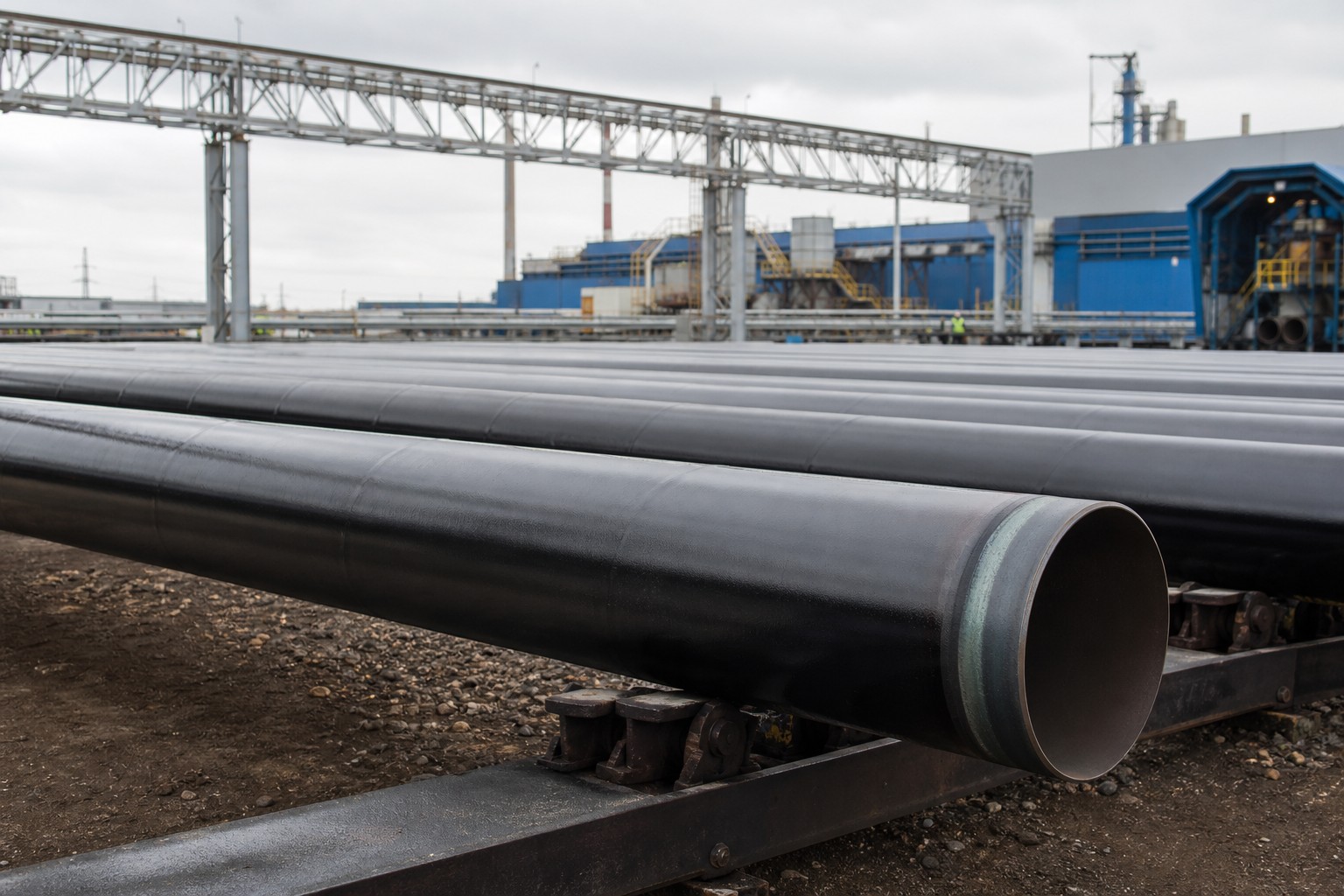
Pipeline steel is protected by a combination of a barrier coating and cathodic protection. The coating provides the primary barrier: it keeps water, oxygen and aggressive ions away from the steel surface. Cathodic protection then protects the small number of coating defects and holidays that inevitably exist, by polarizing the steel to a potential where corrosion cannot proceed.
This partnership means the coating does not need to be perfect to be effective — but its quality determines how much current the cathodic protection system must deliver, and therefore how long the pipeline can be protected economically. A well-applied cathodic protection system combined with a sound coating gives pipelines service lives measured in decades. Coating quality is also an environmental decision: most reportable pipeline incidents over the years have involved external corrosion, and coating condition is the first line of defense against it.
Coating System Basics: From Single Layer to Multi-Layer
Modern external pipeline coatings are built in layers, each with a job to do:
- Primer / anti-corrosion layer — bonds to the blasted steel surface and blocks corrosion.
- Adhesive or tie layer — joins the primer to the outer mechanical layer.
- Mechanical / barrier layer — polyethylene or polypropylene that resists soil stress, rocks and water ingress.
The chemistry of each layer, and how they are combined, define the system name. Single-layer fusion bonded epoxy (FBE) is exactly what it sounds like — one epoxy layer. Three-layer polyethylene (3LPE) stacks an FBE primer, an adhesive and an outer polyethylene jacket. The trend in large projects has been toward multi-layer systems because the outer mechanical layer dramatically improves resistance to handling damage and soil stress compared with a thin single layer.
FBE: The Foundation Coating
Fusion bonded epoxy coating is applied as a dry powder onto pipe heated to around 200–240 °C. The powder melts, flows and cross-links into a tough thermoset film 250–500 microns thick. Because it is chemically bonded to the blasted steel surface, FBE has excellent adhesion, resists cathodic disbondment, and tolerates operating temperatures up to roughly 80–100 °C depending on the formulation.
FBE is used in three ways on modern pipelines:
- As a stand-alone coating for pipelines that operate at higher temperatures, where polyolefin outer layers would soften.
- As the primer layer of 3LPE and 3LPP systems, where it supplies the corrosion protection and the outer layer supplies mechanics.
- As an internal lining for pipes carrying aggressive or high-purity products, applied with a spraying lance inside the rotating pipe.
FBE is also the standard coating for most girth weld field joints in multi-layer systems, which is why almost every pipeline project works with FBE materials in some form.
3LPE: The Workhorse of Buried Lines
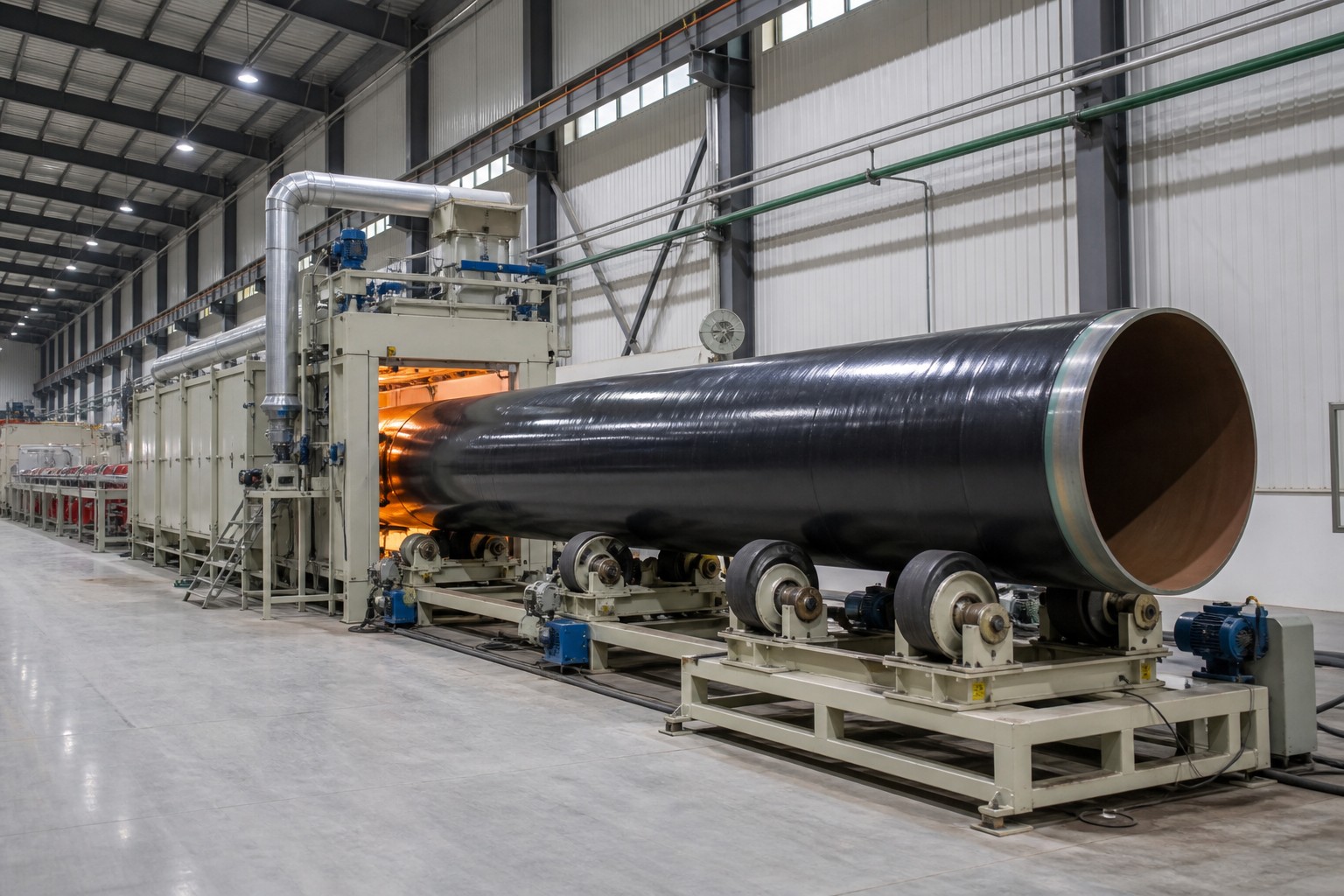
Three-layer polyethylene is the default external coating for buried oil and gas transmission pipelines in most of the world. The system is applied in one continuous plant operation: the pipe is blast-cleaned to near-white metal, induction-heated, and passed through a line that sprays FBE powder, extrudes the adhesive layer and wraps on the polyethylene outer layer while the pipe rotates and advances.
The result is a coating roughly 2.5–3.7 mm thick that combines the adhesion and corrosion resistance of FBE with the mechanical toughness of polyethylene. 3LPE resists impact during handling, withstands soil stresses after burial, and limits current demand on the cathodic protection system. For most onshore transmission lines, 3LPE offers the best balance of protection, cost and application speed.
Specifications commonly call 3LPE with a minimum FBE thickness and an overall system thickness that varies with pipe diameter — typically 2.5 mm for smaller lines and up to 3.7 mm for large-diameter trunk lines. The outer layer is usually high-density or medium-density polyethylene, and the whole system is tested for adhesion, impact resistance, indentation and cathodic disbondment before the pipe leaves the coating yard.
When to Choose 3LPP or Other Systems
Three-layer polypropylene (3LPP) replaces the polyethylene outer layer with polypropylene, which tolerates higher service temperatures — useful for pipelines carrying hot product or for deep-water offshore lines where the pipe is pulled through water and sees higher installation temperatures. For extreme conditions, buyers may also encounter:
| System | Typical operating limit | Primary use |
|---|---|---|
| Single-layer FBE | ~80–100 °C | Higher-temperature service, internal lining |
| 3LPE | ~60–70 °C | Buried onshore transmission lines (default) |
| 3LPP | ~110 °C + | Hot pipelines, offshore and deep-water lines |
| Concrete weight coating | N/A (add-on) | Offshore negative buoyancy and protection |
Cost rises with performance: 3LPP is more expensive than 3LPE, and concrete weight coating is applied on top of a corrosion coating rather than instead of one. The engineering decision is driven by operating temperature, installation method and environment — not by coating cost alone.
Field Joint Coatings: The Weakest Link
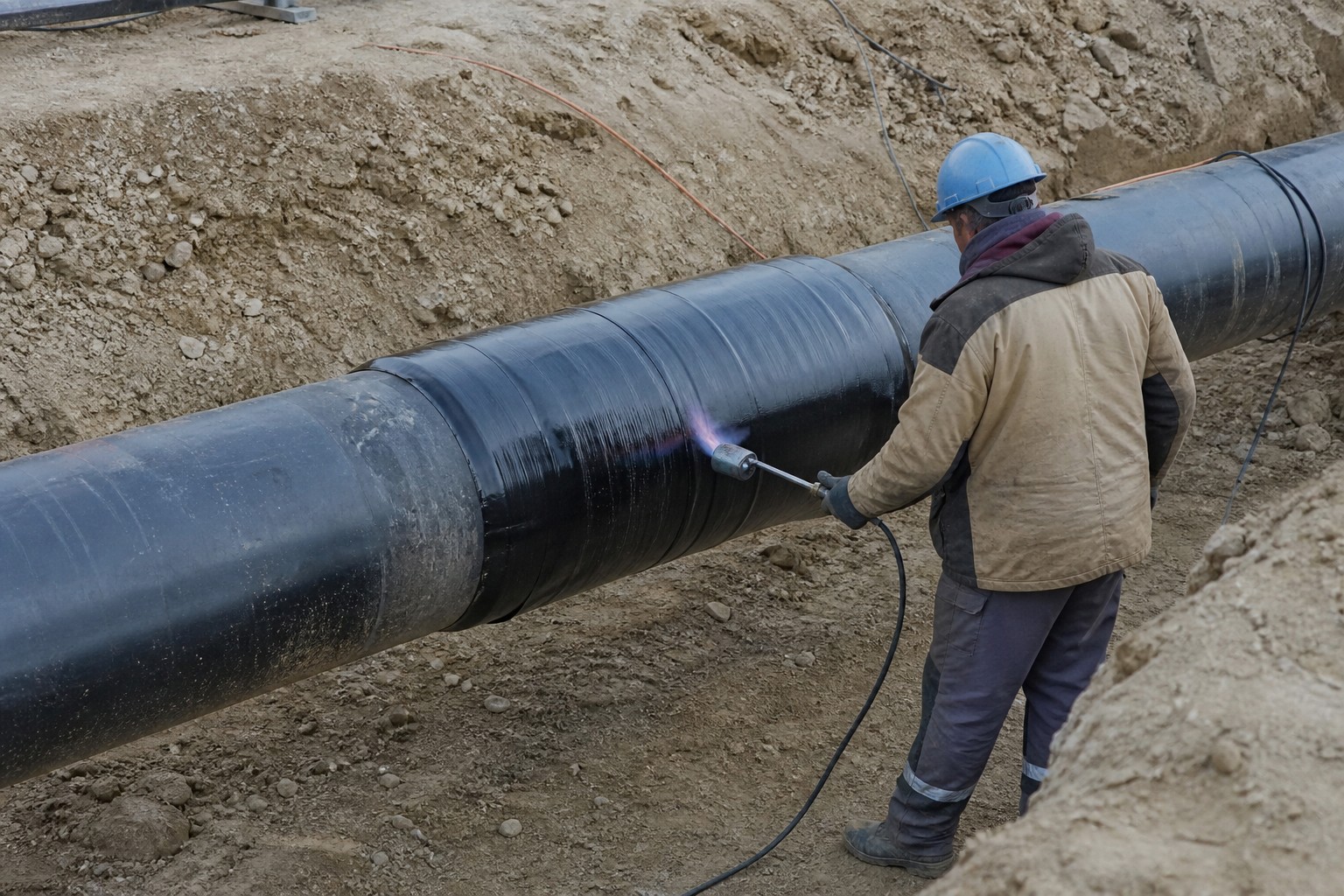
Plant-applied coating stops at each pipe end, leaving a bare band for welding. After the girth weld is made and inspected, that band — the field joint — must be coated to the same standard as the rest of the pipe, in site conditions, by a different crew. Field joints are historically the weakest link in pipeline coating integrity.
Common field joint systems include:
- FBE patch / liquid epoxy — brushed or sprayed two-part epoxy, often with a sleeve; used widely for 3LPE lines in moderate environments.
- Heat-shrink sleeves — pre-coated sleeves that shrink onto the heated joint; fast and field-friendly, quality depends heavily on surface preparation and application discipline.
- Multi-component polyurethane or epoxy — applied with molds for large diameters and offshore work.
- Induction-heated FBE or 3LPE patch — replicates the plant system when the project demands it.
The buyer’s checklist for field joints is simple but strict: surface preparation to the specified standard, correct overlap onto the parent coating, holiday testing of every completed joint, and documentation of the batch and application parameters. Most coating failures found in pipeline integrity surveys start at poorly made field joints, so this step deserves the same specification attention as the plant-applied system.
Coating Defects, Testing and Quality Checks
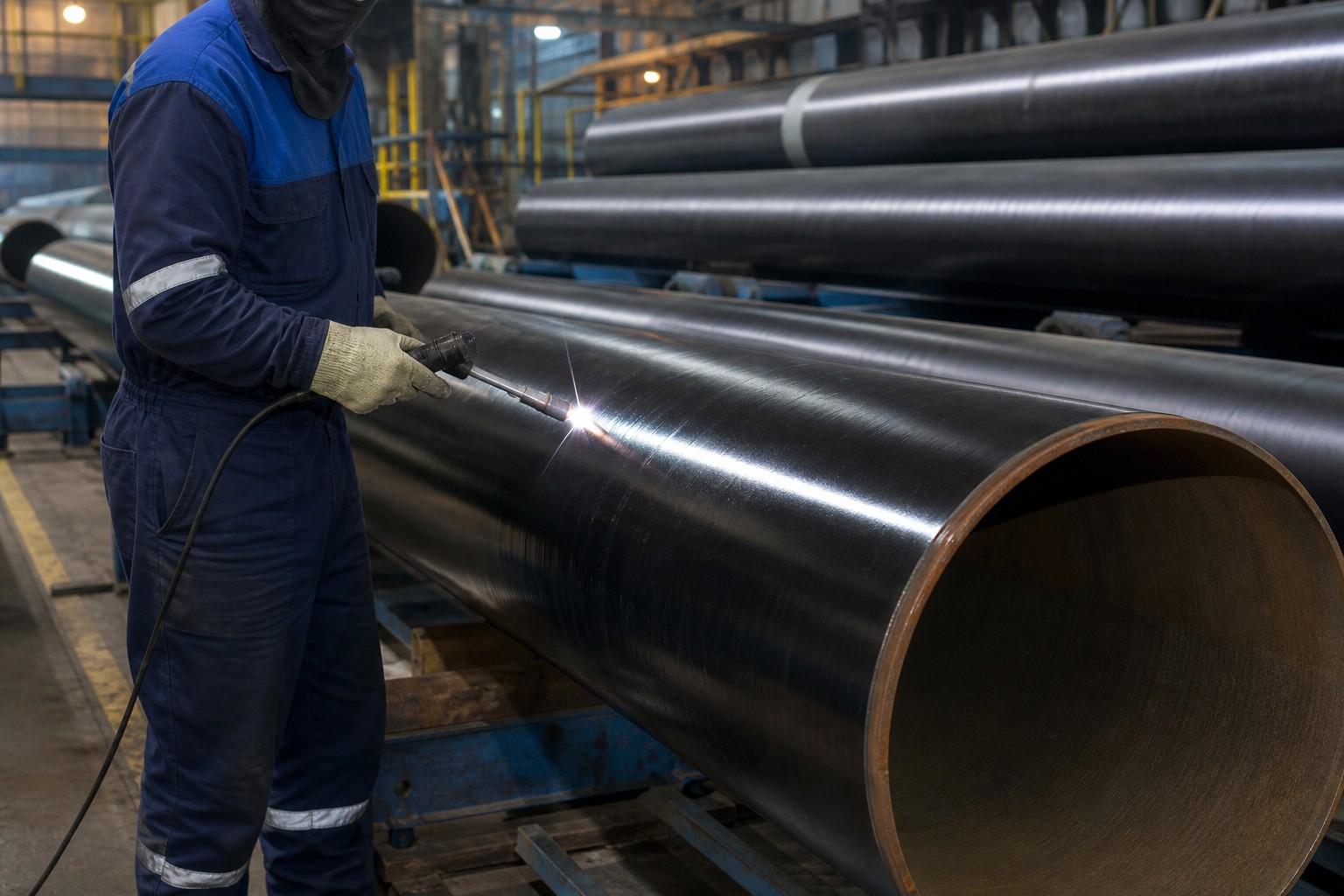
Coating quality is verified with a defined test package, and a serious buyer should see the results before shipment:
- Holiday (discontinuity) detection — a high-voltage spark test runs along the coated surface to find pinholes and bare spots; the acceptable number of repairs per pipe is limited.
- Adhesion tests — pull-off or knife tests confirm the layers are bonded to the steel and to each other.
- Impact and indentation tests — simulate handling and soil loading.
- Cathodic disbondment tests — measure how far the coating lifts from a deliberately damaged area under cathodic protection; this predicts long-term performance in service.
- Thickness profile — dry-film thickness is measured around the circumference and along the length.
Surface preparation is the hidden variable behind every one of these tests. Coating applied over an inadequately blasted surface fails prematurely regardless of the coating chemistry — which is why coating specifications always state the blast cleanliness (typically Sa 2½) and surface profile in microns, and why third-party inspection during application is worth the cost on large orders.
Choosing the Right Coating System
For most buyers, the decision matrix is short:
- Buried onshore line, normal temperatures → 3LPE is the safe default with the widest coating-yard availability.
- Hot product or offshore installation → move to 3LPP or a high-temperature FBE, and involve an engineer before specifying.
- Internal corrosion protection → internal FBE or liquid epoxy lining, chosen by the product carried.
- Repair and maintenance → match the field joint and repair materials to the existing system to avoid galvanic or adhesion mismatches.
Remember that coating is specified on the pipe order itself: the purchase order for seamless steel pipe or welded line pipe should state the coating system, thickness, standard and testing package, so the mill or coating yard can confirm capacity and lead time before you commit to a delivery schedule. Factory-applied coatings are governed by dedicated coating standards (for example the ISO 21809 series), which project specifications reference alongside the pipe standards published by bodies such as the American Petroleum Institute — writing both into the order prevents disputes at inspection. Coating also adds lead time, typically one to three weeks for plant-applied systems, and that belongs in your project plan.
Frequently Asked Questions
Is 3LPE coating suitable for all buried pipelines?
It is the most common choice for buried onshore transmission lines at normal operating temperatures. For hot pipelines, deep-water installations or aggressive soil conditions, engineers may specify 3LPP, FBE or additional mechanical protection instead.
What is the difference between FBE and 3LPE?
FBE is a single epoxy layer that bonds directly to steel. 3LPE adds an adhesive layer and a polyethylene outer jacket over an FBE primer, giving extra mechanical protection and lower cathodic protection current demand. FBE alone is used where higher temperatures rule out polyethylene.
Who applies the coating — the pipe mill or a separate plant?
Both models exist. Some mills run integrated coating lines; others ship bare pipe to dedicated coating yards. Buyers should confirm whether the quote is for bare pipe or coated pipe, and request the coating standard (for example ISO 21809 or its regional equivalents) plus the test certificate from the coating facility.
Specify the Coating, Then Order the Pipe
A pipeline order is complete only when the coating is specified alongside the steel: grade, size and wall in the pipe standard, then coating system, thickness and testing on the coating line. If you are sourcing line pipe with a coating requirement — or want to confirm which system fits your operating temperature and installation method — send the details to our team at Shuncheng Steel. We supply bare and coated API 5L line pipe, coordinate coating capacity and provide the full mill and coating documentation trail.
Related Reading
Brush up on the pipe behind the coating: read Oil and Gas Pipeline Steel: Grades, Standards and Selection Guide and API 5L PSL1 vs PSL2: Requirements, Testing and Price Impact.