
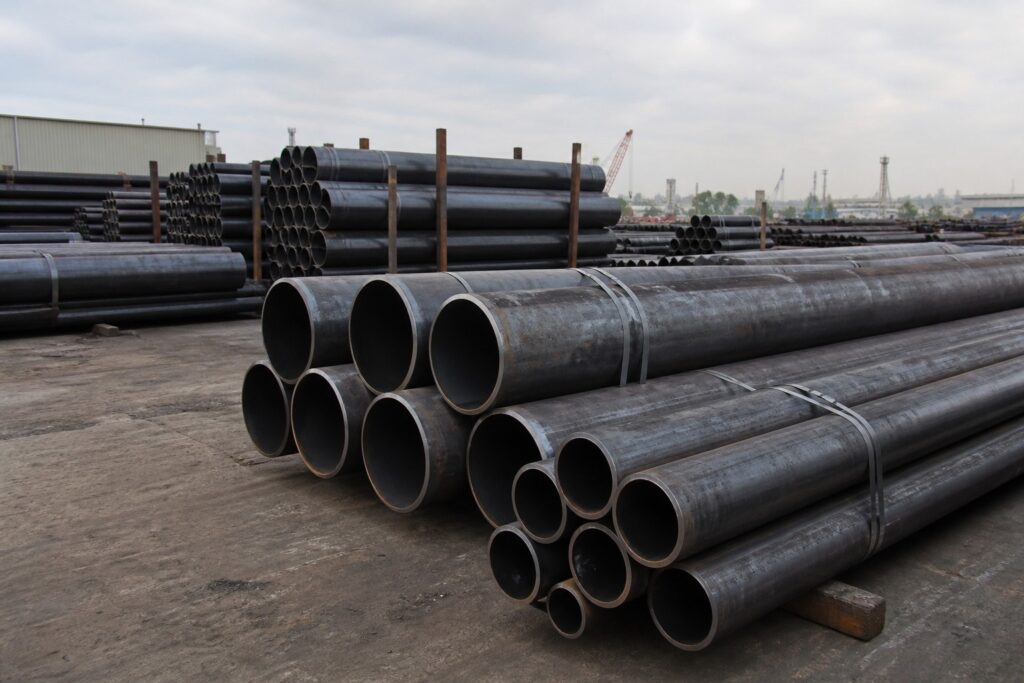
Oil and Gas Pipeline Steel: Grades, Standards and Selection Guide
If you are involved in oil and gas projects, the phrase oil and gas pipeline steel comes up in almost every specification meeting. Line pipe is not a commodity — the steel inside a pipeline must survive high internal pressure, aggressive fluids, wide temperature swings and decades of service without failure. Getting the grade, standard and manufacturing route wrong can delay a project by months and cost millions in rework.
This guide walks through the API 5L specification, the meaning of grades from X42 to X80, the difference between PSL 1 and PSL 2, and the practical steps buyers use to select and source pipeline steel with confidence.
What Is Pipeline Steel and Why Does It Matter?
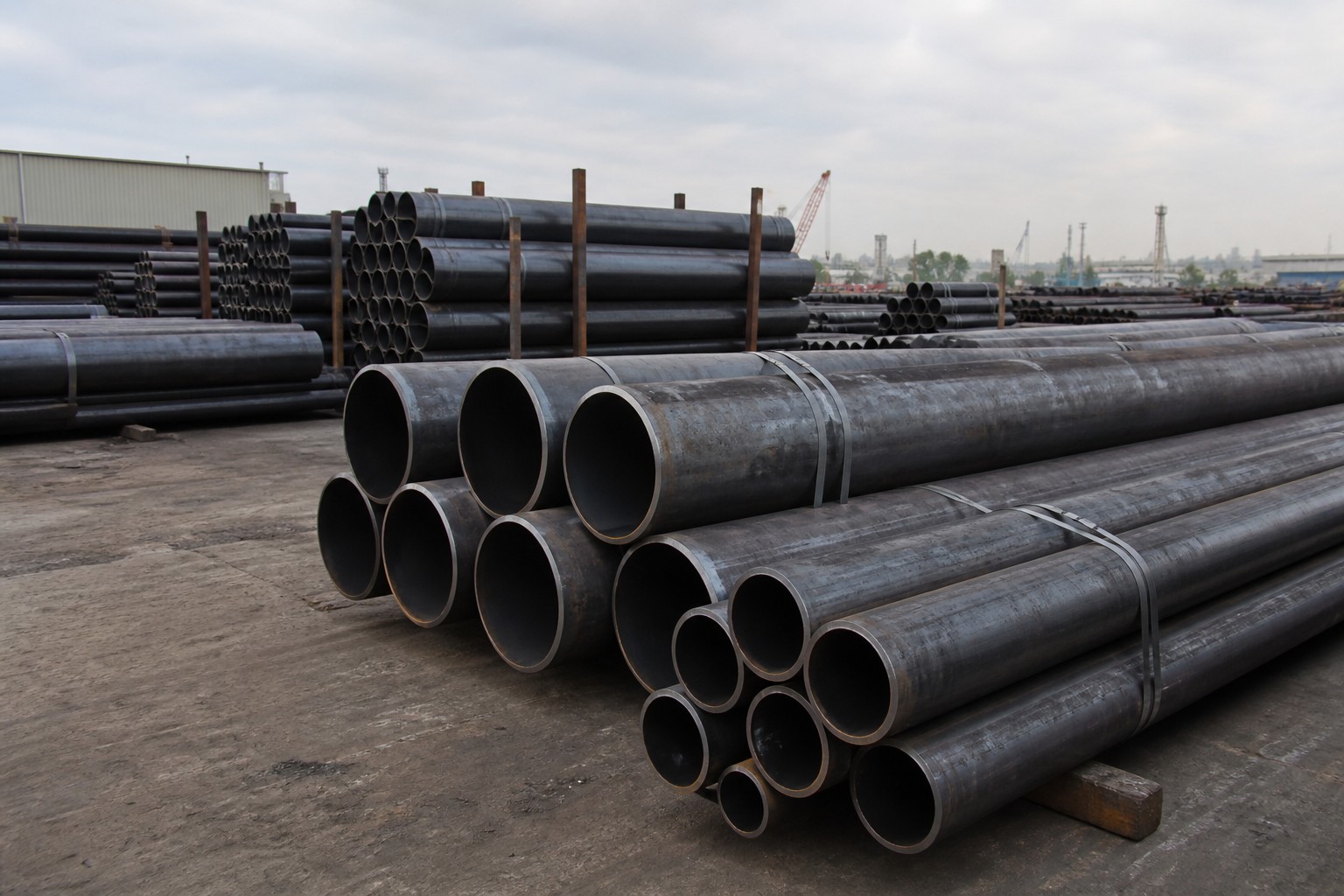
Pipeline steel is the material used to manufacture line pipe for transporting crude oil, natural gas and refined products over long distances. Unlike structural steel, which mainly carries static loads, pipeline steel must combine high strength with excellent toughness, weldability and resistance to crack propagation.
Modern seamless steel pipe and welded line pipe are produced to strict chemistry limits and mechanical property targets. The balance between strength and toughness is achieved through controlled alloying — typically carbon, manganese, niobium, vanadium and titanium microalloys — followed by thermomechanical controlled processing (TMCP). This is why a pipeline grade such as X70 can be both stronger and tougher than older carbon steels of the same weight.
For buyers, the practical implication is simple: the grade stamped on the pipe certificate is a promise about chemistry, yield strength and impact performance. Understanding what each grade promises is the first step toward a specification that fits your service conditions.
The Standards That Govern Pipeline Steel
Most international oil and gas projects specify pipeline steel to one of three families of standards. They are closely aligned, but not identical, so your project location and engineering preference usually decide which one is written into the purchase order.
| Standard | Scope | Common regions |
|---|---|---|
| API 5L | Line pipe for pipeline transportation systems | Global (US-origin projects) |
| ISO 3183 | Petroleum and natural gas industries — line pipe | Global (international projects) |
| GB/T 9711 | China national standard, technically aligned with API 5L | China and Belt & Road projects |
API standards are developed by the American Petroleum Institute and are referenced by pipeline codes worldwide, including ASME B31.4 and B31.8 in North America. The international equivalent, ISO 3183, is largely harmonized with API 5L — in fact, the two organizations publish a joint edition — so a pipe certified to API 5L PSL 2 is generally accepted where ISO 3183 is specified, and vice versa.
Beyond the pipe specification itself, pipeline designers also reference material standards for fittings and flanges, such as ASTM A105 for forged carbon steel fittings and A234 for wrought fittings. When you source a complete line pipe package, confirming that all components meet compatible standards is part of good procurement practice.
Pipeline Steel Grades from X42 to X80
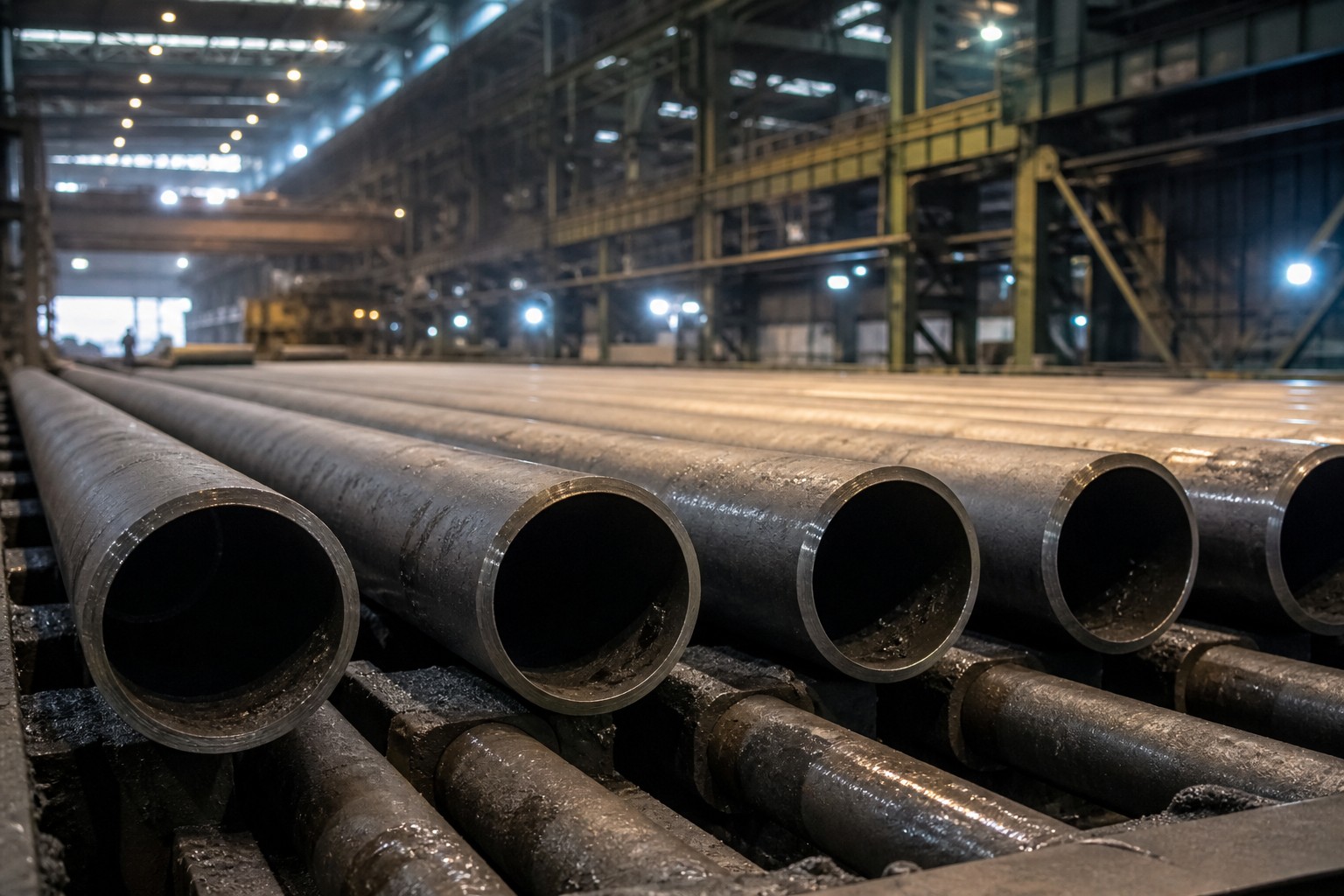
API 5L groups pipeline steel into grades identified by their minimum yield strength. The “X” grade number expresses the yield strength in thousands of pounds per square inch — X52 has a minimum yield strength of 52,000 psi (about 360 MPa), X65 is 65,000 psi (about 450 MPa), and so on.
| Grade | Min. yield strength | Typical use |
|---|---|---|
| X42 | 42,000 psi / 290 MPa | Low-pressure gathering lines, water and utility services |
| X46 / X52 | 46,000–52,000 psi / 317–360 MPa | Mid-pressure transmission lines, most common export grade |
| X56 / X60 | 56,000–60,000 psi / 386–414 MPa | High-pressure transmission lines, sour service options |
| X65 | 65,000 psi / 448 MPa | Long-distance trunk lines, offshore pipelines |
| X70 / X80 | 70,000–80,000 psi / 483–552 MPa | High-pressure large-diameter projects, reduced wall thickness design |
Choosing a grade is an engineering trade-off. Higher grades allow thinner walls and lighter pipe for the same design pressure, which cuts steel tonnage and welding time. The catch is that higher grades are less forgiving of field welding errors and are more sensitive to hard spots and hydrogen-induced cracking in sour environments. For most importers outside of giant trunk-line projects, X52 to X65 covers the overwhelming majority of applications and is the most practical range to stock.
PSL 1 vs PSL 2: What Changes When You Move Up?
Every API 5L grade can be ordered as PSL 1 or PSL 2 — product specification level — and this choice matters as much as the grade itself. PSL 2 adds tighter chemistry limits, mandatory impact testing, a maximum yield-to-tensile ratio, and more demanding non-destructive testing than PSL 1.
The practical differences buyers should know:
- Chemistry: PSL 2 caps carbon equivalent (CE) more tightly to guarantee weldability.
- Toughness: PSL 2 requires Charpy impact tests at a specified temperature; PSL 1 does not.
- Traceability: PSL 2 demands full heat traceability from steelmaking to finished pipe.
- Yield-to-tensile ratio: PSL 2 controls the ratio so the pipe shows ductile behavior before failure.
Most transmission lines, and virtually all projects where the pipe will be welded in the field under sour or low-temperature conditions, specify PSL 2. PSL 1 is still widely used for gathering lines and less critical services where the cost saving is meaningful. When comparing quotations, always confirm whether the PSL level in the offer matches the one in your specification — a PSL 1 price cannot be compared with a PSL 2 requirement.
Seamless vs Welded Line Pipe
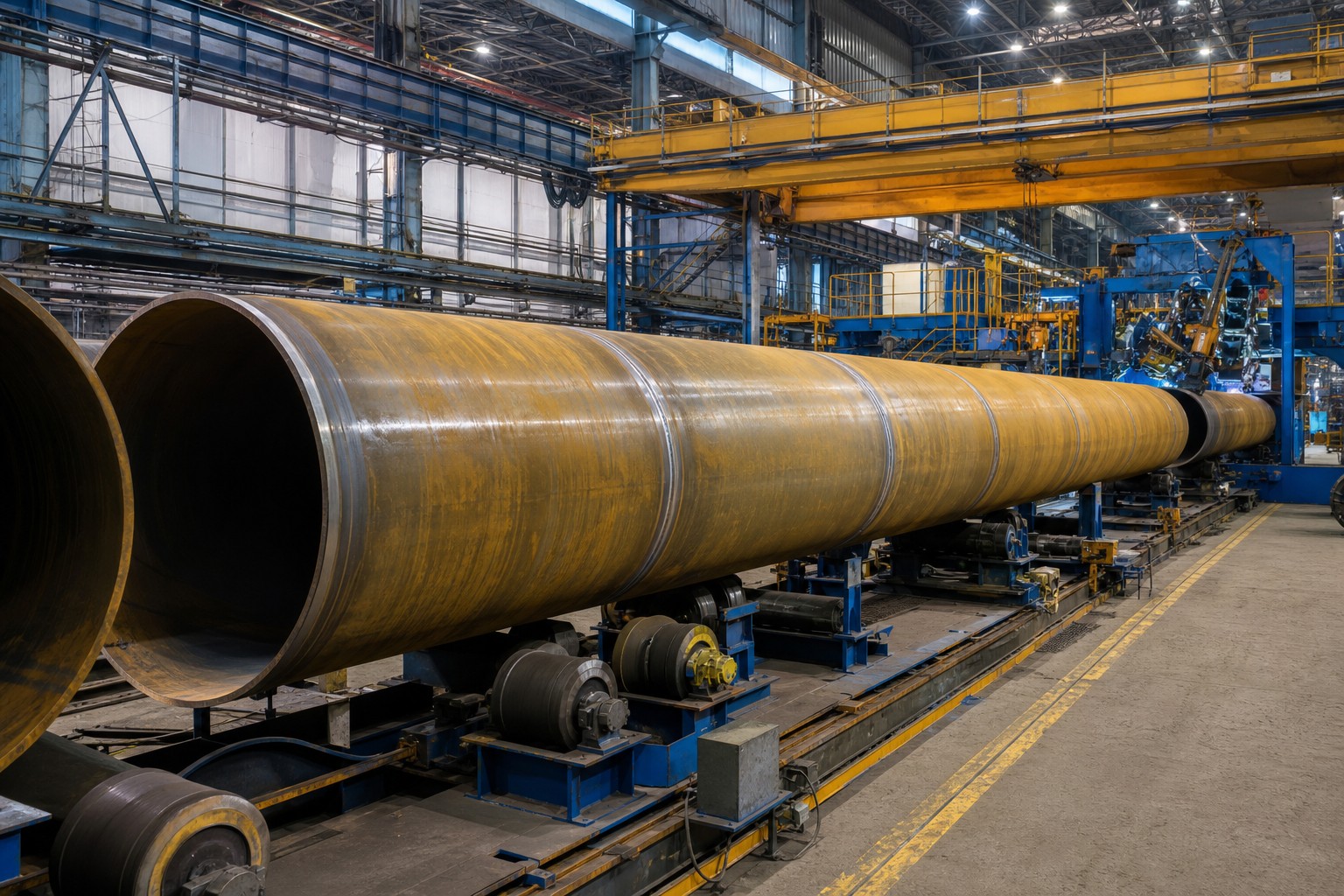
Line pipe is manufactured either seamless or welded, and the manufacturing route determines both the size range and the economics of your purchase.
Seamless pipe is pierced from a solid round billet, which gives it a uniform structure with no longitudinal seam. It is the preferred choice for smaller diameters — typically up to around 16 inches — and for high-pressure service where the absence of a weld eliminates the seam as a potential failure point. Our guide to seamless steel pipe manufacturing explains the process in detail.
Welded pipe is formed from steel plate or coil and joined along the seam using ERW (electric resistance welding), LSAW (longitudinal submerged arc welding) or SSAW (spiral submerged arc welding). Modern ERW mills produce pipe with weld quality that meets the same API 5L testing requirements as seamless, and for diameters above 16 inches welded pipe is the only practical option. Large-diameter trunk lines over 24 inches are almost always DSAW or SSAW because seamless manufacturing is not economically feasible at those sizes.
Your choice depends on diameter, design pressure and availability. For a 6-inch X52 gathering line, seamless is the natural answer; for a 30-inch X70 trunk line, welded is the only realistic option.
How to Select the Right Grade for Your Project
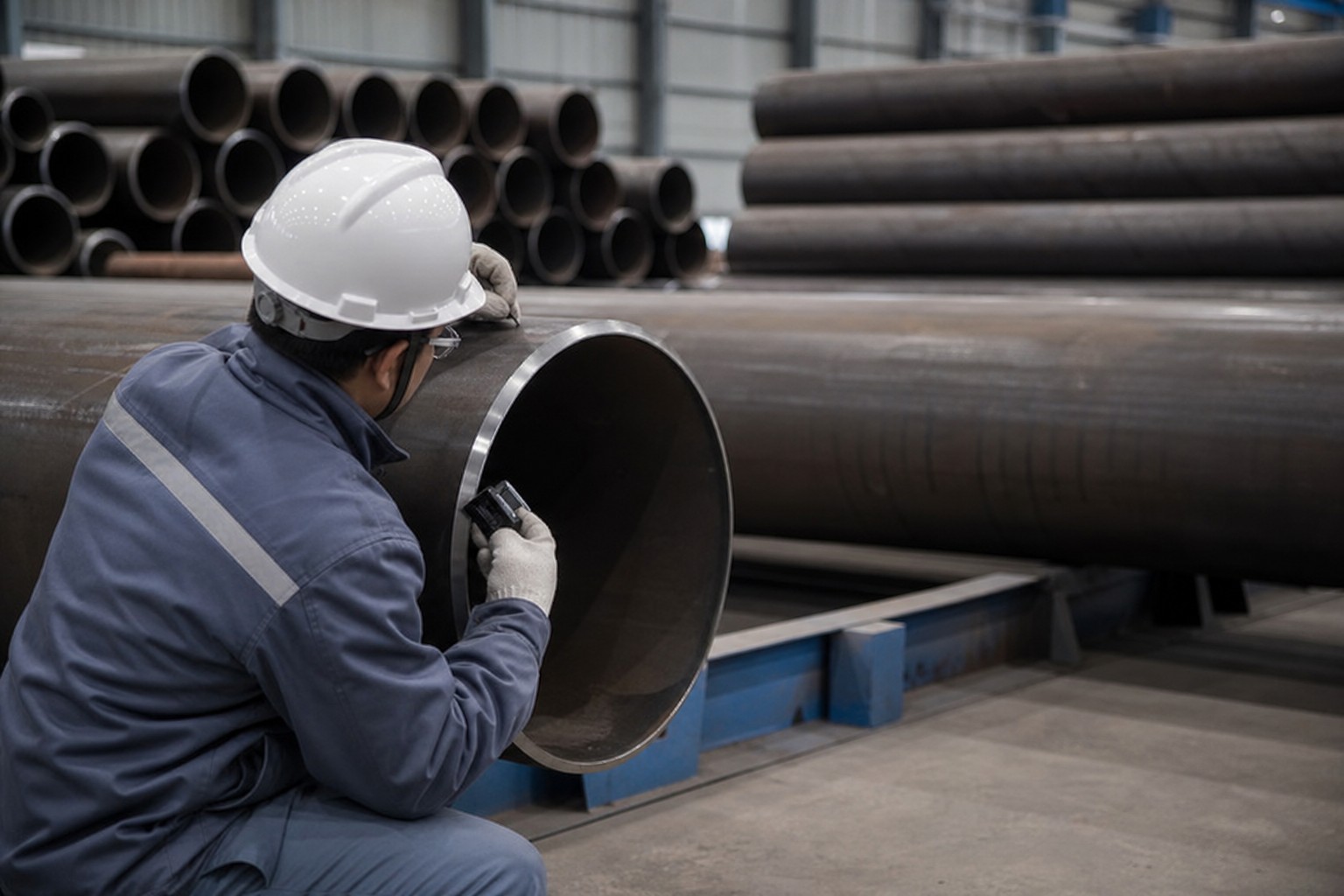
Working through a selection from scratch, the decision sequence usually looks like this:
- Define the service: what fluid, what pressure, what temperature range? Sour gas with hydrogen sulfide triggers additional testing (sour-service grades).
- Set the diameter and wall: flow rate drives diameter; pressure and grade drive wall thickness. Higher grade means thinner wall for the same pressure.
- Choose the PSL level: PSL 2 for transmission and any critical or welded-in-field application; PSL 1 for simple gathering duty.
- Pick the manufacturing route: seamless below about 16 inches for critical service; ERW or DSAW above that, or wherever economics favor welded pipe.
- Confirm the testing package: hydrostatic test, impact test temperature, NDT method, and whether the order is to API 5L PSL 2 supplementary requirements (SR) like SR5 for sour service.
If you are unsure whether your project needs a sour-service grade, the decision usually comes down to the partial pressure of H2S in the transported fluid — this is where consulting the engineering team or the pipe supplier early saves expensive re-specification later.
Sourcing Pipeline Steel: Documents and Checks
Once the specification is fixed, sourcing quality pipeline steel is about verifying documents and physical evidence. Every heat of pipe should arrive with a mill test certificate (MTC) showing chemistry and mechanical test results traceable to the API 5L grade and PSL level you ordered. For buyers in international trade, the natural gas and crude transmission business relies heavily on this documentation trail — a certificate mismatch can stop pipe at customs or fail a client audit.
Practical checks before payment:
- Verify the MTC against the API 5L edition referenced in your contract.
- Confirm impact test temperatures match your service conditions.
- For PSL 2, check the CE value and yield-to-tensile ratio against the limit in the standard.
- Arrange third-party inspection (SGS, Bureau Veritas, TÜV or equivalent) at the mill before shipment when the order value justifies it.
- Confirm marking: grade, PSL, size and heat number must be stenciled on each pipe end.
Long-distance pipeline transport statistics show why this discipline matters: most in-service pipeline failures trace back to material or weld defects, not to design pressure — a reminder that the steel you buy is the real safety barrier. Working with a supplier who stocks full MTC packages and supports third-party inspection is the most reliable way to protect the project.
Frequently Asked Questions
What is the most common grade of pipeline steel?
X52 is historically the most widely stocked grade for oil and gas gathering and mid-size transmission lines, with X65 increasingly common for new high-pressure projects. Together, X52–X65 covers most export demand.
Is X70 pipe the same as API 5L X70?
Yes. X70 refers to API 5L (or ISO 3183) Grade X70 with a minimum yield strength of 70,000 psi. Always confirm the PSL level and the governing standard edition on the certificate.
Can ERW line pipe be used for oil and gas transmission?
Yes. Modern high-frequency ERW pipe is produced to API 5L PSL 2 with full NDT and is widely used for transmission lines up to medium diameters. Large-diameter trunk lines more commonly use DSAW or SSAW pipe.
Talk to a Specialist Before You Spec
Selecting oil and gas pipeline steel should never be a paper exercise. A reliable supplier can check your operating conditions, confirm grade and PSL suitability, provide MTCs from recent heats and arrange third-party mill inspection before you commit. Send your required diameter, wall thickness, standard and quantity to our team at Shuncheng Steel — we respond with a specification review, mill-direct pricing and a realistic delivery schedule.
Related Reading
New to API 5L line pipe terminology? Read our companion guide: API 5L Line Pipe: The Backbone of Oil and Gas Pipelines.