
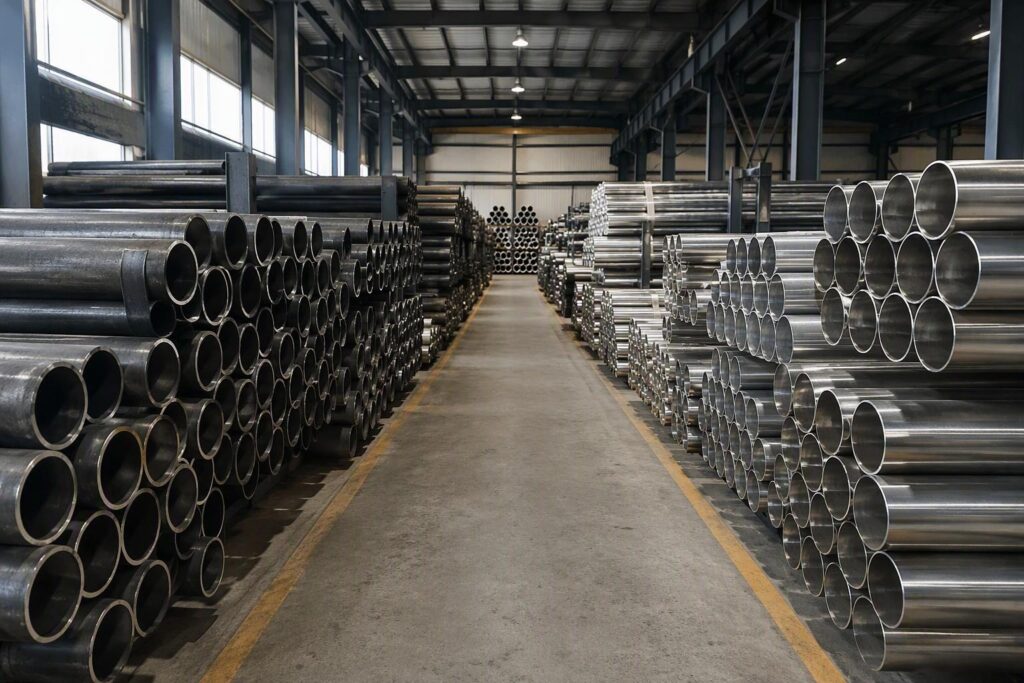
Carbon Steel vs Stainless Steel Pipe: Which Is Right for Your Project?
Every piping project starts with the same question: carbon steel vs stainless steel pipe — which material should the specification call out? The answer is rarely about which steel is “better.” It is about which material matches the fluid you are moving, the environment the pipe will live in, and the budget your project can justify. Choose carbon steel for the wrong application and you will be replacing corroded line in a few years. Choose stainless steel where it is not needed and you will have paid a large premium for performance you never used.
This guide compares the two families honestly: chemistry, mechanical properties, corrosion behavior, governing standards, real-world applications and total cost. By the end you will know exactly which questions to ask your supplier — and whether your order should read seamless steel pipe in carbon steel, stainless steel, or both.
What Is the Difference Between Carbon Steel and Stainless Steel Pipe?
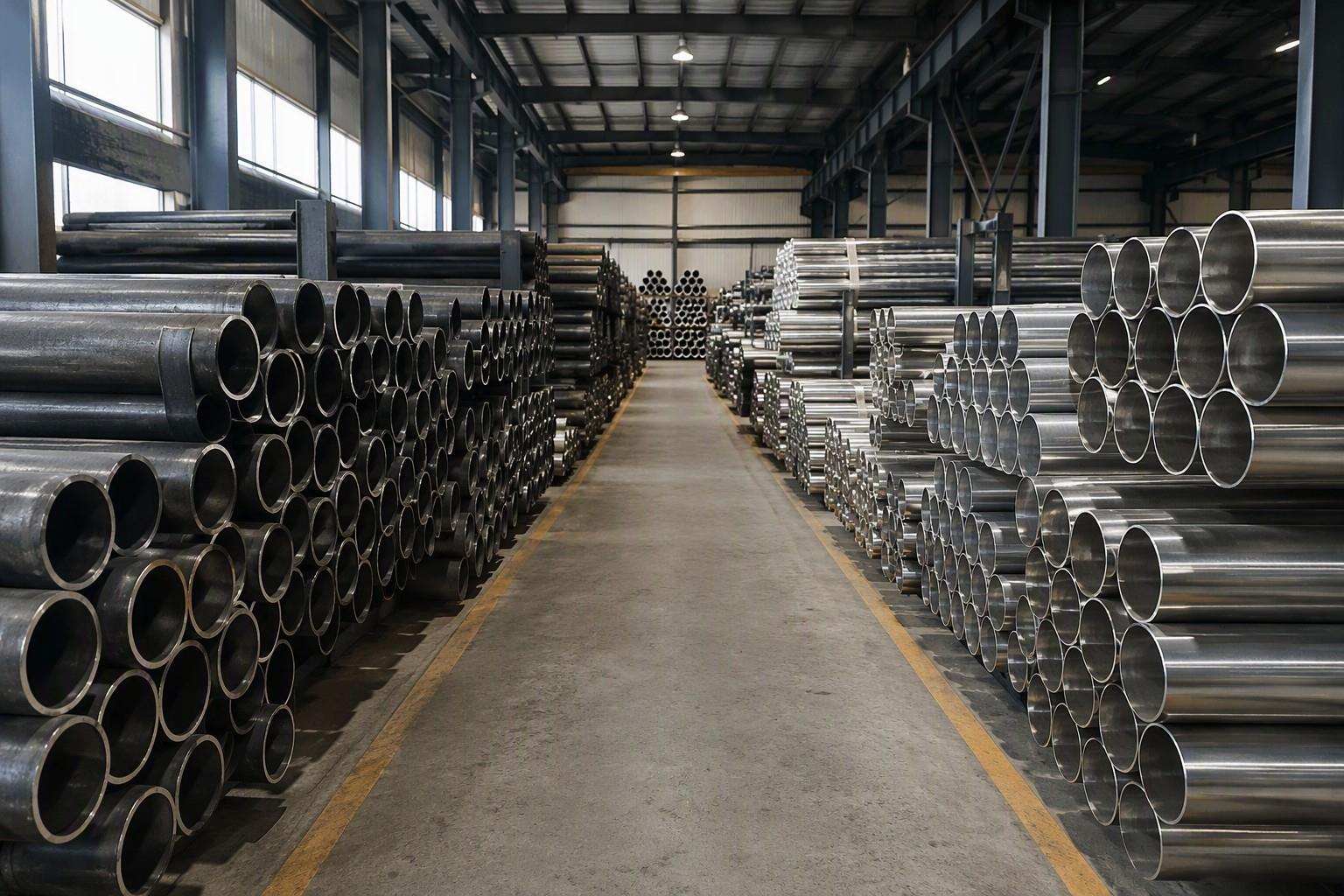
Both materials are iron-based, but the alloying story diverges at chromium. Carbon steel is an alloy of iron and carbon, with carbon typically between about 0.05% and 2% by weight and only residual amounts of other elements. It is strong, weldable and inexpensive — but it has no built-in defense against corrosion. Exposed to moisture and oxygen, carbon steel rusts, so it normally relies on protective coatings, galvanizing or cathodic protection in service.
Stainless steel takes a different path: it contains at least 10.5% chromium, which reacts with oxygen to form an invisible, self-healing chromium oxide film on the surface. This passive layer is what makes stainless steel “stainless.” Common pipe grades such as 304 (18% chromium, 8% nickel) and 316 (which adds 2–3% molybdenum for extra resistance to chlorides and pitting) keep that protective film intact across a wide range of corrosive media.
| Characteristic | Carbon steel pipe | Stainless steel pipe |
|---|---|---|
| Primary alloying element | Carbon (about 0.05–0.30% in mild grades) | Chromium ≥ 10.5%, plus nickel, molybdenum |
| Corrosion resistance | Low — requires coating or galvanizing | High — self-healing passive oxide film |
| Typical grades | A53 Gr A/B, A106 Gr B, API 5L X42–X65, GB 20# | 304/304L, 316/316L (austenitic pipe) |
| Relative material cost | Low | Substantially higher |
| Common governing standards | ASTM A53, A106, API 5L | ASTM A312, A358 |
| Magnetic behavior | Magnetic | Austenitic grades essentially non-magnetic |
Carbon Steel Pipe: Properties and the Grades You Will Actually Buy
Carbon steel pipe is the workhorse of general industry. Its mechanical properties are defined by carbon content and heat treatment: mild grades are ductile and easy to weld and form, while higher-carbon and micro-alloyed grades deliver significantly higher yield strength for pressure service.
For ordinary industrial and mechanical duty, ASTM A53 Grade B — with a minimum yield strength of 35,000 psi (about 240 MPa) — remains one of the most widely specified carbon steel pipe standards in the world. Where higher temperatures and pressures are involved, ASTM A106 seamless carbon steel pipe takes over, and for oil and gas transmission, API 5L line pipe grades such as X42 to X65 are the industry norm. The strength of carbon steel is real: modern micro-alloyed grades achieve yield strengths of 65,000 psi and beyond, which is why high-pressure pipelines are almost always carbon steel rather than stainless.
What carbon steel cannot do is resist corrosion on its own. In water, steam and non-corrosive gas service, bare black steel performs well for decades. Outdoors and in wet or mildly corrosive environments, it is protected with hot-dip galvanizing or paint systems. In aggressive chemical or marine service, no coating is a complete answer — that is the territory where stainless steel earns its cost.
Stainless Steel Pipe: Properties and Common Grades
Stainless steel pipe is specified for one overriding reason: corrosion resistance. Because the passive chromium oxide film regenerates whenever the surface is scratched or damaged (as long as oxygen is present), stainless pipe keeps its integrity in services that would destroy carbon steel within months — chlorinated water, acidic process streams, seawater splash zones, food and pharmaceutical environments.
The two grades you will encounter most often in pipe are 304/304L and 316/316L. Type 304 is the general-purpose grade: excellent corrosion resistance for most aqueous environments, good formability and weldability, and the most economical stainless option. Type 316 adds molybdenum, which markedly improves resistance to pitting and crevice corrosion in chloride environments — the reason 316 is the default for coastal, marine and chemical-processing installations. The “L” suffix (304L, 316L) means a low-carbon version (maximum about 0.03% carbon) that avoids sensitization and intergranular corrosion after welding.
Mechanically, annealed austenitic stainless pipe has a yield strength around 30,000–35,000 psi (about 205–240 MPa) — comparable to A53 Grade B — but stainless steel’s real advantages are corrosion resistance, cleanability and performance at both cryogenic and elevated temperatures. Its drawbacks are a significantly higher material cost per tonne and lower thermal conductivity, neither of which matters in most corrosive-service applications where carbon steel simply cannot be used.
How Each Pipe Is Made — and the Standards That Govern It
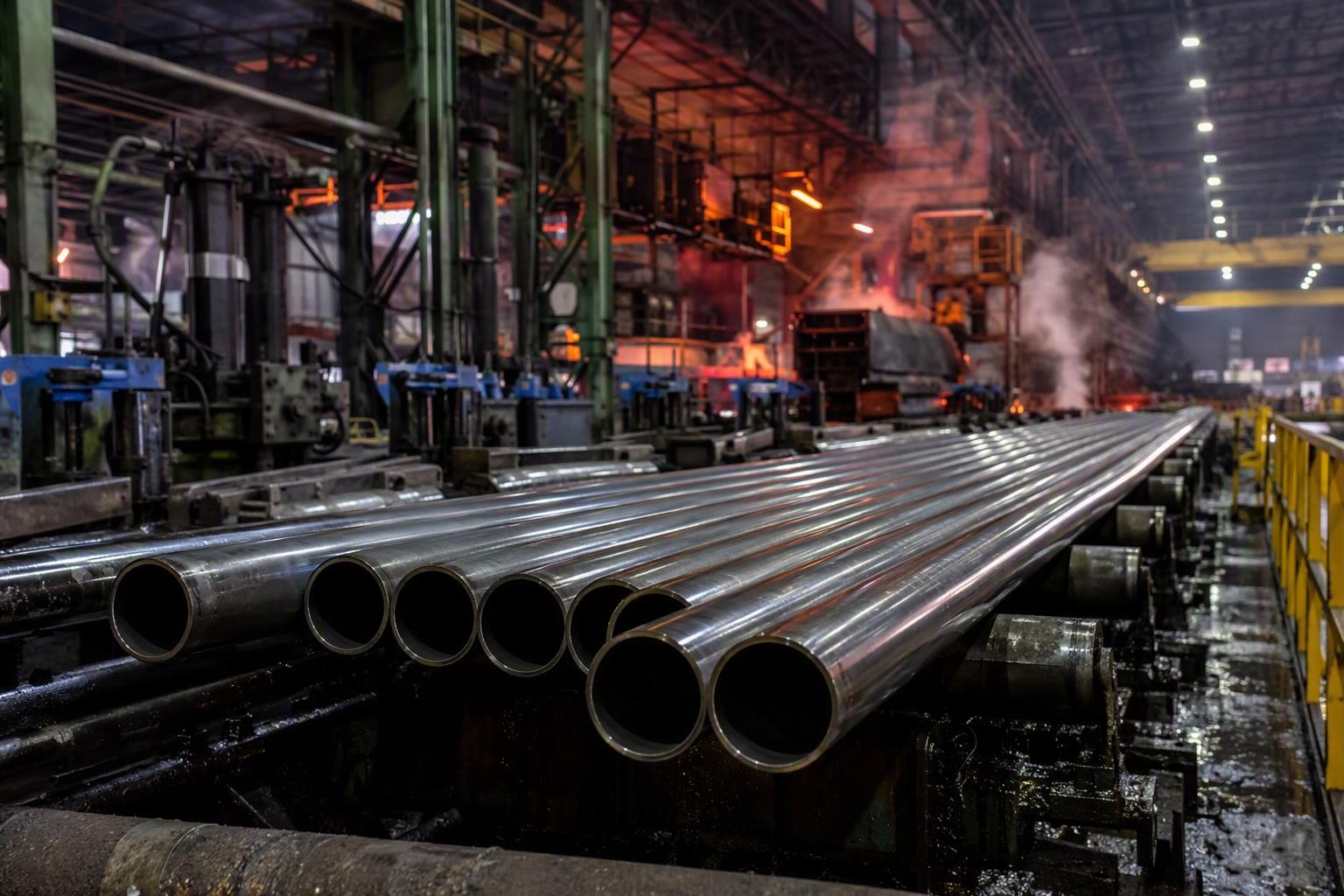
Both carbon and stainless pipe are manufactured either seamless or welded. Seamless pipe is pierced from a solid billet, producing a uniform tube with no longitudinal weld — preferred for high-pressure service and smaller diameters. Welded pipe is formed from strip or plate and joined by electric resistance welding (ERW) or submerged arc welding, which is economical for large diameters and long runs. Our earlier article on how seamless steel pipe is manufactured walks through the full production route if you want the detail.
On the specification side, the standard that governs most carbon steel pipe for mechanical and pressure applications is ASTM A53/A53M, which covers seamless and welded black and hot-dipped galvanized pipe in NPS 1/8 to NPS 26. For austenitic stainless steel pipe intended for high-temperature and general corrosive service, the reference document is ASTM A312/A312M, which covers seamless and welded pipe in grades such as TP304, TP304L, TP316 and TP316L.
Two practical notes for buyers. First, always confirm whether the pipe you are quoted is seamless or welded — the two are priced differently and suit different services. Second, if your project runs to API-style line pipe for oil or gas, the governing family changes to API standards such as API 5L, and grade/PSL selection follows pipeline rules rather than general ASTM practice — a topic our oil and gas pipeline steel selection guide covers in depth.
Carbon Steel vs Stainless Steel Pipe: Direct Comparison
| Factor | Carbon steel pipe | Stainless steel pipe |
|---|---|---|
| Corrosion resistance | Poor without coating; rusts in moisture | Excellent; self-healing passive film |
| Strength (typical yield) | 35,000 psi and up (A53 Gr B to API 5L X65+) | ≈30,000–35,000 psi annealed (304/316) |
| High-temperature service | Good to ~425°C for A106 Gr B | Excellent; retains strength and resists scaling |
| Low-temperature service | Limited by impact toughness (avoid brittle grades) | Excellent down to cryogenic range (austenitic) |
| Weldability | Excellent (low-carbon grades) | Good; low-carbon L grades prevent sensitization |
| Material cost | Low | Roughly several times higher per tonne |
| Maintenance burden | Coatings, touch-up, inspection needed | Minimal in compatible services |
| Typical applications | Water, steam, gas, structures, oil & gas pipelines | Chemicals, food & pharma, seawater, architectural |
Applications: Where Each Material Wins
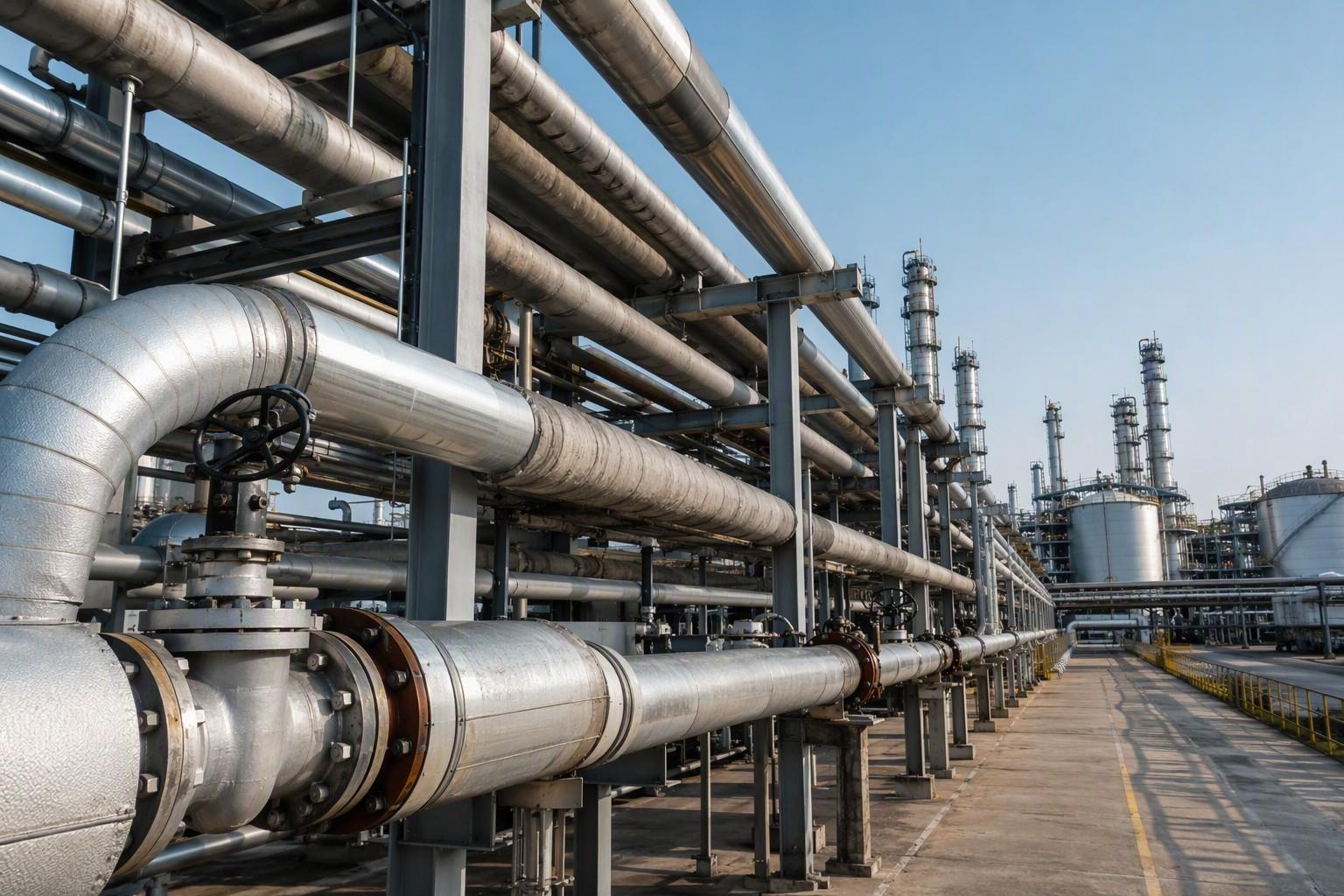
Carbon steel pipe is the default for:
- Water supply, drainage, steam and compressed-air lines in buildings and plants.
- Fire-protection sprinkler systems (black or galvanized pipe).
- Structural and mechanical applications where strength per dollar matters.
- Oil and gas gathering and transmission lines — high-strength API 5L carbon steel is the material of virtually every long-distance pipeline, because the pressure and cost equation favors high-yield carbon steel.
- General construction, scaffolding, fencing and machinery.
Stainless steel pipe is the default for:
- Chemical, petrochemical and pharmaceutical process lines carrying acids, solvents or products that must stay uncontaminated.
- Food, beverage and sanitary applications where cleanability is a regulatory requirement.
- Seawater, coastal and marine environments where chlorides attack carbon steel quickly.
- High-purity water, heat exchangers and cryogenic systems.
- Architectural and visible installations where appearance and longevity justify the premium.
The two materials also meet in the same facility: a plant may run carbon steel for utility steam and cooling water, and stainless steel for the process loop that carries the corrosive product. Choosing per service — rather than standardizing on one material — is the most cost-effective engineering strategy.
Cost: Initial Price vs Life-Cycle Cost
The most common mistake in pipe procurement is comparing only the first invoice. Carbon steel pipe costs a fraction of stainless steel per tonne — that gap is real and substantial, typically several times. But total cost of ownership includes installation, coatings, inspection, downtime and replacement.
In a benign service (dry gas, treated water indoors), carbon steel with a simple coating can last the life of the plant, and it is clearly the economical choice. In a corrosive service, the same pipe may fail in a few years — at which point the replacement cost, lost production and labor usually dwarf the material saving. Engineers often express it simply: if the service will corrode carbon steel, stainless steel is the cheaper pipe over the project life; if it will not, carbon steel is.
That is why the selection question is not “which steel is better” but “what is this line carrying, and for how long must it last?” Getting that answer right before you order is worth far more than any grade discount.
How to Choose: A Practical Checklist
Work through these steps in order, and the material choice usually decides itself:
- Identify the fluid. Is it corrosive — chlorides, acids, seawater, chemicals? Corrosive or purity-critical media push you to stainless steel.
- Check temperature. Very high or cryogenic temperatures favor stainless steel (or specialized carbon grades for elevated service).
- Check pressure and diameter. High pressure favors seamless pipe; very large diameters usually force welded construction. API 5L carbon grades cover most high-pressure pipeline duty.
- Consider the environment. Outdoor, coastal, buried or humid service demands corrosion protection — either stainless steel or coated carbon steel.
- Add maintenance capacity. Can your team re-coat and inspect carbon steel on schedule? If not, stainless steel reduces ongoing burden.
- Calculate life-cycle cost. Compare coated carbon steel vs stainless steel over the expected service life, including replacement risk.
- Verify standards and documentation. Specify the governing standard (A53, A106, A312, API 5L), confirm seamless vs welded, and require mill test certificates with full chemistry and mechanical results before shipment.
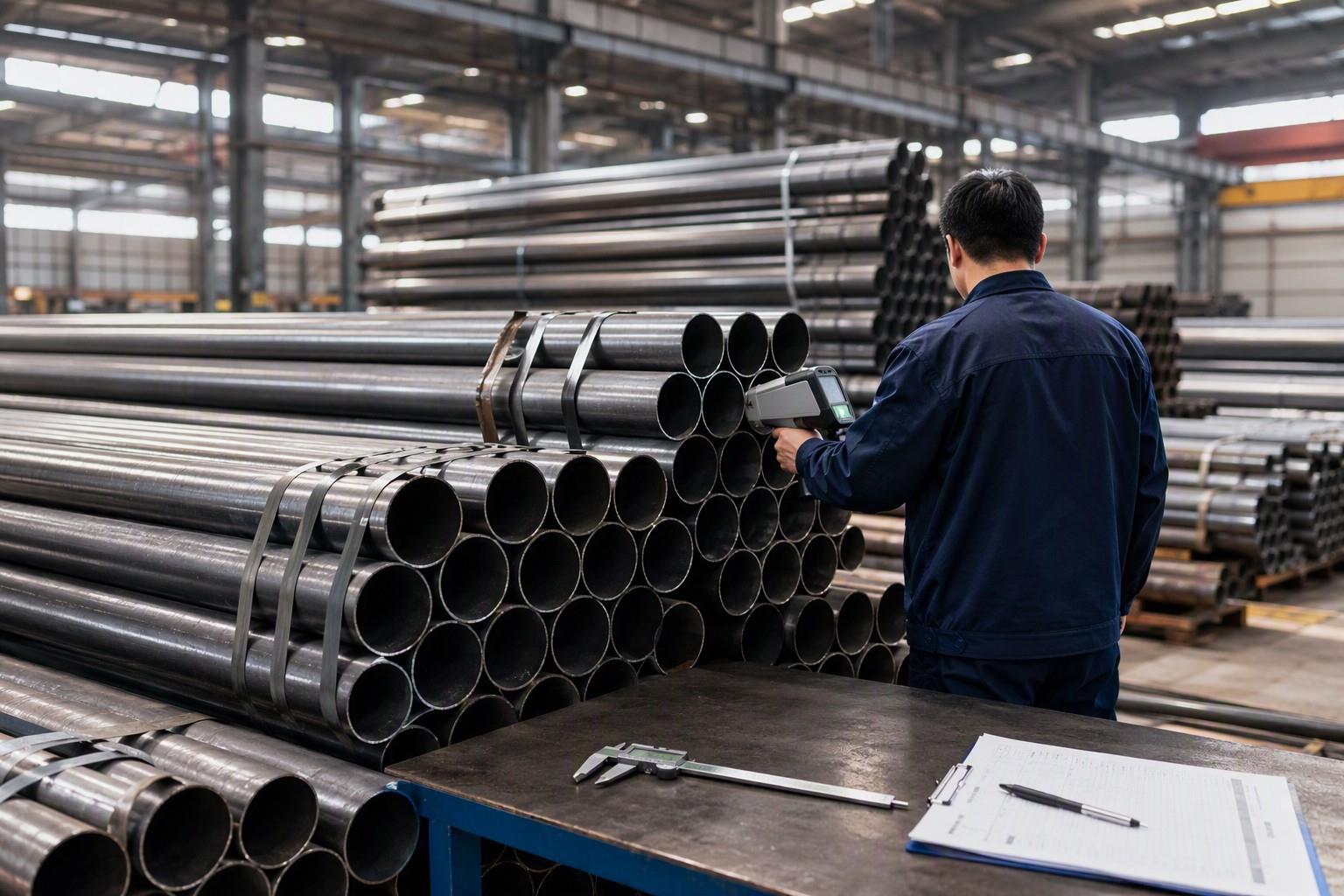
Never rely on visual identification alone when receiving material — carbon steel and stainless pipe can look similar under workshop lighting, and mixing them up on site is a costly error. Insist on grade marking and, for critical orders, arrange third-party verification of the material before it leaves the mill.
Frequently Asked Questions
Is carbon steel pipe cheaper than stainless steel pipe?
Yes. Carbon steel pipe costs substantially less per tonne and is the economical choice in non-corrosive services. Stainless steel’s higher price is justified only where corrosion resistance, purity or extreme temperatures require it — then it usually wins on life-cycle cost.
Can carbon steel pipe be used for oil and gas pipelines?
Yes — and it is the standard choice. Oil and gas transmission lines are almost universally high-strength carbon steel to API 5L (grades X42 through X80), selected for yield strength and fracture toughness. Stainless steel is used in smaller quantities for corrosive well fluids and processing services.
Which is stronger: carbon steel or stainless steel pipe?
At standard pipe grades they are comparable: A53 Grade B and annealed 304 both yield around 30,000–35,000 psi. But high-strength carbon steel (API 5L X65 and above) is significantly stronger than standard austenitic stainless grades, which is why high-pressure pipelines use carbon steel. Stainless steel’s advantage is corrosion resistance, not raw strength.
Talk to a Pipe Specialist Before You Spec
Choosing between carbon steel and stainless steel pipe is a materials decision with real money attached — and the choice depends on service conditions only you know. Send your fluid type, temperature, pressure, diameter and quantity to our team at Shuncheng Steel, and we will recommend the right material and grade, confirm the governing standard, and provide mill-direct pricing with full test certificates. We supply both carbon and stainless steel pipe in seamless and welded routes, so the recommendation you get is based on your project — not on what we happen to stock.