
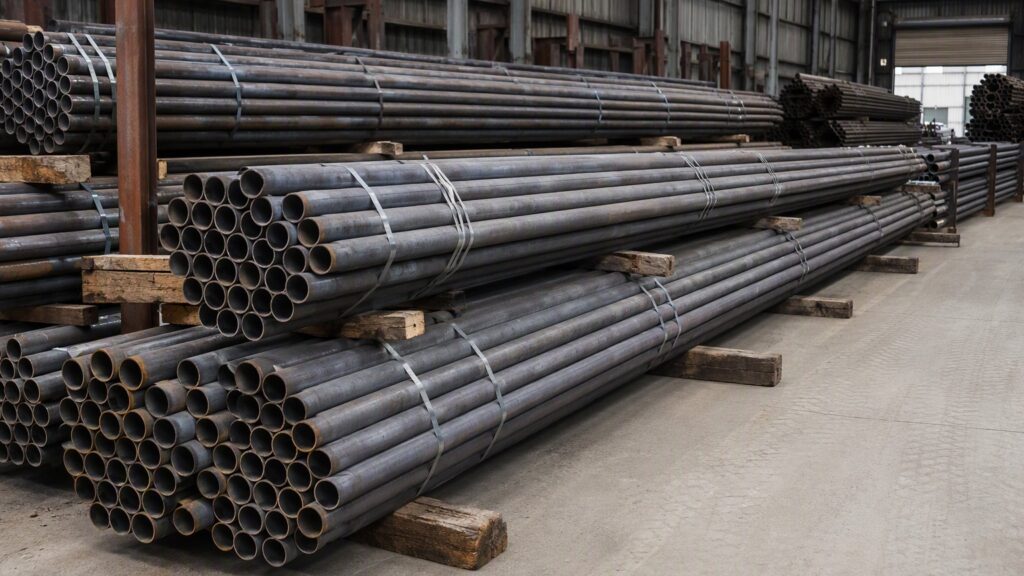
SA-210 vs SA-106: Which Boiler Tube Grade Do You Need?
Two seamless carbon steel standards, one costly mix-up. Specify the wrong one and your tubes arrive with the wrong scope, the wrong tests and the wrong wall basis.
Short answer: Choose ASTM A210/A210M for boiler and superheater tubes: grades A-1 and C, 1/2 in. to 5 in. outside diameter, quoted on minimum wall. Choose ASTM A106/A106M for high-temperature pipework: grades A, B and C, NPS 1/8 to NPS 48, quoted on nominal wall.
Transition: The difference is not a question of quality, and neither standard is the better one. It is a question of what you are actually buying — a tube sized on minimum wall for boiler and superheater service, or a pipe sized on nominal wall for high-temperature steam and process piping. Both are fully killed seamless carbon steel products, both are published in the same volume of ASTM’s book of standards, and both are routinely quoted side by side on the same power plant enquiry, which is precisely why buyers mix them up. The sections below work through the real separation — scope and designation, dimensions and grade lists, chemistry and mechanical requirements, service position, testing and documentation — and finish with the wording that belongs on the purchase order.
What Actually Separates SA-210 from SA-106?
The distinction starts with the product word each standard uses, and with the document your certificate has to satisfy.
Short answer: SA-210 covers seamless boiler and superheater tubes, including flues, arch tubes and stay tubes. SA-106 covers seamless pipe for high-temperature service — steam and process piping. One is a tube specification, one a pipe specification; the ASME prefix shows which code document the buyer works to.
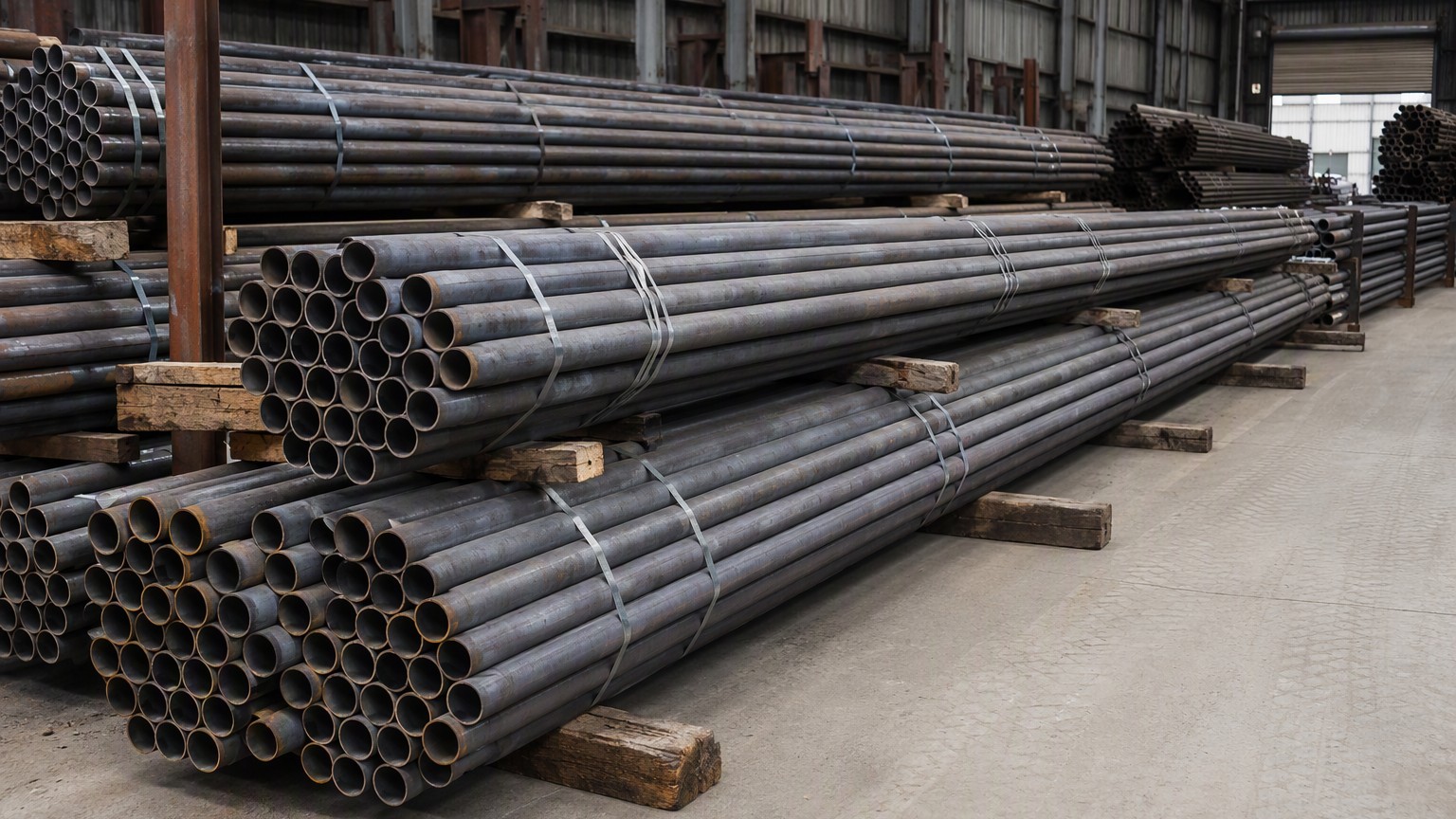
Dive deeper: Start with the documents, because they are not two competing opinions about the same product. ASTM A210/A210M is published in Book of Standards Volume 01.01 under Committee A01, and its scope is deliberately narrow: minimum-wall-thickness seamless medium-carbon steel boiler tubes and boiler flues, including safe ends, arch tubes, stay tubes and superheater tubes. ASTM A106/A106M sits in the same volume and the same committee, but its scope is high-temperature service pipe — a product defined by nominal wall thickness and by its suitability for bending, flanging and welding into a piping system. Different scope, different dimensional basis, different test list. The same furnace can serve both, and the same seamless steel pipe mill often makes both on the same line, which is why the paperwork rather than the metallurgy usually decides the argument.
One steel, two designations
The two codes you see on a quotation — SA-210 and SA-106 — are the ASME forms of the ASTM specifications. The ASME Boiler and Pressure Vessel Code adopts material specifications for use in Code construction, and the SA- prefix marks a specification adopted in that way, while the plain A- prefix marks the ASTM designation of the same document. A mill produces one heat of killed carbon steel and certifies it against whichever document the order names, so the choice is not about the steelmaking route. It is about scope, dimensions, tests and documentation, all of which sit on top of the steel and all of which are re-stated in the certificate.
Tube and pipe are dimensional conventions
This is the technical heart of the comparison. A210 sizes tubes from 1/2 in. to 5 in. outside diameter on a minimum wall basis, meaning the wall figure on the order is the thinnest metal permitted anywhere on the tube. A106 sizes pipe by nominal pipe size from NPS 1/8 to NPS 48, with nominal — that is, average — wall thickness taken from ASME B36.10M. Two products with the same outside diameter and the same nominal wall can therefore contain different amounts of metal, because the tolerances run in different directions around different baselines. A boiler designer who needs a guaranteed minimum wall through a hot section specifies a tube standard for that reason, while a piping engineer who has to match a schedule and a fitting specifies a pipe standard for the same reason in reverse.
Why the scope wording is a commercial question
Scope also decides what a supplier is obliged to inspect. A210 calls for tension, flattening, flaring and hardness testing plus a hydrostatic or nondestructive electric test. A106 calls for tensile, bending, flattening, hydrostatic and nondestructive electric tests, and it carries a note about possible graphitization that has no counterpart in the tube specification. Order the wrong document and the correct steel can still arrive with the wrong test package, which is a problem that tends to surface at the third-party inspection stage rather than at the mill gate.
Which Sizes, Walls and Grades Does Each Standard Cover?
The dimension tables explain most of the day-to-day confusion, because the two documents measure the product in different ways.
Short answer: A210 is quoted on minimum wall from 1/2 in. to 5 in. OD, with walls usually 0.035 in. to 0.500 in. A106 is quoted by NPS from 1/8 to 48 on nominal wall from ASME B36.10M. A210 offers grades A-1 and C; A106 offers A, B and C.
Dive deeper: Put the two specifications side by side — ASTM A106/A106M measured by NPS and nominal wall, A210 measured by outside diameter and minimum wall — and the practical differences become a list of numbers rather than a matter of opinion.
| Item | ASTM A210/A210M | ASTM A106/A106M |
|---|---|---|
| Product covered | Seamless boiler tubes, superheater tubes, flues, arch and stay tubes | Seamless pipe for high-temperature service |
| Size basis | 1/2 in. to 5 in. [12.7 to 127 mm] outside diameter | NPS 1/8 to NPS 48 [DN 6 to DN 1200] |
| Wall basis | Minimum wall, usually 0.035 to 0.500 in. [0.9 to 12.7 mm] | Nominal (average) wall per ASME B36.10M |
| Grades offered | A-1 and C | A, B and C |
| Steelmaking | Killed steel required by the specification | Killed steel is normal mill practice |
| Delivery condition | Hot-finished or cold-finished, stated in the order | Supplied as pipe, hot-finished or cold-drawn |
| Surface | Surface condition must be stated in the order | Standard commercial surface |
The grade lists are short, and that is deliberate
A210 offers two grades, A-1 and C, while A106 offers three, A, B and C. Neither list is designed to give a buyer twenty options; both are designed to cover a defined service window with the least possible specification ambiguity. A210 is a medium-carbon tube specification, so its grades are separated by carbon content and tensile level rather than by alloy additions. A106 is a carbon steel pipe specification in which the three grades step up in tensile strength while carbon is deliberately kept within limits that allow bending, flanging and welding. If you need creep strength at high temperature, neither document is the answer — that is where the chromium-molybdenum tube grades take over, and the standard boiler tube grades comparison covers that transition properly.
Minimum wall and nominal wall in the workshop
The two wall bases behave differently once the material reaches a fabrication shop. A minimum wall order protects the designer’s stress calculation, because every point on the tube is at least as thick as the figure specified, and the consequence is that the average wall runs slightly above it. A nominal wall order protects interchangeability, because the pipe will match the fittings, flanges and schedule designation of the surrounding system, and the consequence is that individual points may fall slightly below the nominal figure within the permitted tolerance. A tube failing a minimum wall check is a rejection; a pipe sitting below nominal within tolerance is conforming. Buyers who treat the two figures as interchangeable are comparing a floor with an average.
How Do the Chemistry and Mechanical Requirements Differ?
Both documents describe medium-carbon steels, but the carbon ceilings and the test lists are not the same.
Short answer: A210 Grade A-1 allows carbon up to about 0.27 percent and promises a minimum tensile of 415 MPa; Grade C allows more carbon and about 485 MPa. A106 separates its grades mainly by tensile level, from about 330 MPa in Grade A to 485 MPa in Grade C.
Dive deeper: Chemistry is where a tube specification and a pipe specification make different bargains with the same alloy family. The figures below are the commonly published minimum values for the current editions; treat them as a buying guide and have the supplier confirm against the edition printed on your order, because both documents have been revised more than once.
| Grade | Carbon, percent | Minimum tensile, MPa | Minimum yield, MPa |
|---|---|---|---|
| A210 Grade A-1 | About 0.27 max | 415 | 255 |
| A210 Grade C | About 0.35 max | 485 | 275 |
| A106 Grade A | About 0.25 max | 330 | 205 |
| A106 Grade B | About 0.30 max | 415 | 240 |
| A106 Grade C | About 0.35 max | 485 | 275 |
Carbon is the cheapest strengthener and the first constraint
Every carbon point added raises tensile strength and lowers weldability at the same time, and both documents manage that trade deliberately. A210 sits at the medium-carbon end of the family because boiler tubes are expanded, beaded, forged, welded and bent during erection, and because the tube wall has to tolerate those operations without cracking. A106 stays lower on carbon for a different reason: pipe is welded into a system on site, often in restraint, and a hard heat-affected zone in a circumferential weld is a far more serious defect than a slightly lower tensile figure. Reading the two carbon ceilings is therefore reading two different risk assessments, not two quality levels.
What the tensile and yield figures actually promise
The mechanical values are minimums for the finished product, tested on specimens cut from the tube or pipe, and they are what a piping or boiler stress calculation is checked against. Notice that A106 Grade B and A210 Grade A-1 share a tensile minimum of 415 MPa but promise different yield values, and that the highest grade in each document lands at the same nominal level. Substituting one for the other on the strength figure alone is therefore tempting and wrong: the wall basis, the dimensional tolerance and the test package all change with the document, and a stress calculation built on one wall basis does not transfer to the other. This is also where the ASME Code matters, because the allowable stress values a designer uses come from the Code’s material tables — published by ASME in the Boiler and Pressure Vessel Code — rather than from the ASTM specification alone.
Why the tube standard adds a hardness test
A210 requires a hardness test that A106 does not name in the same way, together with flattening and flaring tests that simulate the forming operations a boiler tube actually undergoes. Flattening crushes a ring section between platens to a specified separation and looks for cracking; flaring expands a tube end with a tapered mandrel and looks for the same. Hardness is a fast proxy for whether the heat treatment has left the steel in a condition that will survive expansion and bending on site. A tube that passes tensile but shows a hardness excursion is usually telling you something about the cooling history of the heat, and on a boiler that is a warning worth acting on rather than a formality to be filed.
Which One Belongs in the Boiler and Which in the Steam Line?
Service position decides the choice more often than mechanical properties do.
Short answer: A210 goes wherever tubes form the heat-absorbing surfaces: water walls, economisers, superheater and reheater elements, flues, arch and stay tubes. A106 goes wherever pipe carries steam or hot process fluid between items of equipment: headers, main steam lines and high-temperature process piping.
Dive deeper: The water-tube boiler is the clearest way to see the split, because it contains both products within a few metres of each other. A water-tube boiler burns fuel in a furnace whose walls are made of water-filled tubes; the water and steam mixture rises into a steam drum, and saturated steam is then drawn off and passed through a superheater to become dry superheated steam. Every tube in that description is a candidate for a tube specification, and every pipe connecting the boiler to the turbine or to a process unit is a candidate for a pipe specification.
Inside the boiler: heat-absorbing circuits
The furnace water wall, the economiser and the superheater elements are all tube products, and they share two properties that matter. They are formed on site — bent, expanded into headers, welded to fins or membranes — and they are exposed to the hottest gas path and the highest heat flux in the plant. A minimum wall guarantee plus flattening and flaring tests is a direct response to that combination, which is why A210 exists as a separate document rather than as a section of the pipe specification. Superheater and reheater elements in particular sit at the top of the temperature range, and where the metal temperature exceeds what a carbon steel can carry, the selection moves to the chromium-molybdenum grades rather than to a higher tensile carbon grade.
Outside the boiler: headers, steam lines and process piping
Steam leaving the superheater outlet passes through the main steam line to the turbine, and in a process plant the same logic applies to hot oil, hot water and high-temperature process services. Those are piping systems, assembled from pipe, fittings, flanges and valves to a schedule, and they are bought, joined and inspected as pipe. A schedule-based pipe specification is the right document here because the wall is chosen to match the fittings and because the joint quality, not the minimum wall, is the governing risk. The high-pressure boiler steel pipe overview sets out how this family of standards divides the work in practice.
Where the Chinese 20G grade fits
Export enquiries frequently arrive with a GB grade, the most common being 20G to GB/T 5310 for high-pressure boiler tubes. The logic is the same as the ASTM comparison: the Chinese standard defines its own grade, its own dimensional tolerance and its own test list, and a mill certificate to that standard is not automatically acceptable to a reviewer working to the ASME Code. What matters commercially is that the substitution is a documented decision. A carbon steel boiler tube such as a Boiler Steel Pipe 20G 2 inch Sch 80, supplied in seamless form, sits in the same service window as an A210 or A106 product of similar wall and diameter, and it can often satisfy the design intent — but the standard, the wall basis and the test package still have to be reconciled on paper before the order is placed.
What Testing and Documentation Should You Ask For?
The test package is where the two documents separate most visibly on the paperwork.
Short answer: Expect tension, flattening, flaring, hardness and either hydrostatic or nondestructive electric testing on A210 tubes, and tensile, bending, flattening, hydrostatic and electronic testing on A106 pipe. Ask for a mill test certificate that traces every heat number to the bundles delivered.
Dive deeper: Testing is a specification item, not a courtesy, and both documents make it explicit through their scope and abstract rather than through a general promise of quality. Working from the abstracts of the current editions, the mechanical test list on A210 covers tension, flattening, flaring and hardness, with a hydrostatic or nondestructive electric test accepted as the integrity check on the finished tube. A106 covers tensile, bending, flattening, hydrostatic and nondestructive electric testing, with retest provisions that allow a flawed specimen to be discarded and replaced and that permit a retest where a specimen breaks on an internal or external surface flaw. Those retest rules are not loopholes; they are normal industry practice, but a buyer should know they exist before reading a certificate as a guarantee of defect-free material.
Certificates: what level, and for whose benefit
The certificate is the only part of the quality discussion that travels with the goods, which is why the level matters. A mill test certificate to EN 10204 3.1 states that the test results come from the actual heat used to make the delivered product and is signed by the manufacturer’s authorised inspection representative. A 3.2 certificate adds independent verification by an authorised inspection body. For boiler and superheater tubes going into a pressure part, the certificate has to identify the standard and the edition, the grade, the heat number, the dimensions and wall basis, the chemical composition, the tensile and yield results, the elongation, and the results of the flattening, flaring and hardness tests where the order calls for them. A certificate that quotes only a tensile figure is not a substitute for the full test list the standard requires.
Third-party inspection before shipment
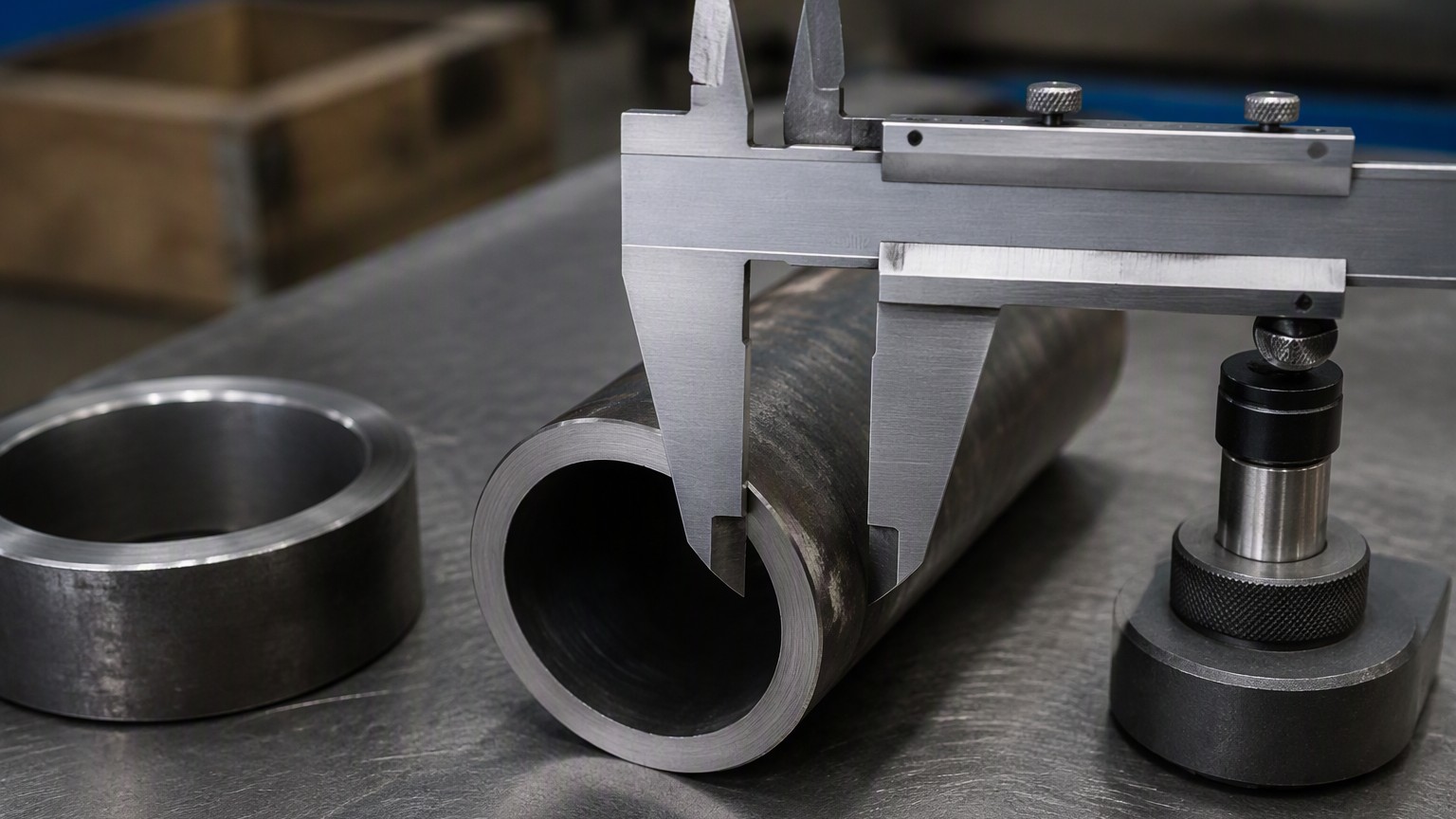
Where the tubes are going into a pressure part that carries a legal responsibility, closing the order with a third-party inspection before shipment is usually cheaper than resolving a dispute after discharge. The inspector sees the material before it is packed, can witness the mill’s tests or review the results directly, and can verify that the marking on each tube ties back to the certificate. Two checks consistently earn their keep at that stage: dimensional verification of the wall against the basis named on the order, and a hardness spot check on the actual tubes supplied rather than a review of the mill’s process capability. Sorting a documentation gap before the container is sealed costs a day; sorting it after arrival costs a claim, a delay and usually a spare order to keep the site working.
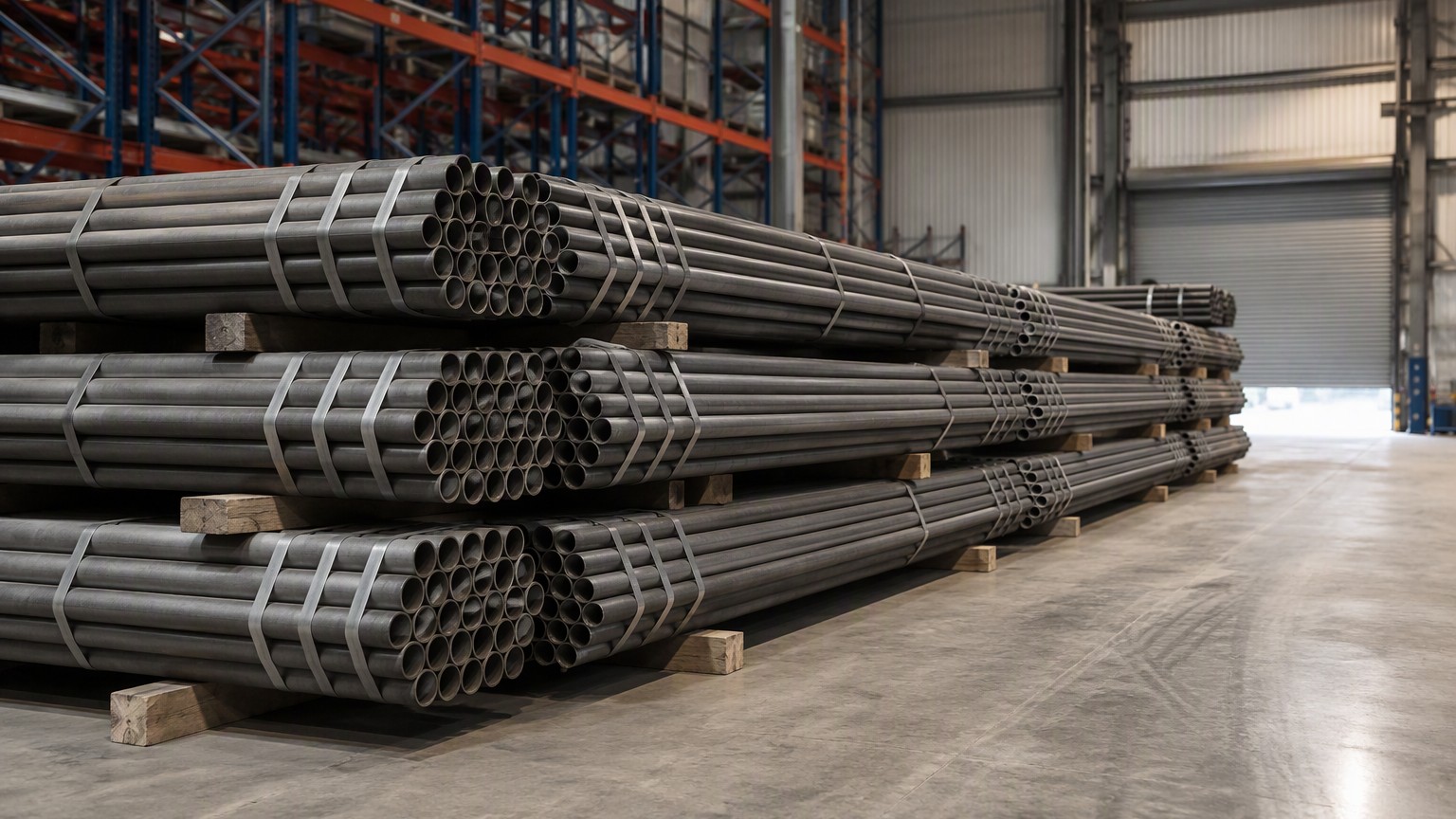
How Do You Specify SA-210 or SA-106 on a Purchase Order?
An order that names only a grade leaves the important decisions to the mill.
Short answer: Name the standard and year of issue, the grade, the size with its wall basis, the delivery condition and surface requirement, the test package and the certificate level. Then state the length, the end finish and the marking you expect to see on every piece.
Dive deeper: A well-written order is short, because each line exists to remove a decision the mill would otherwise make on its own. Begin with the two lines that cause the most trouble: the standard with its edition, and the grade with its type and delivery condition. A210 requires the surface condition to be stated in the order and permits either hot-finished or cold-finished tube, so an order that omits both has left two visible properties of the delivered product undefined. Then state the dimensions with their basis: outside diameter with a tolerance reference, and for a tube the minimum wall rather than an average, and for pipe the schedule and the nominal wall from the schedule table. A wall figure with no basis is the single most common cause of a pre-shipment argument.
The lines that prevent a wrong shipment
Add the items that a mill cannot infer. Specify the length and whether it is random or fixed, the end finish — plain, beveled or threaded — and the marking, because tracing a tube back to a heat number is only possible if the marking survives packaging. State whether the order needs a hydrostatic test in addition to the nondestructive electric option, and if an electric test, which method. Name the certificate level and whether an inspection body is involved. Finally, state the test temperature requirements where they apply and the acceptance criteria for flattening and flaring, so that the mill tests against your criteria rather than its own default. A specification that says all of this fits on one page.
Three mistakes that recur on boiler tube enquiries
The first is quoting a pipe standard for a heat-absorbing application because the outside diameter happened to match a stock size, which quietly replaces a minimum wall guarantee with an average. The second is swapping grades on tensile strength alone, ignoring that the delivery condition, the surface requirement and the test package travel with the standard rather than with the grade. The third is accepting a certificate that lists a generic process capability instead of results traceable to the delivered heat; a hardness range quoted as “typically” is not a test result. Each of these is cheap to fix at enquiry stage and expensive to fix at the port, which is where most of them are discovered.
Putting the choice in writing
If you are unsure which document your application needs, describe the service rather than the grade: the fluid, the design pressure and temperature, the metal temperature, and the position in the system. Whether the part absorbs heat in the furnace or carries steam between items of equipment usually settles the standard in one paragraph, and the wall basis, grade and test package follow from it. Once the standard is fixed, the grade selection within it is a short calculation against the allowable stress tables rather than a matter of preference. If you would like that step reviewed, send us your tube schedule and service conditions and we will confirm what can be supplied against them, including the wall basis, the test package and the documentation level.
Conclusion: Choose by position and by documentation: A210 where tubes absorb heat on minimum wall, A106 where pipe carries high-temperature steam, and always name the standard year on the order.