
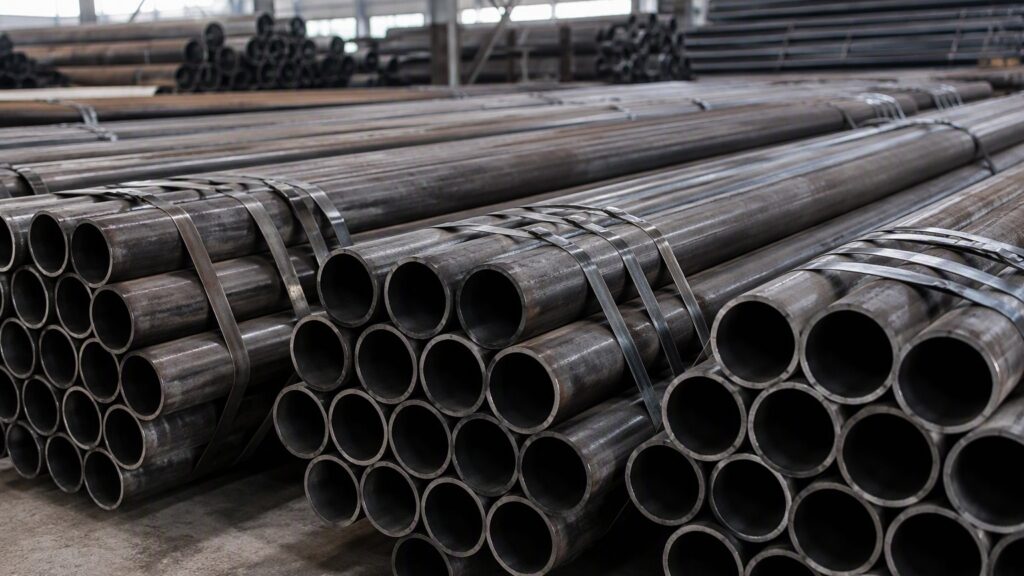
Pipe End Finishes: Plain, Beveled or Threaded — Which Do You Order?
Your pipe passes every wall-thickness check and still fails at the joint, because the end finish was never specified. One line on the order decides thread, bevel or plain.
Short answer: the three standard pipe end finishes are plain end (square cut, for welding or grooving), beveled end (a machined 30° or 37.5° chamfer for butt welds) and threaded end (tapered or parallel threads for screwed connections). Order the finish your joint design requires.
Pipe end finish is one of the few items that is cheap to specify correctly and expensive to correct later: a mis-threaded end can be re-cut, but a missing bevel on a heavy-wall line becomes a field weld repair. The sections below define each finish, show where it belongs, name the standards that set the dimensions, and give a specification routine you can copy straight onto a purchase order.
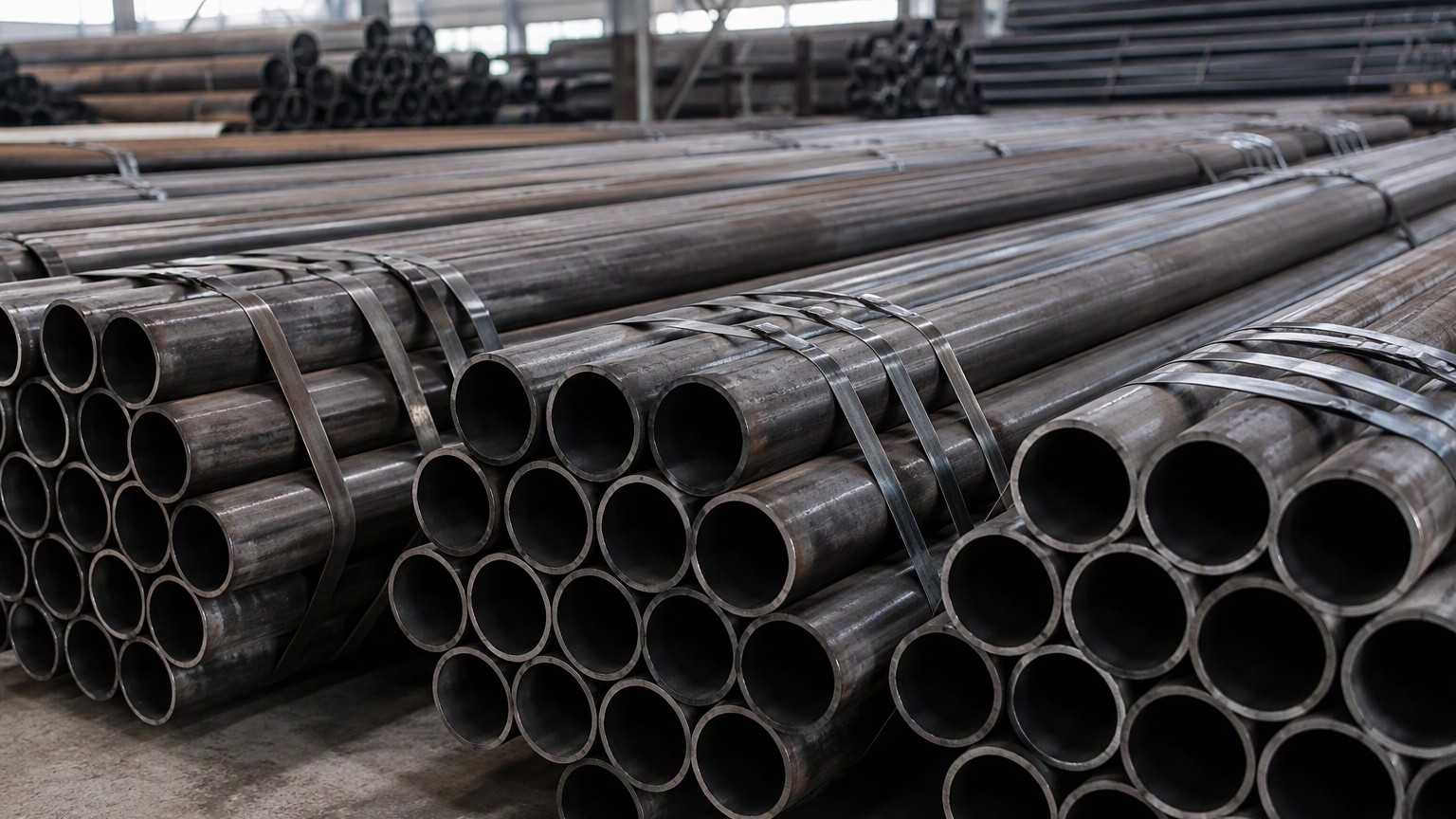
What Does “Pipe End Finish” Actually Mean on a Purchase Order?
End finish is the condition of the pipe’s end face and rim, not its coating, its length or its wall thickness.
Pipe end finish describes how the end of the pipe is prepared for the joint: square cut and plain, machined to a bevel, or threaded. It is stated separately from dimensions, grade and coating, and it determines which connection method the pipe can accept.
Why one line on the order controls three different trades
The end of a pipe is the interface between the mill product and everything the fabricator attaches to it, and the preparation carried out there is described by a small, precise vocabulary that reappears on drawings, mill certificates and packing lists. A plain end means the pipe has been cut square and deburred, with no further preparation; the wall face is the whole joint face, and the pipe is ready for a butt weld, a groove, or a mechanical coupling. A beveled end means the end face has been machined or flame-cut at an angle so that two pipes can be butted together and filled with weld metal down a controlled gap. A threaded end means a thread has been cut or rolled onto the outside of the pipe so that it can be screwed into a coupling, a fitting or a valve. Those three preparations look almost identical on a shipping list and behave completely differently on site. The reason the term deserves its own line is that end preparation is quoted and produced independently of the pipe body. Two orders for identical pipe, same grade, same outside diameter, same wall and same length, can arrive ready for two different construction methods, with a real price and lead-time difference between them, because beveling and threading both consume machine time that plain cutting does not. It also crosses trades. The mill cuts the end and, on request, bevels or threads it; the coater has to leave a short length uncoated so that the joint is not contaminated; the fabricator has to match the preparation to the qualified welding procedure; and the inspector has to verify it on delivery. When the finish is left out, the practical default is a plain end, because that is the cheapest preparation a mill can produce and the one that suits re-cutting on site. That default is harmless on a small-bore spool cut in the shop, and expensive on a transmission line where the weld preparation would then have to be created in the field, in the weather, on a heavy wall. Because the end preparation is referenced to the pipe body, the finish is normally written immediately next to the size and wall, the pairing explained in our guide to how outside diameter and wall thickness are specified.
Plain, Beveled or Threaded: How Do the Three Pipe End Finishes Differ?
These three preparations are not grades of one product; each is a different end geometry with its own joint.
Plain ends are square cut for welding or grooving; beveled ends add a machined chamfer, usually 30° or 37.5°, for butt welds; threaded ends carry a tapered or parallel thread for screwed connections. Each of the three is incompatible with the others at the same end.
Where the geometry and the joint method diverge
Plain, beveled and threaded ends are not three grades of the same thing; each one suits a construction method, and the geometry is different in each case. A plain end is a square cut with the burr removed and the end face perpendicular to the axis within a stated tolerance. It carries no thread and no chamfer, so the entire wall section is available to be welded, grooved or gripped. A beveled end is the same square cut with an additional machined or thermal bevel, commonly 30° or 37.5° included angle depending on the welding procedure and the wall thickness, usually with a small root face or land left unbeveled so that the two pipes locate against each other and leave a controlled root gap. Heavier walls and automatic welding processes tend to call for a compound bevel or a J-preparation, because a single straight bevel leaves too much metal to fill on a thick wall and too many passes to run economically. A threaded end is a different family altogether. The thread is produced on the outside diameter, tapered for pressure-tight joints or parallel for mechanical fastening, and the pipe needs enough wall to carry the thread without reducing pressure capacity below the design rating, which is why threaded ends thin out as the pressure class rises. The dimensions of those threads are not mill-specific. Tapered pressure-tight pipe threads are standardised in ISO 7-1, parallel fastening threads in ISO 228-1, and the widely used British Standard Pipe family that sits behind both is described in the reference article on British Standard Pipe threads. The consequence for a buyer is that the three finishes are close to mutually exclusive at a given end. A pipe that has been beveled cannot be threaded over the same length without cutting the bevel off, and a threaded pipe cannot be welded at that end without removing the thread first. Decide the joint before the order is placed, not after the pipe reaches the yard. All three preparations are available across our seamless steel pipe range, and the same choices apply to welded pipe of equivalent size.
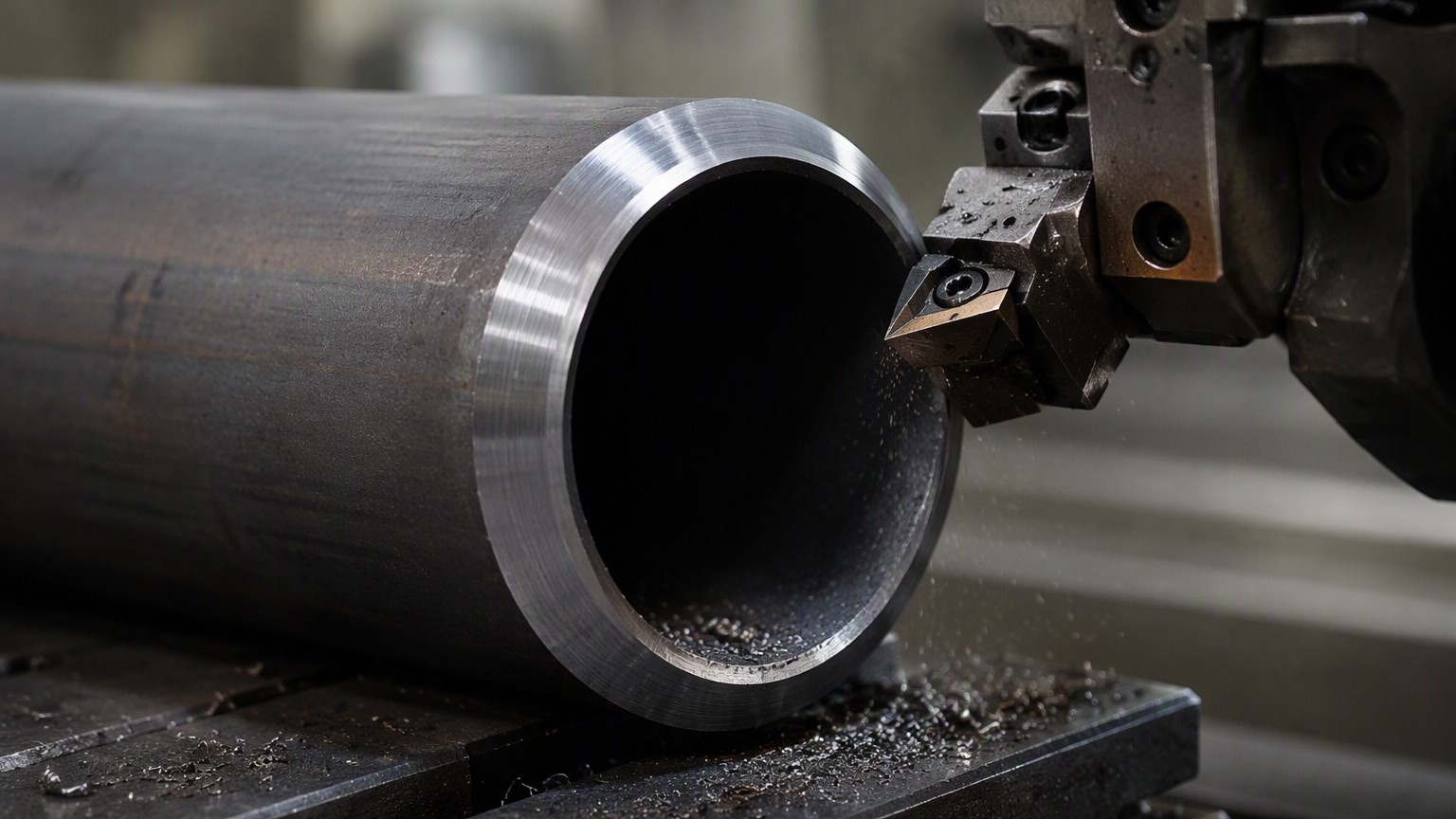
How Do You Match Pipe End Finish to the Application?
Match the finish to the joint method and to the wall, and the decision usually makes itself.
Choose plain ends for field cutting, grooving or local threading; beveled ends for butt-welded pipeline and process work, especially heavy walls; threaded ends for low-pressure, small-bore and re-makeable joints. Wall thickness and the alloy decide which preparation can safely be made on site.
The four variables that settle the choice
Match the finish to the joint, and the joint to the service. As a working rule, use plain ends where the pipe will be cut to length on site, welded with a field preparation, grooved for a mechanical coupling, or threaded locally by the fabricator; use beveled ends wherever a butt weld will be made and the preparation is better carried out at the mill than in the yard, which covers most long-distance pipeline, process piping and pressure service; and use threaded ends where the connection must be made and re-made without welding, such as low-pressure water and gas services, instrument and small-bore piping, and temporary or maintenance lines. Within those three buckets, four variables usually settle the choice. The first is wall thickness: a thin wall is easy to bevel on site with a portable tool and can often be welded from a square-edge preparation, while a heavy wall almost always arrives pre-beveled because field beveling of thick steel is slow and hard to control. The second is the welding procedure: once a procedure has been qualified with a particular bevel angle and root face, the pipe must arrive with that geometry, and a supplier who ships an arbitrary bevel invalidates the qualification. The third is the pressure class and the joint efficiency: a butt weld with full penetration is the strongest joint available at the pipe end, a groove coupling trades some pressure capacity for speed, and a threaded joint is weaker again and is normally reserved for lower ratings and smaller sizes. The fourth is the alloy and the environment: cutting or grinding stainless, duplex and alloy steels in the field risks contamination, embedded iron and heat tint, all of which compromise the passive film, so a machined bevel applied at the mill under controlled conditions is preferable for those grades. A practical example sits in small-bore precision work, where the end finish and the dimensional tolerance are written as one specification line; a cold drawn seamless steel tube in 25 mm OD × 3 mm is ordered with a stated tolerance and a stated end condition because both affect the fit of the joint that follows.
Which Standards and Specifications Govern Pipe End Finishes?
End preparation is a specified characteristic rather than a workshop preference, and three groups of standards apply to it.
Product specifications such as ASTM A53/A53M and API 5L state which end finishes are permitted and what the default is; dimensional standards such as ASME B36.10M fix the outside diameter and wall the bevel is cut against; and ISO 7-1, ISO 228-1 and the NPT series define threaded ends.
What each group of documents actually controls
Three groups of documents decide what a pipe end must look like, and a buyer who knows which group applies rarely gets a surprise. The first is the product specification, which states which end finishes are permitted and, in some cases, what the default is. ASTM A53/A53M, which covers black and hot-dipped galvanized welded and seamless steel pipe, requires pipe to be furnished with plain ends unless beveled ends are specified on the order, which is exactly why a buyer who simply asks for pipe receives plain ends and then discovers the fact in the fabrication shop. API 5L, which governs line pipe for pipeline transportation, treats the end finish as part of the order description and defines the bevel geometry for the standard preparations, so plain, beveled and threaded ends are all orderable options rather than house habits, as set out in our ordering guide for API 5L line pipe. The second group is the dimensional standard for the pipe body itself, because a bevel is referenced to the outside diameter and the wall and cannot be inspected without both. ASME B36.10M standardises the wall-thickness series for welded and seamless wrought steel pipe, and because the outside diameter is fixed for each nominal size, the bevel and the root face are defined against numbers that both the mill and the inspector already share. That is what makes a bevel verifiable: the angle is checked against the drawing and the root face is checked against the nominal wall, not against the pipe in isolation. The third group is the thread standard, for threaded ends. ISO 7-1 covers tapered threads where the joint is made pressure-tight on the thread itself; ISO 228-1 covers parallel threads used for mechanical fastening, where sealing is achieved by a gasket or an O-ring rather than by the thread; and the NPT series performs the same role in North American practice. A design that mixes the two families without saying so is a common source of leaks, because parallel and tapered threads of nominally similar size do not seal the same way. One documentation point closes the loop: the end finish should appear on the mill certificate or the inspection record, because it is an inspected characteristic and, on a claim, the certificate is the only evidence that the preparation was specified rather than improvised.
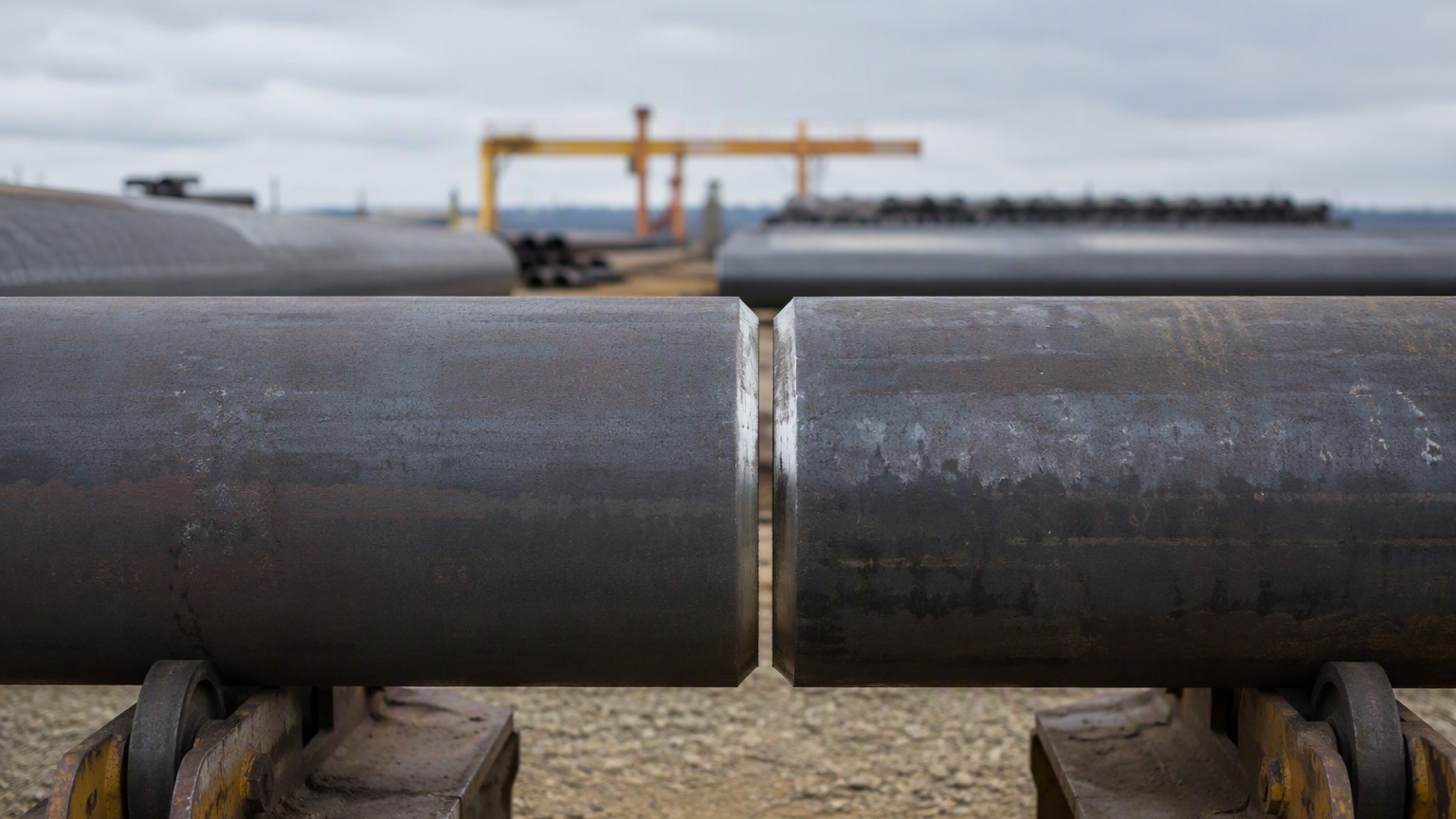
How Do You Inspect Pipe Ends Before Accepting Delivery?
Most end-finish claims are decided in the first ten minutes at goods-in, with a gauge and a photograph.
Check the end face for squareness and burr, the bevel for angle and root face, and the thread with a ring gauge; confirm the end protection is fitted, and record the result with photographs while the container is still open.
A ten-minute incoming inspection routine
Pipe end inspection is short, and almost all of it is visual and dimensional. Start with the end face. On a plain end, confirm that the cut is square to the axis within the permitted tolerance, usually expressed as a small maximum offset measured across the outside diameter, that the burr has been removed rather than rolled back into the bore, and that the end is free of heavy rust, laminations or cracks. On a beveled end, confirm the bevel angle against the purchase order, measure the root face or land width at several points around the circumference, check that the bevel is concentric with the bore rather than offset to one side, and establish whether the bevel was machined or flame-cut, because a thermal bevel should have its oxide removed before welding and a machined bevel should show a clean, uniform finish. A bevel that has been cut with a torch and left with scale will still measure roughly correct on an angle gauge and will still cause porosity in the root pass, which is why the surface condition matters as much as the angle. On a threaded end, check the thread with the correct ring gauge rather than by eye or by trial-fitting a coupling, confirm the thread form and taper, count the usable threads, look for galling, torn crests or a damaged starting thread, and confirm that the thread has been cut to the correct length for the coupling it will receive. Then check protection, because it is the cheapest part of the order and the most easily omitted. Threads and machined bevels are the most vulnerable features on a pipe: threaded ends should arrive with plastic or metal thread protectors fitted, and beveled ends with a bevel protector or end cap, and the protectors should be on the pipe rather than loose in the bottom of the container. Damage found at goods-in is a supplier claim supported by photographs; the same damage found three weeks later in the yard is usually the buyer’s problem, and it is often discovered halfway through a welding fit-up. A simple ball or gauge test of the bore finishes the routine and, on welded pipe, it also reveals internal weld bead that reduces the effective flow area. Two or three photographs of the end taken at goods-in, with a ruler, angle gauge or ring gauge in frame, are worth more in a claim than any written description produced afterwards.
How Do You Specify Pipe End Finish for a Quotation?
An end finish becomes enforceable only when the angle, the thread type and the protection are written down.
State the finish, the bevel angle and root face or the thread standard, which ends are affected, the coupling requirement and the end protection on the order. End finish also affects price and lead time, because beveling and threading are secondary operations.
A specification line you can copy onto the order
Write the finish, the angle, the thread standard and the protection on the order, and nothing is left to interpret. A complete line for a beveled pipe reads: nominal size and schedule, grade, governing standard, length, end finish (beveled), bevel angle and root face, and the document required. A complete line for a threaded pipe reads: nominal size and schedule, grade, governing standard, length, end finish (threaded), thread type and standard, whether the thread is on both ends or one end threaded with the other plain, and the coupling requirement. Those two sentences prevent almost every end-related dispute, because each of them converts a preference into a measurable characteristic. Two commercial points follow from the specification as well. First, the end finish affects both price and lead time, since beveling and threading are secondary operations: a mill that holds plain-end stock can ship quickly, while a beveled order needs a machining or thermal pass and a threaded order needs both a thread and, on most sizes, a coupling that must be sourced and fitted. When a quotation arrives without an end finish stated, the offer is usually priced on plain ends, so a comparison between two suppliers is not a like-for-like comparison until both have stated the finish. Second, the finish interacts with coating and with packing. If the pipe is to be coated, the specification should say whether the ends are to be left bare for welding, and over what length; and the packing specification should say how the ends are protected, because a container of unprotected threaded pipe that has shifted in transit will be rejected on arrival and will cost more to sort than the whole end-preparation line cost to specify. A buyer who needs both plain-end stock for shop work and pre-beveled pipe for the field usually splits the order, which is exactly why the finish belongs on each line of a mixed order rather than once for the whole document. Tell us the size, grade, wall, length and end finish and we will confirm what can ship from stock and what has to be prepared to order; send us your pipe list for a quotation with the quantity and the joint method, and we will state the end finish, the governing standard and the protection on the offer.
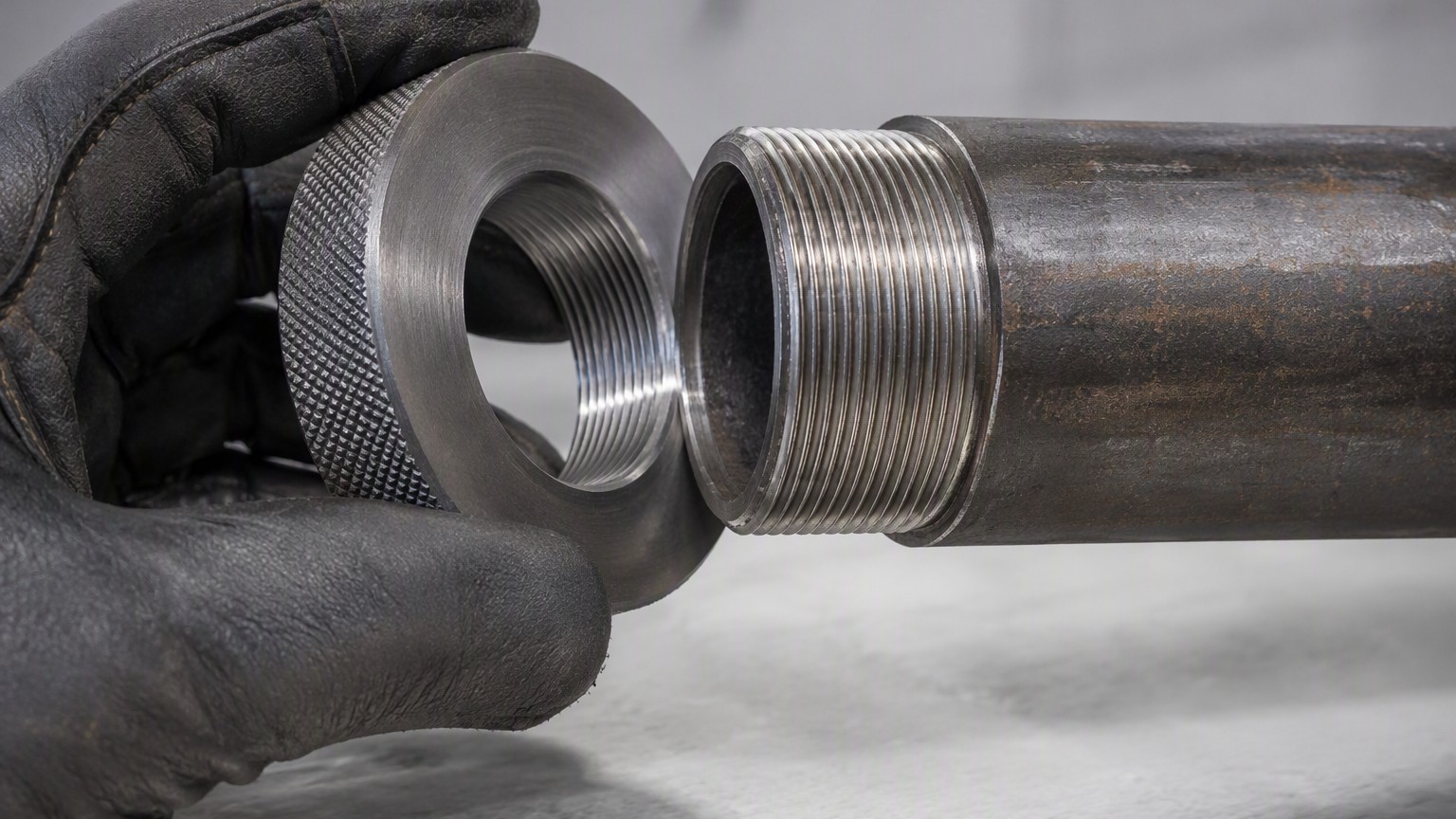
Conclusion: Choose plain ends for field cutting and grooving, beveled ends for butt-welded lines, threaded ends for screwed connections, and write the finish, angle and standard on every order.